The Real Cost of Owning a BMW i3: Beyond the Sticker Price
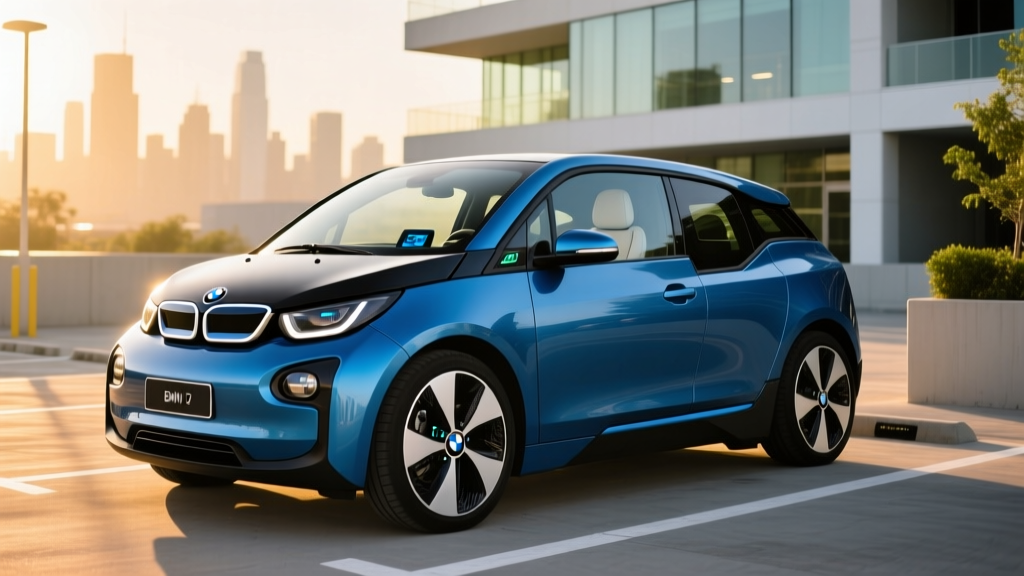
If you're researching the BMW i3 cost, you're likely weighing one of the most distinctive electric vehicles ever built against today's rapidly evolving EV market. The BMW i3 — with its carbon-fiber-reinforced plastic (CFRP) passenger cell, sustainable interior materials, and urban-focused engineering — remains a compelling used EV option in 2026, even though BMW ended production in July 2022. Understanding the true cost of i3 ownership requires looking past the purchase price to charging infrastructure, battery longevity, maintenance savings, and depreciation realities.
This guide breaks down every cost dimension of the BMW i3 from a 2026 ownership perspective: purchase price (new inventory is gone; the used market is where you'll shop), real-world range expectations, charging speed limitations, federal and state incentive eligibility, and how the i3 stacks up against modern competitors like the Chevrolet Bolt EV, Nissan LEAF, and Hyundai Kona Electric.
BMW i3 Specs at a Glance: Range, Battery, and Performance
| Spec | BMW i3 (120 Ah) | BMW i3s (120 Ah) |
|---|---|---|
| EPA Range (BEV) | 153 miles | 153 miles |
| Battery Capacity (usable) | 37.9 kWh (NMC) | 37.9 kWh (NMC) |
| Motor Output | 170 hp / 184 lb-ft | 184 hp / 199 lb-ft |
| 0–60 mph | 6.9 seconds | 6.2 seconds |
| Drivetrain | RWD (single motor) | RWD (single motor) |
| DC Fast Charge (max) | 50 kW (CCS) | 50 kW (CCS) |
| 10–80% DC Charge | ~45 minutes | ~45 minutes |
| Level 2 Charge Rate | 7.4 kW (~25 mi/hr) | 7.4 kW (~25 mi/hr) |
| EPA Efficiency | 113 MPGe (30 kWh/100mi) | 111 MPGe (31 kWh/100mi) |
| Cargo Volume | 15.1 cu ft (rear seats up) | 15.1 cu ft |
| Battery Warranty (orig.) | 8 yr / 100,000 mi | 8 yr / 100,000 mi |
Sources: EPA Fuel Economy, BMW USA specifications.
Real-World Range: What the EPA Number Doesn't Tell You
Real-World Expectation: 120–140 miles in mixed driving; 95–110 miles at sustained 75 mph highway speeds; 85–100 miles in sub-30°F winter conditions with cabin heat.
The BMW i3's 153-mile EPA rating applies to the final 120 Ah battery generation (2019–2022). Earlier 60 Ah models (2014–2016) were rated at just 81 miles, and the 94 Ah models (2017–2018) at 114 miles. If you're shopping used, verifying the battery generation is critical — the difference between 81 and 153 EPA miles is enormous in daily usability.
The i3's tall, narrow tires (155/70 R19) minimize rolling resistance and contribute to its excellent 30 kWh/100mi efficiency figure. However, the boxy shape and lack of an active thermal management system for the battery mean cold-weather range loss is more pronounced than in EVs with heat pumps and liquid battery heating. Expect a 30–40% range reduction in deep winter — a reality confirmed by EPA cold-weather testing data.
The Range Extender (REx) variant, which pairs the electric motor with a 647cc two-cylinder BMW motorcycle engine, adds roughly 70–80 miles of gasoline-assisted range. REx models carry an EPA electric-only range of 126 miles (120 Ah generation). If your commute occasionally exceeds 150 miles, the REx eliminates range anxiety — but it introduces gasoline engine maintenance and forfeits pure-BEV simplicity.
Charging Speed: The i3's Biggest 2026 Limitation
| Charging Level | Power | Speed (approx.) | Notes |
|---|---|---|---|
| Level 1 (120V outlet) | ~1.4 kW | ~5 miles/hour | Emergency/trickle only; 30+ hours for full charge |
| Level 2 (240V home) | 7.4 kW | ~25 miles/hour | Full charge in ~5–6 hours; ideal daily solution |
| DC Fast Charge (CCS) | 50 kW peak | 10–80% in ~45 min | Severely outdated vs. 150–350 kW modern EVs |
Here's where the BMW i3 cost equation gets complicated for 2026 buyers. The i3's 50 kW DC fast-charging ceiling is its most significant weakness in an era where competitors charge at 150–350 kW. On a road trip, a 50 kW charge rate means longer stops and limited route flexibility. The i3 was designed as an urban commuter, not a cross-country cruiser, and its charging hardware reflects that philosophy.
At home on Level 2, the 7.4 kW onboard charger is adequate. A nightly plug-in easily replenishes a day's driving. Home charging installation typically costs $500–$1,500 for a 240V NEMA 14-50 outlet or hardwired Level 2 station, assuming your electrical panel has capacity. For a commuter covering 30–50 miles daily, Level 2 home charging makes the i3 exceptionally convenient and cheap to fuel — roughly $0.04–$0.06 per mile depending on your electricity rate.
One important note: early 2014–2016 i3 models were equipped with a CHAdeMO DC fast-charge port, not CCS. BMW switched to CCS for the 2017+ models. If you're considering an older i3, verify the connector type — CHAdeMO stations are increasingly rare as the North American market standardizes on CCS and NACS.
BMW i3 Pricing in 2026: Used Market and Tax Credit Reality
| Model Year / Battery | Typical Used Price | Mileage Range | Notes |
|---|---|---|---|
| 2014–2016 (60 Ah / 81 mi) | $7,000–$10,000 | 50k–90k mi | Limited range; budget city car |
| 2017–2018 (94 Ah / 114 mi) | $11,000–$15,000 | 35k–65k mi | Sweet spot for value |
| 2019–2022 (120 Ah / 153 mi) | $16,000–$24,000 | 10k–45k mi | Best range; highest demand |
Since BMW discontinued the i3 in 2022, all purchases in 2026 are on the used market. Original MSRPs ranged from ~$44,450 (base i3 120 Ah) to ~$52,000+ (fully loaded i3s with REx). Depreciation has been steep — the i3's unconventional styling and limited range didn't hold value as well as the Tesla Model 3 or Chevrolet Bolt EV.
Federal Tax Credit Eligibility (§30D Used EV Credit)
Under current IRS §25E rules (the used EV credit, formerly §30D for new vehicles), qualifying buyers can claim up to $4,000 or 30% of the sale price (whichever is less) on a used EV purchased from a dealer. Key eligibility requirements:
- Income caps: Modified AGI must not exceed $75,000 (single), $112,500 (head of household), or $150,000 (joint filers).
- Price cap: The used vehicle sale price must be $25,000 or less.
- Vehicle age: The vehicle must be at least 2 model years old (all i3s qualify).
- Battery capacity: Minimum 7 kWh (all i3 variants qualify at 37.9+ kWh).
- Dealer requirement: Must be purchased from a licensed dealer, not a private party.
- First transfer: The credit applies to the first qualified sale since August 16, 2022 — some i3s may have already been "claimed."
At a typical 2019–2022 i3 price of $18,000–$24,000, a qualifying buyer could receive the full $4,000 credit (30% of $18,000 = $5,400, capped at $4,000). This effectively brings a well-equipped 120 Ah i3 down to $14,000–$20,000 — exceptional value for a carbon-fiber-constructed BMW electric car. However, the "first transfer" rule means you must verify with the dealer that the specific vehicle hasn't previously triggered this credit. Always consult a tax professional before relying on credit eligibility.
Total Cost of Ownership: Where the i3 Shines
| Cost Category | BMW i3 (Used, ~$18k) | Gas Compact (~$25k new) |
|---|---|---|
| Purchase Price (after credit) | ~$14,000 | ~$25,000 |
| Fuel/Energy (5 yr, 60k mi) | ~$2,400 (electricity) | ~$7,500 (gasoline at $3.50/gal, 30 MPG) |
| Maintenance (5 yr) | ~$1,200 | ~$3,500 |
| Insurance (5 yr avg.) | ~$6,500 | ~$5,500 |
| Depreciation (5 yr est.) | ~$5,000 | ~$10,000 |
| 5-Year Total (approx.) | ~$29,100 | ~$51,500 |
The i3's ownership economics are compelling for urban commuters. Electricity costs roughly one-third of gasoline per mile, and the i3's simplicity — no oil changes, no transmission fluid, minimal brake wear thanks to regenerative braking — keeps maintenance costs low. The CFRP body is also immune to rust, a meaningful advantage in salt-belt states.
Insurance premiums tend to run slightly higher than comparable gas compacts due to specialized repair requirements for the carbon-fiber structure. Shop quotes before purchasing — rates vary significantly by insurer and region.
Battery Longevity, Warranty, and Replacement Cost
The BMW i3 uses an NMC (nickel manganese cobalt) lithium-ion battery pack manufactured by Samsung SDI. BMW's original battery warranty covered 8 years or 100,000 miles against defects and capacity loss below 70% of original capacity. For 2014–2016 models, that 8-year window has expired or is expiring in 2026 — a critical consideration.
Real-world battery degradation data from i3 owners suggests the NMC pack holds up well under moderate use. Most 2017+ i3s with 40,000–80,000 miles report 5–12% capacity loss, which is within acceptable bounds. However, the i3's passive battery thermal management (air-cooled, not liquid-cooled) means hot-climate vehicles may show accelerated degradation compared to liquid-cooled packs in Tesla or Hyundai EVs.
Out-of-warranty battery replacement is expensive: $12,000–$18,000 for a new pack, though refurbished and used modules are increasingly available for $4,000–$8,000 through independent EV shops. BMW also offers individual module replacement (the i3 pack comprises 8 modules), which can address a single degraded cell group for roughly $1,500–$2,500 per module — a significant cost advantage over monolithic pack designs.
Who Should Buy the BMW i3 in 2026?
Pros
- Exceptional efficiency: 113 MPGe, 30 kWh/100mi — among the best of any EV
- CFRP construction: lightweight, rust-proof, and structurally rigid
- Tight turning radius (32.3 ft) — ideal for urban parking
- Sustainable interior materials (eucalyptus wood, recycled plastics)
- Strong used-market value with potential $4,000 federal tax credit
- Module-replaceable battery reduces worst-case repair cost
- One-pedal driving with aggressive regen — excellent for stop-and-go traffic
Cons
- 50 kW DC fast charging is painfully slow by 2026 standards
- 153-mile range limits road-trip practicality
- Narrow rear seats and limited cargo space (15.1 cu ft)
- No active battery thermal management — cold and heat affect range and longevity
- Suicide-hinge rear doors are awkward in tight parking spots
- Discontinued model — parts availability may decline over time
- Insurance can be higher due to specialized CFRP repair
The Ideal i3 Buyer
The BMW i3 in 2026 is best suited for urban commuters and second-car households who need an efficient, stylish, and affordable electric runabout for daily drives under 60 miles round-trip. If you have reliable home Level 2 charging, a predictable commute, and rarely drive more than 100 miles in a day, the i3 delivers a premium experience at a used-car price. It's also an excellent choice for eco-conscious buyers who appreciate BMW's sustainability-forward engineering.
The i3 is not ideal for families needing rear-seat space, road-trippers who rely on DC fast charging, or hot-climate buyers concerned about long-term battery health without liquid cooling.
BMW i3 vs. Key Competitors: Is It Worth Buying?
| Attribute | BMW i3 (120 Ah) | Chevy Bolt EV (2020–2023) | Hyundai Kona Electric (2020–2023) | Nissan LEAF SV+ (2020–2023) |
|---|---|---|---|---|
| EPA Range | 153 mi | 259 mi | 258 mi | 212 mi |
| Used Price Range | $16k–$24k | $14k–$22k | $16k–$24k | $12k–$20k |
| DC Fast Charge | 50 kW | 55 kW | 75 kW | 100 kW (CHAdeMO) |
| Cargo Space | 15.1 cu ft | 16.9 cu ft | 19.2 cu ft | 23.6 cu ft |
| Efficiency (MPGe) | 113 | 118 | 120 | 108 |
| Battery Cooling | Passive (air) | Liquid | Liquid | Passive (air) |
The i3 sacrifices range and charging speed for efficiency, build quality, and distinctive design. If 153 miles of range covers your daily needs and you charge at home, the i3's premium cabin and BMW driving dynamics offer something competitors can't match. But if you need 200+ miles of range or plan regular road trips, the Bolt EV or Kona Electric are more practical choices at similar used prices.
Frequently Asked Questions
What is the real-world range of the BMW i3?
The 120 Ah BMW i3 (2019–2022) has an EPA rating of 153 miles. In real-world mixed driving, expect 120–140 miles. Highway driving at 75 mph drops this to roughly 95–110 miles, and sub-30°F winter temperatures can reduce range to 85–100 miles with cabin heating active.
How fast does the BMW i3 charge at home and on DC fast chargers?
On a 240V Level 2 home charger, the i3 charges at 7.4 kW, adding roughly 25 miles of range per hour — a full charge takes about 5–6 hours. On DC fast chargers, the i3 peaks at just 50 kW, taking approximately 45 minutes for a 10–80% charge. This is the i3's most significant limitation compared to modern EVs charging at 150–350 kW.
How much does a BMW i3 cost after tax credits in 2026?
A used 2019–2022 BMW i3 (120 Ah) typically sells for $16,000–$24,000. Qualifying buyers purchasing from a dealer for $25,000 or less can claim the federal used EV credit (§25E) of up to $4,000 (30% of sale price, capped at $4,000). This can bring an $18,000 i3 down to roughly $14,000 after the credit. Income caps apply: $75,000 single / $150,000 joint filers.
Does the BMW i3 qualify for the federal EV tax credit?
As a used vehicle, the i3 qualifies for the §25E Used Clean Vehicle Credit (up to $4,000), not the §30D new-vehicle credit. Requirements include: purchase from a licensed dealer, sale price at or below $25,000, buyer income within caps, and the vehicle must not have previously triggered this credit after August 16, 2022. Verify eligibility with your dealer and tax professional.
Is the BMW i3 worth buying vs. a Chevy Bolt EV or Hyundai Kona Electric?
It depends on your priorities. The i3 offers superior build quality, a unique carbon-fiber structure, and class-leading efficiency. However, the Bolt EV and Kona Electric deliver significantly more range (259 and 258 miles respectively), more cargo space, and comparable or lower used prices. If range and road-trip capability matter, choose the Bolt or Kona. If urban style, efficiency, and BMW prestige matter more, the i3 is a compelling choice.
What are the biggest concerns with buying a used BMW i3?
The three main concerns are: (1) slow 50 kW DC fast charging, which limits road-trip usability; (2) passive battery thermal management, which may accelerate degradation in extreme climates; and (3) discontinued-model parts availability, which could become an issue over the next 5–10 years as the fleet ages. Always have a used i3 inspected by a BMW-certified EV technician before purchase.
How long will the BMW i3 battery last?
Based on owner-reported data, most i3 NMC batteries retain 88–95% capacity after 50,000 miles. At typical annual mileage (10,000–12,000 mi), the battery should provide reliable service for 10–15 years before capacity drops below 70%. Hot-climate vehicles without garage parking may degrade faster. Individual module replacement ($1,500–$2,500 each) can extend pack life without a full $12,000+ replacement.