Quick Verdict: Low Upkeep, But Know the Details
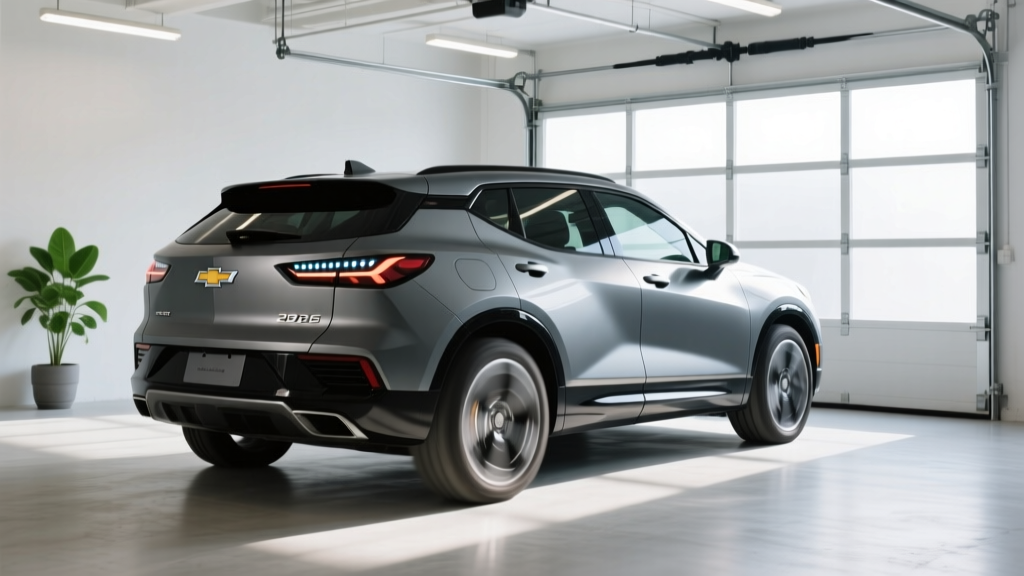
The 2026 Chevrolet Blazer EV is a midsize electric crossover built on GM's Ultium platform, and like most battery-electric vehicles, its maintenance schedule is remarkably lean compared to a gas-powered equivalent. There are no oil changes, no spark plugs, no transmission fluid swaps, and no exhaust system to worry about. But "low maintenance" doesn't mean "no maintenance." Understanding exactly what the 2026 Blazer EV requires — and what it doesn't — is essential for budgeting your long-term ownership and avoiding surprises.
This guide covers the factory-recommended maintenance intervals, pairs them with the Blazer EV's full spec profile (range, charging, pricing, tax credit eligibility), and explains where real-world ownership diverges from the sticker. If you're shopping the Blazer EV or already own one, this is your reference.
2026 Chevrolet Blazer EV: Core Specifications
| Spec | 2LT (RWD) | RS (AWD) | SS (AWD) |
|---|---|---|---|
| EPA Range | 324 mi | 283 mi | 290 mi |
| Battery (usable) | 102 kWh (NMC) | 102 kWh (NMC) | 102 kWh (NMC) |
| Drivetrain | Rear-Wheel Drive | Dual-Motor AWD | Dual-Motor AWD |
| Horsepower | 340 hp | 557 hp | 557 hp |
| 0-60 mph | ~6.2 sec | ~4.0 sec | ~3.4 sec |
| Max DC Fast Charge | 190 kW | 190 kW | 190 kW |
| 10-80% DCFC Time | ~30 min | ~30 min | ~30 min |
| Level 2 Home Charge Rate | 11.5 kW (48A) | 11.5 kW (48A) | 11.5 kW (48A) |
| EPA Efficiency | 89 MPGe | 84 MPGe | 82 MPGe |
| Base MSRP | $44,600 | $50,200 | $60,600 |
The Blazer EV uses Ultium-format NMC (nickel manganese cobalt) lithium-ion pouch cells, which offer higher energy density than LFP alternatives but require more careful thermal management. The 102 kWh usable capacity is among the largest in the midsize EV crossover segment, giving the RWD 2LT a legitimate 300+ mile EPA rating.
Factory Maintenance Schedule: Intervals and Costs
Chevrolet's recommended maintenance for the 2026 Blazer EV follows GM's standard EV service protocol. Here's what the factory specifies:
Every 7,500 Miles or 12 Months (Whichever Comes First)
- Tire rotation and inspection — EVs are heavier and produce instant torque, accelerating tire wear. Rotation is critical. Expect $25-$50 at a dealer or tire shop.
- Multi-point inspection — Brake pads, rotors, suspension components, 12V battery health, coolant levels, charging port and cable condition.
- Wiper blade check/replacement — As needed, ~$30-$50 for a set.
Every 22,500 Miles or 3 Years
- Cabin air filter replacement — The Blazer EV's HVAC system uses a standard particulate filter. Replacement runs $40-$70 including labor.
- Brake fluid inspection — EVs use regenerative braking heavily, so friction brakes see minimal use. However, brake fluid absorbs moisture over time and should be checked.
Every 45,000 Miles or 5 Years
- Brake fluid replacement — Typically $80-$120. Because regen handles most deceleration, brake pads on the Blazer EV can easily last 80,000-100,000+ miles.
- Coolant system inspection — The Ultium battery and power electronics use a liquid thermal management system. Coolant doesn't require scheduled replacement under normal conditions but should be inspected for level and condition.
Every 75,000 Miles or 5 Years
- Drive unit (reduction gear) fluid check — GM's Ultium drive units use a sealed reduction gear. Fluid is generally considered "lifetime" but may be inspected at high-mileage service intervals.
No Scheduled Maintenance Required
- No engine oil or filter changes
- No spark plugs or ignition components
- No timing belt or chain service
- No fuel filter or fuel system service
- No emissions testing
- No transmission fluid changes (single-speed reduction gear)
Real-World Range: What the EPA Number Doesn't Tell You
2LT RWD: EPA 324 mi → Expect ~260-280 mi on sustained highway driving at 70+ mph; ~240-260 mi in cold weather (below 30°F).
RS AWD: EPA 283 mi → Expect ~230-250 mi highway; ~210-230 mi in cold weather.
SS AWD: EPA 290 mi → Expect ~235-255 mi highway; ~215-235 mi in cold weather.
Cold-weather range loss of 15-25% is typical for NMC batteries without preconditioning. The Blazer EV's heat pump (standard on 2026 models) mitigates cabin-heating energy draw but cannot fully eliminate cold-induced battery chemistry slowdown.
The Blazer EV's 102 kWh battery is large, which helps absorb real-world inefficiencies. In mixed city/highway driving during mild weather, the RWD 2LT can actually meet or slightly exceed its EPA estimate thanks to generous regenerative braking in stop-and-go traffic. But sustained 75 mph highway cruising, roof-rack cargo, and sub-freezing temperatures all pull range down meaningfully. Plan your road-trip charging stops using ~80% of the EPA figure as a safe baseline.
Charging Speed and Infrastructure
The Blazer EV uses a NACS (North American Charging Standard) connector natively on 2026 models, giving it direct access to Tesla Supercharger stations — the most reliable DC fast-charging network in the U.S. This is a significant advantage over CCS-equipped competitors that require adapters.
| Charging Level | Power (kW) | Speed | Notes |
|---|---|---|---|
| Level 1 (120V household) | ~1.4 kW | ~4 mi/hr | Emergency/trickle only |
| Level 2 (240V home, 48A) | 11.5 kW | ~34 mi/hr | Full charge overnight (~10 hrs from 0%) |
| DC Fast Charge (peak) | 190 kW | ~190 mi in 30 min (10-80%) | Charge curve tapers above 80% SoC |
At a 190 kW peak, the Blazer EV's DC fast-charging speed is competitive but not class-leading — the Hyundai Ioniq 5 peaks at 240 kW, for instance. The Blazer's charge curve holds near peak rate from roughly 10% to 50% SoC, then gradually tapers. A 10-80% session takes approximately 30 minutes at a capable charger. Above 80%, charging slows considerably to protect battery health — expect an additional 20-25 minutes to reach 100% if needed.
For home charging, the 11.5 kW onboard charger means a properly installed 240V/60A circuit (Level 2) will replenish the Blazer's large battery in roughly 10 hours from empty. Most owners charging overnight from 20-30% remaining will wake to a full battery every morning. Budget $800-$2,000 for a professional Level 2 home charger installation, depending on your electrical panel's capacity and distance from the panel to your parking spot. A 200A panel upgrade, if needed, adds $1,500-$3,000.
Pricing, Trims, and Federal Tax Credit Eligibility
| Trim | Base MSRP | As-Tested (Typical) | §30D Credit Eligible? |
|---|---|---|---|
| 2LT RWD | $44,600 | $47,000-$50,000 | Yes (under $80,000 SUV cap) |
| RS AWD | $50,200 | $53,000-$57,000 | Yes (under $80,000 SUV cap) |
| SS AWD | $60,600 | $63,000-$67,000 | Yes (under $80,000 SUV cap) |
All 2026 Blazer EV trims fall under the IRS §30D MSRP cap of $80,000 for SUVs, making them potentially eligible for the full $7,500 federal tax credit — but eligibility is not automatic. Current IRS rules require:
- Buyer income caps: Modified AGI ≤ $150,000 (single), $225,000 (head of household), $300,000 (joint).
- Battery sourcing requirements: A percentage of critical minerals and battery components must be sourced from the U.S. or free-trade-agreement countries. These thresholds tighten annually. Verify current-year compliance on fueleconomy.gov.
- Point-of-sale transfer: As of 2024, buyers can transfer the credit to the dealer at purchase, reducing the out-of-pocket price by up to $7,500 at the time of sale rather than waiting for a tax refund.
- Assembly: The Blazer EV is assembled at GM's Ramos Arizpe plant in Mexico, which currently meets North American final-assembly requirements.
If you qualify, a 2LT RWD at $44,600 effectively drops to roughly $37,100 after the credit — a compelling value for a 324-mile electric crossover. Always confirm eligibility with your tax professional before relying on the credit in your budget, as sourcing rules and model eligibility lists update periodically.
Cargo, Passenger Space, and Daily Practicality
The Blazer EV is sized as a midsize two-row crossover, competing directly with the Tesla Model Y, Hyundai Ioniq 5, and Ford Mustang Mach-E in exterior footprint but offering a more traditional SUV seating position.
- Cargo volume (behind rear seats): 25.5 cu ft
- Cargo volume (rear seats folded): 59.4 cu ft
- Front trunk (frunk): Not available — the Ultium platform in this configuration does not include a front storage compartment
- Front legroom: 43.1 in
- Rear legroom: 38.9 in
- Towing capacity: 1,500 lbs (not rated for heavy towing)
The lack of a frunk is a notable omission at this price point — the Model Y and Ioniq 5 both offer front trunk storage. Cargo space behind the second row is adequate for groceries, luggage for a family road trip, or a couple of mountain bikes with wheels removed, but the 59.4 cu ft maximum falls short of the Model Y's ~76 cu ft. If maximum cargo volume is a priority, the Blazer EV isn't the segment leader.
Technology, Driver Assists, and Standout Features
The 2026 Blazer EV features a 17.7-inch diagonal infotainment touchscreen running GM's latest Ultifi-based software, paired with an 11.0-inch digital instrument cluster. Wireless Apple CarPlay and Android Auto are standard across all trims. The system supports over-the-air (OTA) updates for feature additions and performance improvements.
Driver assistance (SAE Level 2): Chevrolet's Super Cruise — GM's hands-free highway driving system — is available on RS and SS trims and standard on the SS. Super Cruise operates on over 750,000 miles of mapped divided highways in the U.S. and Canada, using a combination of GPS, LiDAR-mapped data, cameras, and radar. It is a Level 2 system per NHTSA definitions, meaning the driver must remain attentive and ready to take over at all times, despite the hands-free capability. A driver-monitoring camera ensures eyes-on-road compliance.
Other notable tech includes a digital rear-view camera mirror, a head-up display (SS standard), heated and ventilated front seats (standard on RS, available on 2LT), and GM's Energy Assist app for route planning with integrated charging stops.
Notable drawbacks: The Blazer EV's software had a rocky launch in the 2024 model year with reported infotainment bugs and charging communication issues. GM has addressed many of these through OTA updates, but some owners still report occasional connectivity hiccups with public chargers. The absence of a frunk and a modest 1,500-lb tow rating also limit versatility compared to some competitors.
Warranty Coverage
- Battery: 8 years / 100,000 miles (whichever comes first), covering defects and capacity loss below 70% of original capacity
- Powertrain (drive unit, power electronics): 8 years / 100,000 miles
- Bumper-to-bumper: 3 years / 36,000 miles
- Corrosion: 6 years / 100,000 miles
- Roadside assistance: 5 years / 100,000 miles
The battery warranty's 70% capacity retention threshold is industry-standard but worth noting: if your 102 kWh battery degrades to 71.4 kWh within 8 years/100,000 miles, that's within spec and not covered. Real-world degradation data for Ultium NMC packs is still accumulating, but GM's thermal management system is robust, and most NMC packs from major manufacturers retain 85-92% capacity at the 100,000-mile mark based on data from earlier-generation GM EVs and comparable platforms.
Who the 2026 Blazer EV Suits Best
- Daily commuters with home Level 2 charging who want a 300+ mile buffer and a commanding driving position
- Families needing a comfortable two-row SUV with strong safety tech and Super Cruise for highway road trips
- GM loyalists who want to stay within the Chevrolet ecosystem and benefit from native NACS/Supercharger access
- Heavy towing needs (1,500 lb max — look at the Rivian R1S or F-150 Lightning instead)
- Maximum cargo haulers (Model Y offers significantly more cargo volume)
- Buyers in areas without reliable DC fast-charging infrastructure and no home charging option
Blazer EV vs. Key Competitors: Is It Worth Buying?
The Blazer EV competes in a crowded midsize EV crossover segment. Here's how it stacks up against the three most common cross-shops:
- vs. Tesla Model Y Long Range: The Model Y offers more cargo space (~76 cu ft), faster DC charging (250 kW peak), and access to the same Supercharger network. But the Blazer EV has a more conventional SUV interior, a smoother ride, and available Super Cruise. Pricing is similar after tax credits.
- vs. Hyundai Ioniq 5: The Ioniq 5 charges faster (240 kW peak, ~18 min 10-80%), has a frunk, and offers a more distinctive design. The Blazer EV counters with more EPA range in RWD trim (324 vs. 303 mi) and a larger battery.
- vs. Ford Mustang Mach-E: The Mach-E is sportier to drive and offers BlueCruise hands-free driving. The Blazer EV has a larger battery, more range, and a more upright SUV seating position that many buyers prefer.
- 324 mi EPA range (RWD) — among the best in class
- Native NACS connector for direct Supercharger access
- Super Cruise hands-free highway driving available
- Minimal maintenance schedule, low running costs
- All trims under $80K SUV MSRP cap for §30D credit
- Large 102 kWh battery with robust thermal management
- No frunk (front trunk)
- 190 kW DC peak — slower than Ioniq 5 and Model Y
- Cargo space trails Model Y significantly
- 1,500-lb tow rating limits utility
- Early-model-year software issues (improving via OTA)
- SS trim pushes $60K+ before options
Frequently Asked Questions
What is the real-world range of the 2026 Blazer EV?
The EPA rates the RWD 2LT at 324 miles, but expect roughly 260-280 miles on sustained highway trips and 240-260 miles in cold weather below 30°F. The AWD RS delivers about 230-250 real-world highway miles from its EPA-rated 283.
How fast does the Blazer EV charge at home and on the road?
At home on a 240V Level 2 charger, the Blazer EV accepts up to 11.5 kW, adding about 34 miles of range per hour. On a DC fast charger, it peaks at 190 kW and charges from 10-80% in approximately 30 minutes, though the charge curve tapers noticeably above 80% SoC.
How much does the 2026 Blazer EV cost after the federal tax credit?
If you qualify for the full $7,500 §30D credit, the 2LT RWD drops from $44,600 to roughly $37,100. The RS AWD falls from $50,200 to ~$42,700. Eligibility depends on your income, the vehicle's battery sourcing compliance, and MSRP caps — confirm with your tax professional and check fueleconomy.gov for current model eligibility.
Does the Blazer EV qualify for the $7,500 federal EV tax credit?
All trims fall under the $80,000 SUV MSRP cap, and the Blazer EV meets North American final-assembly requirements. However, the credit also depends on buyer income limits, critical-mineral sourcing thresholds, and battery component rules that update annually. Check the IRS's official list before purchasing.
What does the 2026 Blazer EV maintenance schedule actually cost per year?
Budget roughly $120-$180 per year for routine maintenance — primarily tire rotations every 7,500 miles and periodic cabin filter and brake fluid service. This is roughly one-quarter to one-third of what a comparable gas SUV costs to maintain annually.
Is the Blazer EV worth buying over a Tesla Model Y or Hyundai Ioniq 5?
If you value a traditional SUV driving position, GM's Super Cruise system, and native NACS Supercharger access, the Blazer EV is a strong choice. If maximum cargo space or fastest DC charging is your priority, the Model Y or Ioniq 5 respectively have an edge. Test-drive all three — the Blazer's ride quality and interior comfort often win in person even if competitors lead on paper specs.