The Short Answer on the GM Electric Bolt
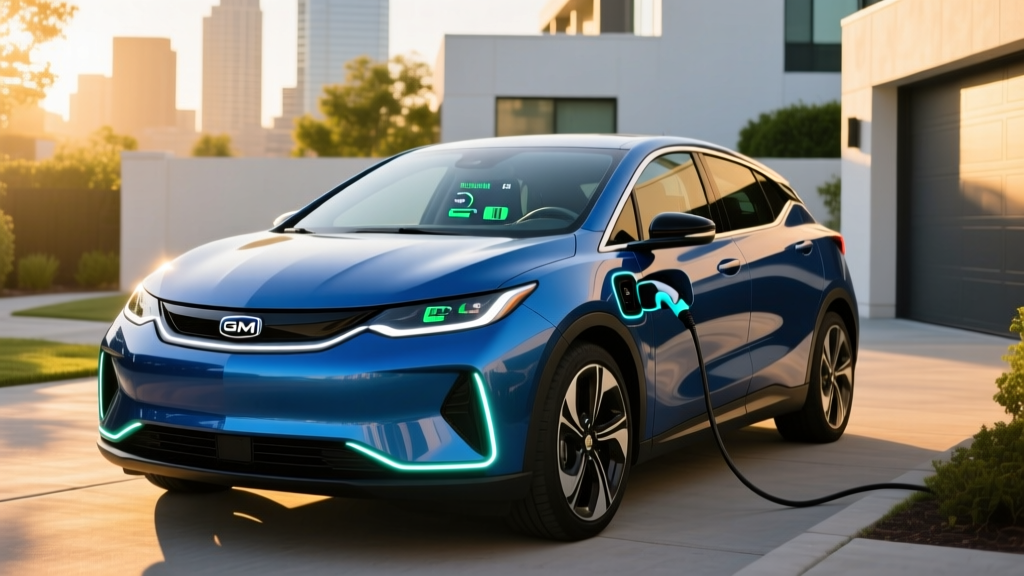
The 2026 Chevrolet Bolt EV (the latest iteration of GM's electric Bolt lineup) starts at approximately $26,500 MSRP and delivers an EPA-estimated 259 miles of range from its 65 kWh (usable) LFP battery. It's one of the least expensive new EVs on the US market. However, its DC fast-charging speed peaks at roughly 55 kW, meaning a 10–80% charge takes around 45–50 minutes — far slower than rivals like the Hyundai Kona Electric or Tesla Model 3. If you mostly charge at home overnight and commute under 100 miles round-trip, the Bolt is a bargain. If you rely on public fast-charging road trips, its sluggish charge curve will frustrate you.
2026 Bolt EV vs Bolt EUV: Which GM Electric Bolt Fits You?
GM currently sells two body styles under the Bolt nameplate. Both share the same Ultium-adapted platform and LFP battery chemistry for 2026, but they differ in wheelbase, cargo room, and price.
| Spec | 2026 Bolt EV (2LT) | 2026 Bolt EUV (Premier) |
|---|---|---|
| Base MSRP | $26,500 | $29,900 |
| EPA Range | 259 mi | 247 mi |
| Battery (usable) | 65 kWh, LFP | 65 kWh, LFP |
| Motor Output | 200 hp / 266 lb-ft | 200 hp / 266 lb-ft |
| 0–60 mph | ~6.5 sec | ~6.8 sec |
| DC Fast Charge (peak) | 55 kW | 55 kW |
| 10–80% DC Time | ~47 min | ~47 min |
| Level 2 Charge Rate | 11.5 kW (AC) | 11.5 kW (AC) |
| Cargo Volume | 57.0 cu ft (seats down) | 63.6 cu ft (seats down) |
| MPGe (combined) | 120 MPGe | 115 MPGe |
| Battery Warranty | 8 yr / 100,000 mi | 8 yr / 100,000 mi |
The EUV's extra rear legroom (3.2 inches more) and slightly larger cargo area make it the better pick for families. But the EV's lighter curb weight nets it 12 more miles of EPA range and a lower entry price. Per fueleconomy.gov, the Bolt EV achieves 120 MPGe combined — excellent for the segment.
Real-World Range: What the EPA Sticker Doesn't Tell You
EPA estimate: 259 miles (Bolt EV)
Real-world expectation:
- City / mild weather (65°F): 250–270 miles — LFP chemistry and strong regen can actually exceed the sticker in stop-and-go driving.
- Highway (70 mph, 75°F): 220–235 miles — the Bolt's boxy shape and lack of a heat pump hurt efficiency at sustained speed.
- Cold weather (20°F, highway): 170–195 miles — expect 25–35% range loss in freezing temps, especially without preconditioning to a DC charger.
The Bolt uses LFP (lithium iron phosphate) cells for 2026, which trade some energy density for longer cycle life and thermal stability. GM recommends you can charge LFP to 100% daily without accelerated degradation — a significant advantage over NMC batteries that prefer an 80% daily ceiling. That means your usable daily range is effectively closer to the full 259 miles, not the ~207 miles you'd get from an NMC pack limited to 80% SoC.
Charging Reality: The Bolt's Biggest Weakness
Here's where the GM electric Bolt falls behind the 2026 competition. Its peak DC fast-charge rate of 55 kW is a fraction of what rivals deliver:
| Charging Method | Power (kW) | Miles Added per Hour | Bolt-Specific Notes |
|---|---|---|---|
| Level 1 (120V household) | ~1.4 kW | ~4 mi/hr | A full 0–100% takes ~46 hours |
| Level 2 (240V, 48A home) | 11.5 kW | ~37 mi/hr | 0–100% in ~6 hours — ideal overnight |
| DC Fast Charge (CCS/NACS*) | 55 kW peak | ~150 mi/hr (peak) | 10–80% in ~47 min; tapers hard above 80% |
*GM has adopted the NACS (Tesla-style) connector for new models, but the 2026 Bolt retains the CCS1 port with a NACS adapter available. Tesla Supercharger access requires the adapter and the MyChevrolet app.
The 55 kW peak means the Bolt adds roughly 25 miles of range per 10 minutes at a DC fast charger — adequate for a lunch stop but painful on a 400-mile road trip where you'll need two 45-minute stops. Compare that to the Hyundai Kona Electric (100+ kW peak) or the Tesla Model 3 (170 kW), which hit 10–80% in under 25 minutes.
Bottom line: The Bolt is a home-charging car. If you have a garage or driveway where you can install a Level 2 charger, the slow DC speed barely matters day-to-day. If you live in an apartment without charging access and depend on public DC fast chargers, the Bolt's charge curve will add 20+ minutes to every road-trip stop versus competitors.
Cost Breakdown: Bolt EV vs Gas Subcompact vs Hybrid
Let's compare the 2026 Bolt EV against two benchmarks: the Honda Civic (gas, ~$24,500 MSRP, 33 MPG combined) and the Toyota Prius (hybrid, ~$28,500 MSRP, 57 MPG combined) over 5 years and 75,000 miles.
| Cost Category | 2026 Bolt EV | Honda Civic (Gas) | Toyota Prius (HEV) |
|---|---|---|---|
| Base MSRP | $26,500 | $24,500 | $28,500 |
| Fed. Tax Credit (§30D)* | Up to $7,500 | $0 | $0 |
| Effective Purchase Price | ~$19,000 | $24,500 | $28,500 |
| Fuel/Energy (5 yr, 75k mi) | $3,100** | $7,950*** | $4,600*** |
| Maintenance (5 yr) | $1,200 | $3,500 | $3,200 |
| Insurance (5 yr avg) | $9,500 | $7,800 | $8,100 |
| 5-Year Total Cost | $32,800 | $43,750 | $44,400 |
* §30D credit eligibility depends on MSRP caps (under $55,000 for sedans/hatchbacks), buyer income limits ($150K single / $300K joint), and battery critical-mineral sourcing. The Bolt has historically qualified for the full $7,500, but verify current-year rules at irs.gov and consider point-of-sale transfer at the dealer.
** Based on $0.14/kWh national avg home electricity and 3.5 mi/kWh efficiency. Public DC charging at $0.35–0.50/kWh would raise this to ~$5,500.
*** Based on $3.50/gal gasoline.
The Bolt's effective price after the federal credit undercuts both the Civic and Prius dramatically. The savings compound over 5 years: roughly $11,000 less than the Civic and $11,600 less than the Prius in total cost. The Bolt's higher insurance premiums (typically 15–25% above gas equivalents) eat into savings but don't erase them.
Federal Tax Credit: Does the Bolt Qualify in 2026?
To claim the full $7,500 §30D clean vehicle credit on a 2026 Bolt EV/EUV, you must meet ALL of the following:
- MSRP cap: Vehicle must be under $55,000 (Bolt qualifies — all trims under $35K)
- Buyer income cap: AGI ≤ $150,000 (single) / $225,000 (HOH) / $300,000 (joint)
- Battery sourcing: Critical minerals and battery components must meet phased-in domestic/free-trade-agreement thresholds that tighten each year through 2030
- Final assembly: Must occur in North America (the Bolt is built in Orion Township, MI — qualifies)
- Point-of-sale transfer: You can elect to transfer the credit to the dealer for an upfront price reduction at purchase
The battery-sourcing requirements have tightened significantly since 2023. GM has worked to reshore LFP cell supply, and the Bolt has maintained eligibility through recent rule updates. However, sourcing thresholds change annually — always verify your specific purchase date against the latest IRS guidance before signing.
Common Misconceptions About the GM Electric Bolt
| Myth | Fact |
|---|---|
| "The Bolt's battery will need expensive replacement in a few years." | LFP chemistry has demonstrated 3,000+ charge cycles with minimal degradation. GM warranties the battery at 8 years / 100,000 miles for 60%+ capacity retention. Real-world data from earlier Bolt generations shows ~8–12% degradation over 100K miles. |
| "You can't road-trip in a Bolt." | You can, but you'll plan longer stops. A 500-mile trip requires roughly two 45-minute DC fast-charge sessions (vs. ~25 min in a 150 kW-capable EV). Apps like PlugShare and A Better Routeplanner make this manageable. |
| "EVs are worse in cold weather." | The Bolt loses 25–35% range below freezing — real and significant. But preconditioning (warming the battery while plugged in) recovers some of that loss, and the instant cabin heat from the electric heater is faster than waiting for a gas engine to warm up. |
| "Charging an EV is more expensive than gas." | At the $0.14/kWh national average, the Bolt costs roughly $0.04 per mile on home electricity vs. $0.11 per mile for a 33 MPG gas car at $3.50/gal. Public DC charging at $0.45/kWh narrows the gap to ~$0.13/mile — roughly equivalent to gas. |
| "The Bolt is too slow for highway merging." | 200 hp and 266 lb-ft of instant torque delivers a 6.5-second 0–60. That's quicker than most gas-powered subcompacts and provides confident highway on-ramp acceleration. |
Decision Framework: Should You Buy the 2026 GM Electric Bolt?
Buy the Bolt EV if:
- You have reliable home Level 2 charging (garage, driveway, or workplace)
- Your daily commute is under 100 miles round-trip
- You want the lowest-cost new EV on the market after tax credits
- You rarely take road trips over 300 miles, or you don't mind planning longer charge stops
- You want LFP battery longevity and the ability to charge to 100% daily
Skip the Bolt and look at alternatives if:
- You live in an apartment without charging access and depend entirely on public DC fast chargers
- You regularly drive 300+ miles in a day and need 20-minute charge stops
- You live in extreme cold (regularly below 10°F) where range loss compounds with slow charging
- You need all-wheel drive — the Bolt is front-wheel drive only
- You want the latest ADAS features — the Bolt's Super Cruise availability is limited compared to GM's newer Ultium-platform vehicles
Consider the Bolt EUV instead of the EV if:
- You regularly carry rear-seat passengers and need the extra 3.2 inches of legroom
- You want the available Super Cruise hands-free driving assist (Level 2 — driver must remain attentive) on compatible highways
- The $3,400 price premium and 12-mile range sacrifice are acceptable tradeoffs
What First-Time EV Buyers Should Know About the Bolt
If the GM electric Bolt is your first EV, here's what ownership actually looks like:
Home charging is non-negotiable for this car. Given the 55 kW DC charge speed, relying solely on public infrastructure turns every errand into a patience test. Budget $500–$1,500 for a Level 2 home charger installation (240V, 48A circuit). If your electrical panel is at capacity, a panel upgrade can add $1,500–$3,000. Get a quote from a licensed electrician before purchasing.
Maintenance is genuinely minimal. No oil changes, no spark plugs, no transmission fluid. You'll rotate tires every 7,500 miles, replace cabin air filters annually, and top off washer fluid. Brake pads last 100,000+ miles thanks to regenerative braking doing most of the deceleration work.
The MyChevrolet app handles charge scheduling, preconditioning, and remote climate control. Set your departure time while plugged in, and the Bolt will warm or cool the cabin using grid power — preserving battery range for driving. This is especially valuable in cold climates.
Tires wear faster on EVs. The Bolt's instant torque and heavier curb weight (~3,500 lbs) accelerate tire wear by roughly 20–30% compared to a gas equivalent. Budget for a tire replacement at 35,000–45,000 miles. Choose low-rolling-resistance EV-rated tires to preserve range.
Frequently Asked Questions
Does the 2026 Chevrolet Bolt qualify for the $7,500 federal tax credit?
The Bolt EV and EUV have historically qualified for the full §30D credit, given their sub-$55,000 MSRP, North American assembly, and GM's battery sourcing compliance. However, critical-mineral and component thresholds tighten yearly. Verify eligibility for your exact purchase date at irs.gov, and ask the dealer about point-of-sale credit transfer to reduce your upfront cost.
How long does it take to charge a Bolt EV at home?
On a Level 2 home charger (240V, 11.5 kW), a full 0–100% charge takes approximately 6 hours. On a standard 120V household outlet (Level 1), it takes roughly 46 hours — which is why Level 2 installation is strongly recommended. Most owners plug in nightly and wake up with a full battery, adding roughly 37 miles of range per hour of Level 2 charging.
Is the Bolt EV good in snow and cold weather?
The Bolt is front-wheel drive with no AWD option, which limits traction in deep snow. In cold temperatures (below 30°F), expect 25–35% range reduction due to battery chemistry and cabin heating demands. Preconditioning while plugged in mitigates some loss. For heavy-snow regions, winter tires are strongly recommended, and you may want to consider an AWD EV alternative like the Subaru Solterra or Hyundai Ioniq 5 AWD.
What's the difference between LFP and NMC batteries, and why does it matter?
The 2026 Bolt uses LFP (lithium iron phosphate) cells, which offer longer cycle life (3,000+ cycles), better thermal stability, and the ability to charge to 100% regularly without accelerated degradation. The tradeoff is lower energy density (more weight for the same range) and reduced cold-weather performance compared to NMC (nickel manganese cobalt). For a daily commuter that charges at home, LFP's longevity advantage far outweighs its density disadvantage.
Can I use Tesla Superchargers with the Bolt?
Yes, but with caveats. The 2026 Bolt uses a CCS1 charge port. GM provides a NACS adapter that enables access to Tesla's Supercharger network via the MyChevrolet app. However, the Bolt's 55 kW peak charge rate means you'll still charge slowly even at a 250 kW Supercharger stall — the bottleneck is the car, not the station.
How does the Bolt compare to the Chevy Equinox EV?
The Equinox EV rides on GM's newer Ultium platform with faster DC charging (~150 kW peak), available AWD, and more interior space — but starts around $33,000 (before credits). If budget is paramount, the Bolt wins. If you need faster road-trip charging, more cargo room, or AWD, the Equinox EV is worth the premium. Per chevrolet.com, the Equinox EV 3RS starts at $36,000 with an EPA range of up to 319 miles.