The Short Answer on a $20,000 Electric Truck
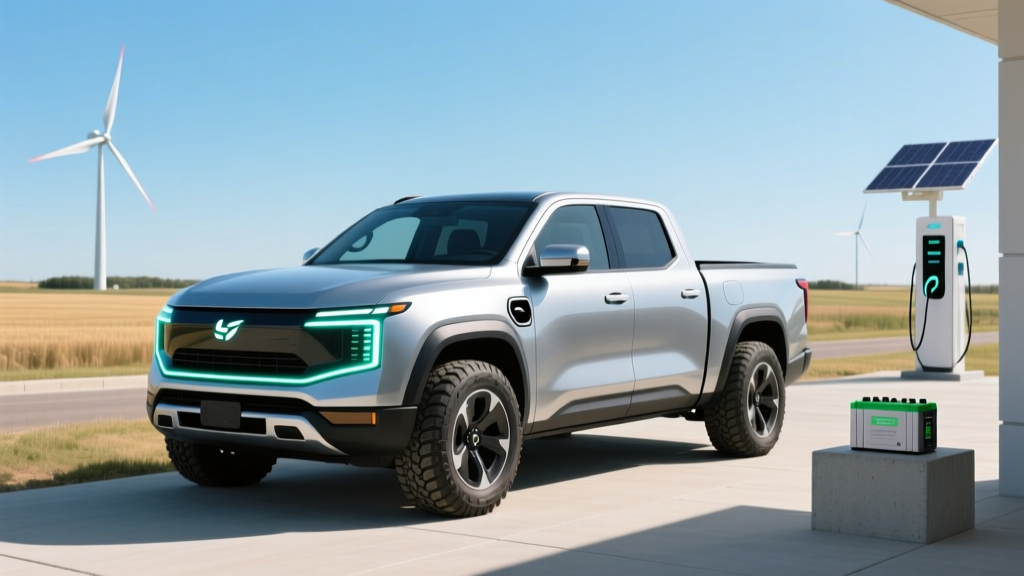
No new electric truck sells for $20,000 in 2026. The least expensive new electric pickups — the Ford Maverick EV and Chevrolet Silverado EV base trims — start between $40,000 and $50,000 before incentives. However, a used electric truck near $20,000 is increasingly achievable through the §25E used clean vehicle credit (up to $4,000 or 30% of the sale price, whichever is lower) applied to models like early Rivian R1Ts or the GMC Hummer EV at high mileage. For buyers willing to consider adjacent body styles, the Ford E-Transit cargo van starts around $45,000 new and drops into the low $20,000s on the used market. Your path to a $20,000 electric truck depends entirely on whether you mean new vs. used, and whether a pickup bed is non-negotiable.
The Current Electric Truck Market: Where Prices Actually Sit
The electric pickup segment has matured since 2022, but "affordable" remains relative. Here is where the major players land for the 2026 model year:
| Model | Base MSRP | EPA Range | Battery (kWh) | Max DC Charge (kW) | 10-80% Time |
|---|---|---|---|---|---|
| Ford F-150 Lightning (Pro) | ~$55,000 | 240 mi (Std Range) | 98 usable (NMC) | 150 kW | ~41 min |
| Chevrolet Silverado EV (4WT) | ~$50,000 | 240 mi | 100 usable (NMC) | 200 kW | ~35 min |
| Rivian R1T (Dual Standard) | ~$70,000 | 270 mi | 95 usable (NMC) | 200 kW | ~30 min |
| Tesla Cybertruck (RWD) | ~$61,000 | 250 mi | ~100 usable (NMC) | 250 kW | ~25 min |
| Ford Maverick EV (announced) | ~$40,000 (est.) | ~250 mi (est.) | ~75 (est.) | ~150 kW (est.) | TBD |
None of these hit $20,000 new. The anticipated Ford Maverick EV — the closest the market has come to a budget electric truck — is expected to start near $40,000 when it reaches dealers, though Ford's official pages have yet to confirm final specs. Even applying the full $7,500 federal §30D credit (which requires meeting battery sourcing, MSRP caps, and buyer income limits per IRS guidelines) brings a $40,000 truck to $32,500 — still far from $20,000.
The Used-EV Path: How $20,000 Becomes Possible
The realistic route to a $20,000 electric truck is the used market, specifically leveraging the §25E Previously-Owned Clean Vehicle Credit. This credit provides up to $4,000 (or 30% of the sale price, whichever is less) for qualifying used EVs purchased from a dealer, subject to these requirements:
- Sale price must be $25,000 or less
- Buyer income caps: $75,000 single / $112,500 head of household / $150,000 joint
- Vehicle must be at least two model years old
- Must be purchased from a licensed dealer (private-party sales excluded)
- Credit is non-refundable unless transferred at point of sale
At a $24,000 sale price, the 30% calculation yields $7,200 but the $4,000 cap applies — so the effective discount is $4,000, bringing your net cost to $20,000. Early 2022-2023 Rivian R1Ts with higher mileage (80,000+ miles) and the discontinued Lordstown Endurance (extremely limited availability) are the primary candidates. The Rivian's 135 kWh NMC battery pack was one of the largest ever put in a production pickup, and its degradation curve has been favorable so far — most high-mileage examples retain 88-92% State of Health (SoH) based on owner reports.
Real-world caveat: A used R1T at $24,000 likely has significant mileage and may be outside its 8-year/175,000-mile battery warranty window. Budget $2,000-$5,000 for potential out-of-warranty suspension or electronics work.
Cost Comparison: Electric Truck vs. Gas Truck Ownership
Even if you can't hit $20,000 on purchase price, the total cost of ownership (TCO) can favor electric over five years. Here's a data-driven comparison using a Ford F-150 Lightning Pro ($55,000) versus a Ford F-150 XL gas (2.7L EcoBoost, ~$40,000) over 5 years and 75,000 miles:
| Cost Category | F-150 Lightning (EV) | F-150 XL (Gas) |
|---|---|---|
| Purchase Price (after credits) | $47,500 (with $7,500 §30D) | $40,000 |
| Fuel/Energy (75k mi) | $3,750 (home L2, $0.15/kWh) | $10,700 ($3.50/gal, 20 MPG) |
| Maintenance (5 yr) | $1,800 | $4,500 |
| Insurance (5 yr avg) | $12,500 | $9,000 |
| Depreciation (est.) | $22,000 | $16,000 |
| 5-Year Total | $87,550 | $80,200 |
The EV saves roughly $11,000 on fuel and maintenance but gives back $7,500 on purchase premium, $3,500 on insurance, and $6,000 on steeper depreciation. Net result: the gas truck still wins by ~$7,350 over five years in this scenario. However, if you qualify for the full §30D credit, charge primarily at home with cheap electricity, and live in a state with additional rebates, the gap narrows significantly — potentially flipping in the EV's favor by year six or seven.
Per fueleconomy.gov, the F-150 Lightning achieves approximately 70 MPGe combined (2.0 kWh/mile equivalent). A gas F-150 4WD averages 20-22 MPG combined. At national average electricity and gas prices, the per-mile energy cost is roughly $0.05 for the EV versus $0.14 for gas.
Real-World Ownership: What First-Time EV Truck Buyers Must Know
If you're seriously considering an electric truck — at any price point — these factors will determine whether it works for your life:
Home Charging Is Nearly Mandatory for Truck Owners
Electric trucks have large batteries (98-135 kWh usable). On a standard 120V Level 1 outlet delivering ~1.4 kW, recharging an F-150 Lightning from 20% to 80% takes roughly 55+ hours. You need a Level 2 home charger (240V, 40-80 amp circuit) delivering 9.6-19.2 kW to make daily use practical. Expect $800-$2,500 for a quality Level 2 unit plus $1,000-$3,000 for electrician installation, depending on panel capacity and run length. A 200-amp panel upgrade (if needed) adds $1,500-$4,000.
Range Reality: EPA vs. Highway vs. Cold Weather
The EPA range sticker on electric trucks is optimistic for real-world truck use. Towing or hauling reduces range by 30-50%. Highway driving at 75+ mph cuts range by 15-25%. Cold weather (below 30°F) reduces range by 20-35% depending on whether the truck has a heat pump. An F-150 Lightning with a 240-mile EPA rating will deliver roughly:
- Normal city/suburban driving: 210-230 miles
- 70-mph highway: 180-200 miles
- Highway in 20°F weather: 140-170 miles
- Towing a 5,000-lb trailer: 120-150 miles
Charging Deserts and Road Trips
While the Tesla Supercharger network (now open to NACS-equipped and CCS trucks via adapters) and Electrify America have expanded significantly, rural charging gaps persist in the Mountain West, Great Plains, and parts of the Southeast. If your truck use involves remote job sites, ranching, or cross-country towing, map your routes against charging station databases before buying. DC fast charging a large truck battery from 10-80% still takes 25-45 minutes — and the charge curve tapers sharply above 80%, making 80-100% top-ups painfully slow.
Common Misconceptions About Budget Electric Trucks
| Myth | Fact |
|---|---|
| "There's a $20,000 new electric truck I can buy today." | No new electric pickup starts below ~$40,000 in 2026. The used market with §25E credit is the only path near $20K. |
| "Electric trucks can't tow." | The F-150 Lightning tows up to 10,000 lbs; the Silverado EV up to 12,500 lbs. The issue is range reduction while towing, not capability. |
| "The battery will need replacing in 5 years." | NMC batteries in current trucks show 10-15% degradation over 100,000-150,000 miles. Federal warranty mandates 8 years/100,000 miles minimum coverage for battery capacity (≥70% retention). |
| "Charging an electric truck costs more than gas." | At $0.15/kWh home rate, charging a 100 kWh battery costs ~$15 for 200+ miles. The same distance in a 20 MPG truck at $3.50/gal costs ~$35. |
| "I'll get the full $7,500 tax credit." | §30D eligibility depends on MSRP caps ($80K for trucks), buyer income limits, and battery critical-mineral/component sourcing rules that change annually. Check current IRS requirements. |
Decision Framework: Is an Electric Truck Right for You?
Choose an Electric Truck If:
- You have reliable home Level 2 charging access (garage or driveway with 240V circuit)
- Your daily driving is under 150 miles round-trip with predictable routes
- You use the truck primarily for commuting, job-site travel (no towing), or suburban errands
- You qualify for the §30D or §25E tax credit and can absorb a higher upfront cost for long-term fuel savings
- You value instant torque, quiet operation, and V2L (vehicle-to-load) capability for powering tools or home backup
- You live in a region with moderate winters or have garage parking to mitigate cold-weather range loss
Stick With a Gas or Hybrid Truck If:
- You tow heavy loads (5,000+ lbs) regularly and need 300+ mile range between stops
- You live in an apartment or lack home charging access and can't install a Level 2 charger
- Your work takes you to remote areas with sparse DC fast-charging infrastructure
- Your budget is strictly $20,000-$30,000 for a new vehicle — no current EV truck fits this
- You drive 30,000+ miles annually in extreme cold, where range loss compounds daily inconvenience
- You need a truck under $20K today and can't wait for used-market depreciation to bring prices down further
The Bottom Line: What a $20,000 Electric Truck Budget Actually Gets You
A $20,000 electric truck in 2026 means one of three paths: a high-mileage used Rivian R1T with the §25E credit applied, a used Ford E-Transit cargo van (if a bed isn't essential), or waiting 2-3 more years for depreciation and newer budget models to bring prices down. The total-cost-of-ownership math can favor electric if you have home charging, qualify for incentives, and drive moderate daily distances — but the upfront price gap remains real.
For buyers who need a truck today at $20,000 and can't stretch, a conventional gas truck (used F-150, Ranger, or Colorado) or a hybrid option like the Ford Maverick Hybrid (starting ~$28,000 new, achieving 42 MPG city) remain more practical choices. The electric truck market is moving toward affordability, but $20,000 new is likely still 3-5 years away pending battery cost reductions and platform economics.
Frequently Asked Questions
Will there ever be a new $20,000 electric truck?
It's possible but not before 2028-2029 at the earliest. Battery pack costs would need to fall below $70/kWh (from current ~$110-130/kWh for NMC) for a 75+ kWh truck pack to fit a $20,000 vehicle MSRP with manufacturer margin. Compact trucks like the Maverick EV or a potential Hyundai Santa Cruz EV are the most likely candidates to approach this price point first.
How much does it cost to charge an electric truck at home per month?
At the US average of $0.15/kWh and driving 1,000 miles/month (roughly 2.0 kWh/mile for a full-size electric truck), expect $250-$300/month in electricity. This compares to $175-$200/month in gasoline for a 20 MPG gas truck at $3.50/gallon. Wait — that's actually more expensive for the EV? Only if you pay $0.15/kWh. Many EV owners on time-of-use plans charge overnight at $0.08-$0.10/kWh, bringing the cost to $160-$200/month — genuinely cheaper than gas.
Do electric trucks qualify for the $7,500 federal tax credit?
Some do, but eligibility is complex. Under §30D rules, trucks must have an MSRP under $80,000, the buyer must fall under income caps ($150K single / $300K joint), and the battery must meet critical-mineral and component-sourcing thresholds that tighten annually. Check the latest requirements at irs.gov or consult a tax professional. The credit can now be transferred to the dealer at point of sale, effectively reducing your purchase price immediately.
What happens if the battery fails out of warranty?
Full battery pack replacement for an electric truck currently runs $15,000-$25,000 depending on capacity and chemistry. However, complete pack failures are rare — most degradation issues involve individual module replacements at $1,500-$3,000 per module. Federal law mandates that EV batteries carry a warranty of at least 8 years/100,000 miles covering capacity retention above 70%. Many manufacturers exceed this minimum.
Can I use an electric truck for worksite power (V2L)?
Yes. The F-150 Lightning offers Pro Power Onboard with up to 9.6 kW of exportable power through bed and cabin outlets — enough to run power tools, lighting, and even provide limited home backup during outages. The Rivian R1T and Silverado EV also offer V2L capability. This is a genuine functional advantage electric trucks hold over gas equivalents.