Quick Verdict: The Performance Sedan That Doesn't Sacrifice Range
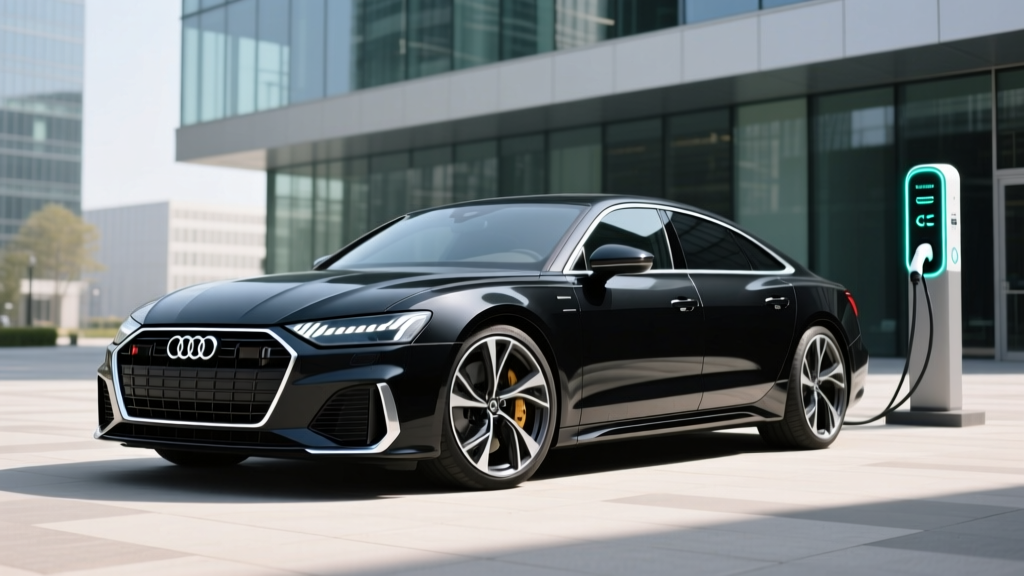
The 2026 Audi S6 e-tron occupies a rare position in the EV market: a sportback sedan with legitimate sports-sedan acceleration, over 300 miles of EPA-rated range, and 800-volt architecture that delivers class-leading DC fast-charging speeds. Built on the Porsche-developed PPE (Premium Platform Electric) architecture shared with the Macan EV and next-gen Q6 e-tron, the S6 e-tron targets buyers who want Tesla Model S performance without the Tesla ownership experience — and who are willing to pay a premium for Audi build quality, ride refinement, and dealer support.
With 543 horsepower in launch-control mode, a 100 kWh battery (94.9 kWh usable), and peak DC charging at 270 kW, the S6 e-tron is engineered for both the Autobahn and the American interstate. But how does it perform once you leave the spec sheet behind? We break down the real-world range, charging behavior, ownership costs, and tax-credit reality for the 2026 model year.
Range & Efficiency: EPA vs. Real-World Numbers
The EPA rates the 2026 Audi S6 e-tron at 321 miles of combined range with its standard 20-inch wheels. Opt for the available 21-inch sport wheels and that figure drops to approximately 298 miles due to increased rolling resistance and aerodynamic drag. Efficiency lands at 87 MPGe combined (approximately 38 kWh/100 mi), which is competitive with the BMW i5 M60 (86 MPGe) but trails the more efficiency-focused Mercedes EQE 350+ (97 MPGe, RWD).
EPA Sticker: 321 miles (20-inch wheels, combined)
Highway (70-80 mph, moderate temps): ~265–285 miles. The S6 e-tron's dual-motor AWD and performance tuning prioritize power delivery over highway efficiency. Expect 2.8–3.0 mi/kWh at sustained interstate speeds.
Cold Weather (below 32°F): ~225–255 miles. The PPE platform's heat pump is standard, which helps cabin efficiency, but battery chemistry still suffers 20–30% range loss in sustained sub-freezing driving. Preconditioning while plugged in mitigates this significantly.
City/Commuting: ~310–330 miles. Regenerative braking (up to 275 kW recovery) recaptures energy effectively in stop-and-go traffic.
The 94.9 kWh usable battery capacity (NMC chemistry — nickel manganese cobalt, optimized for energy density and charge-rate performance) provides a substantial buffer. Audi includes approximately 5.1 kWh of buffer below 0% displayed SoC to protect long-term battery health, meaning the total pack capacity is roughly 100 kWh gross.
Charging: 800-Volt Architecture Delivers Real Speed
This is where the PPE platform's 800-volt architecture separates the S6 e-tron from 400-volt competitors like the BMW i5 and Mercedes EQE. Higher voltage means lower current at equivalent power, reducing heat generation and enabling sustained fast-charging rates without aggressive thermal throttling.
| Charging Level | Power / Rate | Speed | Notes |
|---|---|---|---|
| Level 1 (120V) | 1.3 kW | ~3 mi/hr | Emergency/trickle only |
| Level 2 (240V, 48A) | 11.5 kW | ~28 mi/hr; full charge ~9.5 hr | Onboard charger max |
| DC Fast Charge (peak) | 270 kW | 10–80% in ~21 min | Requires 350 kW station, preconditioning |
| DC Fast (sustained avg) | ~190–210 kW | 10–80% real-world ~24–27 min | Charge curve tapers above 60% SoC |
Charging curve reality: The 270 kW peak is achieved between approximately 10–35% SoC, then the curve steps down progressively — around 220 kW through 50%, 180 kW through 65%, and below 100 kW past 80%. This is normal lithium-ion behavior to protect cell longevity, but it means your 10–80% time will vary based on battery temperature and starting SoC. Always use the Audi MMI navigation preconditioning feature to warm the battery before arriving at a DC fast charger — this alone can shave 5–8 minutes off your session.
The S6 e-tron ships with the NACS (North American Charging Standard) connector for 2026, granting access to Tesla Supercharger V3 and V4 stations via native plug — no adapter required. CCS1 adapter compatibility is retained for Electrify America, EVgo, and other legacy networks.
Performance & Drivetrain: Dual-Motor Precision
| Metric | Value |
|---|---|
| Powertrain | Dual-motor AWD (quattro electric) |
| Horsepower | 496 hp (543 hp w/ launch control) |
| Torque | 605 lb-ft |
| 0–60 mph | 3.4 seconds |
| Top Speed | 155 mph (electronically limited) |
| Towing Capacity | 4,400 lbs (braked) |
The rear motor is a permanently excited synchronous machine (PSM) while the front uses an asynchronous (induction) motor — this allows the front axle to decouple entirely during cruising for efficiency gains, re-engaging in milliseconds when quattro traction is needed. The S6 e-tron defaults to rear-biased power delivery under normal driving, which gives it a more engaging character than typical Audi AWD systems.
Adaptive air suspension is standard, with a 20mm ride-height range. In Dynamic mode, the car drops 10mm for improved aero and handling; in Lift mode, it raises for steep driveways and speed bumps. The S-specific tune firms up damping compared to the standard A6 e-tron, but it never crosses into punishing territory — this is a grand tourer, not a track car.
Interior, Cargo & Technology
The S6 e-tron's cabin is dominated by Audi's new E3 1.2 electronics architecture, featuring an 11.9-inch digital instrument cluster and a 14.5-inch central MMI touchscreen angled toward the driver. A 10.9-inch front passenger display is available as part of the Technology package ($3,200).
Cargo volume: 15.9 cu ft behind the rear seats (sportback liftback design provides a wide opening), expanding to approximately 45.2 cu ft with the 40/20/40 rear seats folded. The front trunk (frunk) adds 2.3 cu ft — enough for charging cables and a small bag. Compared to the BMW i5 (17.4 cu ft sedan trunk), the sportback layout offers superior practicality for bulky items.
Passenger space: Front legroom measures 41.3 inches; rear legroom is 37.2 inches. The flat floor (no transmission tunnel) makes the center rear seat genuinely usable for short trips. Headroom is adequate at 38.8 inches front / 37.1 inches rear, though taller passengers may notice the sloping roofline in the back.
Standout tech: Audi's MMI Navigation Plus with EV route planning automatically factors in charging stops, battery preconditioning, elevation changes, and real-time charger availability. The augmented-reality head-up display projects navigation arrows onto the windshield at apparent distance. The S6 e-tron also features adaptive cruise with lane-centering (SAE Level 2 — driver must remain engaged), intersection assist, and remote parking via smartphone.
Audi's Adaptive Cruise Assist with Lane Guidance is an SAE Level 2 driver-assistance system. It does NOT make the S6 e-tron self-driving. The driver must keep hands on the wheel (or demonstrate attention via the capacitive steering wheel and driver-monitoring camera) and remain prepared to take over at any time. Hands-free driving is not available on the 2026 S6 e-tron in the United States.
Pricing, Trims & Federal Tax Credit Eligibility
| Trim | MSRP | Key Features |
|---|---|---|
| S6 e-tron Premium Plus | $74,995 | Air suspension, 20" wheels, matrix LED, 11.9+14.5" displays |
| S6 e-tron Prestige | $81,495 | Adds HUD, B&O 3D audio, passenger display, night vision |
The destination charge adds $1,195. Our test vehicle — a Prestige trim with 21-inch sport wheels ($1,500), S Sport package ($2,800, red brake calipers, sport seats), and Technology package ($3,200) — came to $88,995 before incentives.
Federal Tax Credit (§30D) Reality for 2026
The 2026 Audi S6 e-tron's eligibility for the $7,500 federal EV tax credit under IRS §30D depends on several factors that buyers must verify before purchase:
- MSRP Cap: Sedans must be under $55,000 MSRP to qualify. The S6 e-tron starts at $74,995 — it exceeds the sedan MSRP cap and does NOT qualify for the §30D new-vehicle credit.
- SUV/Truck Classification Exception: The IRS classifies some sportback/crossover vehicles under the higher $80,000 MSRP cap if the manufacturer lists them as SUVs. As of the 2026 model year, Audi classifies the S6 e-tron as a sedan, meaning the $55,000 cap applies. Check the fueleconomy.gov listing for your specific VIN classification.
- Buyer Income Caps: Even if MSRP-eligible, AGI must not exceed $150,000 (single), $225,000 (head of household), or $300,000 (married filing jointly).
- Battery Sourcing: The credit's critical-minerals and battery-component requirements continue to tighten in 2026, restricting vehicles with FEOC-sourced (Foreign Entity of Concern) battery materials. The S6 e-tron's Samsung SDI cells and supply chain must meet these thresholds — verify at IRS.gov qualified vehicles list.
- Point-of-Sale Transfer: If eligible, the credit can be transferred to the dealer at purchase, reducing your out-of-pocket cost immediately rather than waiting for a tax refund.
Bottom line: Most S6 e-tron buyers should not expect the $7,500 federal credit due to the MSRP cap. However, some states offer additional incentives (California's CVRP, Colorado's $5,000 credit, etc.) — check your state's energy office for current programs. Leasing may offer a path to the $7,500 commercial credit (§45W) passed through by the leasing company, though this depends on the lessor's policies.
Ownership Costs & Warranty
| Coverage | Term |
|---|---|
| Basic Vehicle | 4 years / 50,000 miles |
| Powertrain | 4 years / 50,000 miles |
| HV Battery | 8 years / 100,000 miles (70% capacity retention) |
| Corrosion Perforation | 12 years / unlimited miles |
| Roadside Assistance | 4 years / unlimited miles |
Audi's battery warranty guarantees that the high-voltage battery will retain at least 70% of its original usable capacity over 8 years or 100,000 miles. This is industry-standard but not class-leading — Hyundai/Kia offers 10yr/100,000mi. NMC chemistry in the S6 e-tron typically shows 8–12% degradation over the first 100,000 miles based on fleet data from similar PPE-platform vehicles, meaning most owners should stay well within warranty thresholds.
Estimated 5-year ownership cost: Using national averages of $0.16/kWh for home charging and $0.48/kWh for public DC fast charging (assuming 70/30 split), fueling the S6 e-tron for 12,000 miles/year costs approximately $1,450–$1,700 annually. Compare this to a BMW M5 (premium gasoline, 16 mpg combined): ~$4,200/year at $3.80/gallon. The EV saves roughly $2,500–$2,800 per year in energy costs, partially offsetting its higher purchase price and typically higher insurance premiums (expect 15–25% more than an equivalent ICE sedan).
How It Compares: S6 e-tron vs. Key Rivals
| Spec | Audi S6 e-tron | BMW i5 M60 | Tesla Model S LR | Mercedes EQE 350+ |
|---|---|---|---|---|
| EPA Range | 321 mi | 295 mi | 402 mi | 308 mi |
| Battery (usable) | 94.9 kWh NMC | 84.3 kWh NMC | ~100 kWh | 90.6 kWh NMC |
| 0–60 mph | 3.4 sec | 3.7 sec | 3.1 sec | 5.7 sec (RWD) |
| Peak DC Charge | 270 kW | 205 kW | 250 kW | 170 kW |
| 10–80% DC | ~21 min | ~30 min | ~25 min | ~32 min |
| Base MSRP | $74,995 | $84,100 | $79,990 | $76,050 |
| Architecture | 800V PPE | 400V CLAR | ~450V | 400V EVA2 |
Choose the Audi S6 e-tron if: You want the fastest DC charging in the segment (800V matters on road trips), prefer sportback practicality, value Audi's ride quality and build, and want performance without the Tesla brand.
Choose the Tesla Model S if: Maximum range (402 mi) is your top priority, you want Supercharger network reliability without adapter concerns, or you need the most cargo space.
Choose the BMW i5 M60 if: You prefer a traditional sedan silhouette, want the most engaging steering feel, or already have BMW dealer loyalty and service relationships.
Choose the Mercedes EQE 350+ if: You prioritize ride comfort over acceleration, want the most luxurious interior materials, or prefer rear-wheel-drive efficiency.
Pros, Cons & Final Assessment
- 270 kW DC fast charging — best-in-class speed, real road-trip advantage
- 321-mile EPA range balances performance and efficiency well
- 800V PPE architecture future-proofs charging capability
- Sportback cargo versatility (45.2 cu ft max) beats traditional sedans
- Air suspension standard; ride quality is superb for a sport sedan
- NACS connector native — no adapter needed for Superchargers
- 4,400-lb towing capacity for a sedan is exceptional
- $74,995+ MSRP eliminates federal §30D tax credit (sedan cap: $55K)
- Rear headroom compromised by sportback roofline for tall passengers
- No hands-free Level 3 driving available in the US market
- Insurance premiums run 15–25% higher than ICE equivalents
- Frunk is small (2.3 cu ft) — mostly cable storage
- Real-world highway range drops to ~265–285 mi at 80 mph
- Infotainment learning curve with haptic touch controls
Frequently Asked Questions
What is the real-world range of the 2026 Audi S6 e-tron?
The EPA rates it at 321 miles combined on 20-inch wheels, but real-world highway driving at 70–80 mph yields approximately 265–285 miles in moderate temperatures. In sustained sub-freezing conditions, expect 225–255 miles. City driving with regenerative braking can exceed the EPA estimate, reaching 310–330 miles.
How fast does the S6 e-tron charge at home and on the road?
At home on a 240V Level 2 charger (48A), the S6 e-tron accepts up to 11.5 kW, adding roughly 28 miles per hour and completing a full charge in about 9.5 hours. On DC fast chargers rated at 350 kW, it peaks at 270 kW and charges from 10–80% in approximately 21 minutes under ideal conditions (preconditioned battery, optimal temperature). Real-world 10–80% sessions typically take 24–27 minutes due to charge-curve tapering above 60% SoC.
Does the 2026 S6 e-tron qualify for the federal EV tax credit?
Most likely not. The IRS §30D credit caps sedan MSRP at $55,000, and the S6 e-tron starts at $74,995. Unless the IRS reclassifies it as an SUV (which would raise the cap to $80,000), it does not qualify. Leasing may allow the lessor to claim the commercial clean vehicle credit (§45W) and pass savings to you — ask your Audi dealer about lease incentive structures. State-level credits may still apply depending on your residence.
Is the S6 e-tron worth buying over the Tesla Model S or BMW i5?
It depends on your priorities. The S6 e-tron offers the fastest DC charging in its class (270 kW vs. 205–250 kW rivals), which saves meaningful time on road trips. The Model S wins on range (402 mi vs. 321 mi) and cargo space. The i5 M60 offers sharper steering dynamics but charges slower and costs ~$9,000 more. If fast charging and ride refinement matter most, the S6 e-tron is the strongest pick in this segment.
What is the battery warranty and expected longevity?
Audi covers the high-voltage battery for 8 years or 100,000 miles, guaranteeing at least 70% capacity retention. NMC chemistry in the PPE platform typically shows 8–12% degradation over 100,000 miles based on fleet data. With proper care — avoiding prolonged 100% SoC storage, using DC fast charging judiciously, and preconditioning in cold weather — the battery should remain functional well beyond the warranty period. Full battery replacement (out of warranty) is estimated at $15,000–$20,000 based on current PPE-platform parts pricing.
Who is the Audi S6 e-tron best suited for?
The S6 e-tron fits buyers who want a daily-drivable performance sedan with genuine road-trip capability. It excels as a commuter (quiet, smooth, one-pedal driving in traffic), a family car (sportback cargo room, 4,400-lb towing for a small trailer or ski rack), and a long-distance cruiser (fast charging minimizes stops). It is less ideal for buyers on a strict budget, those who need maximum rear-seat headroom, or anyone expecting autonomous driving features.
Sources: EPA range and efficiency data via fueleconomy.gov; Audi USA official specifications; IRS §30D eligibility rules at irs.gov. All specifications reflect the 2026 model year as published. Verify final pricing and credit eligibility with your Audi dealer and a qualified tax professional before purchase.