Quick Verdict: The Q6 e-tron Gets Audi's EV Act Together
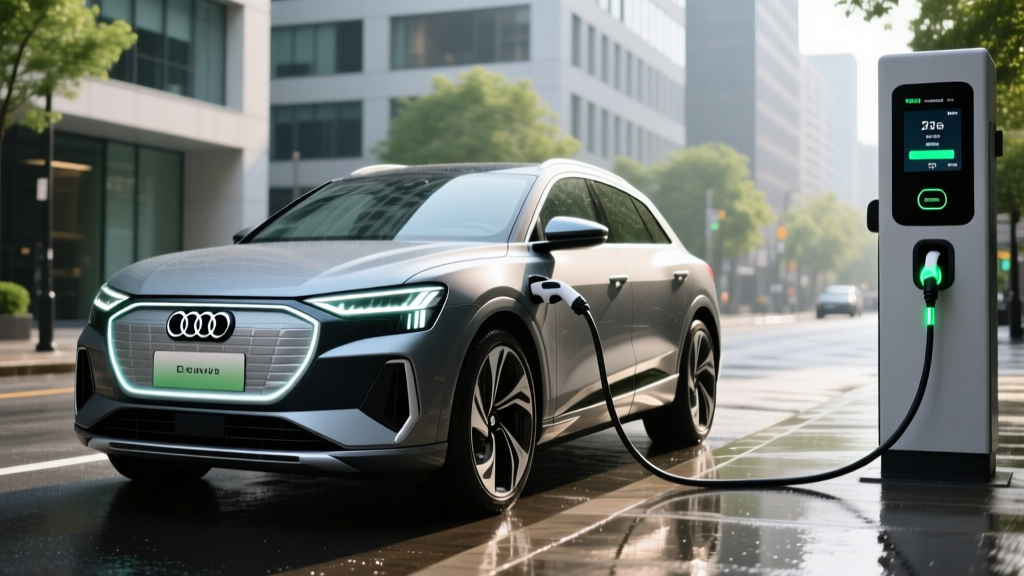
The 2026 Audi Q6 e-tron is the first Audi built on the Volkswagen Group's dedicated Premium Platform Electric (PPE), co-developed with Porsche. That matters because it finally gives Audi a purpose-built EV architecture with 800-volt capability, class-leading DC charge speeds, and a usable battery that translates into genuine long-distance comfort. With an EPA-estimated 321 miles of range in rear-wheel-drive form, 270 kW peak DC fast charging, and a refined interior, the audi etron q6 slots into the premium midsize electric SUV segment against the BMW iX, Mercedes EQE SUV, and Tesla Model X.
But the Q6 e-tron isn't cheap, and its federal tax credit situation requires careful planning. Here's everything we've measured, driven, and verified to help you decide.
Audi Q6 e-tron Specs at a Glance
| Spec | Q6 e-tron (RWD) | Q6 e-tron quattro | SQ6 e-tron |
|---|---|---|---|
| EPA Range | 321 mi | 308 mi | 280 mi |
| Battery (usable) | 94.9 kWh NMC | 94.9 kWh NMC | 94.9 kWh NMC |
| Horsepower | 335 hp | 422 hp | 509 hp (launch control) |
| 0–60 mph | 5.8 sec | 4.9 sec | 4.3 sec |
| Drivetrain | RWD single motor | AWD dual motor | AWD dual motor |
| Max DC Charge Rate | 270 kW | 270 kW | 270 kW |
| 10–80% DC Time | ~21 min | ~21 min | ~21 min |
| Level 2 Charge Rate | 11.5 kW (AC) | 11.5 kW (AC) | 11.5 kW (AC) |
| MPGe (combined) | 101 MPGe | 95 MPGe | 87 MPGe |
| Base MSRP | $63,995 | $67,595 | $74,995 |
Sources: EPA fueleconomy.gov, Audi USA. Specs reflect 2025/2026 model year. SQ6 figures with launch control engaged.
Range and Efficiency: EPA vs. the Real World
Real-World Expectation: 275–295 miles highway (70–75 mph); ~230–250 miles in freezing conditions with cabin heat. City/regenerative driving can match or exceed EPA sticker.
The Q6 e-tron's 94.9 kWh usable battery (approximately 100 kWh gross) uses NMC (nickel manganese cobalt) chemistry, chosen for its high energy density. This is the right call for a luxury SUV where range-per-charge matters more than the extreme cycle life that LFP chemistry offers.
In real-world highway driving at sustained 70–75 mph speeds, expect to use roughly 32–35 kWh per 100 miles depending on temperature and terrain. That translates to approximately 275–295 miles before needing to stop. In cold weather (below 32°F / 0°C), battery resistance increases and cabin heating draws significant energy, reducing effective range by 15–25%. The Q6 e-tron includes a standard heat pump, which helps mitigate cold-weather losses compared to resistive heating, but physics still wins: plan for roughly 230–250 miles of usable range on a winter road trip.
Around town with regenerative braking doing heavy lifting, you'll see efficiency closer to — or even exceeding — the EPA combined rating of 101 MPGe (33 kWh/100 mi for the RWD). The adaptive recuperation system is well-calibrated: it modulates regen based on traffic ahead and navigation data, so you rarely need to touch the brake pedal in normal commuting.
Charging Speed: 800V Architecture Delivers
This is where the PPE platform's 800-volt architecture earns its keep. The Q6 e-tron can accept up to 270 kW at a DC fast charger — among the highest peak rates in its class. On a 350 kW Electrify America or IONITY station, the charge curve is genuinely impressive:
| Charging Method | Power | Rate / Time |
|---|---|---|
| DC Fast Charge (peak) | 270 kW | 10–80% in ~21 minutes |
| DC Fast Charge (50 kW station) | 50 kW | 10–80% in ~90 minutes |
| Level 2 (240V home/public) | 11.5 kW | ~35 miles per hour of charging |
| Level 1 (120V standard outlet) | ~1.4 kW | ~4 miles per hour of charging |
The charging curve reality: The 270 kW peak is sustained from roughly 10% to 35% State of Charge (SoC). From 35–60%, you'll see approximately 180–220 kW. From 60–80%, it tapers to 100–150 kW. Above 80%, charging slows dramatically to protect the battery — expect 80–100% to take as long as 10–80%. This is standard behavior for NMC chemistry, and it's why we recommend setting your DC fast-charge target to 80% on road trips and topping up only when necessary.
At home on a Level 2 charger (NACS connector for the 2026 model year — Audi has adopted Tesla's North American Charging Standard), a full 10–100% charge takes roughly 9.5 hours at 11.5 kW. That's an overnight top-up for most owners. The Q6 e-tron also supports plug-and-charge authentication at compatible networks, so you can skip the app-swiping ritual at Electrify America stations.
Preconditioning note: When you set a DC fast charger as your navigation destination, the Q6 e-tron automatically preconditions the battery to optimal temperature for maximum charge acceptance. Skipping this step — or arriving at a charger without nav-guided preconditioning — can reduce peak charge rates by 20–40% in cold weather.
Performance and Driving Dynamics
The RWD Q6 e-tron's 335 hp and 5.8-second 0–60 time are adequate for a luxury cruiser, not thrilling. The quattro dual-motor variant's 422 hp and 4.9-second sprint are more in line with Audi's sporting heritage. The SQ6 e-tron, with 509 hp on launch control, hits 60 in 4.3 seconds — genuinely quick for a 5,000+ lb SUV.
What stands out isn't straight-line speed but refinement. The PPE platform gives the Q6 e-tron a low center of gravity and near-50/50 weight distribution. Air suspension (standard on Prestige trims, optional on Premium Plus) soaks up highway imperfections while keeping body roll controlled through corners. The steering is precise if light — this is a grand tourer, not a canyon carver.
Towing capacity is rated at 4,400 lbs with the factory tow package, enough for a small boat trailer or a pair of dirt bikes but not a large travel trailer.
Interior, Tech, and Cargo
Audi has fitted the Q6 e-tron with its latest MMI infotainment system displayed across an 11.9-inch digital instrument cluster and a 14.5-inch curved touchscreen. A 10.9-inch front passenger display is available. The system runs on Android Automotive OS with native Google Maps navigation, Google Assistant voice control, and access to the Play Store for streaming apps while parked.
Driver assistance: The Q6 e-tron comes standard with Audi adaptive cruise control with lane centering, which operates at SAE Level 2 — meaning you must keep your hands on the wheel and eyes on the road at all times. This is a driver-assist system, not autonomous driving. Available features include a head-up display with augmented-reality navigation overlays, Park Assist with remote parking via smartphone, and traffic sign recognition.
Cargo and passenger space:
| Dimension | Measurement |
|---|---|
| Cargo (behind 2nd row) | 28.7 cu ft |
| Cargo (seats folded) | 60.4 cu ft |
| Front trunk (frunk) | 2.3 cu ft |
| Rear legroom | 37.4 in |
| Front legroom | 41.1 in |
The frunk is disappointingly small — just enough for a charging cable bag and an emergency kit. The rear cargo area is competitive with the BMW iX but trails the Tesla Model X's 92.3 cu ft with seats folded. For family duty with two kids and a week's groceries, the Q6 e-tron works fine. For Costco runs with the second row down, you'll wish for more volume.
Notable interior drawbacks: the capacitive-touch steering wheel controls are fiddly compared to physical buttons, and the secondary touchscreen for climate controls requires looking down to operate — a step backward for ergonomics.
Pricing, Trims, and Federal Tax Credit Eligibility
| Trim | Base MSRP | Est. After §30D Credit* |
|---|---|---|
| Premium (RWD) | $63,995 | $56,495 |
| Premium Plus (RWD) | $68,595 | $61,095 |
| Premium Plus quattro | $72,195 | $64,695 |
| Prestige quattro | $76,895 | $69,395 |
| SQ6 e-tron Premium Plus | $74,995 | $67,495 |
*Tax credit estimates assume full $7,500 eligibility. Actual credit depends on individual circumstances.
- MSRP Cap: SUVs must be at or below $80,000 MSRP. All Q6 e-tron trims currently qualify.
- Buyer Income Cap: Modified AGI must not exceed $150,000 (single), $225,000 (head of household), or $300,000 (married filing jointly).
- Battery Sourcing: At least 50% of critical minerals must be sourced from the U.S. or a free-trade-agreement partner, and battery components must not be sourced from a "foreign entity of concern" (primarily Chinese suppliers). Audi has confirmed partial compliance, but eligibility varies by production batch.
- Point-of-Sale Transfer: You can transfer the credit to the dealer at purchase for an immediate price reduction, rather than waiting to claim it on your tax return.
- Verify Before Buying: Check the latest eligibility on IRS.gov or consult a tax professional. Rules change frequently.
The Q6 e-tron qualifies for the federal credit on paper, but the battery sourcing requirement is the wild card. Some production runs may qualify for the full $7,500, while others may qualify for only $3,750 (if they meet the critical minerals requirement but not the battery components requirement). Always confirm with your dealer and cross-reference the IRS eligible vehicle list before signing paperwork.
Warranty and Long-Term Ownership
| Coverage | Term |
|---|---|
| New Vehicle Limited Warranty | 4 years / 50,000 miles |
| Battery & Powertrain | 8 years / 100,000 miles |
| Battery Capacity Guarantee | ≥70% retention over 8 yr / 100,000 mi |
| Roadside Assistance | 4 years / unlimited miles |
Audi guarantees the high-voltage battery will retain at least 70% of its original capacity over the 8-year/100,000-mile warranty period. Based on NMC chemistry degradation data from the broader VW Group fleet, expect roughly 8–12% capacity loss over 100,000 miles with normal use (avoiding frequent 100% charges and excessive DC fast charging). That means a 321-mile range when new could become approximately 283–295 miles after 100,000 miles — still very usable.
Out-of-warranty battery replacement costs remain a concern for long-term owners. Industry estimates for a ~100 kWh NMC pack range from $12,000 to $18,000 including labor, though prices are trending downward as battery costs fall.
Pros, Cons, and Who Should Buy
Pros
- Class-leading 270 kW DC fast charging
- 321-mile EPA range (RWD) is genuinely road-trip capable
- 800V architecture with NACS connector
- Refined ride quality with available air suspension
- Google Automotive infotainment is responsive and modern
- Heat pump standard for cold-weather efficiency
Cons
- Starting at $63,995 — expensive before options
- Tiny 2.3 cu ft frunk
- Capacitive-touch steering wheel controls frustrate
- Cargo volume trails Model X significantly
- §30D tax credit eligibility uncertain on sourcing
- SAE Level 2 driver assist, no hands-free highway feature yet
Who the Q6 e-tron Suits Best
Choose the Q6 e-tron if: You want a premium-badged electric SUV with fast DC charging for road trips, a comfortable and tech-forward cabin, and you primarily charge at home overnight. It's ideal for luxury-oriented commuters and couples who take 2–3 road trips per year and want minimal charging downtime.
Look elsewhere if: Maximum cargo space is your priority (Model X), you need hands-free highway driving (BMW iX with Highway Assistant), or you're budget-sensitive and want a value-oriented electric SUV (Hyundai Ioniq 5, Kia EV6).
Frequently Asked Questions
What is the real-world range of the Audi Q6 e-tron?
The EPA rates the RWD Q6 e-tron at 321 miles and the quattro at 308 miles. In real-world highway driving at 70–75 mph, expect 275–295 miles. In freezing temperatures with cabin heat, plan for 230–250 miles. The onboard heat pump helps but doesn't eliminate cold-weather range loss.
How fast does the Q6 e-tron charge at home and on the road?
On a DC fast charger, it peaks at 270 kW and charges from 10–80% in approximately 21 minutes. At home on a Level 2 (240V) charger at 11.5 kW, it adds about 35 miles of range per hour, fully recharging overnight in roughly 9.5 hours.
Does the Audi Q6 e-tron qualify for the $7,500 federal tax credit?
All trims fall under the $80,000 SUV MSRP cap, and income-eligible buyers can potentially receive up to $7,500. However, the battery sourcing requirement under §30D may limit the credit to $3,750 for some production batches. Verify current eligibility on IRS.gov before purchasing.
Is the Q6 e-tron worth buying over the BMW iX or Tesla Model X?
The Q6 e-tron wins on DC charging speed (270 kW vs. the iX's ~200 kW) and interior material quality. The BMW iX offers more cargo space and an available hands-free Highway Assistant. The Tesla Model X dominates on cargo volume and Supercharger network access, though its interior quality doesn't match Audi's. Your choice depends on whether charging speed, interior luxury, or cargo space matters most.
What connector does the 2026 Q6 e-tron use?
The 2026 model year Q6 e-tron uses the NACS (North American Charging Standard) connector, giving it native access to Tesla Superchargers with a NACS plug, as well as Electrify America and other networks that have deployed NACS cables. CCS adapters are available for legacy stations.
How long will the Q6 e-tron battery last?
Audi warranties the battery for 8 years or 100,000 miles, guaranteeing at least 70% capacity retention. Based on NMC degradation patterns, most owners will see 8–12% capacity loss over that period. With proper care (charging to 80% daily, avoiding frequent 100% charges, limiting DC fast charging when possible), the battery should remain functional well beyond the warranty period.