Quick Verdict: A Supercar-Sized EV With a Color Palette to Match
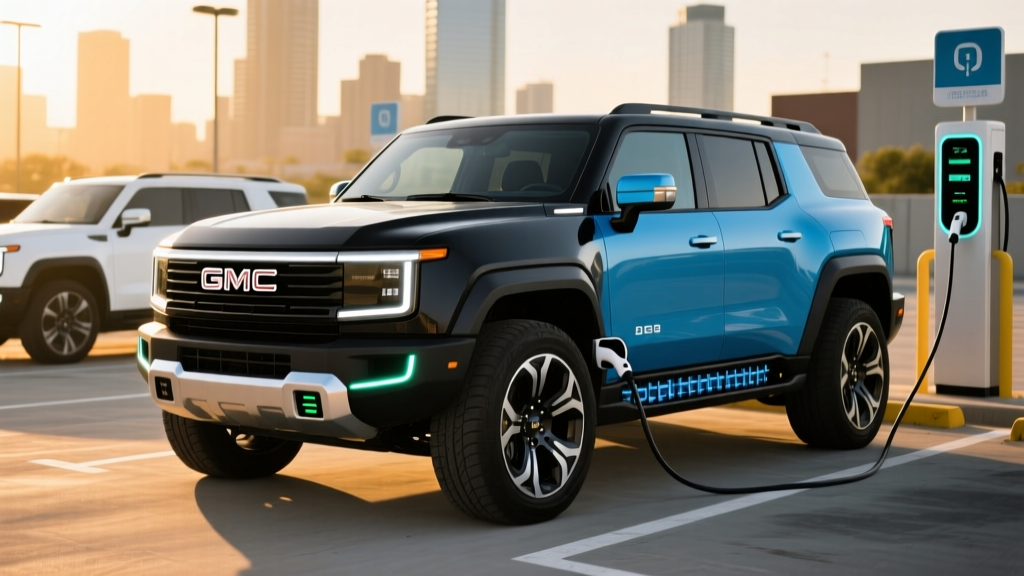
The GMC Hummer EV SUV is an exercise in excess — 830 horsepower, a 24-module Ultium battery, and a footprint that commands every lane it occupies. But beyond the Watts to Freedom launch mode and the CrabWalk diagonal driving, buyers spending six figures want to know: what does it actually look like on your driveway? The 2026 Hummer EV SUV color lineup offers a curated but impactful selection that reflects GMC's positioning of this vehicle as a premium lifestyle statement, not just an off-road brute.
This review covers every exterior and interior color option for the 2026 model year alongside the hard numbers that matter — real-world range, DC fast-charging curves, tax credit eligibility, and whether this 9,000-pound electric supertruck makes sense against rivals like the Rivian R1S and Tesla Model X.
2026 Hummer EV SUV Exterior Colors: The Full Palette
GMC keeps the Hummer EV SUV color catalog tight, favoring bold neutrals and a few signature shades over an overwhelming configurator. Here's what's available for 2026:
| Color Name | Code | Finish | Available Trims | Cost |
|---|---|---|---|---|
| Interstellar White | GAO | Tri-coat pearl | 2X, 3X, Edition 1 | Standard |
| Meteorite Metallic | GWT | Metallic | 2X, 3X, Edition 1 | Standard |
| Void Black | GBA | Solid | 2X, 3X, Edition 1 | Standard |
| Neptune Blue Matte | GCS | Satin matte | 3X, Edition 1 | +$3,995 |
| Solar Orange | GCR | Metallic | 3X, Edition 1 | +$1,295 |
| Dark Moon Metallic | G7Q | Metallic | 2X, 3X | Standard |
Analyst note: The Neptune Blue Matte is the standout for 2026 — a satin finish that shifts tone under different lighting and photographs dramatically. However, matte finishes require specific care (no automatic car washes with brushes, dedicated matte-safe sealants). If you garage outdoors or live in a region with heavy pollen or sap, factor in maintenance effort. Interstellar White remains the most popular choice based on resale data, reflecting broad buyer appeal and better heat reflection in warmer climates.
Interior Color Options
The interior palette is simpler but pairs strategically with exterior choices:
- Lunar Horizon (Light): A light grey and black combo with copper accents. Pairs best with Interstellar White and Solar Orange exteriors. Shows dirt more readily — consider if you regularly hit trails.
- Lunar Shadow (Dark): Full black with dark titanium accents. The pragmatic choice for families and off-roaders. Available across all trims.
Both interiors use GMC's premium synthetic leather (not genuine hide), which is consistent with the sustainability positioning of the Ultium platform and holds up well against abrasion from gear and pets.
Range, Battery, and Real-World Efficiency
The 2026 Hummer EV SUV carries GM's largest Ultium battery pack — a 24-module, double-stacked configuration with NMC (nickel manganese cobalt) chemistry. Here's what that translates to on paper and on the road:
| Specification | Value |
|---|---|
| Usable Battery Capacity | ~212.7 kWh (NMC lithium-ion) |
| EPA Estimated Range | 314 miles (3X trim, 20" wheels) |
| EPA Efficiency | 47 MPGe combined / 72 kWh/100 mi |
| Drivetrain | Dual-motor AWD (tri-motor on Edition 1) |
| Horsepower | 625 hp (dual) / 830 hp (tri-motor w/ WTF mode) |
| 0–60 mph | 3.5 seconds (tri-motor, Watts to Freedom) |
| Curb Weight | ~8,688 lbs |
The EPA rates the 3X Hummer EV SUV at 314 miles. In real-world highway driving at 70–75 mph with climate control on, expect 240–265 miles before needing to stop. Cold-weather testing (below 32°F) pushes range down to approximately 200–225 miles due to battery heating demands and cabin energy draw. The Hummer's 9,000-lb mass and boxy aerodynamics penalize highway efficiency heavily. City driving with regenerative braking recovers more energy, yielding closer to 280–300 miles in stop-and-go conditions. If your typical trip exceeds 200 miles one-way in winter, plan a mid-route DC fast-charge stop.
The 72 kWh/100 mi efficiency figure is among the worst in the EV market — for context, the Rivian R1S achieves roughly 48 kWh/100 mi and the Tesla Model X sits near 36 kWh/100 mi. You're paying an energy premium for the Hummer's mass and frontal area. According to fueleconomy.gov, annual electricity costs run approximately $1,400–$1,650 depending on your local rate (at 15,000 miles/year and $0.16/kWh national average).
Charging Speed: DC Fast Charge and Home Level 2
Charging a 212+ kWh battery is an endurance event, even on the fastest hardware available. Here's the full breakdown:
| Charging Level | Max Power | Speed | Estimated Time |
|---|---|---|---|
| Level 1 (120V, 12A) | ~1.4 kW | ~3 miles/hour | 72+ hours (0–100%) |
| Level 2 (240V, 48A) | 11.5 kW | ~25 miles/hour | ~9 hours (0–100%) |
| Level 2 (240V, 80A) | 19.2 kW | ~42 miles/hour | ~5.5 hours (0–100%) |
| DC Fast Charge | 350 kW peak | ~100 miles in 12 min | 10–80% in ~32 minutes |
Charging curve reality check: The Hummer EV SUV peaks at 350 kW only briefly between 10–25% State of Charge (SoC). Sustained rates drop to roughly 200–250 kW through the 25–60% band, then taper sharply above 80%. On a road trip, your practical stop time at a 350 kW Electrify America or EVgo station is approximately 32–38 minutes for a 10–80% fill. That's longer than lighter EVs like the Hyundai Ioniq 5 (18 min) because there's simply more battery to fill — 212 kWh is roughly three times the capacity of a compact EV.
For home charging, a 48-amp Level 2 wallbox on a 60-amp circuit adds roughly 25 miles per hour of charging. Overnight (10 hours) gets you approximately 250 miles — adequate for most daily use but insufficient to fully replenish the pack from empty. GMC offers an available 80-amp Level 2 charger (requires a 100-amp dedicated circuit) that cuts full-charge time to about 5.5 hours. Budget $1,200–$3,500 for professional Level 2 installation depending on panel capacity and run length — and factor in a potential $2,000–$4,000 panel upgrade if your home still has a 100-amp service. Consult a licensed electrician for a site-specific quote.
Pricing, Trims, and Federal Tax Credit Eligibility
| Trim | Base MSRP | As-Tested (Typical Options) | Powertrain |
|---|---|---|---|
| 2X | $106,395 | $112,000–$118,000 | Dual-motor AWD, 625 hp |
| 3X | $118,295 | $125,000–$135,000 | Tri-motor AWD, 830 hp |
| Edition 1 | $126,895 | $130,000+ | Tri-motor AWD, 830 hp, Neptune Blue Matte |
The Hummer EV SUV starts at $106,395 for the 2X and climbs past $126,000 for the Edition 1. Add the Extreme Off-Road Package ($9,995 on 3X) with underbody armor, rock-crawl mode, and 35-inch mud-terrain tires, and a fully loaded 3X can exceed $140,000 before destination.
The Hummer EV SUV's MSRP exceeds the IRS §30D cap of $80,000 for SUVs. As a result, the Hummer EV SUV does not qualify for the $7,500 federal new-vehicle tax credit regardless of buyer income or battery sourcing. This is a firm rule per irs.gov — no point-of-sale transfer workaround applies. Buyers should check with a tax professional regarding state-level incentives, which vary by jurisdiction and may still apply.
Cargo, Passenger Space, and Practicality
Despite its massive exterior dimensions (206.7 inches long, 86.7 inches wide), the Hummer EV SUV's interior volume is surprisingly moderate — the Ultium battery's double-stack design consumes significant floor space.
| Measurement | Value |
|---|---|
| Front Legroom | 45.6 inches |
| Rear Legroom | 38.9 inches |
| Cargo (Behind 2nd Row) | 35.9 cu ft |
| Cargo (Seats Folded) | 81.8 cu ft |
| Front Trunk (Frunk) | 11.3 cu ft (power-operated) |
| Seating Capacity | 5 passengers |
| Ground Clearance | 10.1 inches (standard) / 15.9 inches (Extract Mode) |
| Towing Capacity | 7,500 lbs |
The 35.9 cu ft behind the second row is less than a Rivian R1S (46.7 cu ft) and far below a Tesla Model X (37.1 cu ft behind the third row, 85.1 cu ft max). Five-passenger seating only — no third-row option — limits family utility for larger households. The power-operated frunk is a standout feature, with enough space for charging cables, a weekend bag, or recovery gear. The Extract Mode (suspension raises 6 inches) is genuinely useful for rock crawling and deep-snow egress, though it reduces range due to increased drag.
Standout Tech, Driver Assists, and Drawbacks
Standout technology:
- CrabWalk: Rear wheels steer up to 10 degrees in the same direction as the front, allowing diagonal movement — invaluable on tight trail obstacles.
- UltraVision: Up to 18 camera views including underbody cameras for trail navigation. The camera wash system keeps lenses clear in mud.
- Super Cruise (Level 2): GM's hands-free highway driver-assist system covers over 750,000 miles of compatible roads in North America. Per NHTSA guidelines, this is SAE Level 2 — the driver must remain attentive and ready to take over at all times. It is not self-driving.
- Watts to Freedom (WTF): Launch mode that drops the suspension, plays a haptic and audio sequence, and unleashes full 830 hp for a 3.5-second 0–60 sprint. A party trick, but one that never stops being entertaining.
- Infinity Roof: Removable modular roof panels stored in the frunk. Open-air driving in a 9,000-lb EV is a unique experience.
Super Cruise is an SAE Level 2 driver-assistance system. It controls steering, acceleration, and braking on mapped highways but requires continuous driver supervision. Eye-tracking monitors engagement. It does not handle construction zones, unmapped roads, or complex urban intersections. You are the driver at all times.
Notable drawbacks:
- Efficiency is abysmal — 47 MPGe combined means high electricity costs and frequent charging on road trips.
- No federal tax credit eligibility due to the $80,000 SUV MSRP cap.
- Visibility is compromised by thick A-pillars and the massive hood; parking structures and drive-throughs require caution.
- Tire costs are significant — the 35-inch Goodyear Wrangler Territory MT tires run $500+ each and wear faster under the vehicle's 8,688-lb weight.
- Insurance premiums run 25–40% higher than comparable luxury SUVs due to repair costs and vehicle weight, per industry data.
Pros and Cons at a Glance
✓ Pros
- 830 hp tri-motor performance (3.5s 0–60) is supercar-quick
- 350 kW DC fast charging handles the massive battery well
- CrabWalk and Extract Mode are genuinely capable off-road tools
- Super Cruise hands-free highway driving on 750K+ miles of roads
- Distinctive color palette including exclusive Neptune Blue Matte
- Removable Infinity Roof panels for open-air driving
- 7,500-lb towing capacity for boats and campers
✗ Cons
- No federal tax credit (MSRP exceeds $80K SUV cap)
- 47 MPGe combined — worst-in-class efficiency
- Real-world highway range drops to ~240–265 miles
- 35.9 cu ft cargo space is less than Rivian R1S
- No third-row seating; 5-passenger limit
- Insurance and tire costs significantly above average
- Massive dimensions challenge parking garages and narrow streets
Is the Hummer EV SUV Worth It vs. Competitors?
Decision Framework
Choose the Hummer EV SUV if: You want maximum presence, off-road capability with CrabWalk and Extract Mode, tri-motor performance, and a color palette that makes a statement. You have home charging, your daily driving is under 200 miles, and you accept the efficiency penalty and lack of federal tax credit as the cost of exclusivity.
Choose the Rivian R1S if: You need a third row (7-passenger seating), better efficiency (~78 MPGe), more cargo space, and a lower starting price ($84,900). The R1S also qualifies for the federal tax credit on eligible trims.
Choose the Tesla Model X if: You prioritize efficiency (102 MPGe), Supercharger network reliability, and over-the-air updates. The Model X starts around $80,000 and offers falcon-wing doors for a different kind of presence.
Frequently Asked Questions
What is the real-world range of the 2026 Hummer EV SUV?
The EPA estimates 314 miles for the 3X trim with 20-inch wheels. In real-world highway driving at 70–75 mph, expect 240–265 miles. Cold weather (below 32°F) reduces this to approximately 200–225 miles. City driving with regenerative braking yields closer to 280–300 miles.
How fast does the Hummer EV SUV charge at home and on DC fast chargers?
On a 350 kW DC fast charger, the Hummer EV SUV achieves 10–80% in approximately 32 minutes, peaking at 350 kW briefly before tapering. At home on a 48-amp Level 2 charger (11.5 kW), it adds about 25 miles per hour, requiring roughly 9 hours for a full charge. An 80-amp Level 2 (19.2 kW) reduces full-charge time to about 5.5 hours.
Does the Hummer EV SUV qualify for the federal EV tax credit?
No. The Hummer EV SUV's MSRP ($106,395+) exceeds the IRS §30D cap of $80,000 for SUVs. This disqualifies it regardless of buyer income or battery component sourcing. State-level incentives may still apply — check your local DMV or energy office. Consult a tax professional for your specific situation.
How much does the 2026 Hummer EV SUV cost after incentives?
With no federal tax credit, the 2X starts at $106,395, the 3X at $118,295, and the Edition 1 at $126,895. Fully optioned 3X models with the Extreme Off-Road Package and Neptune Blue Matte paint can exceed $140,000. State incentives (where available) may reduce the effective cost by $1,000–$5,000.
Which Hummer EV SUV color holds value best?
Interstellar White and Void Black historically show the strongest resale demand based on used-market listings. The Neptune Blue Matte commands a premium among enthusiasts but may narrow the buyer pool at resale due to its specialized maintenance requirements.
What's the battery warranty on the Hummer EV SUV?
GM covers the Ultium battery and powertrain for 8 years or 100,000 miles (whichever comes first), with a capacity retention threshold of 70% of original capacity. This is industry-standard and matches competitors like Rivian and Tesla.
Sources: EPA fueleconomy.gov, IRS §30D Clean Vehicle Credits, NHTSA Automated Vehicle Safety, GMC manufacturer specifications.