Quick Verdict: A Practical Family EV That Plays It Safe
The 2025 Volkswagen ID.4 is VW's volume electric SUV — a conservative, comfort-oriented crossover that prioritizes ride quality and interior space over headline-grabbing acceleration or bleeding-edge tech. With an EPA range stretching from 206 to 291 miles depending on battery and drivetrain, a usable 82 kWh battery pack, and a starting MSRP of $42,695 before incentives, it occupies the mainstream-compact EV space alongside the Hyundai Ioniq 5, Kia EV6, and Tesla Model Y. For buyers considering a 2025 Volkswagen ID.4 lease, the math often works out favorably: VW's aggressive lease cash and the ability to pass through the $7,500 federal credit as a lease incentive can drop effective monthly payments into competitive territory.
But the ID.4 isn't for everyone. Its infotainment software remains a friction point, DC fast-charging speeds trail some rivals, and real-world highway range falls noticeably short of the EPA sticker. This review breaks down every number that matters — from charge curves to cargo cubic feet — so you can decide whether leasing or buying makes sense for your driving pattern.
Range, Efficiency, and the Real-World Gap
Volkswagen offers the 2025 ID.4 with two battery sizes and two drivetrains, creating four distinct range profiles. The entry-level Standard Range models use a 62 kWh battery (usable capacity), while Pro and AWD trims get the larger 82 kWh pack. Here's what the EPA says versus what you'll actually experience:
| Trim / Drivetrain | EPA Range | Real-World Highway (70 mph) | Cold Weather (20°F) |
|---|---|---|---|
| Standard Range RWD (62 kWh) | 206 mi | ~165–175 mi | ~140–155 mi |
| Pro RWD (82 kWh) | 291 mi | ~240–255 mi | ~200–220 mi |
| Pro AWD (82 kWh) | 263 mi | ~215–230 mi | ~175–195 mi |
| Pro S Plus AWD (82 kWh) | 263 mi | ~215–230 mi | ~175–195 mi |
Highway estimates reflect sustained 70 mph driving in moderate temperatures. Cold-weather figures assume 20°F with cabin heating active. The ID.4 lacks a heat pump on lower trims, which exacerbates winter range loss — a notable omission versus competitors like the Ioniq 5 that include one standard.
Efficiency on the Pro RWD model rates at 104 MPGe combined (city/highway), translating to roughly 32 kWh per 100 miles according to fueleconomy.gov. The AWD models drop to around 97 MPGe combined. These figures are mid-pack for the segment — the Ioniq 5 RWD achieves 114 MPGe combined, while the heavier Tesla Model Y Long Range AWD lands at 119 MPGe. The ID.4's bluff nose and taller ride height create more aerodynamic drag than its lower-slung rivals.
Battery Chemistry and Long-Term Durability
The 2025 ID.4's 82 kWh pack (77 kWh usable in Standard Range trims) uses NMC (nickel manganese cobalt) lithium-ion chemistry supplied primarily by SK On. Unlike some competitors that have shifted to LFP (lithium iron phosphate) for lower trims — which trades energy density for longer cycle life and tolerance for 100% daily charging — VW has stuck with NMC across the lineup. This means:
- Higher energy density — more range in a given pack volume
- Charging best practice — VW recommends daily charging to 80% for NMC longevity, reserving 100% for road trips
- Degradation expectations — industry data suggests NMC packs lose roughly 10–15% capacity over 150,000 miles under normal use
VW backs the battery with an 8-year/100,000-mile warranty guaranteeing at least 70% capacity retention. If the pack falls below that threshold within the warranty period, VW will repair or replace it. This matches the industry standard set by federal emissions warranty requirements, though some competitors like Hyundai/Kia offer 10-year/100,000-mile battery coverage.
Charging Speeds: DC Fast, Level 2, and Level 1
Charging performance is where the ID.4 shows its age relative to newer 800-volt competitors. The 400-volt architecture caps DC fast-charging speed below what Hyundai, Kia, and Porsche can deliver.
| Charging Level | Power / Rate | Time / Speed | Notes |
|---|---|---|---|
| Level 1 (120V household) | ~1.4 kW | ~3–4 miles per hour | Emergency/trickle only; full charge takes days |
| Level 2 (240V home/public) | 11 kW (48A) | ~26–30 miles per hour; 82 kWh in ~8.5 hrs (0–100%) | Onboard charger maxes at 11 kW; ideal for overnight |
| DC Fast Charge (Standard Range) | Peak 135 kW | 10–80% in ~30 min | Sustained rate drops above 60% SoC |
| DC Fast Charge (Pro 82 kWh) | Peak 175 kW | 10–80% in ~28 min | Peak only below 40% SoC; tapers significantly above 70% |
Charging curve reality: The "peak 175 kW" figure applies only in a narrow state-of-charge window (roughly 10–40%). Above 60% SoC, the rate drops to around 100 kW, and above 80% it falls below 50 kW. This is typical of 400V architectures but means your actual average charging speed on a road trip is closer to 110–120 kW. For context, the Hyundai Ioniq 5 with its 800V system sustains higher rates and hits 10–80% in roughly 18 minutes.
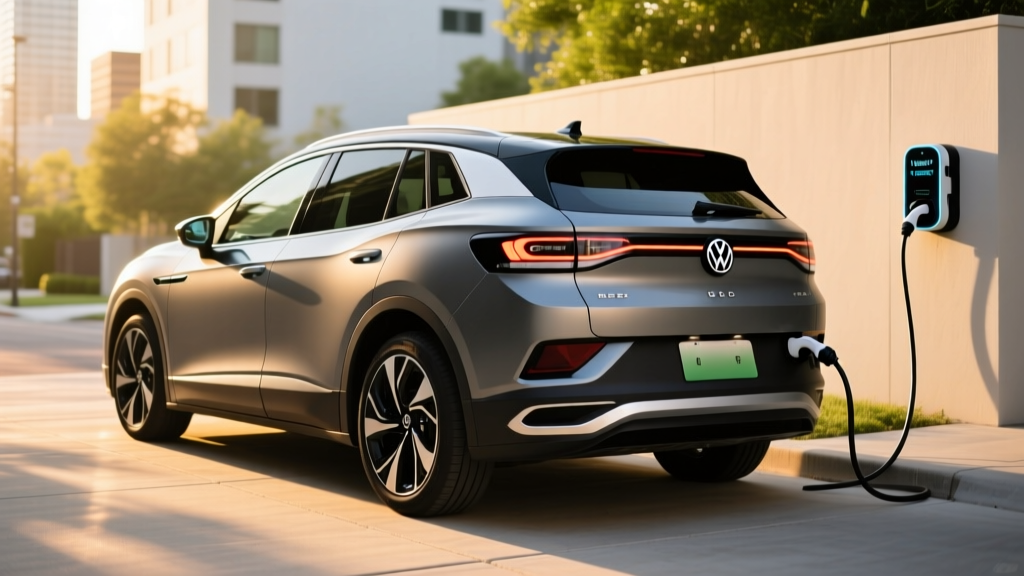
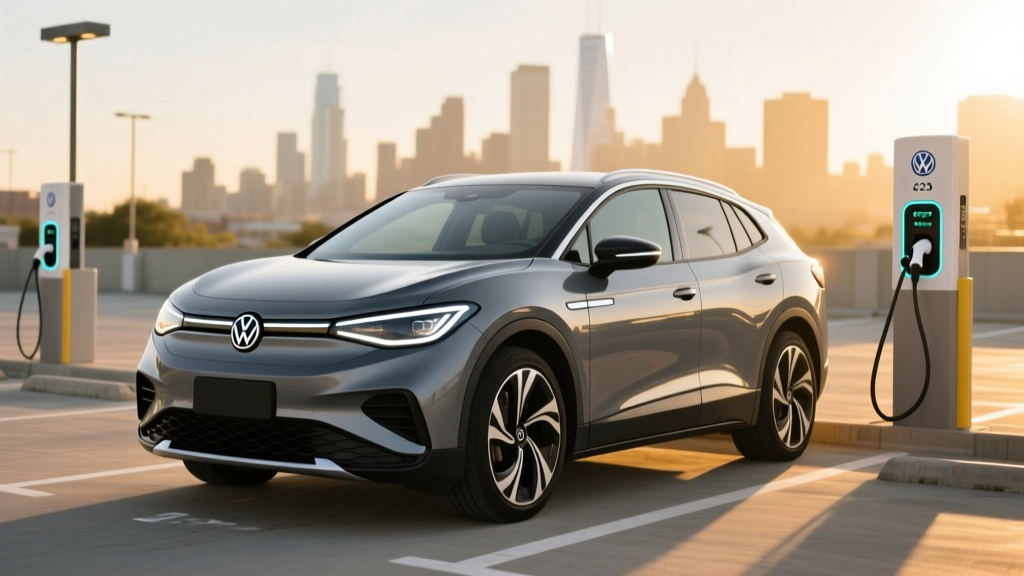
On the plus side, the ID.4 uses the CCS1 connector, which is compatible with Electrify America, EVgo, and most non-Tesla DC networks. VW includes three years of complimentary Electrify America charging (up to 30-minute sessions) with new purchases and leases, which meaningfully offsets road-trip fuel costs in the early ownership period.
Performance, Drivetrain, and Driving Impressions
| Specification | Standard Range RWD | Pro RWD | AWD (Pro / Pro S Plus) |
|---|---|---|---|
| Horsepower | 201 hp | 282 hp | 335 hp |
| Torque (lb-ft) | 229 | 339 | 339 |
| 0–60 mph | ~7.9 sec | ~7.3 sec | ~5.4 sec |
| Top Speed | 99 mph | 112 mph | 112 mph |
| Drivetrain | RWD single motor | RWD single motor | Dual-motor AWD |
| Towing Capacity | 2,200 lbs | 2,700 lbs | 2,700 lbs |
The ID.4 is not a performance EV, and it doesn't pretend to be. The AWD model's 5.4-second 0–60 time is adequate for highway merging but trails the Tesla Model Y Long Range (4.8 sec) and Ioniq 5 AWD (5.0 sec). Where the VW earns its keep is ride quality: the MEB platform delivers a supple, well-damped ride that absorbs highway imperfections better than most rivals. Steering is light and numb — this is a cruiser, not a canyon carver.
Regenerative braking offers three levels selectable via steering-wheel paddles (B mode for maximum regen approaching one-pedal driving, D1/D2/D3 for graduated coasting). However, the ID.4 does not achieve true one-pedal driving to a complete stop — you'll need the friction brakes at very low speeds, which is a common complaint among EV veterans accustomed to Nissan Leaf or Tesla behavior.
Interior, Cargo, and Technology
Inside, the ID.4 delivers a spacious, airy cabin with a minimalist design philosophy. The panoramic fixed-glass roof (standard on Pro S and above) floods the interior with light and contributes to a sense of openness that rivals can't match.
Passenger and Cargo Dimensions
- Front headroom: 41.1 inches
- Front legroom: 41.1 inches
- Rear headroom: 38.4 inches
- Rear legroom: 37.6 inches — generous for the segment, comfortably fits adults on long trips
- Cargo (rear seats up): 30.3 cubic feet
- Cargo (rear seats folded): 64.2 cubic feet
- Frunk: None — the ID.4 has no front trunk, a missed opportunity given the MEB platform's packaging flexibility
Infotainment and Driver Assistance
The ID.4 runs VW's ID. Software 4.0 on a 12.9-inch center touchscreen (Pro S and above; 10.25-inch on lower trims). The latest software update has improved responsiveness and menu logic, but the system still relies on capacitive-touch slider controls for volume and temperature — no physical knobs — which frustrates many drivers, especially while wearing gloves or on bumpy roads. Wireless Apple CarPlay and Android Auto are standard across all trims.
The driver-assistance suite, branded IQ.DRIVE, includes:
- Adaptive cruise control with stop-and-go
- Lane-keeping assist with centering
- Front and rear automatic emergency braking
- Blind-spot monitoring with rear cross-traffic alert
- Travel Assist (combined lane-centering + ACC for highway use)
Travel Assist is a Level 2 driver-assistance system per SAE International standards. This means the driver must remain fully engaged, keep hands on or near the wheel, and supervise the system at all times. It is not autonomous or "self-driving." Only Level 4 services like Waymo operate without a human driver in defined operational domains.
Pricing, Lease Economics, and Federal Tax Credit
The 2025 ID.4 lineup spans five trims with a roughly $13,000 spread from base to fully loaded:
| Trim | Base MSRP | Est. Max §30D Credit | Effective Price After Credit |
|---|---|---|---|
| Standard Range | $42,695 | Up to $7,500* | ~$35,195 |
| Pro | $44,995 | Up to $7,500* | ~$37,495 |
| Pro S | $47,295 | Up to $7,500* | ~$39,795 |
| AWD Pro | $48,695 | Up to $7,500* | ~$41,195 |
| AWD Pro S Plus | $55,695 | Up to $7,500* | ~$48,195 |
*Federal tax credit (§30D) eligibility is not automatic. As of current IRS guidelines, the ID.4 must meet all of the following to qualify for the full $7,500:
- MSRP cap: SUVs must be priced at or below $80,000 — all ID.4 trims clear this easily
- Buyer income cap: Modified AGI ≤ $150,000 (single) / $300,000 (joint) / $225,000 (head of household)
- Battery sourcing: Critical minerals and battery components must meet escalating domestic-sourcing thresholds — VW's SK On battery supply chain has been progressively qualifying, but exact eligibility can vary by production batch. Always verify with your dealer and consult a tax professional before relying on the credit
- Point-of-sale transfer: As of 2024, you can transfer the credit to the dealer at purchase, reducing your out-of-pocket cost immediately rather than waiting for tax filing
Lease-Specific Considerations
When you lease a 2025 Volkswagen ID.4, the federal tax credit technically goes to the lessor (VW Credit), not to you. However, VW frequently passes this through as a "lease cash" incentive that reduces the capitalized cost — effectively giving you the benefit. As of early 2025, VW has been offering lease cash in the $7,500 range on many ID.4 trims, though this varies by region and changes monthly. Key lease factors to negotiate:
- Money factor: Ask for the base rate; dealer markups here inflate your payment silently
- Residual value: Set by VW and non-negotiable, but it directly impacts your monthly cost
- Mileage allowance: Standard is 10,000 or 12,000 miles/year; excess mileage charges at lease-end typically run $0.20–$0.25/mile
- Disposition fee: Usually $350–$400 if you don't lease another VW at term end
How It Stacks Up Against Key Competitors
| Spec | VW ID.4 Pro AWD | Hyundai Ioniq 5 AWD | Tesla Model Y LR AWD | Kia EV6 AWD |
|---|---|---|---|---|
| EPA Range | 263 mi | 290 mi | 320 mi | 282 mi |
| Battery (usable kWh) | 82 | 84 | ~75 | 77.4 |
| Peak DC kW | 175 | 238 (800V) | 250 | 239 (800V) |
| 10–80% DCFC Time | ~28 min | ~18 min | ~22 min | ~18 min |
| 0–60 mph | 5.4 sec | 5.0 sec | 4.8 sec | 5.1 sec |
| Base MSRP (AWD) | $48,695 | $50,100 | $49,990 | $51,900 |
| Cargo (seats up) | 30.3 cu ft | 27.2 cu ft | 30.2 cu ft | 24.4 cu ft |
| Heat Pump | Optional (Pro S+) | Standard | Standard | Standard |
- Ride comfort and cabin quietness are your top priorities
- You value a spacious rear seat and strong cargo volume over sporty dynamics
- You want complimentary Electrify America charging for three years
- Lease deals in your area bring the effective monthly payment below comparable rivals
- You need maximum DC fast-charging speed for frequent road trips (Ioniq 5 / EV6)
- You want the longest possible range (Model Y)
- Physical controls and polished infotainment matter to you
- You need a heat pump for cold-climate efficiency (standard on most rivals)
Pros, Cons, and Who This EV Suits Best
- Excellent ride quality — best-in-class comfort for daily commuting
- Generous rear-seat legroom (37.6 in) and cargo space (30.3 cu ft)
- 3 years of free Electrify America DC charging
- Competitive lease pricing when VW offers aggressive lease cash
- All ID.4 trims fall under the $80,000 MSRP cap for §30D credit
- Strong IIHS safety ratings; available Travel Assist highway driving aid
- Panoramic glass roof creates an airy, premium cabin feel
- DC fast-charging slower than 800V competitors (175 kW peak vs 238–250 kW)
- Capacitive-touch sliders for volume/climate — no physical knobs
- No front trunk (frunk) — wasted packaging space
- Heat pump not standard on lower trims — hurts cold-weather range
- Infotainment still less intuitive than Tesla or Hyundai systems
- Regen braking doesn't bring the car to a full stop
- AWD range (263 mi EPA) trails key rivals by 20–50 miles
Best Use Cases
The ID.4 is ideal for suburban families and commuters who prioritize comfort over performance and whose daily driving stays under 80 miles round-trip. It works well for two-car households where a second vehicle handles long road trips. It's less suited for frequent road-trippers who need fast DC charging or cold-climate buyers in northern states who would benefit from a standard heat pump. Towing capacity of 2,700 pounds (AWD) handles a small utility trailer but not a boat or camper — this is not a towing-focused EV.
Frequently Asked Questions
What is the real-world range of the 2025 VW ID.4?
The Pro RWD model carries an EPA rating of 291 miles, but expect roughly 240–255 miles at sustained highway speeds in moderate weather. In cold conditions (below 30°F), range drops to approximately 200–220 miles due to battery resistance and cabin heating demands. The AWD model's 263-mile EPA rating translates to about 215–230 miles on the highway.
How fast does the ID.4 charge at home and on the road?
At home on a 240V Level 2 charger, the onboard 11 kW charger adds roughly 26–30 miles per hour, fully replenishing the 82 kWh battery overnight in about 8.5 hours. On a DC fast charger, the Pro models peak at 175 kW and reach 10–80% in approximately 28 minutes, though the charge curve tapers significantly above 70% state of charge.
Does the 2025 VW ID.4 qualify for the $7,500 federal EV tax credit?
It can, but eligibility depends on your income (≤$150K single / ≤$300K joint), the specific vehicle's battery component and critical-mineral sourcing compliance, and the MSRP (all trims are under the $80K SUV cap). When leasing, VW typically passes the credit through as lease cash to reduce your capitalized cost. Always verify current eligibility with your dealer and consult a tax professional — rules change frequently. Check the latest at irs.gov.
Is it worth buying vs. the Hyundai Ioniq 5 or Tesla Model Y?
If ride comfort, rear-seat space, and a relaxed driving character top your list, the ID.4 is compelling — especially on a strong lease deal. If you prioritize charging speed and range for road trips, the Ioniq 5's 800V architecture and 290-mile AWD range make it a stronger pick. The Model Y wins on range (320 mi), Supercharger network access, and software polish, though its ride is firmer and its starting price slightly higher for AWD.
What are the biggest drawbacks of the ID.4?
The main complaints center on slower DC fast-charging versus 800V competitors, the lack of physical controls for volume and climate, no front trunk, and infotainment that lags behind segment leaders in responsiveness. Cold-climate buyers should also note that the heat pump is not standard on lower trims, which worsens winter range loss.
How does the ID.4 battery warranty compare?
Volkswagen provides an 8-year/100,000-mile battery warranty guaranteeing at least 70% capacity retention. This matches the federal minimum standard and most competitors, though Hyundai and Kia offer 10-year/100,000-mile battery warranties. The general vehicle warranty is 4 years/50,000 miles with 2 years of complimentary scheduled maintenance.