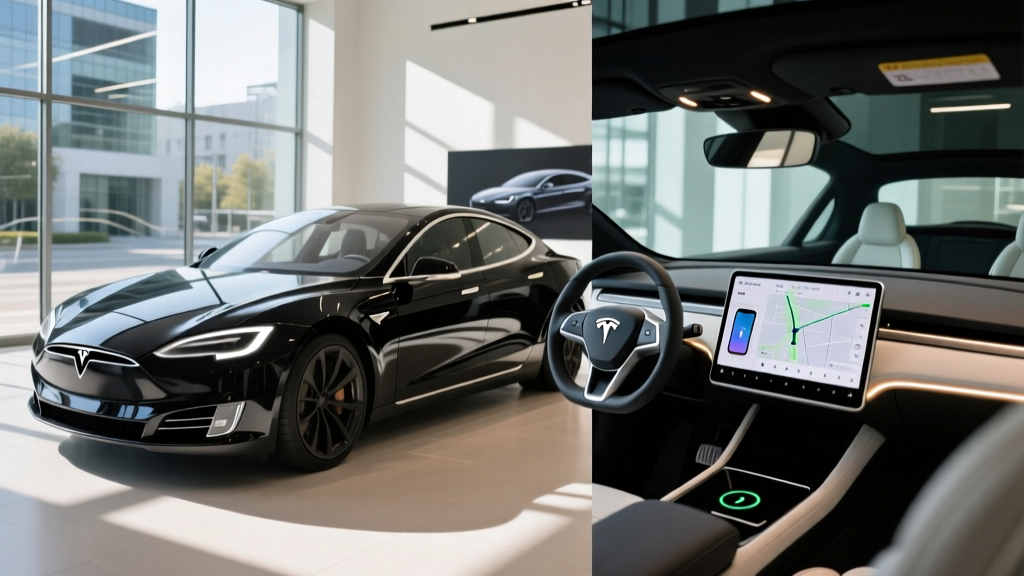
The Truth About the Tesla Employee Discount
If you've searched for ways to lower the price of a new Tesla, you've likely encountered the phrase Tesla employee discount. Unlike legacy automakers that offer well-publicized "Friends & Family" or "Supplier" pricing programs, Tesla's employee purchase benefit is deliberately opaque. There is no public landing page, no printable discount code, and no standardized percentage advertised on Tesla's website. What exists is an internal perk that varies by employment status, role, vehicle availability, and timing — and it rarely delivers the deep cuts that Ford or GM employee pricing might suggest.
In this review, we break down what the Tesla employee discount actually looks like in 2026, how much you can realistically save on a 2026 Tesla Model Y Long Range AWD, and whether stacking it with the federal §30D tax credit makes Tesla ownership meaningfully cheaper. We also put the Model Y Long Range through a full spec review so you can judge the vehicle on its merits regardless of how you buy it.
| Spec | Value |
|---|---|
| EPA Range | 320 miles |
| Battery (usable) | ~78.1 kWh, NMC chemistry |
| Drivetrain | Dual-motor AWD |
| Horsepower | 384 hp combined |
| 0–60 mph | 4.8 seconds |
| Peak DC Fast Charge | 250 kW |
| 10–80% DC Charge Time | ~27 minutes |
| Level 2 Home Charge Rate | 11.5 kW (~44 mi/hr) |
| Efficiency | 122 MPGe combined / 28 kWh/100 mi |
| Cargo (behind 2nd row) | 30.2 cu ft |
| Cargo (seats folded) | 72.1 cu ft |
| Rear Legroom | 38.4 in |
| Base MSRP | $44,990 |
| As-Tested (w/ FSD, paint, wheels) | ~$54,480 |
| Battery & Drive Unit Warranty | 8 years / 120,000 miles |
| Basic Vehicle Warranty | 4 years / 50,000 miles |
How the Tesla Employee Discount Actually Works
Tesla's employee vehicle purchase program is an internal benefit extended to full-time employees. Historically, it has not been a flat percentage off MSRP the way GM's "Employee Pricing for Everyone" events work. Instead, the benefit typically takes one of several forms:
- Direct MSRP reduction — a modest discount (historically in the range of $1,000–$3,000 off, depending on model and quarter) applied at the time of purchase.
- Referral or credit bonuses — internal credits applied toward vehicle purchase, Supercharging, or accessories.
- Inventory or demo vehicles — access to loaner, demo, or end-of-quarter inventory at reduced pricing, which can yield deeper savings than a standard employee discount.
- Lease/subsidy programs — some Tesla employees receive commuting or vehicle-use benefits that reduce effective monthly cost without altering the sticker price.
The exact structure changes frequently. Tesla has been known to pause, modify, or reintroduce the benefit based on production capacity, demand, and quarter-end delivery targets. Employees are typically required to purchase through a dedicated internal portal and the vehicle is registered to the employee (not transferable immediately). Always confirm current program terms with Tesla HR or your internal benefits administrator before counting on a specific dollar amount.
Real-World Range: EPA Sticker vs. What You'll Actually Get
EPA Estimated Range: 320 miles (Long Range AWD)
Real-World Expectation: Expect 260–290 miles on mixed highway driving at 70–75 mph. In cold weather (below 32°F), plan for 200–240 miles of usable range before needing a charge. City and suburban driving with regenerative braking can approach or slightly exceed the EPA figure.
The Model Y Long Range's 320-mile EPA rating remains one of the strongest in the compact luxury EV crossover segment. However, as with every EV, that number assumes a specific test cycle that doesn't fully replicate sustained highway speeds, elevation changes, or winter conditions. Tesla's heat pump — standard on all current Model Y trims — significantly mitigates cold-weather range loss compared to older EVs using resistive cabin heating, but physics still wins: a 20–25% reduction in range at highway speeds in sub-freezing temperatures is typical and consistent with independent testing data from fueleconomy.gov.
For daily commuting under 80 miles round-trip, the Model Y Long Range will rarely require mid-day charging, even in winter. For road trips exceeding 250 miles one-way, plan at least one DC fast-charging stop using Tesla's built-in route planner, which preconditions the battery for optimal charge speed.
Charging Speed: DC Fast, Level 2, and the Charge Curve Reality
| Charge Level | Power (kW) | Miles Added per Hour | Typical Use Case |
|---|---|---|---|
| Level 1 (120V household) | ~1.4 kW | ~4–5 mi/hr | Emergency / overnight trickle |
| Level 2 (240V, 48A Wall Connector) | 11.5 kW | ~44 mi/hr | Daily home charging |
| DC Fast (Tesla Supercharger V3) | Peak 250 kW | ~180 mi in 15 min | Road trips |
| DC Fast (CCS adapter, non-Tesla) | Up to ~200 kW | Varies by station | Non-Tesla networks |
The Model Y Long Range peaks at 250 kW on Tesla's V3 Superchargers, but that peak is sustained only briefly — typically between 10–30% state of charge. Above 50% SoC, the charge curve tapers significantly, dropping below 100 kW around 65% and below 50 kW past 80%. This is why Tesla (and every EV manufacturer) quotes 10–80% charge times rather than 0–100%: the final 20% can take as long as the first 70%.
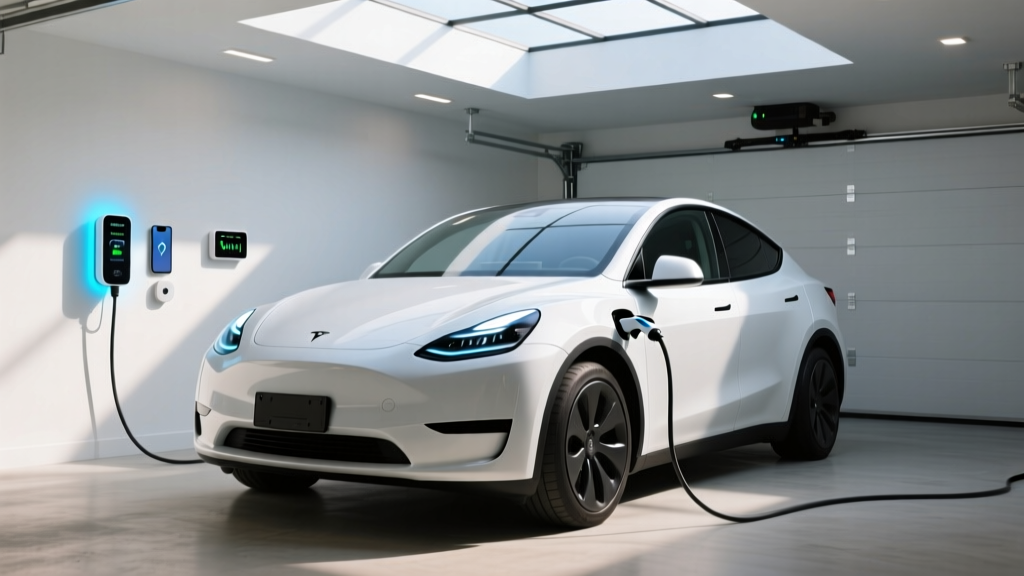
At home, a Tesla Wall Connector on a 60-amp circuit delivers 11.5 kW (48 amps continuous), adding roughly 44 miles of range per hour. A full overnight charge from 20% to 80% takes about 4–5 hours — more than sufficient for any daily driving pattern. Installation cost for a dedicated 240V/60A circuit typically runs $800–$2,500 depending on panel proximity and local permitting, according to industry estimates.
Tesla now ships all vehicles with a NACS (North American Charging Standard) port natively. A CCS1 adapter is available for access to Electrify America and other non-Tesla DC networks, though Tesla's own Supercharger network remains the most reliable option for road-trip charging in 2026.
Federal Tax Credit Eligibility: The §30D Breakdown
The federal EV tax credit under IRS §30D remains one of the most impactful purchase incentives available, but eligibility depends on multiple intersecting requirements:
- MSRP cap: The Model Y qualifies as an SUV under IRS guidelines, with a cap of $80,000. All 2026 Model Y trims fall well under this threshold.
- Buyer income cap: Modified adjusted gross income (MAGI) must not exceed $150,000 (single), $225,000 (head of household), or $300,000 (joint filers).
- Battery sourcing: A percentage of critical minerals and battery components must be sourced from the U.S. or free-trade-agreement countries. Tesla's shift toward LFP batteries in Standard Range trims (sourced from CATL in China) has complicated credit eligibility for those trims, but the Long Range AWD with NMC chemistry has historically met partial or full credit requirements depending on the model year and production batch.
- Point-of-sale transfer: As of 2024, buyers can transfer the credit to the dealer at point of sale, reducing the purchase price directly rather than waiting for a tax refund.
| Scenario | Price |
|---|---|
| Base MSRP | $44,990 |
| After $3,750 partial §30D credit (estimated) | $41,240 |
| After $7,500 full §30D credit (if eligible) | $37,490 |
| With hypothetical $2,000 employee discount stacked | $35,490–$39,240 |
| As-tested with FSD + red paint + 20" wheels ($54,480 MSRP) | $46,980–$50,730 after credit |
Important caveat: The exact credit amount for any given Model Y depends on the battery's mineral and component sourcing at the time of manufacture, which can vary by production batch. Always verify the specific vehicle's eligibility on the fueleconomy.gov tax credit lookup tool before purchase. Consult a tax professional for your personal eligibility.
Pros and Cons: Model Y Long Range AWD
Pros
- 320-mile EPA range — among the best in its class
- Access to Tesla Supercharger network (most reliable DC charging in the U.S.)
- 250 kW peak DC charge speed with strong 10–80% time (~27 min)
- Spacious cargo area (72.1 cu ft seats folded) with flat load floor
- Standard heat pump reduces cold-weather range loss
- Over-the-air updates continuously add features
- Strong resale value relative to non-Tesla EVs
Cons
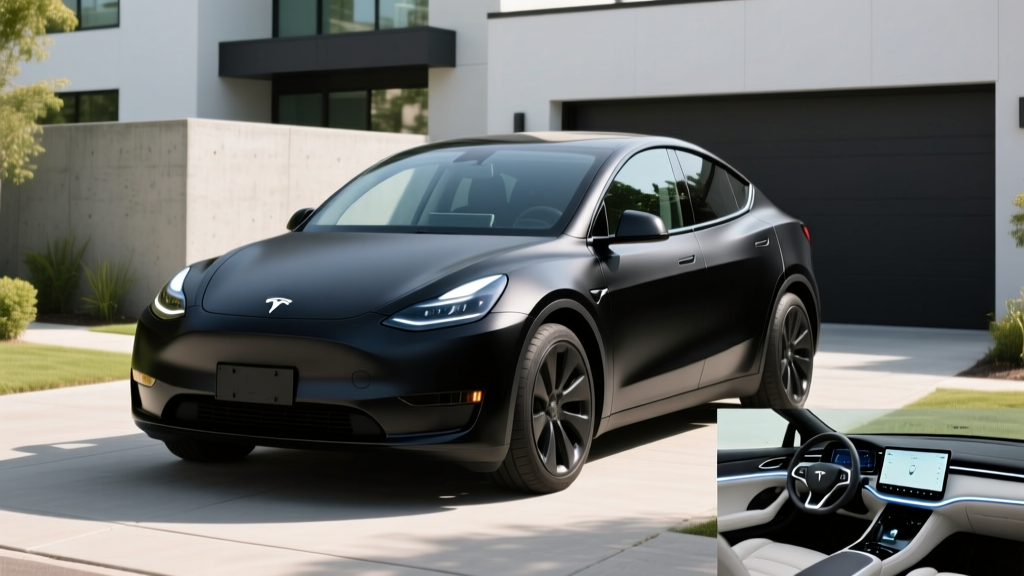
- Minimalist interior lacks physical controls; all functions routed through touchscreen
- No Apple CarPlay or Android Auto support
- Ride quality firm on 20" wheels; road noise noticeable at highway speed
- FSD (Supervised) remains a Level 2 driver-assist — not autonomous
- Employee discount is inconsistent and not publicly verifiable
- LFP battery on Standard Range trim may affect tax credit eligibility
- No head-up display or traditional instrument cluster
Who Should Buy the Model Y Long Range — and Who Shouldn't
Best for: Daily commuters covering 40–100 miles round-trip, small families needing three-across rear seating and substantial cargo space, and road-trip-oriented drivers who value Supercharger access above all else. The 320-mile range and 250 kW charging make it genuinely practical for multi-state drives without excessive downtime.
Consider alternatives if: You need a third row (look at the Model X or Kia EV9), you prioritize interior material quality and physical controls (BMW iX, Genesis Electrified GV70), or you want Apple CarPlay integration (nearly every competitor). If your budget is tighter and you don't need AWD, the Model Y Standard Range RWD starts lower but sacrifices range and may face tax-credit complications.
Is the Tesla Employee Discount Worth Relying On?
If you're a current Tesla employee or have a household member who is, the discount can provide meaningful savings — typically in the $1,000–$3,000 range based on historical patterns — but it should be treated as a bonus, not the foundation of your purchase decision. The discount is not guaranteed, varies by quarter and inventory, and cannot always be stacked with every promotional offer Tesla runs.
The more reliable savings lever in 2026 remains the federal §30D tax credit (up to $7,500 at point of sale), combined with any state or utility incentives available in your area. A Model Y Long Range purchased at base MSRP with the full federal credit effectively drops below $38,000 — a price point that competes directly with well-equipped gas-powered compact SUVs when you factor in fuel and maintenance savings over five years.
Does the Tesla employee discount apply to all models?
Historically, the employee purchase benefit has applied to new Tesla vehicles across the lineup, but availability and discount amounts vary by model, trim, and production quarter. High-demand configurations may be excluded. Confirm with Tesla's internal HR portal for current eligibility.
Can I combine the employee discount with the federal tax credit?
Yes — the employee discount reduces the negotiated purchase price, while the §30D tax credit is based on MSRP caps and buyer income, not on whether you received a private discount. They are not mutually exclusive, but always confirm current stacking rules with Tesla and your tax advisor.
What is the real-world highway range of the 2026 Model Y Long Range?
Expect 260–290 miles at sustained 70–75 mph highway speeds in moderate temperatures. In sub-freezing winter conditions, plan for 200–240 miles of usable range. City driving with regenerative braking can approach or exceed the 320-mile EPA estimate.
How fast does the Model Y Long Range charge at home?
On a Tesla Wall Connector with a 60-amp circuit (48A continuous), the Model Y charges at 11.5 kW, adding approximately 44 miles of range per hour. A typical overnight session from 20% to 80% takes about 4–5 hours.
Is the Model Y Long Range eligible for the full $7,500 federal tax credit?
Eligibility depends on battery sourcing at time of manufacture, buyer income, and MSRP caps. The Model Y Long Range AWD with NMC chemistry has historically qualified for partial or full credit, but the exact amount varies by production batch. Verify on fueleconomy.gov before purchasing.
Is FSD (Supervised) self-driving?
No. Tesla's Full Self-Driving (Supervised) is a SAE Level 2 driver-assistance system. The driver must remain fully engaged, hands on or near the wheel, and eyes on the road at all times. It does not make the vehicle autonomous. Only Level 4 services like Waymo operate without a driver.