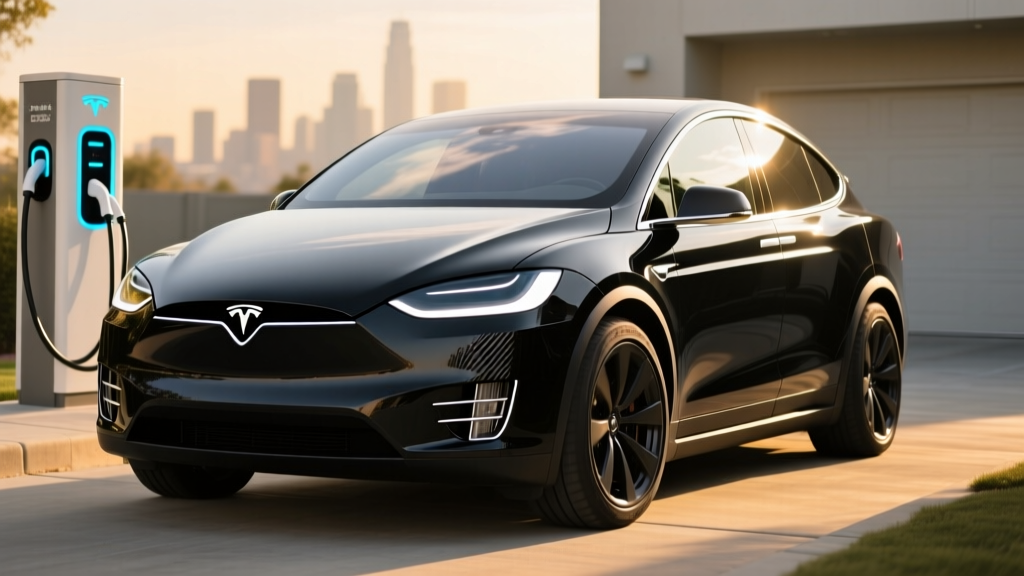
The Tesla Model X remains one of the few all-electric three-row SUVs on the market, and for 2025 it continues with incremental updates rather than a full redesign. If you are researching the 2025 Tesla Model X MSRP, you are likely weighing its premium price against a unique combination of falcon-wing doors, Supercharger access, and genuine seven-seat utility. This review dissects every number that matters — from the window sticker to the charge curve — so you can decide whether Tesla's flagship SUV earns a spot in your garage.
2025 Tesla Model X MSRP and Trim Pricing
Tesla adjusts pricing frequently throughout the year, but as of early 2025 the Model X lineup holds at two trims. The destination fee is included in the figures below.
| Trim | Drivetrain | Base MSRP (incl. destination) | As-Tested Typical |
|---|---|---|---|
| Model X Long Range AWD | Dual-Motor AWD | $77,990 | $82,000–$86,000 (with FSD, wheels, color) |
| Model X Plaid | Tri-Motor AWD | $92,990 | $97,000–$103,000 |
Options that push the as-tested price higher include Full Self-Driving (Supervised) at $8,000, 22-inch Turbine wheels ($5,500), and premium paint colors like Ultra Red or Solid Black ($2,000–$3,000). A six-seat interior with second-row captain's chairs is a no-cost option that replaces the standard seven-seat layout.
Federal Tax Credit Eligibility
Under the current IRS §30D clean vehicle credit, the Model X faces a significant hurdle: the SUV MSRP cap is $80,000. The Long Range AWD at $77,990 clears this threshold, making it potentially eligible for up to $7,500 — provided you meet all other requirements. The Plaid at $92,990 exceeds the cap and is not eligible for the federal credit regardless of buyer income.
§30D Requirements for the Model X Long Range (2025):
- MSRP cap: ≤ $80,000 for SUVs/vans/pickups — Long Range qualifies at $77,990
- Buyer income cap: Modified AGI ≤ $300,000 (joint), $225,000 (head of household), $150,000 (single)
- Battery sourcing: Critical minerals and battery component thresholds must be met — Tesla's supply chain has shifted significantly; verify current-year compliance on fueleconomy.gov before purchasing
- Point-of-sale transfer: You can elect to transfer the credit to the dealer at purchase, reducing your out-of-pocket cost immediately
- Assembly: Final assembly must be in North America — the Model X is built in Fremont, CA ✓
Important: Battery component and critical-mineral sourcing requirements tighten each year. Consult a tax professional and verify on the IRS and fueleconomy.gov sites before relying on the credit.
Range, Efficiency, and Real-World Expectations
The Model X Long Range AWD carries an EPA-estimated range of 335 miles on its standard 20-inch wheels. Step up to the optional 22-inch Turbine wheels and that drops to approximately 311 miles due to increased rolling resistance and weight. The Plaid trim is rated at 326 miles (20-inch) or roughly 300 miles (22-inch).
EPA vs. Real-World Range — What to Actually Expect
EPA estimates are derived from controlled lab cycles that blend city and highway driving. In real-world use:
- Highway cruising (70–80 mph): Expect 275–300 miles in the Long Range on 20-inch wheels. Aerodynamic drag hits large SUVs hard at speed.
- Cold weather (below 32°F): Range drops 15–30% depending on severity. A 335-mile EPA rating can shrink to 235–280 miles in sub-freezing conditions without preconditioning.
- City/commuter driving: You may meet or slightly exceed the EPA figure thanks to regenerative braking recapturing energy in stop-and-go traffic.
- Towing: With a 5,000-lb towing capacity, expect range to drop 35–50% when pulling a loaded trailer.
Efficiency for the Long Range AWD is rated at 100 MPGe combined, which translates to roughly 34 kWh per 100 miles. The heavier Plaid dips to around 98 MPGe combined. For context, these figures are competitive with the Rivian R1S but trail the more aerodynamic BMW iX.
Battery Chemistry, Capacity, and Degradation
The 2025 Model X uses a ~100 kWh battery pack (approximately 95 kWh usable) with NMC (nickel manganese cobalt) chemistry. Tesla does not publish exact pack specifications, but teardown data and EPA test filings consistently point to this capacity range.
| Factor | NMC (Model X) | LFP (Model 3 RWD) |
|---|---|---|
| Energy density | Higher — needed for 335-mi range in a heavy SUV | Lower — acceptable in lighter sedan |
| Cold-weather performance | Better low-temp discharge | More range loss in freezing temps |
| Cycle life | ~1,000–1,500 cycles to 80% SoH | ~3,000+ cycles to 80% SoH |
| Charging recommendation | Daily charge to 80–90% preferred | Tesla recommends charging to 100% weekly |
| Cost | Higher per kWh | Lower per kWh |
Tesla's battery warranty covers 8 years or 150,000 miles (whichever comes first), with a guaranteed minimum of 70% capacity retention over that period. Real-world data from high-mileage Tesla owners suggests NMC packs typically lose 8–12% capacity in the first 100,000 miles, then degrade more slowly. Battery replacement, if needed out of warranty, runs approximately $15,000–$22,000 at current service pricing.
Charging Speed: DC Fast, Level 2, and Level 1
Charging speed is where the Model X benefits from Tesla's mature Supercharger network. Here is the complete picture across all charging levels:
| Charging Level | Power / Rate | Miles Added per Hour | Notes |
|---|---|---|---|
| DC Fast Charge (V3/V4 Supercharger) | Peak 250 kW | ~175 mi in 15 min | 10–80% in approximately 30 minutes; charge curve tapers significantly above 60% |
| DC Fast Charge (CCS adapter, non-Tesla networks) | Up to ~150 kW typical | Varies by station | Adapter included with newer vehicles; verify station output |
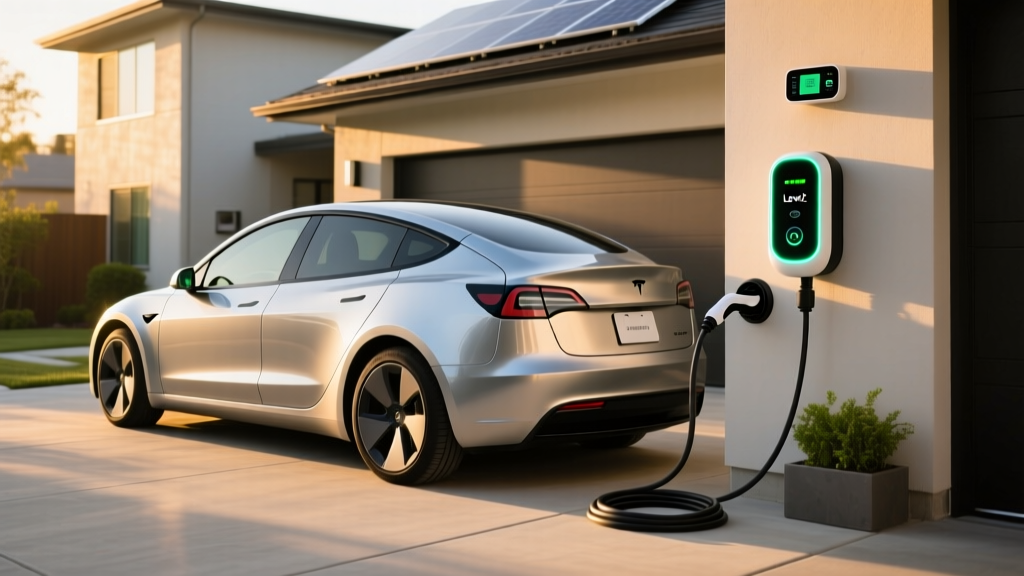
| Level 2 — Tesla Wall Connector (48A / 11.5 kW) | 11.5 kW | ~34 mi/hr | Full charge in ~9 hours; recommended home setup |
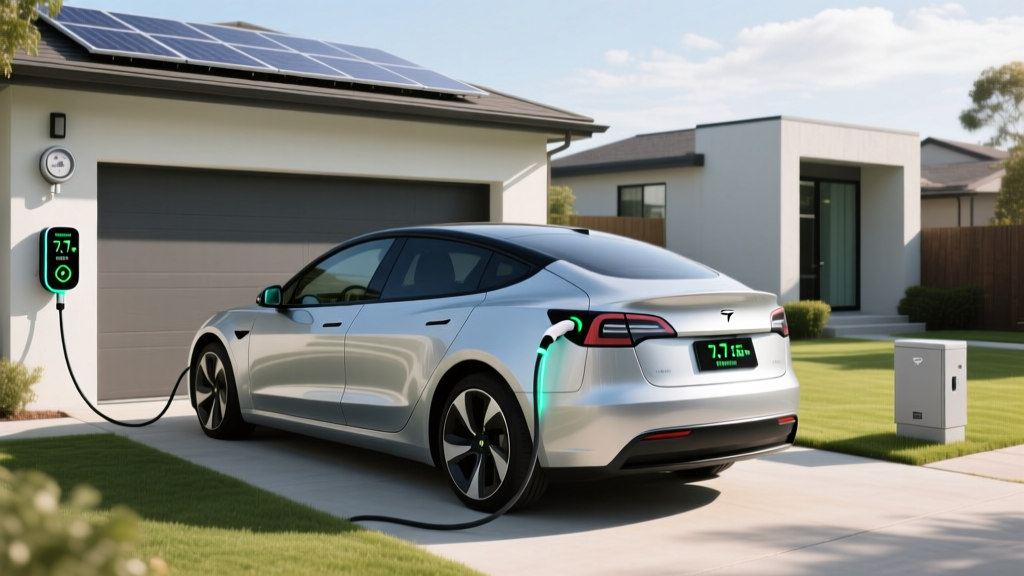
| Level 2 — Mobile Connector (32A / 7.7 kW) | 7.7 kW | ~23 mi/hr | Uses NEMA 14-50 outlet; full charge in ~13 hours |
| Level 1 — Mobile Connector (120V / 12A) | 1.4 kW | ~3–4 mi/hr | Emergency/trickle only; full charge takes 3+ days |
Charge curve reality check: The Model X peaks at 250 kW only when the battery is preconditioned (navigating to a Supercharger triggers this automatically) and the state of charge is below ~30%. By 50% SoC, the rate drops to roughly 150 kW, and above 80% it falls below 50 kW. This is why the 10–80% time is approximately 30 minutes, not the 15 minutes that peak-kW marketing might suggest.
For home charging, a Tesla Wall Connector on a 60-amp circuit delivers the best overnight experience. Budget $500–$800 for the unit and $800–$2,500 for professional installation depending on your electrical panel's capacity and distance from the panel to the garage.
Performance, Drivetrain, and Driving Dynamics
| Spec | Long Range AWD | Plaid |
|---|---|---|
| Drivetrain | Dual-Motor AWD | Tri-Motor AWD |
| Horsepower | 670 hp | 1,020 hp |
| 0–60 mph | 3.8 seconds | 2.5 seconds |
| Top Speed | 155 mph | 163 mph |
| Towing Capacity | 5,000 lbs | 5,000 lbs |
| Curb Weight (approx.) | 5,185 lbs | 5,390 lbs |
The Long Range's 3.8-second 0–60 time is already supercar territory from a decade ago, delivered with the instant torque that defines electric drivetrains. The Plaid's 2.5-second run is genuinely startling in a 5,390-pound SUV — though in practice, few owners will ever use it outside of a merge onto a fast highway.
Ride quality is firm but controlled. The adaptive air suspension offers adjustable ride height — useful for clearing speed bumps, loading cargo, or reducing drag at highway speeds. Steering is precise and weighted appropriately, though the yoke steering wheel (standard on Plaid, optional on Long Range) remains divisive. For low-speed maneuvering and three-point turns, the yoke requires genuine adaptation.
Interior Space, Cargo, and Passenger Comfort
The Model X is one of the few EVs offering genuine three-row seating for up to seven passengers (or six with optional captain's chairs). Here are the key dimensions:
- Cargo volume (behind 3rd row): ~15 cu ft (enough for a few grocery bags or a small stroller)
- Cargo volume (3rd row folded): ~41 cu ft
- Cargo volume (all rear seats folded): ~82 cu ft
- Front trunk (frunk): ~6.6 cu ft — useful for charging cables or a small bag
- Front legroom: 41.2 inches
- Second-row legroom: 40.1 inches
- Third-row legroom: 32.7 inches — suitable for children or short trips only
The falcon-wing rear doors are the Model X's signature feature. They open upward with a powered articulating hinge, making it easy to load children into car seats or access the second row in tight parking spaces. However, they require overhead clearance (roughly 8 feet) and can be slow to operate compared to conventional doors. In freezing rain or heavy snow, the sensors can hesitate, and the door mechanisms add complexity that has historically been a maintenance concern.
The panoramic windshield extends over the front seats, creating an airy cabin but also significant solar heat gain in summer — the glass is heavily tinted to compensate, but some owners add aftermarket ceramic tint.
Technology, Driver Assistance, and Infotainment
The 2025 Model X runs Tesla's latest software on a 17-inch center touchscreen with a 12.3-inch driver instrument cluster and an 8-inch rear-seat entertainment screen. Key tech highlights:
- Autopilot (standard): SAE Level 2 driver assistance including adaptive cruise control, lane-keeping, and automatic emergency braking. The driver must remain attentive with hands on the wheel (or yoke).
- Full Self-Driving Supervised ($8,000 option): Also SAE Level 2 — adds automatic lane changes, navigate-on-autopilot for highway exits, traffic-light recognition, and a city-streets mode. Despite the name, FSD requires continuous driver supervision and is not autonomous driving.
- Infotainment: Netflix, YouTube, and gaming (including Cyberpunk 2077-level titles) while parked. Spotify and Tidal streaming built in. No Apple CarPlay or Android Auto — Tesla's ecosystem is closed.
- Over-the-air updates: Tesla pushes regular software updates that can add features, improve efficiency, or adjust suspension tuning without a service-center visit.
- Sentry Mode and Dashcam: Records from multiple cameras when the vehicle is parked or driving, storing clips on a USB drive.
ADAS Limitation Notice: Autopilot and FSD (Supervised) are SAE Level 2 systems. They assist with steering, acceleration, and braking but require the driver to remain fully engaged, monitor the road, and be prepared to take over instantly. They are not self-driving systems and cannot handle all road conditions, construction zones, or weather events.
Warranty Coverage and Ownership Costs
| Coverage | Term |
|---|---|
| Basic Vehicle Limited Warranty | 4 years / 50,000 miles |
| Battery & Drive Unit Warranty | 8 years / 150,000 miles (min. 70% capacity retention) |
| Roadside Assistance | 4 years / 50,000 miles |
Insurance costs for the Model X are notably higher than average. Expect annual premiums in the $2,800–$4,200 range depending on your state, driving record, and coverage level. Tesla offers its own insurance product in many states, which uses real-time driving data to set rates — safe drivers can see meaningful discounts, but the baseline is still elevated due to repair costs.
Maintenance is minimal compared to internal-combustion SUVs: no oil changes, no spark plugs, no transmission fluid. Cabin air filter replacement, tire rotation, brake fluid checks, and wiper fluid top-offs are the primary service items. Expect $300–$600 annually in routine maintenance. Tire wear, however, can be accelerated by the vehicle's weight and instant torque — budget for replacement tires ($300–$450 each) every 25,000–35,000 miles.
Pros, Cons, and the Verdict
Pros
- Class-leading Supercharger network access with 250 kW peak charging
- Genuine three-row seating with falcon-wing door utility
- 335 miles EPA range (Long Range, 20-inch wheels)
- 5,000-lb towing capacity — rare for a three-row EV
- Exceptional performance (3.8s 0–60 Long Range, 2.5s Plaid)
- Over-the-air updates continuously improve the vehicle
- Long Range trim eligible for up to $7,500 federal tax credit (with caveats)
Cons
- MSRP above $77,990 — premium pricing even before options
- Plaid trim exceeds $80K MSRP cap, disqualifying it from the federal credit
- Third-row legroom is tight (32.7 in) — best for children
- Falcon-wing doors add mechanical complexity and potential maintenance cost
- No Apple CarPlay or Android Auto
- Insurance premiums are significantly above average
- Yoke steering requires adaptation and is controversial for daily use
- Interior material quality does not always match the price point vs. BMW iX or Mercedes EQS SUV
Who Should Buy the 2025 Tesla Model X?
Choose the Model X Long Range if:
- You need three rows and electric range above 300 miles for family road trips
- Supercharger network reliability is a top priority for long-distance travel
- You tow a small trailer, boat, or camper occasionally (up to 5,000 lbs)
- You can charge at home with a Level 2 setup and want overnight convenience
Look elsewhere if:
- You only need two rows — the Model Y, BMW iX, or Hyundai Ioniq 9 offer better value
- Interior luxury and material quality are paramount — consider the BMW iX xDrive50 or Mercedes EQS SUV
- Your budget tops out around $60,000 — the Kia EV9 or Rivian R1S (base) may fit better
- You prefer Apple CarPlay/Android Auto integration — Tesla's closed ecosystem won't change
Frequently Asked Questions
What is the real-world range of the 2025 Tesla Model X?
The EPA rates the Long Range AWD at 335 miles on 20-inch wheels. In real-world highway driving at 70–80 mph, expect 275–300 miles. In cold weather below freezing, that can drop to 235–280 miles. City driving with regenerative braking may match or slightly exceed the EPA estimate.
How fast does the Model X charge at home and on the road?
On a DC fast charger (Tesla V3/V4 Supercharger), the Model X peaks at 250 kW and charges from 10–80% in approximately 30 minutes. At home on a Tesla Wall Connector (11.5 kW Level 2), it adds about 34 miles of range per hour, achieving a full charge overnight in roughly 9 hours.
How much does the 2025 Model X cost after tax credits?
The Long Range AWD starts at $77,990 MSRP. If you qualify for the full $7,500 federal §30D credit (meeting income, battery-sourcing, and MSRP requirements), the effective price drops to approximately $70,490. The Plaid at $92,990 does not qualify for the federal credit due to the $80,000 SUV MSRP cap. State incentives may provide additional savings — check your state's energy office for current programs.
Does the 2025 Tesla Model X qualify for the federal EV tax credit?
The Long Range AWD potentially qualifies, as its $77,990 MSRP falls under the $80,000 SUV cap. However, eligibility also depends on your modified adjusted gross income (≤$300K joint / ≤$150K single), battery component and critical-mineral sourcing compliance, and North American final assembly (the Model X is built in Fremont, CA). The Plaid trim does not qualify. Always verify current eligibility on fueleconomy.gov and consult a tax professional.
Is the Model X worth buying vs. the Rivian R1S or BMW iX?
The Model X wins on Supercharger network access, falcon-wing door utility, and proven long-range efficiency. The Rivian R1S offers superior off-road capability, a more conventional (and reliable) door design, and competitive range. The BMW iX provides a more luxurious interior and Apple CarPlay but lacks a third row. If three-row electric seating and road-trip charging infrastructure are your top priorities, the Model X remains the strongest choice in its segment.
What is the battery warranty on the Model X?
Tesla covers the battery and drive unit for 8 years or 150,000 miles, whichever comes first, guaranteeing a minimum of 70% capacity retention. If the battery degrades below that threshold within the warranty period, Tesla will repair or replace it at no cost.
Sources: EPA fuel economy data via fueleconomy.gov, Tesla official specifications, IRS §30D clean vehicle credit guidelines. Pricing and tax credit rules reflect early 2025 information and are subject to change. Verify all figures before purchasing.