Quick Answer: Can You Charge an Electric Vehicle at Home?
Yes — and it's how roughly 80% of EV owners do the majority of their charging. You have two realistic options:
- Level 1 (120V): Plug into any standard household outlet. Adds 3–5 miles of range per hour. Costs $0 for equipment (use the cord that comes with the car). Best for PHEVs or BEVs driven under 30 miles/day.
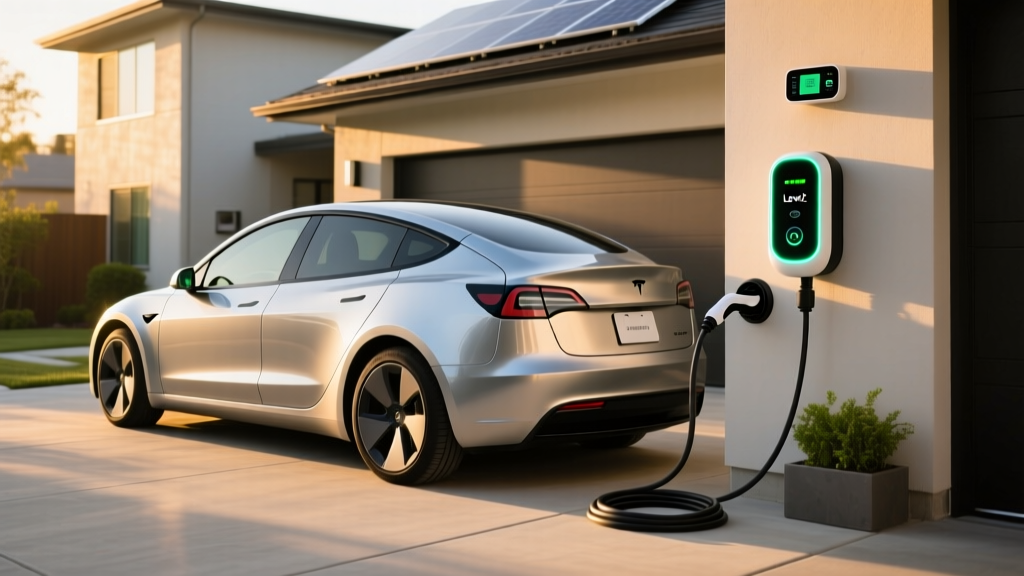
- Level 2 (240V): Requires a dedicated circuit and a wall-mounted or plug-in charger (NACS or J1772 connector). Adds 25–44 miles of range per hour. Equipment runs $200–$700; professional installation typically $500–$2,000 depending on panel capacity and run length. Fully recharges most EVs overnight.
If your daily commute is under 40 miles and you can park near an outlet, Level 1 may be enough to start. If you drive more, want faster turnaround, or own a large-battery BEV (80+ kWh), budget for a Level 2 install.
Level 1 vs Level 2: What Each Actually Delivers
The single most important distinction in home EV charging is kW (kilowatts) = charging power versus kWh (kilowatt-hours) = battery energy capacity. Your charger's kW rating determines how fast energy flows into the battery's kWh tank.
| Level | Voltage | Power (kW) | Miles Added/Hour | Full Charge Time (80 kWh Battery) | Equipment Cost |
|---|---|---|---|---|---|
| Level 1 | 120V | 1.0–1.4 kW | 3–5 mi | 55–80 hours | $0 (included cord) |
| Level 2 (24A) | 240V | 5.8 kW | 17–22 mi | 14–16 hours | $200–$400 |
| Level 2 (32A) | 240V | 7.7 kW | 25–30 mi | 10–12 hours | $300–$550 |
| Level 2 (48A) | 240V | 11.5 kW | 35–44 mi | 7–9 hours | $400–$700 |
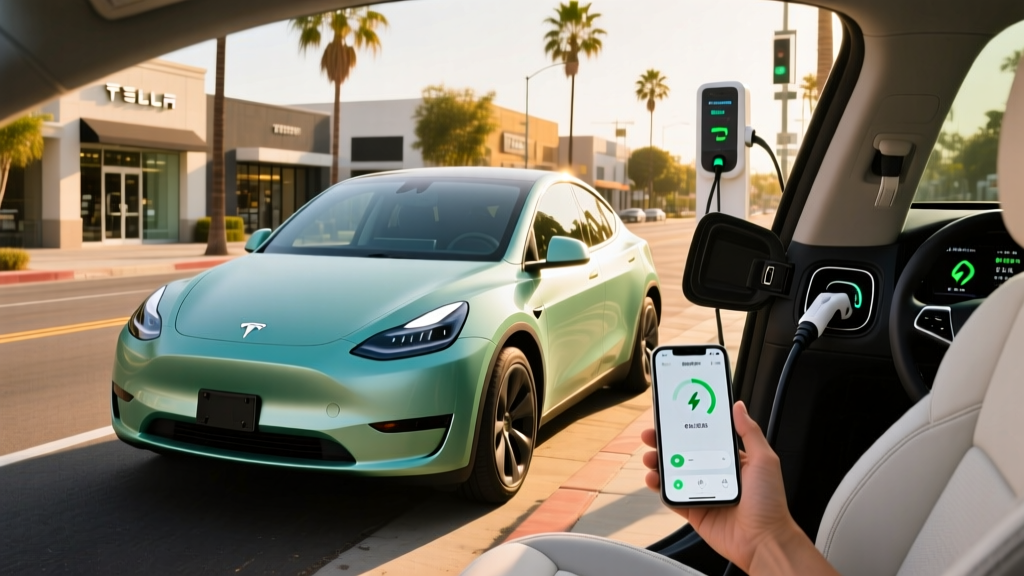
Real-world context: A 2026 Tesla Model 3 Long Range with an 82 kWh (usable ~79 kWh) battery and 4.0 mi/kWh efficiency gains roughly 30 miles per hour on a 7.7 kW Level 2 charger. Plug in at 9 PM with 20% remaining and you'll wake up at 7 AM near 90% — more than enough for a 200-mile day. That same session on Level 1 adds only ~35 miles over 10 hours — barely covering a moderate commute.
Home Charger Installation: Real Cost Breakdown
The sticker price of a Level 2 charger (EVSE — Electric Vehicle Supply Equipment) is only part of the equation. Electrical work frequently exceeds hardware cost, especially in older homes.
| Item | Low End | High End | Notes |
|---|---|---|---|
| Level 2 EVSE (hardwired or NEMA 14-50 plug) | $200 | $700 | Emporia, ChargePoint, Wallbox, Tesla Wall Connector |
| Electrician labor (licensed) | $300 | $1,200 | Depends on run length from panel to garage/carport |
| Materials (wire, conduit, breaker) | $100 | $400 | 6 AWG copper for 48A; longer runs = more cost |
| Permit & inspection | $50 | $250 | Required in most jurisdictions; varies by municipality |
| Electrical panel upgrade (if needed) | $1,500 | $4,000 | Common in homes with 100A service adding a 60A circuit |
| Total (no panel upgrade) | $650 | $2,550 | |
| Total (with panel upgrade) | $2,150 | $6,550 |
Panel capacity is the hidden gotcha. A 48A Level 2 charger requires a 60A breaker (the National Electrical Code requires circuits rated at 125% of continuous load). If your home has a 100A main panel already near capacity, an electrician may recommend upgrading to 200A — adding $1,500–$4,000. Always get a load calculation before committing to a charger amperage.
Utility rebates can offset costs significantly. Many utilities offer $250–$1,000 rebates for Level 2 installations, and some provide time-of-use (TOU) rate plans that cut charging costs by 40–60% during off-peak hours. Check with your local utility before installing.
Home Charging Cost vs Gas: The Real Savings Math
Let's compare annual fueling costs for a typical 12,000-mile/year driver using 2026 national averages.
| Metric | EV (Home Level 2) | Gas Sedan (30 MPG) | Hybrid (50 MPG) |
|---|---|---|---|
| Energy/fuel price | $0.16/kWh (national avg) | $3.30/gallon | $3.30/gallon |
| Efficiency | 3.5 mi/kWh (typical BEV) | 30 MPG | 50 MPG |
| Annual energy/fuel cost | $549 | $1,320 | $792 |
| Annual savings vs gas | $771 | — | $528 vs gas |
| 5-year fuel savings vs gas | $3,855 | — | $2,640 vs gas |
With a TOU rate plan charging at $0.09/kWh overnight, the EV's annual cost drops to roughly $309 — saving over $1,000/year versus gas and paying off a Level 2 installation within 1–2 years.
Maintenance savings compound. BEVs have no oil changes, no spark plugs, no transmission fluid, and regenerative braking extends pad life significantly. According to the DOE, EV maintenance costs average about $0.061/mile versus $0.101/mile for gas vehicles — a $480/year difference at 12,000 miles.
Real-World Ownership: What First-Time EV Buyers Should Know
Home charging convenience is real, but honest ownership planning means accounting for these variables:
Climate and Range Loss
Cold weather reduces EV range by 15–30% in freezing temperatures because the battery must be heated and cabin heating draws significant energy (unlike gas cars that use waste engine heat). A 310-mile EPA-rated EV may deliver 220–260 miles in sub-30°F conditions. Home charging mitigates this: preconditioning while plugged in warms the battery using grid power rather than battery power, preserving range for your drive.
Apartment and Street Parking Challenges
Roughly 30% of US households lack access to dedicated off-street parking. If you rent, live in a condo, or park on the street, home Level 2 charging may not be feasible without landlord or HOA cooperation. Right-to-charge laws in states like California, Colorado, and Florida require HOAs to permit reasonable installations, but the process still takes negotiation. In these cases, rely on workplace charging, public DC fast chargers, or consider a PHEV with 30–45 miles of electric range and a smaller battery that charges fully on Level 1 overnight.
Driving Pattern Fit
| Daily Miles | Home Charging Access | Best Fit |
|---|---|---|
| Under 30 mi | Level 1 outlet available | BEV (Level 1 sufficient) or PHEV |
| 30–60 mi | Level 2 installed | BEV — wakes up fully charged daily |
| 60–100 mi | Level 2 installed | BEV with 300+ mi EPA range |
| 100+ mi or frequent road trips | Level 2 + DC fast network access | BEV with fast charging (200+ kW peak) or PHEV |
| Any | No home/work charging | Hybrid (HEV) — no plug needed |
Common Home Charging Misconceptions
| Myth | Fact |
|---|---|
| "Home charging will spike my electric bill" | Adding 12,000 miles of EV driving at $0.16/kWh adds ~$550/year ($46/month). Most households see a 20–35% increase in total electricity use but eliminate $1,000–$1,500 in gas costs. |
| "I need a 48A charger for any EV" | Most EVs have onboard chargers limited to 7.7–11.5 kW. A 32A (7.7 kW) charger fully serves vehicles like the Hyundai Ioniq 5 (10.9 kW onboard) and costs less to install. Match charger amperage to your car's onboard charger and your panel capacity. |
| "Charging to 100% every night is best" | NMC/NCA batteries last longest when kept between 20–80% for daily use. Set your car's charge limit to 80% for commuting and 100% only before long trips. LFP batteries (Tesla Model 3 RWD, some BYD models) tolerate regular 100% charges without significant degradation. |
| "My house wiring can't handle an EV" | Most homes built after 1980 with 200A service can accommodate a Level 2 charger without panel upgrades. A licensed electrician's load calculation (typically $100–$200) will confirm this before you buy equipment. |
| "Level 1 is too slow to be useful" | For PHEVs with 10–18 kWh batteries, Level 1 delivers a full charge in 3–5 hours overnight. For BEVs driven under 30 miles daily, Level 1 replenishes a day's driving in 6–10 hours — adequate if you're parked at home most of the time. |
Federal Tax Credits and Utility Incentives for Home Charging
The IRS §30D federal tax credit primarily applies to the vehicle itself (up to $7,500 for eligible new EVs, subject to MSRP caps, buyer income limits, and battery sourcing requirements), but a separate provision — §30C Alternative Fuel Vehicle Refueling Property Credit — covers home charging equipment:
- 30% of charger hardware and installation costs, up to $1,000
- Must be installed at your primary residence
- The property must be in a qualifying census tract (many suburban and rural areas qualify; most dense urban tracts do not)
- Available through 2032 under current law
Combine the §30C credit with a utility rebate ($250–$750 typical) and a $1,200 Level 2 installation can net out at $400–$600 out of pocket.
Decision Framework: Should You Install a Home Charger?
Choose Level 1 (120V outlet) if:
- You drive a PHEV or a BEV with under 30 miles of daily driving
- Your electrical panel has no spare capacity and upgrade costs are prohibitive
- You rent and cannot modify the property
- You want to test EV ownership before investing in Level 2 infrastructure
Choose Level 2 (240V) installation if:
- You drive a BEV and cover 30+ miles daily
- Your battery is 75+ kWh and you need full overnight replenishment
- You have off-street parking (garage, carport, or driveway) near your panel
- Your utility offers TOU rates that make overnight charging substantially cheaper
- You plan to stay in your home 3+ years (installation pays for itself in fuel savings)
Choose public/DC fast charging or a hybrid if:
- You lack home and workplace charging access
- You frequently drive 200+ miles in a day and need rapid turnaround
- You live in an apartment without EV infrastructure and your HOA/landlord won't cooperate
Frequently Asked Questions
Can I install a Level 2 charger myself?
If you choose a plug-in model with a NEMA 14-50 connector and already have a properly wired 14-50 outlet (common for electric ranges and dryers), you can plug in yourself. However, hardwired installations and any new circuit work should be done by a licensed electrician to meet code, pass inspection, and maintain your home insurance coverage. DIY electrical work on 240V/60A circuits carries serious fire and shock risk.
What's the best home EV charger to buy in 2026?
Top-performing Level 2 chargers include the Tesla Wall Connector ($420, 48A, NACS native), ChargePoint Home Flex ($550–$700, up to 50A, J1772 with NACS adapter), and Emporia Vue ($250–$350, 48A, J1772). Key criteria: UL certification, connector compatibility with your vehicle, amperage matching your panel capacity, and Wi-Fi-enabled scheduling for TOU rate optimization.
Will charging at home degrade my EV battery?
Home Level 2 charging is actually gentler on batteries than DC fast charging because lower power generates less heat. Battery degradation is primarily driven by sustained high state-of-charge, extreme temperatures, and frequent DC fast charging. Set your charge limit to 80% for daily driving, avoid leaving the car at 100% for extended periods (NMC/NCA chemistry), and your battery should retain 85–90%+ capacity after 100,000 miles based on current fleet data.
How long does a full Level 2 charge take?
Depends on battery size and charger amperage. A 7.7 kW (32A) charger adds roughly 25–30 miles per hour. For a 2026 Chevrolet Equinox EV (85 kWh usable, ~315 mi EPA), a 10–80% charge takes approximately 8 hours on 7.7 kW or 5.5 hours on 11.5 kW (48A). For a smaller-battery PHEV like the Toyota RAV4 Prime (18.1 kWh), Level 2 delivers a full 0–100% charge in about 2.5 hours at 7.7 kW.
Is a smart charger worth the extra cost?
Smart (Wi-Fi-connected) chargers cost $50–$150 more than dumb units but enable scheduled charging during off-peak TOU hours, energy-use tracking, and integration with solar panels or home batteries. If your utility offers TOU rates, the scheduling feature alone typically saves $15–$30/month — paying back the premium within 6–12 months.