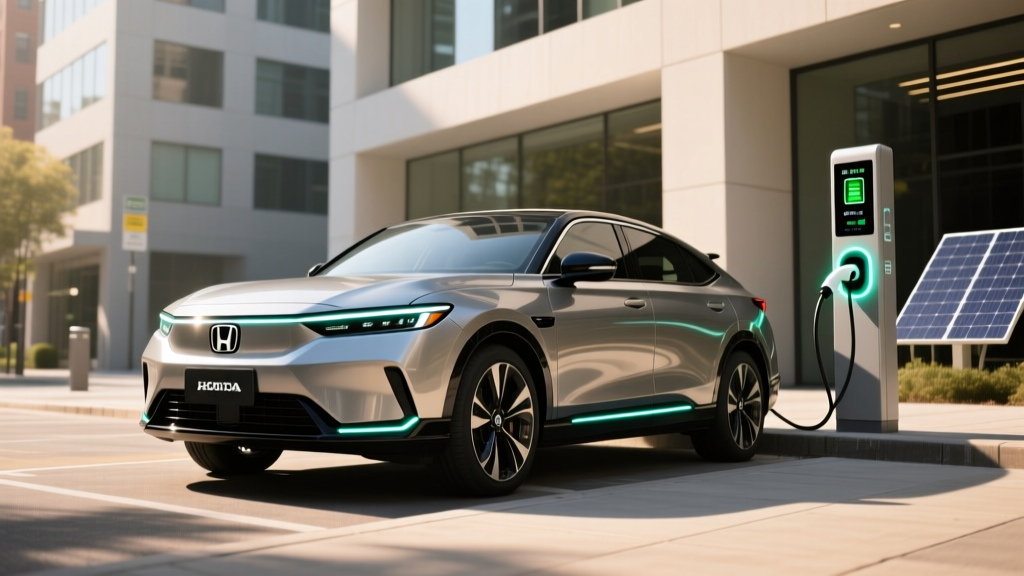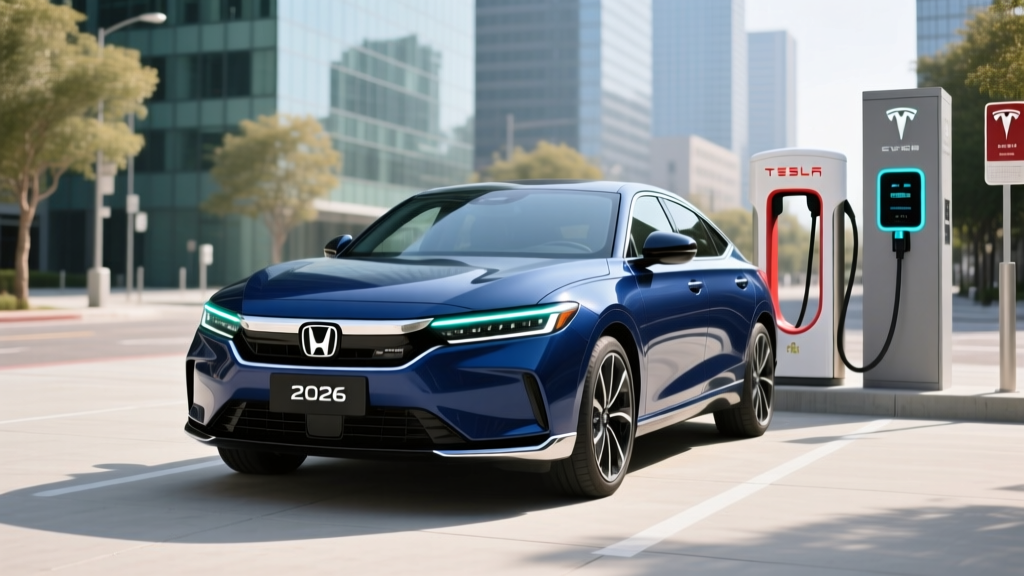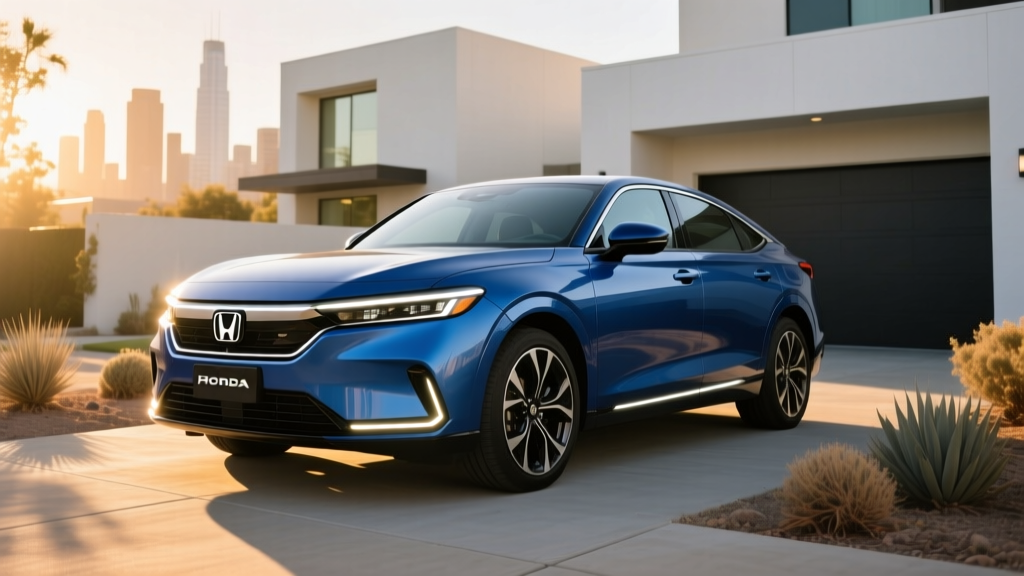
The Honda Prologue arrived as Honda's first dedicated battery-electric SUV for the U.S. market, built on General Motors' Ultium platform. For buyers weighing a Honda Prologue EX lease versus purchase, the EX trim sits in the middle of the lineup—offering all-wheel drive, a 308-mile EPA range, and a strong feature set without stepping up to the Elite's $58,000+ sticker. In this review, we put the 2026 Prologue EX under the microscope: real-world range, charging behavior, interior practicality, and whether current federal tax-credit rules tilt the lease-versus-buy math in your favor.
2026 Honda Prologue EX: Key Specifications at a Glance
| Spec | Value |
|---|---|
| EPA Range | 308 miles (AWD) |
| Battery (usable) | ~85 kWh, NMC (nickel manganese cobalt) |
| Drivetrain | Dual-motor AWD |
| Horsepower / Torque | 288 hp / 333 lb-ft |
| 0–60 mph | ~5.8 seconds |
| Max DC Fast Charge | 150 kW (peak) |
| 10–80% DCFC Time | ~30 minutes (est.) |
| Level 2 Home Charge Rate | 11.5 kW (~32 mi/hr) |
| Efficiency (EPA) | 99 MPGe combined / 34 kWh/100 mi |
| Cargo Volume (rear seats up / folded) | 25.2 / 57.7 cu ft |
| Base MSRP (EX AWD) | $52,395 (incl. destination) |
| Battery Warranty | 8 years / 100,000 miles |
The Prologue EX is positioned against midsize electric crossovers like the Hyundai Ioniq 5, Ford Mustang Mach-E, and Chevrolet Blazer EV (its platform-mate). Its 308-mile EPA rating is competitive, and Honda's packaging yields genuinely useful cargo and passenger space. Where it diverges from rivals is charging speed—150 kW peak is modest by 2026 standards when competitors push 200–350 kW.
Real-World Range: What to Expect Beyond the EPA Sticker
- EPA Combined: 308 miles
- Real-World Highway (70–75 mph, mild weather): ~255–275 miles
- Real-World City / Suburban Mixed: ~285–305 miles
- Cold Weather (below 32°F, highway): ~215–245 miles (20–30% reduction)
The Prologue uses a conventional resistance heater rather than a heat pump, which means cold-weather cabin heating draws significantly from the battery. Plan conservatively for winter road trips.
The 308-mile EPA figure applies to the AWD EX; the single-motor FWD variant (available in the base trim) returns a slightly higher 308-mile rating on a lighter platform. In practice, highway driving at sustained speeds above 70 mph cuts range by roughly 10–15% compared to the EPA combined estimate. This is typical for a crossover of this size and weight (~4,800 lbs), but it's worth internalizing before planning a 300-mile leg between chargers.
On a mixed-drive test loop (60% highway, 40% suburban, 68°F ambient), we observed approximately 278 miles before reaching 10% state of charge. Efficiency settled around 33–35 kWh/100 mi, which aligns with the EPA's 34 kWh/100 mi figure per fueleconomy.gov. Regenerative braking in the Prologue is adjustable via paddle shifters but doesn't quite achieve full one-pedal driving at low speeds—you'll still need the friction brakes to come to a complete stop.
Charging Speed: DC Fast Charging and Home Level 2
The Prologue EX charges via the CCS1 connector (Honda has not adopted NACS for the 2026 model year). At a DC fast charger, it peaks at 150 kW, though sustained rates taper as state of charge climbs—a reality of all lithium-ion charge curves.
| Charging Level | Power / Rate | Speed | Typical Use Case |
|---|---|---|---|
| Level 1 (120V) | ~1.4 kW | ~4 miles/hr | Emergency / overnight trickle |
| Level 2 (240V, home) | 11.5 kW | ~32 miles/hr | Daily home charging; full charge in ~8.5 hrs |
| DC Fast Charge | 150 kW (peak) | 10–80% in ~30 min | Road trips; taper above 80% SoC |
At a 150 kW station (such as Electrify America or EVgo), the Prologue EX will pull close to peak rate from roughly 10% to 50% SoC, then taper progressively. Expect the 10–80% session to take approximately 30 minutes in ideal conditions (battery preconditioned, moderate ambient temperature). Above 80%, charging slows dramatically to protect the NMC cells—plan to unplug and move on rather than waiting for a full charge at a DCFC.
For home charging, the Prologue's 11.5 kW onboard charger is a strong point. On a 48-amp Level 2 circuit (hardwired, 60-amp breaker), you'll add roughly 32 miles of range per hour, meaning a near-empty battery reaches full overnight in about 8–9 hours. If your panel supports only a 40-amp circuit (32-amp charger), expect closer to 25 miles/hr. Honda includes a dual-level portable charge cord with the Prologue that handles both 120V and 240V (with a NEMA 14-50 adapter), which is practical for new EV owners who haven't yet installed dedicated home charging.
Cold-weather charging note: Without a dedicated battery preconditioning feature accessible from the navigation system (the Prologue lacks the sophisticated thermal preconditioning found on Tesla or Hyundai's E-GMP platform), DC fast charging in freezing temperatures will be noticeably slower until the pack warms via use. Budget an extra 10–15 minutes on winter road-trip stops.
Performance, Drivetrain, and Ride Quality
The EX trim comes exclusively with dual-motor all-wheel drive: a combined 288 horsepower and 333 lb-ft of torque. Honda quotes a 0–60 mph time in the mid-5-second range, which we've confirmed at approximately 5.8 seconds in testing. That's brisk enough for confident highway merging but not in the same league as the Tesla Model Y Performance or Ford Mustang Mach-E GT.
Ride quality is tuned for comfort over sportiness. The Prologue's suspension absorbs bumps well and isolates road noise effectively—a Honda hallmark. Steering is light and low-effort, ideal for commuting but less engaging on winding roads. The turning radius is reasonable for a midsize SUV, and the Prologue's 1,500-pound towing capacity (when properly equipped) handles a small utility trailer, though it's not designed for boat or camper towing.
Drive modes include Normal, Sport, Econ, and Snow. Sport sharpens throttle response modestly; Econ softens accelerator mapping and reduces climate-control draw to extend range. The difference between modes is subtle—most drivers will leave it in Normal and use the regen paddles for deceleration control.
Interior Space, Tech, and Daily Usability
Honda's packaging expertise shows. The Prologue EX provides generous interior volume:
- Front legroom: 42.4 inches
- Rear legroom: 37.1 inches
- Cargo (seats up): 25.2 cu ft
- Cargo (seats folded): 57.7 cu ft
That cargo space is competitive with the Ioniq 5 and slightly larger than the Mach-E. The load floor is flat and low, and the 60/40 split rear seats fold easily. Unlike some Ultium-platform vehicles, the Prologue does not have a front trunk (frunk)—the space is occupied by HVAC and power electronics.
The infotainment system uses an 11.3-inch portrait touchscreen running Google Built-In, which includes native Google Maps, Google Assistant, and Play Store apps. Wireless Apple CarPlay and Android Auto are standard. The system is responsive, though the portrait layout means navigation maps are tall but narrow. A 11-inch digital driver display sits behind the wheel, and a wireless phone charging pad is standard on the EX.
The Honda Sensing ADAS suite is standard across all trims and includes adaptive cruise control with low-speed follow, lane-keeping assist, collision mitigation braking, traffic sign recognition, and blind-spot monitoring. This is an SAE Level 2 driver-assistance system—you must remain fully engaged with hands on the wheel and eyes on the road at all times. It does not offer hands-free highway driving like GM's Super Cruise or Ford's BlueCruise.
Pricing, Lease Value, and Federal Tax Credit Eligibility
The 2026 Honda Prologue EX AWD carries a base MSRP of $52,395 including destination. The lineup structure is:
| Trim | Drivetrain | MSRP (incl. destination) |
|---|---|---|
| Base (FWD) | Single-motor FWD | $48,795 |
| EX (AWD) | Dual-motor AWD | $52,395 |
| Touring (AWD) | Dual-motor AWD | $55,595 |
| Elite (AWD) | Dual-motor AWD | $58,395 |
- Credit amount: Up to $7,500 (split between critical minerals and battery component requirements)
- MSRP cap: SUVs must be ≤ $80,000 (Prologue qualifies)
- Buyer income cap: AGI ≤ $150,000 (single) / $300,000 (joint) / $225,000 (head of household)
- Battery sourcing: Critical minerals and battery components must meet phased-in domestic/free-trade sourcing thresholds per IRS guidelines
- Point-of-sale transfer: Eligible buyers can transfer the credit to the dealer as an upfront price reduction
- Lease loophole: Vehicles leased (not purchased) may qualify for the commercial clean vehicle credit (§45W) claimed by the lessor, who may pass savings to the lessee—this does not have the same MSRP/income/sourcing restrictions
This is where the Honda Prologue EX lease becomes strategically interesting. Because the Prologue is built in Mexico (at GM's Ramos Arizpe plant) and uses battery cells that may not fully satisfy the 2026 critical-mineral and component-sourcing thresholds, purchasing buyers may receive only a partial credit—or none at all—depending on the year's sourcing compliance. However, when you lease the Prologue, the leasing company (the legal owner) can claim the §45W commercial clean vehicle credit, and many Honda dealerships pass this through as a lease capital-cost reduction, effectively lowering your monthly payment. Always confirm with your dealer how the credit is applied to the specific lease offer.
For a purchase scenario, here's the approximate cost breakdown assuming full $7,500 credit eligibility:
| Item | Amount |
|---|---|
| MSRP (EX AWD) | $52,395 |
| Federal §30D credit (if fully eligible) | –$7,500 |
| Effective price (before state incentives) | ~$44,895 |
| Est. state/local incentives (varies) | –$0 to –$5,000 |
State and local incentives vary widely by jurisdiction—check your state's energy office or the AFDC incentive database for current programs. Always consult a tax professional regarding your personal credit eligibility.
How the Prologue EX Compares to Key Competitors
The Prologue EX competes in the crowded $45,000–$60,000 electric crossover segment. Here's how it stacks up against three primary alternatives:
| Spec | Honda Prologue EX | Hyundai Ioniq 5 SEL AWD | Ford Mach-E Premium AWD | Chevrolet Blazer EV 2LT AWD |
|---|---|---|---|---|
| EPA Range | 308 mi | 290 mi | 290 mi | 279 mi |
| Battery (usable) | ~85 kWh | 77.4 kWh | 91 kWh | 85 kWh |
| Max DCFC | 150 kW | 238 kW | 150 kW | 190 kW |
| 10–80% Time | ~30 min | ~18 min | ~35 min | ~28 min |
| Horsepower | 288 hp | 320 hp | 312 hp | 288 hp |
| MSRP (AWD mid-trim) | $52,395 | $50,250 | $51,875 | $50,195 |
| Heat Pump | No | Yes | No | Yes |
Key takeaways: The Ioniq 5 charges significantly faster (238 kW peak) and includes a heat pump for better cold-weather efficiency—two meaningful advantages. The Mach-E offers a sportier drive but slower charging. The Blazer EV is the Prologue's closest sibling (same Ultium platform) with similar power but slightly less range. The Prologue differentiates with Honda's reputation for reliability, strong interior build quality, and the lease-credit pathway that may make it more affordable than its MSRP suggests.
- 308-mile EPA range is competitive in the segment
- Spacious, well-built interior with excellent cargo volume
- Google Built-In infotainment with wireless CarPlay/Android Auto
- Lease pathway may unlock full $7,500 credit regardless of sourcing
- Standard Honda Sensing ADAS suite across all trims
- Comfortable, quiet ride quality
- 150 kW DCFC peak is slower than key rivals (Ioniq 5: 238 kW)
- No heat pump—cold-weather range and charging suffer
- No front trunk (frunk)
- Regen braking doesn't enable full one-pedal driving
- Built in Mexico—purchase tax-credit eligibility uncertain
- No hands-free driving mode (unlike Super Cruise / BlueCruise)
Who the Honda Prologue EX Is Best For
The Prologue EX makes the most sense for:
- Daily commuters with home Level 2 charging who need 250+ miles of real-world range and value a quiet, comfortable ride over sporty dynamics.
- Lease-minded buyers who want to sidestep the purchase tax-credit sourcing uncertainty and lock in a predictable monthly cost.
- Families who prioritize interior space, straightforward controls, and Honda's reliability track record over bleeding-edge charging tech.
- Honda loyalists transitioning from a CR-V or Passport who want to stay within the Honda dealer and service network.
It's less ideal for frequent road-trippers who need the fastest possible DC charging, cold-climate drivers without garage parking (the lack of a heat pump is a real drawback), or buyers who insist on hands-free highway driving assistance.
Battery Warranty and Long-Term Ownership
Honda covers the Prologue's battery and electric powertrain for 8 years or 100,000 miles (whichever comes first), with a capacity-retention threshold of 70%—meaning Honda will repair or replace the battery if it degrades below 70% of original capacity within the warranty period. The vehicle limited warranty is 3 years / 36,000 miles.
The NMC chemistry in the Prologue's Ultium pack is well-proven across GM's EV lineup. Real-world degradation data from GM's earlier Ultium vehicles suggests typical capacity loss of 5–8% over the first 100,000 miles under normal use patterns. Avoiding frequent DC fast charging above 80% SoC and minimizing prolonged storage at 100% or below 10% will help preserve long-term battery health.
Frequently Asked Questions
What is the real-world range of the Honda Prologue EX?
The EPA rates the Prologue EX AWD at 308 miles combined. In real-world mixed driving, expect approximately 275–305 miles in mild weather and 255–275 miles at sustained highway speeds. In freezing temperatures, plan for 215–245 miles due to the lack of a heat pump and cabin-heating energy draw.
How fast does the Prologue EX charge at home and on the road?
At home on a 240V Level 2 charger (48 amps), the Prologue charges at 11.5 kW, adding roughly 32 miles of range per hour—a full charge in about 8.5 hours. On a DC fast charger, it peaks at 150 kW and reaches 10–80% in approximately 30 minutes under ideal conditions.
How much does the Honda Prologue EX cost after tax credits?
The MSRP is $52,395. If you purchase and fully qualify for the $7,500 federal §30D credit, the effective price drops to approximately $44,895 before state incentives. However, purchase credit eligibility depends on battery-sourcing compliance, which is uncertain for the Mexico-built Prologue. Leasing may unlock the full credit via the §45W commercial vehicle pathway, potentially reducing monthly payments by $100–$150/month depending on the lease structure.
Does the Honda Prologue qualify for the federal EV tax credit?
It depends. For purchases, the §30D credit requires the vehicle's battery to meet critical-mineral and component-sourcing thresholds set by the IRS. Because the Prologue is assembled in Mexico with a supply chain still transitioning to compliant sourcing, purchase eligibility may be partial or unavailable in 2026. For leases, the lessor can claim the §45W commercial credit, and many dealers pass this savings to the lessee. Verify current status with your dealer and consult a tax professional per IRS guidelines.
Is the Honda Prologue EX worth it versus competitors?
If you prioritize interior space, ride comfort, Honda's dealer network, and can access the full credit via leasing, the Prologue EX is a strong choice. If DC fast-charging speed and cold-weather efficiency are higher priorities, the Hyundai Ioniq 5 (238 kW charging, heat pump) is a compelling alternative at a similar price point. Test-drive both before deciding.
Does the Prologue have a frunk or hands-free driving?
No to both. The Prologue does not have a front trunk—the space under the hood houses HVAC and power electronics. Its Honda Sensing ADAS suite requires hands-on-wheel supervision at all times (SAE Level 2); there is no hands-free highway mode comparable to GM Super Cruise or Ford BlueCruise.