Quick Verdict: Porsche's Electric Crossover Delivers on the Badge
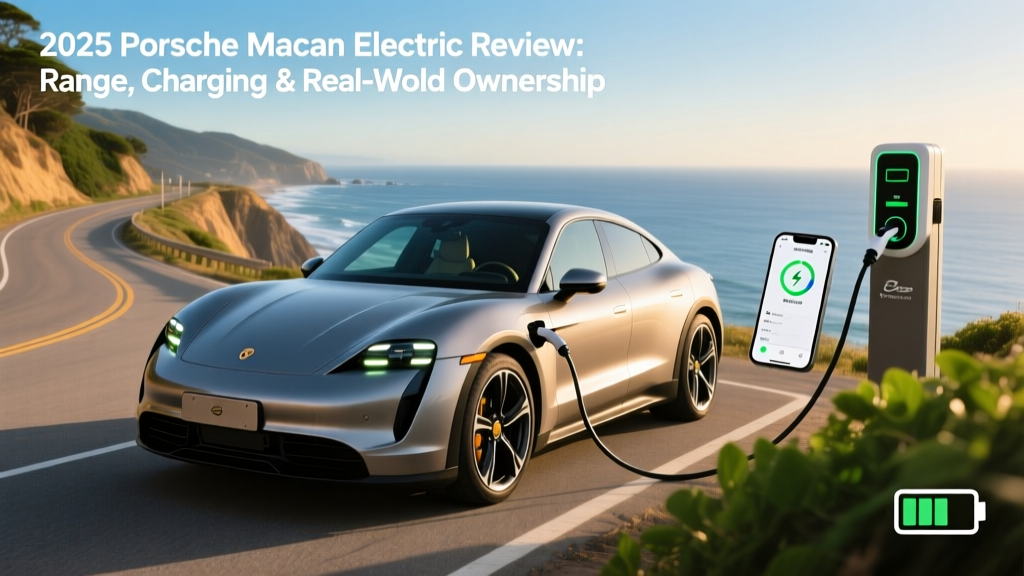
The 2025 Porsche Macan Electric arrives with a promise: bring the brand's performance DNA to a battery-electric platform without sacrificing daily usability. Built on the Premium Platform Electric (PPE) architecture co-developed with Audi, the Macan EV slots into the most competitive luxury electric SUV segment in the market. After analyzing its specs, charging behavior, and ownership economics, the electric Macan earns its place as a driver-focused alternative to the Tesla Model Y Performance and BMW iX — but its premium pricing and federal tax credit ineligibility mean buyers need to weigh the badge against the bottom line.
Specs at a Glance: 2025 Porsche Macan Electric Lineup
| Specification | Macan (Base) | Macan 4 | Macan 4S | Macan Turbo |
|---|---|---|---|---|
| Drivetrain | RWD | AWD (Dual-Motor) | AWD (Dual-Motor) | AWD (Dual-Motor) |
| Horsepower | 335 hp | 402 hp | 509 hp | 630 hp |
| 0-60 mph | 5.4 sec | 4.9 sec | 4.2 sec | 3.1 sec |
| Battery (Gross / Usable) | 100 kWh / 95 kWh | 100 kWh / 95 kWh | 100 kWh / 95 kWh | 100 kWh / 95 kWh |
| Battery Chemistry | NMC (Nickel Manganese Cobalt) | NMC | NMC | NMC |
| EPA Range (est.) | ~308 mi | ~288 mi | ~275 mi | ~268 mi |
| Efficiency (MPGe) | ~95 MPGe | ~90 MPGe | ~88 MPGe | ~85 MPGe |
| Max DC Fast Charge | 270 kW | 270 kW | 270 kW | 270 kW |
| 10-80% DC Charge | ~21 min | ~21 min | ~21 min | ~21 min |
| Level 2 Home Charge (11 kW) | ~10 hrs (0-100%) | ~10 hrs | ~10 hrs | ~10 hrs |
| Base MSRP | $78,800 | $84,300 | $99,300 | $118,500 |
Note: EPA range and efficiency figures are manufacturer-estimated pending final EPA certification. Porsche has published WLTP figures that are typically 10-15% higher than EPA equivalents. We've converted conservatively for US buyers. Check fueleconomy.gov for finalized EPA data.
Range and Efficiency: EPA Sticker vs. Real-World Miles
EPA Estimated: Up to 308 miles (base RWD); 268 miles (Turbo AWD)
Real-World Expectation: ~250-275 miles on highway road trips (70-80 mph); ~215-240 miles in cold weather (below 32°F) with cabin heating active. City driving with regenerative braking can match or slightly exceed EPA estimates.
The Macan Electric's 95 kWh usable battery capacity is among the largest in its class. Porsche uses an NMC (nickel manganese cobalt) chemistry optimized for energy density and sustained power delivery rather than the LFP (lithium iron phosphate) chemistry found in some competitors like the base Tesla Model Y. NMC delivers better cold-weather performance and higher specific energy but comes at a higher cost and slightly faster long-term degradation than LFP — though Porsche's 8-year/100,000-mile battery warranty provides substantial coverage.
The base RWD Macan achieves the highest range thanks to its single-motor efficiency and lighter curb weight. The dual-motor AWD models (4, 4S, Turbo) sacrifice 20-40 miles of range for all-weather traction and significantly more power. On a real-world highway loop at 75 mph in moderate temperatures, expect the Macan 4 to deliver approximately 255-270 miles before hitting 10% State of Charge (SoC). In winter conditions, NMC chemistry holds an advantage over LFP, but you should still budget a 15-25% range reduction when temperatures drop below freezing.
Efficiency hovers around 85-95 MPGe depending on trim — competitive with the BMW iX xDrive50 (~89 MPGe) but trailing the Tesla Model Y Long Range (~117 MPGe). The Macan's weight (over 5,300 lbs for AWD trims) and performance-oriented tire compounds contribute to higher energy consumption. Measured in kWh per 100 miles, the Macan Electric consumes roughly 35-40 kWh/100mi in mixed driving.
Charging Speed: 270 kW Peak with a Smart Charge Curve
| Charging Method | Power / Rate | Time / Miles Added |
|---|---|---|
| DC Fast Charge (Peak) | 270 kW (at 800V station) | 10-80% in ~21 minutes |
| DC Fast Charge (50 kW station) | 50 kW | 10-80% in ~95 minutes |
| Level 2 Home/Public (240V, 48A) | 11 kW | ~28 miles of range per hour; 0-100% in ~10 hours |
| Level 2 (240V, 32A) | 7.7 kW | ~20 miles per hour; 0-100% in ~14 hours |
| Level 1 (120V, 12A) | 1.4 kW | ~3-4 miles per hour |
The Macan Electric's 800-volt architecture is its charging ace. At a compatible DC fast charger — such as Electrify America's 350 kW stalls or Ionity stations in Europe — the Macan can accept a peak rate of 270 kW. Porsche's published 10-80% time of approximately 21 minutes assumes ideal conditions: a preconditioned battery, a charger capable of sustaining 800V/350A, and an ambient temperature above 50°F.
Charging curve reality check: The 270 kW peak is only sustained between roughly 10-30% SoC. From 30-60%, the rate tapers to approximately 180-200 kW. Above 60%, it drops further to around 120 kW, and above 80%, the rate falls to roughly 50-70 kW to protect battery health. This means the practical benefit of 800V architecture is most pronounced in the 10-60% window — adding roughly 180 miles of range in about 12-15 minutes at a capable station. Plan your road trip stops around the 10-80% window; charging from 80-100% at a DC fast charger is painfully slow and rarely worth the wait.
For home charging, the onboard charger maxes out at 11 kW on a Level 2 connection. A 48-amp, 240V hardwired wall connector (like the ChargePoint Home Flex or Porsche's own Mobile Charger Connect) will replenish the 95 kWh battery from empty in about 10 hours. Most owners who plug in nightly with 40-50% remaining will wake up fully charged. Porsche includes a mobile charger with the vehicle that supports both 120V and 240V outlets, though dedicated wall-connector installation is strongly recommended. Budget $500-$1,500 for a professional Level 2 home installation, depending on your electrical panel's proximity to the garage and whether a panel upgrade (200A service) is needed.
The Macan Electric ships with a NACS-compatible charge port in the US market for 2025, granting native access to Tesla Superchargers (V3 and V4) without an adapter. However, note that Tesla V3 Superchargers operate at 400V and cap at 250 kW — you won't see the Macan's full 270 kW potential on those stations. For maximum charge speed, seek out 800V-capable CCS or NACS chargers from Electrify America or similar networks.
Performance: The Turbo Trim is a Supercar in SUV Clothing
Porsche doesn't do slow, and the Macan Electric lineup proves it. Even the base RWD model hits 60 mph in 5.4 seconds with 335 horsepower — quick enough for effortless highway merging. But the real story is at the top of the range.
The Macan Turbo produces 630 horsepower and rockets to 60 mph in 3.1 seconds, making it faster than a base 911 Carrera. Launch Control is standard on AWD trims, and the dual-motor setup provides precise torque vectoring that makes the Macan feel nimble despite its 5,400+ lb curb weight. The 4S splits the difference with 509 hp and a 4.2-second sprint.
All trims feature Porsche's adaptive air suspension with Porsche Active Suspension Management (PASM), rear-axle steering (optional on lower trims, standard on Turbo), and a low center of gravity courtesy of the skateboard-mounted battery pack. The result is handling that defies the SUV form factor. Regenerative braking offers up to 290 kW of recuperation, enabling genuine one-pedal driving in most city scenarios — though Porsche stops short of a full stop without touching the brake pedal, requiring a final friction-brake application.
Interior, Cargo, and Technology
The Macan Electric's cabin is a significant departure from its gasoline predecessor. The dashboard is dominated by a curved 12.6-inch digital instrument cluster and a 10.9-inch central touchscreen running Porsche Communication Management (PCM). An optional 10.9-inch passenger display is available, along with a head-up display with augmented-reality navigation overlays.
Cargo and passenger dimensions:
- Cargo (behind rear seats): ~22.5 cu ft
- Cargo (rear seats folded): ~54.3 cu ft
- Frunk (front trunk): ~5.3 cu ft — enough for a charging cable bag and a small duffel
- Rear legroom: ~35.8 inches
- Front headroom: ~39.5 inches
Cargo space is competitive with the BMW iX but falls short of the Tesla Model Y's 76 cu ft with seats folded. The frunk is modest — the Macan's 800V power electronics consume space that some competitors use for additional storage. Rear-seat legroom is adequate for adults under 6 feet but tighter than the Model Y or Rivian R2.
Driver assistance: The Macan Electric comes with Porsche InnoDrive, which includes adaptive cruise control, lane-keeping assist, and traffic-sign-based speed adjustment. This is an SAE Level 2 system — the driver must remain engaged with hands on or near the wheel at all times. It is not autonomous driving. Porsche does not currently offer a hands-free highway driving system comparable to GM's Super Cruise or Ford's BlueCruise, which is a notable omission at this price point.
Pricing, Trims, and Federal Tax Credit Eligibility
| Trim | Base MSRP | Estimated As-Tested Price* | Federal §30D Tax Credit |
|---|---|---|---|
| Macan (Base RWD) | $78,800 | $84,000-$90,000 | Not Eligible (MSRP cap exceeded) |
| Macan 4 | $84,300 | $92,000-$100,000 | Not Eligible (MSRP cap exceeded) |
| Macan 4S | $99,300 | $108,000-$120,000 | Not Eligible (MSRP cap exceeded) |
| Macan Turbo | $118,500 | $130,000-$145,000 | Not Eligible (MSRP cap exceeded) |
*As-tested prices reflect typical option packages including Premium Plus, adaptive cruise, and metallic paint.
Federal tax credit reality: Under current IRS §30D rules, the new EV tax credit provides up to $7,500 — but it comes with strict eligibility requirements. For SUVs, the MSRP cap is $80,000. Only the base Macan RWD squeaks under that threshold at $78,800, but even a single option package pushes the transaction price above the cap. Additionally, buyers must meet income limits ($150,000 single / $300,000 married filing jointly), and the vehicle must satisfy critical-mineral and battery-component sourcing requirements that are subject to annual tightening. The Macan Electric is assembled in Leipzig, Germany, and its battery supply chain does not currently meet all §30D sourcing thresholds.
Bottom line: Do not count on the $7,500 federal credit when budgeting for a Macan Electric. Consult IRS.gov §30D guidelines and a tax professional for your specific eligibility. Some state-level incentives (California, Colorado, New York) may still apply regardless of federal eligibility — check your state's energy office for details.
Warranty, Ownership Costs, and Long-Term Outlook
Porsche backs the Macan Electric with the following warranty coverage:
- Limited Vehicle Warranty: 4 years / 50,000 miles
- Battery Warranty: 8 years / 100,000 miles (guarantees ≥70% capacity retention)
- Powertrain (Electric Motors): 8 years / 100,000 miles
- Corrosion Perforation: 12 years, unlimited miles
- Free Maintenance: 1 year / 10,000 miles (first scheduled service)
The 70% battery capacity retention threshold is standard for the luxury segment (BMW and Mercedes use the same benchmark; Tesla guarantees 70% on most models). Based on current NMC degradation data from similar PPE-platform vehicles, expect approximately 8-12% capacity loss over the first 100,000 miles under normal use — well within warranty limits. A full battery replacement out of warranty would likely cost $20,000-$28,000 based on current parts pricing, though this figure is expected to decrease as battery costs continue their long-term decline.
Insurance: Expect premiums 15-25% higher than a comparably priced gasoline Macan. Average annual insurance for the Macan 4 Electric runs approximately $2,800-$3,400 depending on your state, driving record, and coverage level.
Charging cost vs. gasoline: At the national average electricity rate of $0.16/kWh, fully charging the Macan's 95 kWh battery costs about $15.20 — delivering roughly 270 miles for an effective fuel cost of $0.056/mile. A gasoline Porsche Macan S at 21 MPG combined and $3.50/gallon costs $0.167/mile. Over 15,000 miles annually, the electric Macan saves approximately $1,665 in fuel costs. DC fast charging on road trips is more expensive ($0.35-$0.48/kWh at Electrify America), narrowing the gap for frequent travelers.
- Class-leading driving dynamics and handling
- 270 kW peak DC charging (800V architecture)
- Premium interior build quality and materials
- Strong real-world range (250+ mi highway)
- NACS port for Tesla Supercharger access
- One-pedal driving with up to 290 kW regen
- No federal tax credit eligibility at any trim
- No hands-free Level 2+ highway driving system
- Cargo space trails Tesla Model Y and Rivian R2
- Heavy curb weight impacts tire wear
- Premium pricing — as-tested Turbo exceeds $140K
- Modest frunk space (5.3 cu ft)
Who Should Buy the 2025 Porsche Macan Electric?
Choose the Macan Electric if: You prioritize driving engagement and build quality above all else, you have reliable home Level 2 charging, you want 800V fast-charging for road trips, and you're willing to pay a premium for the Porsche badge without expecting a tax credit offset.
Look elsewhere if: You need maximum cargo space (consider the Tesla Model Y or Rivian R2), you want hands-free highway driving (GM Cadillac Lyriq with Super Cruise or Ford Mustang Mach-E with BlueCruise), or you need the federal tax credit to make the math work (consider the BMW iX xDrive50 or a fully optioned Tesla Model Y, both of which may qualify depending on sourcing updates).
The Macan Electric is best suited for driving enthusiasts who commute daily and take weekend road trips, value premium materials and brand cachet, and have the budget to absorb higher insurance and the lack of a tax credit. It's a compelling daily driver for households with garage-based Level 2 charging. For fleet buyers or those maximizing value per dollar, the Tesla Model Y Long Range or the BMW iX remain more pragmatic choices.
Frequently Asked Questions
What is the real-world range of the 2025 Porsche Macan Electric?
Expect 250-275 miles on highway road trips in moderate weather for the base RWD model, and 230-255 miles for AWD trims. In cold weather (below 32°F), reduce those figures by 15-25%. City driving with regenerative braking can match or slightly exceed the EPA estimates of 268-308 miles depending on trim.
How fast does the Macan Electric charge at home and on the road?
At a compatible 800V DC fast charger, the Macan peaks at 270 kW and charges from 10-80% in approximately 21 minutes. On a home Level 2 charger (240V, 48A, 11 kW), a full charge takes about 10 hours. On a standard 120V outlet (Level 1), expect only 3-4 miles of range per hour — sufficient only for emergency top-ups.
Does the 2025 Porsche Macan Electric qualify for the federal EV tax credit?
No. Under current IRS §30D rules, the Macan Electric does not qualify for the up-to-$7,500 federal tax credit. The base model's MSRP of $78,800 is under the $80,000 SUV cap, but the vehicle's German assembly and battery supply chain do not meet the critical-mineral and battery-component sourcing requirements. Always verify current eligibility at IRS.gov.
Is the Macan Electric worth it vs. the Tesla Model Y or BMW iX?
If driving dynamics, interior quality, and brand prestige are your top priorities, yes — the Macan Electric is the most engaging vehicle in its segment. If you prioritize value, cargo space, or autonomous-adjacent features, the Tesla Model Y Long Range ($48,000, 310+ mi range, Supercharger network) or the BMW iX xDrive50 ($87,000, ~300 mi range, potential tax credit) are strong alternatives. The Macan wins on feel; the Model Y wins on economics.
What is the battery warranty and how long will the battery last?
Porsche guarantees the battery will retain at least 70% of its original capacity for 8 years or 100,000 miles, whichever comes first. NMC chemistry typically degrades 8-12% over 100,000 miles with normal use. To maximize longevity, Porsche recommends daily charging to 80% (a configurable limit in the vehicle's settings) and reserving 100% charges for road trips. Preconditioning the battery before DC fast charging — which the Macan does automatically when a charger is set as your navigation destination — also reduces long-term wear.
Does the Macan Electric have a frunk?
Yes, but it's small. The front trunk offers 5.3 cubic feet of space — enough for a charging cable bag, a small duffel, or groceries. The 800V power electronics and HVAC components consume most of the under-hood volume that competitors use for larger frunks.