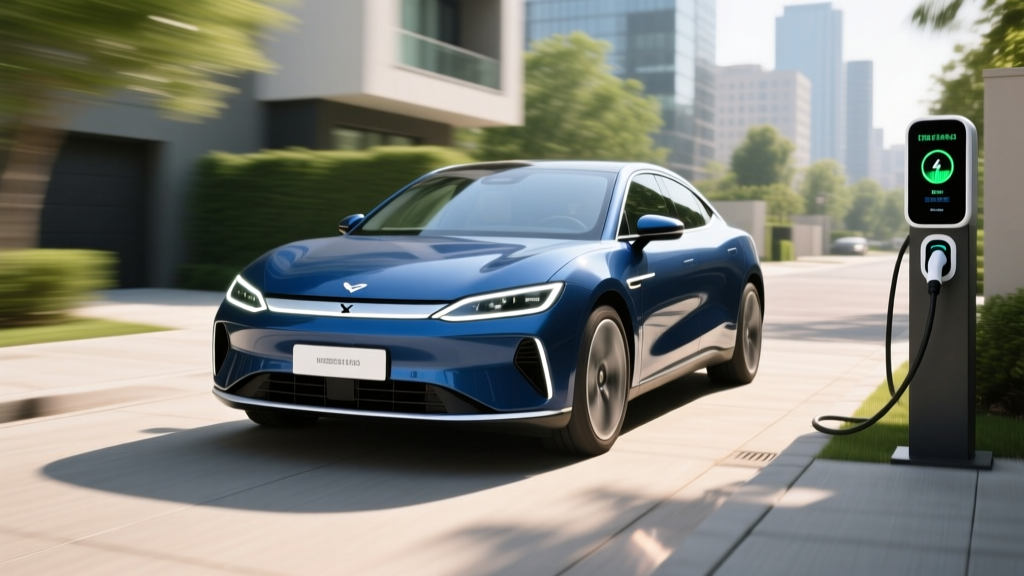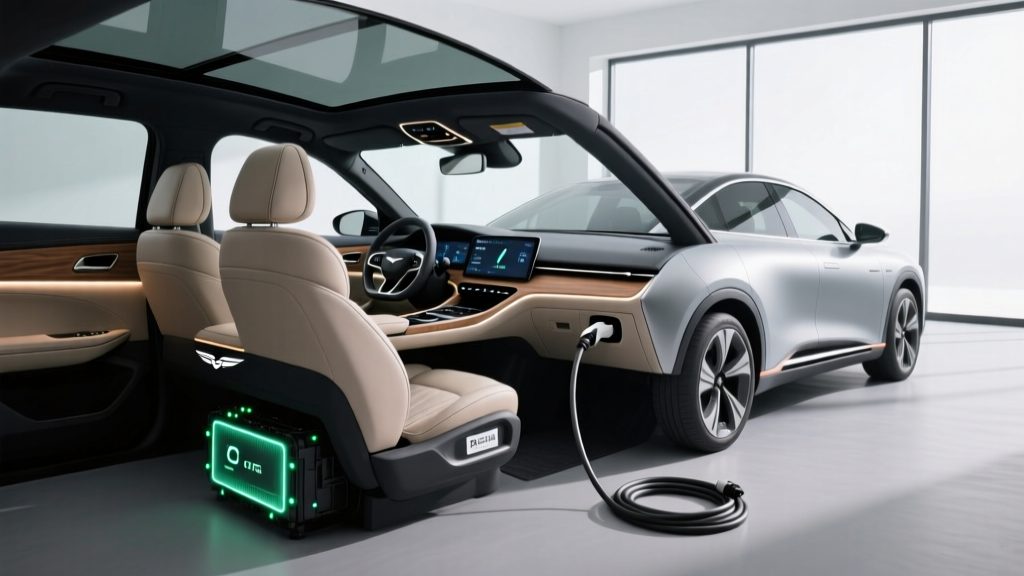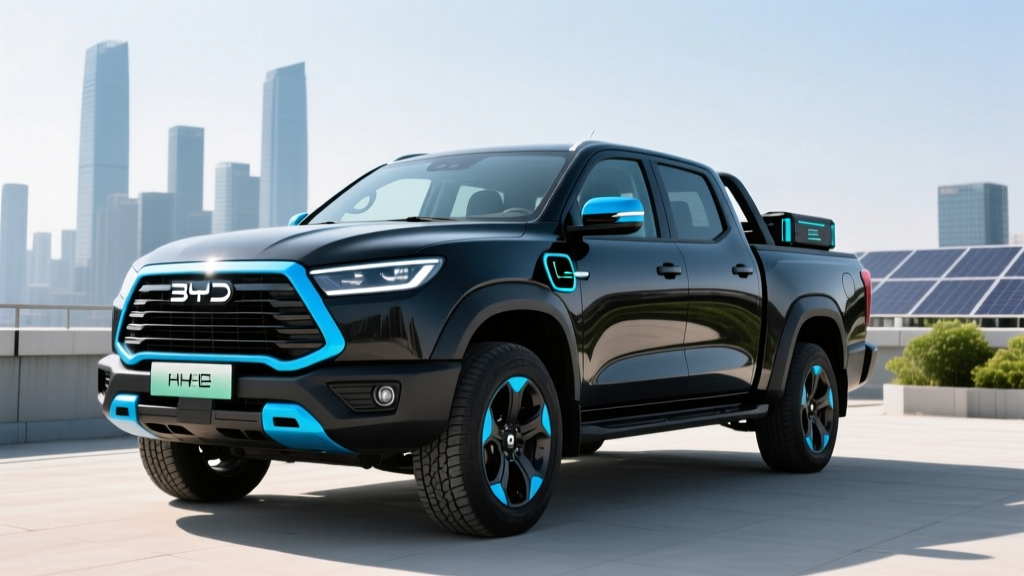
The BYD Shark has grabbed global headlines as one of the first plug-in hybrid pickups from a major Chinese automaker. With a 29.87 kWh blade battery, a dual-motor AWD system, and a turbocharged 1.5-liter engine, it promises electric daily driving with gas-engine range extension for longer hauls. But U.S. buyers need to know what's real, what's preliminary, and whether this truck will ever arrive on American shores.
This profile covers everything confirmed about the BYD Shark (also called the Shark 6 in some markets) — powertrain specs, battery chemistry, charging speeds, performance data, and the regulatory and tariff hurdles that define its U.S. outlook as of early 2026.
BYD Shark Powertrain and Performance
The BYD Shark uses the company's DMO (Dual Mode Off-Road) plug-in hybrid platform. It pairs a 1.5-liter turbocharged four-cylinder engine with front and rear electric motors for standard all-wheel drive.
| Specification | Value |
|---|---|
| Powertrain Type | Plug-in Hybrid (PHEV), DMO platform |
| Engine | 1.5L Turbocharged 4-Cylinder |
| System Horsepower | ~430 hp (combined) |
| Drivetrain | AWD (dual electric motor + ICE) |
| 0–100 km/h (0–62 mph) | 5.7 seconds |
| Battery Capacity | 29.87 kWh (BYD Blade, LFP chemistry) |
| EV-Only Range (WLTP) | ~100 km (~62 miles) |
| Combined Range (WLTP) | ~840 km (~522 miles) |
| Towing Capacity | 2,500 kg (~5,510 lbs, braked) |
| Payload | ~805 kg (~1,775 lbs) |
The 5.7-second 0–62 mph time is impressive for a midsize pickup and puts the Shark in the same ballpark as a Ford Ranger Raptor on acceleration. The dual-motor AWD system provides torque vectoring to the rear axle, which BYD says improves off-road traction without a traditional mechanical transfer case.
One important distinction: the Shark's 1.5L engine primarily acts as a generator in series-hybrid mode at lower speeds, switching to direct mechanical drive at highway speeds. This is similar to how the Mitsubishi Outlander PHEV and older Chevy Volt operate — it's not a pure parallel hybrid like the Toyota Tacoma's i-FORCE MAX.
Battery Chemistry and Electric-Only Range
The Shark's 29.87 kWh pack uses BYD's proprietary Blade battery, which is lithium iron phosphate (LFP) chemistry. This matters for several reasons:
- Longevity: LFP cells typically sustain 3,000+ charge cycles with minimal degradation, outlasting NMC packs in cycle-life testing.
- Safety: LFP chemistry is more thermally stable and less prone to thermal runaway than NMC/NCA.
- Energy density trade-off: LFP is heavier per kWh, which is why the Shark's pack is relatively large for its ~62-mile EV range. In a lighter sedan, this same chemistry would yield more miles.
- Charging behavior: LFP batteries can and should be charged to 100% regularly (unlike NMC, which benefits from an 80% daily limit). This means the Shark's full 29.87 kWh is routinely usable.
The Shark's WLTP-rated EV-only range is ~100 km (62 miles). U.S. EPA testing tends to produce lower figures than WLTP — typically 10–15% less. If the Shark were EPA-rated, expect an estimated ~50–55 miles of electric-only driving under mixed conditions. Highway driving at 70+ mph, cold weather below 40°F, and heavy payloads could reduce that to 35–45 miles. For most commutes under 40 miles round-trip, the Shark could operate as a pure EV on weekdays, only engaging the gas engine on longer trips.
Because the Shark is not currently sold in the United States, there is no official EPA range or MPGe rating. The figures above are estimates based on WLTP-to-EPA conversion patterns seen in other PHEVs like the Toyota RAV4 Prime (EPA 42 miles EV vs. WLTP ~75 km).
Charging Speeds: DC Fast and Home Level 2
Charging is one area where the Shark's PHEV architecture shows both strengths and limitations compared to full battery-electric trucks.
| Charging Level | Rate | Time / Notes |
|---|---|---|
| Level 1 (120V household) | ~1.4–1.9 kW | ~16–20 hours (0–100%); adds ~4–5 mi EV range per hour |
| Level 2 (240V AC) | ~7 kW (estimated) | ~4–5 hours (0–100%); adds ~8–10 mi EV range per hour |
| DC Fast Charge | Not confirmed for all markets | Some global variants may lack DC fast-charging capability; verify by market |
Most PHEVs in this class — including the Ford Maverick Hybrid and Toyota Tacoma PHEV concepts — do not prioritize DC fast charging because the battery is small enough to replenish overnight on Level 2. If the Shark does offer DC charging in some markets, expect a modest peak rate around 40–50 kW given the 29.87 kWh pack size, which would take 10–80% in roughly 25–30 minutes.
For U.S. home charging, a standard 240V / 32A Level 2 wallbox (like a ChargePoint Home Flex or Emporia Vue) would replenish the Shark's battery fully overnight — roughly 4 to 5 hours from empty. This is practical for daily EV commuting without ever needing public charging infrastructure.
U.S. Availability: Tariffs, Regulation, and Timeline
This is the critical question for American buyers, and the answer as of early 2026 is: the BYD Shark is not available for purchase in the United States.
Several barriers currently prevent U.S. sales:
- Tariffs: Chinese-manufactured vehicles face a combined tariff burden that can exceed 100% under current U.S. trade policy (the 2.5% standard tariff, plus 25% Section 301 tariffs, plus additional duties enacted in 2024–2025 targeting Chinese EVs). This effectively doubles the vehicle's price before it reaches a dealer lot.
- Regulatory homologation: BYD would need to certify the Shark to NHTSA safety standards (FMVSS), EPA emissions requirements, and California Air Resources Board (CARB) rules — a multi-year process requiring crash testing, software compliance, and dealer network setup.
- Dealer and service network: BYD has no passenger-vehicle dealer infrastructure in the U.S. Building one from scratch is a multi-billion-dollar commitment the company has not announced.
- Battery sourcing and tax credits: Even if the Shark were sold in the U.S., its BYD-manufactured LFP battery and Chinese-sourced critical minerals would almost certainly disqualify it from the IRS §30D federal tax credit, which requires battery components and critical minerals to meet North American sourcing thresholds.
BYD has indicated interest in entering markets like Australia, Mexico, Brazil, and Southeast Asia with the Shark. Mexico is the closest geographically to the U.S., and some buyers have speculated about gray-market imports — but this would bypass all safety certification and void any warranty support.
Pricing: Global MSRP and U.S. Cost Projection
In markets where the Shark is sold, pricing varies significantly:
| Market | Trim | Local Price | Approx. USD Equivalent |
|---|---|---|---|
| Australia | Shark 6 (base) | AUD ~58,000 | ~$37,000 |
| Australia | Shark 6 Premium | AUD ~65,000 | ~$41,500 |
| Mexico | Shark (base) | MXN ~899,000 | ~$45,000 |
| Brazil | Shark (base) | BRL ~299,000 | ~$52,000 |
If the Shark were hypothetically sold in the U.S. without tariff penalties, a reasonable estimate would place it in the $40,000–$50,000 range depending on trim — competitive with a Ford Ranger PHEV or Toyota Tacoma Hybrid. However, with current tariffs applied, the landed cost could exceed $75,000–$90,000, making it uncompetitive against domestically built alternatives.
Because the Shark is not U.S.-available, there is no federal tax credit eligibility to evaluate. If it were to arrive, buyers should expect it to fail the §30D battery-component and critical-mineral sourcing requirements due to its fully Chinese supply chain.
Tech, Interior, and Driver Assistance
The Shark's interior and technology suite reflects BYD's rapid improvement in cabin quality, though it sits below the premium tier occupied by Rivian or Tesla.
Infotainment: A 12.8-inch rotating touchscreen (a BYD signature) anchors the dash, running a customized Android-based OS. Wireless Apple CarPlay and Android Auto are expected in most markets. A 10.25-inch digital instrument cluster sits behind the steering wheel.
Driver Assistance: The Shark includes a Level 2 ADAS suite — adaptive cruise control, lane-keeping assist, automatic emergency braking, blind-spot monitoring, and a 360-degree camera system. This is comparable to Toyota Safety Sense 3.0 or Ford Co-Pilot360. It is not a hands-free system like GM's Super Cruise or Ford's BlueCruise; the driver must maintain steering input and attention at all times.
Utility Features:
- V2L (Vehicle-to-Load): The Shark can output 240V AC power from its battery, functioning as a mobile generator for tools, camping equipment, or emergency home backup — similar to the Ford F-150 Lightning's Pro Power Onboard.
- Bed dimensions: Approximately 1,520 mm (60 in) long × 1,450 mm (57 in) wide — competitive with the Ford Ranger and Toyota Tacoma bed sizes.
- Ground clearance: ~220 mm (8.7 in), with approach/departure angles suited for moderate off-road use.
Notable Drawbacks:
- No confirmed DC fast-charging capability across all markets — a significant gap for road-trip use.
- Limited towing capacity (~5,500 lbs) compared to full-size electric trucks like the F-150 Lightning (7,700–10,000 lbs) or Rivian R1T (11,000 lbs).
- Interior materials, while improved, lean toward hard plastics in lower-trim models based on early international reviews.
- Aftermarket support and parts availability outside BYD's current markets is essentially nonexistent.
Competitor Comparison: How the Shark Stacks Up
| Spec | BYD Shark (Global) | Ford Maverick Hybrid | Toyota Tacoma i-FORCE MAX |
|---|---|---|---|
| Type | PHEV | HEV (not plug-in) | HEV (not plug-in) |
| EV-Only Range | ~62 mi (WLTP) | 0 (no EV mode) | 0 (no EV mode) |
| HP | ~430 | 191 | 326 |
| 0–60 mph | ~5.7s | ~7.5s | ~6.5s |
| AWD | Standard | Optional | Optional |
| Towing | ~5,510 lbs | 2,000 lbs | 6,500 lbs |
| Base Price (USD equiv.) | ~$37,000+ | ~$28,000 | ~$40,000 |
| U.S. Available | No | Yes | Yes |
The Shark's combination of EV-only range, high horsepower, and AWD is unique in the midsize truck segment. Neither the Maverick Hybrid nor the Tacoma i-FORCE MAX offers plug-in capability. The closest U.S. competitor conceptually would be the upcoming Jeep Gladiator 4xe (if produced) or the Ford Ranger PHEV sold in Europe and Australia.
- Daily commuters with a sub-50-mile round trip who want zero-emission weekday driving without range anxiety on weekend trips.
- Outdoor enthusiasts who value V2L capability for camping and off-grid power.
- Fleet operators in markets with favorable PHEV incentives and moderate towing needs.
- Not ideal for: Heavy towing (above 5,500 lbs), long highway-only road trips where the EV range advantage disappears, or buyers who need a robust dealer/service network in the U.S.
Warranty and Long-Term Ownership
BYD offers varying warranty terms by market, but the global baseline for the Shark includes:
- Vehicle warranty: 6 years / 150,000 km (~93,000 miles) in Australia; terms may differ in other markets.
- Battery warranty: 8 years / 160,000 km (~99,000 miles) with a minimum 70% capacity retention guarantee — standard for LFP packs in this class.
- Drive motor warranty: 8 years / 150,000 km in most markets.
LFP chemistry gives the Shark a longevity advantage: these cells degrade more slowly than NMC, and BYD's Blade cell format has demonstrated strong performance in nail-penetration and cycle-life testing. Real-world degradation data is still limited since the Shark launched in 2024–2025, but BYD's LFP packs in vehicles like the Atto 3 have shown less than 5% degradation over 100,000 km in fleet usage.
Frequently Asked Questions
Can I buy the BYD Shark truck in the United States?
No. As of early 2026, BYD does not sell any passenger vehicles in the U.S. market. The Shark is available in Australia, Mexico, Brazil, and select other markets. Tariffs exceeding 100% on Chinese-manufactured vehicles, combined with the need for NHTSA/EPA certification, make near-term U.S. availability unlikely.
What is the real-world electric range of the BYD Shark?
The WLTP-rated EV range is approximately 100 km (62 miles). In real-world driving, expect closer to 50–55 miles under EPA-equivalent testing, and 35–45 miles in cold weather or at sustained highway speeds. For most daily commutes under 40 miles, the Shark can operate purely on electricity.
How fast does the BYD Shark charge?
On a 240V Level 2 charger (~7 kW), the 29.87 kWh battery charges fully in about 4–5 hours. DC fast-charging capability has not been confirmed across all global markets. The relatively small battery means Level 2 overnight charging is sufficient for daily use.
Does the BYD Shark qualify for the U.S. federal EV tax credit?
The Shark is not sold in the U.S., so the question is currently moot. Even if it were available, its Chinese-manufactured battery and critical-mineral supply chain would almost certainly disqualify it from the IRS §30D clean vehicle credit, which requires North American assembly and specific battery-sourcing thresholds.
How does the BYD Shark compare to the Ford Ranger or Toyota Tacoma?
The Shark offers significantly more horsepower (~430 hp vs. 270–326 hp) and plug-in EV capability that neither the Ranger nor Tacoma provides in the U.S. market. However, the Tacoma leads in towing capacity (6,500 lbs vs. ~5,510 lbs) and has an established U.S. dealer and service network. The Shark's advantage is electric commuting; its disadvantage is availability and support.
What is BYD's Blade battery, and why does LFP chemistry matter?
The Blade battery is BYD's proprietary cell format using lithium iron phosphate (LFP) chemistry. LFP offers superior thermal stability (lower fire risk), longer cycle life (3,000+ cycles), and the ability to charge to 100% daily without accelerated degradation. The trade-off is lower energy density — the pack is heavier per kWh than NMC — but in a truck application where weight is less critical than in a sedan, this is an acceptable compromise.