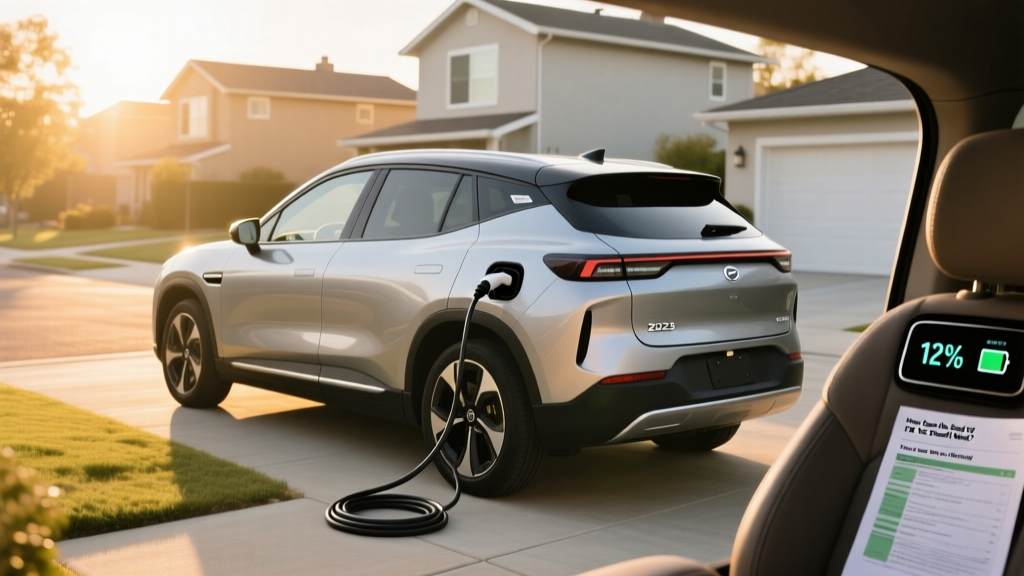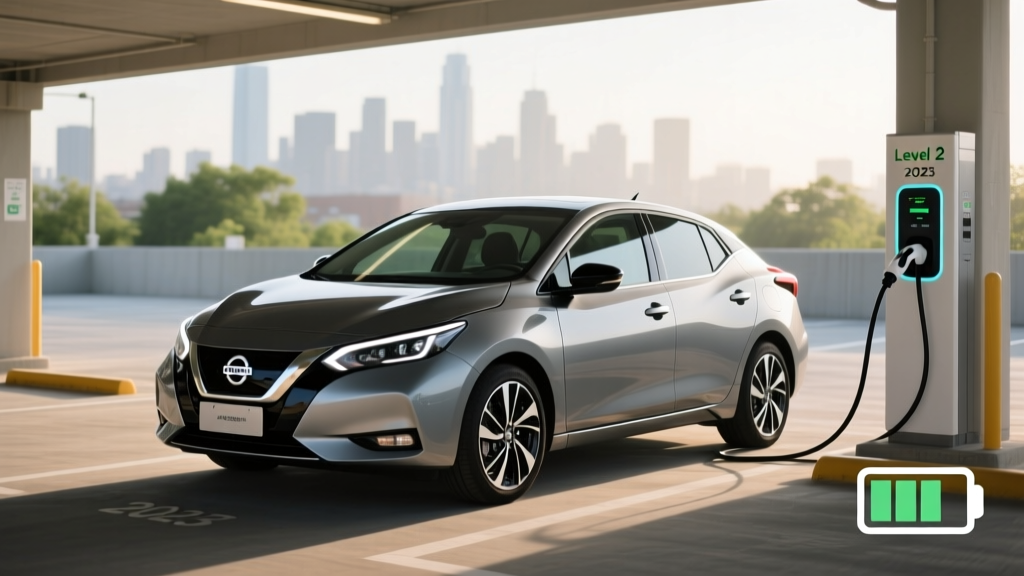
The Nissan Leaf holds a unique place in electric-vehicle history as one of the first mass-market EVs sold in the United States. For 2025, the Leaf carries over largely unchanged, which means buyers get a proven, affordable commuter EV — but one that still relies on aging charging hardware and a battery architecture that has fallen behind newer competitors. If you are considering the 2025 Nissan Leaf EV as your next daily driver, this review breaks down every number that matters: real-world range, charging speeds, tax credit eligibility, and how it stacks up against the growing field of sub-$35,000 electric vehicles.
Quick Verdict: The 2025 Nissan Leaf at a Glance
The 2025 Leaf is a practical, budget-friendly EV commuter that excels in city driving and predictable daily routines. Its two battery options cover most suburban needs, and its starting price undercuts nearly every competitor. However, the CHAdeMO DC fast-charging connector — now orphaned by the industry's shift to NACS and CCS — is a serious long-term liability for road trips. The Leaf is best understood as a dedicated commuter and errand-runner, not a do-everything EV.
| Spec | Leaf S (40 kWh) | Leaf SV PLUS (60 kWh) |
|---|---|---|
| EPA Range | 149 miles | 212 miles |
| Battery Capacity (usable) | 40 kWh | 60 kWh |
| Battery Chemistry | NMC (Lithium-ion) | NMC (Lithium-ion) |
| Horsepower | 147 hp | 214 hp |
| Torque | 236 lb-ft | 250 lb-ft |
| 0–60 mph | ~7.9 seconds | ~6.5 seconds |
| Drivetrain | FWD (single motor) | FWD (single motor) |
| Max DC Fast Charge | 50 kW (CHAdeMO) | 100 kW (CHAdeMO) |
| Level 2 Charge Rate | 6.6 kW | 6.6 kW |
| MPGe (Combined) | 111 MPGe | 104 MPGe |
| kWh/100 mi | 30 kWh | 32 kWh |
| Base MSRP | $28,140 | $36,190 |
Source: EPA Fuel Economy, Nissan USA specifications.
Range and Efficiency: What the EPA Sticker vs. Real World Tells You
Leaf S (40 kWh): EPA 149 miles — expect 120–130 miles highway, 100–115 miles in cold weather (below 32°F).
Leaf SV PLUS (60 kWh): EPA 212 miles — expect 175–195 miles highway, 145–170 miles in cold weather.
The Leaf lacks a heat pump, which means cabin heating draws directly from the traction battery, compounding range loss in winter conditions.
The 40 kWh Leaf S is strictly a city and suburban commuter. At 149 miles EPA, it works if your daily round trip is under 60 miles and you charge at home nightly. Highway driving at 70+ mph pushes efficiency down to roughly 3.0–3.2 miles per kWh, cutting usable range significantly.
The SV PLUS with its 60 kWh pack is the more versatile choice. Its 212-mile EPA rating gives most drivers a comfortable buffer for a full day of mixed driving. Efficiency on the SV PLUS is rated at 104 MPGe combined (32 kWh/100 mi), which is respectable but trails the Hyundai Kona Electric (120 MPGe) and Chevrolet Bolt EUV (115 MPGe) in its segment.
One factor unique to the Leaf is its passive air-cooled battery thermal management system. Unlike the liquid-cooled packs in most modern EVs, the Leaf relies on air cooling. In hot climates or during repeated fast-charging sessions, this can trigger thermal throttling — commonly called "Rapidgate" in Leaf owner communities — where the vehicle deliberately limits charge speed and power output to protect the battery. If you live in Arizona, Texas, or the Southeast, this is a meaningful consideration.
Charging: The CHAdeMO Problem You Need to Understand
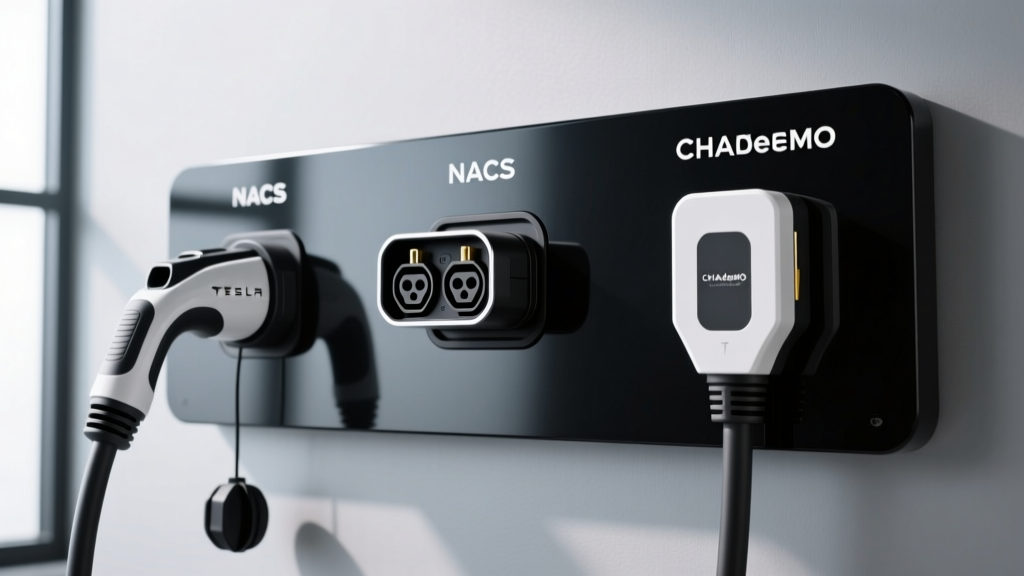
Charging is where the 2025 Leaf's age shows most clearly. Nissan has stuck with the CHAdeMO DC fast-charging connector, while virtually the entire industry has standardized on CCS1 or, increasingly, the Tesla NACS connector. This has real-world consequences for public charging access.
| Charging Level | Leaf S (40 kWh) | Leaf SV PLUS (60 kWh) | Miles Added/Hour |
|---|---|---|---|
| Level 1 (120V, 12A) | ~1.4 kW | ~1.4 kW | ~4–5 mi/hr |
| Level 2 (240V, 6.6 kW) | 6.6 kW | 6.6 kW | ~22–25 mi/hr |
| DC Fast (CHAdeMO) | 50 kW peak | 100 kW peak | N/A |
| 10–80% DC Fast Time | ~40 minutes | ~45 minutes |
On a Level 2 home charger (240V, 32A), the Leaf charges at 6.6 kW — adequate for overnight replenishment. A full charge from empty takes about 6 hours on the S and roughly 9.5 hours on the SV PLUS. For daily commuting, you will rarely need a full charge; topping up 30–50 miles overnight takes just 2–3 hours.
The DC fast-charging situation requires honesty. The Leaf S peaks at just 50 kW, which is painfully slow by 2025 standards. The SV PLUS can accept up to 100 kW, but real-world sustained rates are lower due to the air-cooled battery's thermal limitations. Expect the charge curve to taper aggressively above 60% state of charge (SoC), and in hot weather, peak rates may never be reached at all.
More critically, CHAdeMO chargers are becoming scarce. Electrify America, EVgo, and most major networks have shifted investment to CCS and NACS hardware. According to the U.S. Department of Energy's Alternative Fuels Data Center, CHAdeMO connectors represent a shrinking percentage of public DC fast-charging ports nationwide. If road trips are part of your plan, the Leaf's charging ecosystem is a genuine constraint.
Performance and Driving Impressions
The Leaf is front-wheel drive with a single permanent-magnet synchronous motor. The base S produces 147 horsepower and 236 lb-ft of torque, delivering a 0–60 mph time of approximately 7.9 seconds. That is adequate for merging and city driving but unremarkable.
The SV PLUS upgrades to 214 hp and 250 lb-ft, dropping the 0–60 time to roughly 6.5 seconds. The extra power makes highway passing more confident and the car generally more engaging to drive. Instant electric torque gives both variants a responsive feel from a stop that belies their modest horsepower figures.
Ride quality is comfortable and compliant — Nissan tuned the Leaf for comfort over sportiness. The cabin is quiet at city speeds, though wind and tire noise become noticeable above 65 mph. Regenerative braking offers two modes: standard (coasting) and e-Pedal, which provides aggressive regen strong enough for near one-pedal driving in stop-and-go traffic. Note that e-Pedal does not bring the Leaf to a complete hold in all conditions — you still need the brake pedal at times.
Interior, Cargo, and Technology
The Leaf's interior reflects its budget positioning. Materials are hard plastics in most touchpoints, though higher trims add some soft-touch surfaces and cloth or leatherette upholstery. The seating position is upright and comfortable, with decent visibility all around.
Passenger Space:
- Front headroom: 39.6 inches
- Front legroom: 42.1 inches
- Rear headroom: 37.3 inches
- Rear legroom: 33.5 inches
Rear legroom is tight compared to the Hyundai Kona Electric (36.5 inches) and will feel cramped for taller passengers on longer trips.
Cargo Volume: 23.6 cubic feet behind the rear seats, expanding to 31.6 cubic feet with the rear seats folded. The cargo area is usable but the load floor is high due to the battery pack beneath, and the 60/40 split creates a step when folded.
Infotainment: An 8-inch touchscreen with Apple CarPlay (wireless on SV PLUS) and Android Auto (wired) is standard. The system is functional but dated in graphics and response time compared to competitors running newer UI platforms. A 7-inch digital driver display supplements the main cluster.
Driver Assistance (Nissan ProPILOT Assist): Available on SV PLUS, ProPILOT Assist provides adaptive cruise control with stop-and-go and lane-centering steering assist. This is an SAE Level 2 system — it requires continuous driver supervision and hands-on-wheel engagement. It performs adequately on well-marked highways but is not competitive with GM's Super Cruise or Ford's BlueCruise in terms of capability or hands-free operation.
This is an SAE Level 2 driver-assistance system. It does not provide autonomous or self-driving capability. The driver must remain fully attentive, keep hands on the steering wheel, and be prepared to take over at any time. Performance degrades in construction zones, poor weather, and faded lane markings.
Pricing, Trims, and Federal Tax Credit Eligibility
| Trim | Base MSRP | Destination | Total Before Incentives |
|---|---|---|---|
| S (40 kWh) | $28,140 | $1,095 | $29,235 |
| SV (40 kWh) | $29,140 | $1,095 | $30,235 |
| SV PLUS (60 kWh) | $36,190 | $1,095 | $37,285 |
The Leaf's pricing remains its strongest selling point. At under $30,000 for the S trim, it is one of the least expensive new EVs available in the U.S. market.
Does the 2025 Nissan Leaf Qualify for the Federal EV Tax Credit?
This is where the Leaf's situation requires careful attention. Under current IRS §30D Clean Vehicle Credit rules, eligibility depends on several criteria:
- MSRP Cap: The Leaf qualifies — its MSRP is well below the $55,000 cap for sedans/hatchbacks.
- Buyer Income Cap: Modified adjusted gross income must not exceed $150,000 (single), $225,000 (head of household), or $300,000 (joint filing).
- Battery Component Sourcing: A percentage of battery components must be manufactured or assembled in North America. The Leaf's battery has historically been sourced from Japan and assembled in Tennessee, and compliance with critical-mineral and component requirements has been inconsistent across model years.
- Final Assembly: The Leaf is assembled in Smyrna, Tennessee, which satisfies the North American final-assembly requirement.
Critical caveat: The Leaf's credit eligibility has been uncertain and subject to change based on evolving Treasury Department guidance on battery sourcing. As of early 2025, the Leaf SV PLUS has qualified for a partial credit (typically $3,750) in recent determinations, while the base S trim's eligibility has varied. The point-of-sale transfer option allows dealers to apply the credit as a down-payment reduction at purchase, but you must verify current eligibility with your dealer and confirm via the IRS's official vehicle eligibility list at the time of purchase. Consult a tax professional for your specific situation.
Leaf S: ~$29,235 – $3,750 = ~$25,485
Leaf SV PLUS: ~$37,285 – $3,750 = ~$33,535
These figures assume $3,750 partial credit eligibility. Full $7,500 credit is unlikely under current sourcing rules. State and utility incentives may reduce cost further — check AFDC for your area.
Battery Warranty and Longevity
Nissan provides a 8-year/100,000-mile lithium-ion battery capacity warranty on the Leaf. The warranty guarantees the battery will retain at least 9 bars out of 12 on the battery capacity gauge (roughly 66–70% of original capacity). This is a lower retention threshold than many competitors, which typically guarantee 70% capacity with clearer testing methodology.
The air-cooled battery system remains the Leaf's biggest long-term concern. Data from Leaf owner communities and fleet studies show that Leafs in hot climates experience faster degradation than liquid-cooled competitors. A 2020 study by Recurrent Auto found that Leafs in warmer regions showed measurably higher degradation rates than vehicles with active thermal management. If you plan to keep the Leaf for 8+ years in a hot climate, budget for the possibility of noticeable range loss over time.
The standard vehicle warranty covers 3 years/36,000 miles bumper-to-bumper and 5 years/60,000 miles powertrain.
How the 2025 Leaf Compares to Key Competitors
| Spec | Nissan Leaf SV PLUS | Hyundai Kona Electric | Chevrolet Bolt EV* |
|---|---|---|---|
| EPA Range | 212 mi | 261 mi | 259 mi |
| Battery | 60 kWh NMC | 64.8 kWh NMC | 65 kWh NMC |
| DC Fast Connector | CHAdeMO | CCS / NACS | CCS |
| Max DC Charge | 100 kW | 100+ kW | 55 kW |
| Thermal Mgmt | Passive (air) | Active (liquid) | Active (liquid) |
| Base MSRP | $36,190 | ~$32,975 | ~$26,500* |
*Chevrolet Bolt EV production ended in late 2023; remaining inventory or next-gen Bolt availability may vary. Check with dealers.
The Kona Electric offers more range, a modern charging connector, liquid-cooled battery management, and competitive pricing — making it a strong alternative. The Leaf's advantage is its slightly lower entry price on the S trim and Nissan's established dealer network for service.
Pros, Cons, and Who Should Buy the 2025 Nissan Leaf
- One of the lowest-priced new EVs in the U.S.
- Comfortable ride and quiet city manners
- ProPILOT Assist available for highway commuting
- e-Pedal regen mode for one-pedal city driving
- Assembled in Tennessee (supports domestic manufacturing)
- Low running costs: ~$0.04–0.06/mile on home electricity
- CHAdeMO connector — shrinking public charging access
- Air-cooled battery — degradation risk in hot climates
- No heat pump — significant cold-weather range loss
- Modest DC fast-charge speeds (50–100 kW peak)
- Dated infotainment and interior materials
- Tight rear legroom (33.5 inches)
- Partial or uncertain federal tax credit eligibility
Who the Leaf Suits Best
Buy the Leaf if: You need an affordable daily commuter for city and suburban driving, you can charge reliably at home every night, you live in a moderate climate, and you do not plan frequent road trips.
Look elsewhere if: You need road-trip capability, you live in a hot climate and plan to keep the car 8+ years, you lack home charging access and depend on public DC fast chargers, or you want the latest infotainment and driver-assist technology.
Frequently Asked Questions
What is the real-world range of the 2025 Nissan Leaf?
The Leaf S delivers approximately 120–130 miles in real-world highway driving and 100–115 miles in cold weather. The SV PLUS manages roughly 175–195 miles highway and 145–170 miles in freezing temperatures. Both fall short of their EPA estimates under demanding conditions due to the lack of a heat pump and the efficiency penalties of high-speed driving.
How fast does the 2025 Leaf charge at home and on DC fast chargers?
On a 240V Level 2 home charger, the Leaf charges at 6.6 kW, adding about 22–25 miles of range per hour. On DC fast chargers, the S trim peaks at 50 kW (10–80% in roughly 40 minutes), while the SV PLUS peaks at 100 kW (10–80% in roughly 45 minutes). Real-world DC charging may be slower due to thermal throttling from the air-cooled battery.
Does the 2025 Nissan Leaf qualify for the $7,500 federal tax credit?
Full $7,500 credit eligibility is unlikely due to battery component and critical-mineral sourcing requirements under IRS §30D. A partial credit of $3,750 has been available for qualifying trims, but this is subject to change. Always verify current eligibility on the IRS Clean Vehicle Credit page before purchasing.
Is the CHAdeMO connector a dealbreaker?
For road trips, it is a significant limitation. CHAdeMO ports are declining as a percentage of public DC fast-charging infrastructure. If your driving is 95% local with home charging, it matters less. If you plan highway travel, the connector limits your charging options compared to CCS or NACS vehicles.
How long will the Leaf's battery last?
Nissan warrants the battery for 8 years/100,000 miles against dropping below 9 of 12 capacity bars. Real-world data suggests Leafs in moderate climates retain 85–90% capacity after 5 years, while hot-climate vehicles may see faster degradation. Liquid-cooled competitors generally show better long-term retention.
Is the 2025 Nissan Leaf worth buying over competitors?
The Leaf is worth considering if price is your primary concern and your use case is strictly local commuting. For buyers who need road-trip flexibility, better fast charging, modern connectors, or long-term battery confidence, the Hyundai Kona Electric or other liquid-cooled, CCS/NACS-equipped competitors offer a more future-proof package at a modest price premium.