The short answer: Buying your first EV in 2026 means choosing from vehicles with 250–400+ miles of EPA range, home-charging costs roughly 50–60% less per mile than gasoline, and federal tax credits up to $7,500 (with strict income, MSRP, and battery-sourcing rules). The real decision hinges on three factors: whether you can install a Level 2 home charger, your typical daily mileage, and your local climate. If you can charge at home and drive under 60 miles daily, nearly any modern EV will save you money and hassle compared to gas. If you rely solely on public charging or regularly drive 300+ miles in sub-freezing weather, a plug-in hybrid may be the smarter bridge.
What "1 Electric Ave" Really Means for Today's Car Buyer
The shift to electric transportation isn't a future promise — it's a present-day decision millions of Americans are making right now. "1 Electric Ave" has become shorthand for that moment: the address you move to when you trade a gas pump for a charging plug. But unlike a simple street change, going electric requires rethinking fueling, maintenance, trip planning, and upfront budgeting.
As of early 2026, the EV market offers over 60 battery-electric models across every body style — sedans, SUVs, trucks, and minivans — with base MSRPs ranging from roughly $28,000 to well over $100,000. The technology has matured: lithium iron phosphate (LFP) batteries now power many affordable models with excellent longevity, the North American Charging Standard (NACS) connector has unified most new vehicles onto Tesla's Supercharger network, and DC fast-charging speeds commonly peak at 150–350 kW.
The challenge for first-time buyers isn't a lack of options — it's sorting through them with accurate data rather than marketing claims. This guide gives you the numbers, the trade-offs, and the decision framework to get it right the first time.
EV vs Gas vs Hybrid: The Numbers That Actually Matter
Before picking a specific model, you need to understand which powertrain type fits your driving life. Here's how the three main options stack up across the metrics that hit your wallet.
| Metric | Battery EV (BEV) | Plug-in Hybrid (PHEV) | Gas Vehicle (ICE) |
|---|---|---|---|
| Typical EPA Range | 250–400+ mi | 25–50 mi electric + 350–500 mi gas | 350–500 mi |
| Fuel/Energy Cost per Mile | $0.04–$0.06 (home charging) | $0.04 electric / $0.12–$0.15 gas | $0.12–$0.16 |
| Annual Fuel Cost (12,000 mi) | $480–$720 | $500–$1,100 (mixed) | $1,440–$1,920 |
| Annual Maintenance | $300–$500 | $600–$900 | $800–$1,200 |
| Oil Changes | None | 1–2 per year | 2–3 per year |
| Brake Pad Life | 80,000–150,000+ mi (regen) | 40,000–70,000 mi | 30,000–60,000 mi |
| Federal Tax Credit | Up to $7,500 (§30D) | Up to $7,500 (§30D) | None |
| Home Fueling Setup Cost | $500–$2,500 (Level 2) | $500–$2,000 (Level 2, lower kW) | $0 |
Sources: fueleconomy.gov, IRS §30D guidelines. Fuel costs based on $0.15/kWh national average electricity and $3.40/gal gasoline (2026 estimates). Actual costs vary by utility rate and region.
The key insight: a BEV's per-mile energy cost is roughly one-third that of gasoline — but only if you charge at home on a residential electricity rate. Public DC fast charging at $0.35–$0.55/kWh pushes per-mile costs to $0.09–$0.14, which narrows or eliminates the savings gap with gas. This is why home charging access is the single most important variable in your EV decision.
The Real Costs: Purchase, Charging, Insurance, and Maintenance
Sticker price is just the entry ticket. Here's a realistic five-year cost breakdown comparing a popular 2026 EV against its gas-powered equivalent in the same segment.
| Cost Category (5 Years) | 2026 Tesla Model Y LR AWD (~$44,990 MSRP) | 2026 Toyota RAV4 Gas AWD (~$33,000 MSRP) |
|---|---|---|
| Purchase Price (after $7,500 credit) | $37,490* | $33,000 |
| Home Charger Installation | $1,200 | $0 |
| Energy/Fuel (60,000 mi total) | $2,700 (home L2 @ $0.15/kWh) | $8,400 (@ $3.40/gal, 28 MPG avg) |
| Maintenance | $1,800 | $4,500 |
| Insurance (avg premium) | $9,500 | $7,200 |
| Depreciation (est.) | $14,000 | $11,500 |
| 5-Year Total | $66,690 | $64,600 |
*Tax credit eligibility depends on income caps ($150K single / $300K joint), MSRP caps ($55K sedans / $80K SUVs/trucks/vans), and battery sourcing requirements. Verify at irs.gov or consult a tax professional. Credit can now be transferred at point of sale as an upfront discount.
The takeaway: even with higher insurance and depreciation, the EV nearly breaks even over five years — and the gap closes further if electricity rates are lower than the national average, or if you drive more than 12,000 miles per year. The fuel and maintenance savings are substantial and compound over time.
Insurance Reality Check
EV insurance premiums run 15–30% higher than comparable gas vehicles, driven by higher repair costs (specialized parts, battery-safe procedures) and elevated vehicle values. Shop quotes from multiple carriers before purchasing — some insurers now offer dedicated EV policies with bundled home-charger coverage.
What First-Time EV Buyers Must Know Before Signing
If you've never owned an electric vehicle, these are the ownership realities that catch new buyers off guard:
Range Is Real — But Contextual
An EPA-rated 310-mile range is tested under specific conditions. Expect 15–30% range loss in sustained highway driving at 75+ mph, and 20–40% loss in sub-freezing temperatures (below 32°F) due to battery heating demands and cabin climate use. A 310-mile EPA vehicle may deliver 220–260 miles on a cold winter highway trip. Vehicles with heat pumps (standard on most 2026 models from Tesla, Hyundai/Kia, BMW, and others) mitigate cold-weather loss by 10–15% compared to resistive heating.
Charging Speed Isn't a Single Number
When a manufacturer advertises "250 kW DC fast charging," that's a peak rate — not a sustained one. EV batteries follow a charge curve: the battery charges fastest between roughly 10–50% State of Charge (SoC), then progressively tapers to protect cell health. A vehicle peaking at 250 kW might average 150–170 kW over a full 10–80% session. Always look at the 10–80% time, not the peak kW number. For most 2026 models with 75–100 kWh batteries, that translates to 18–30 minutes at a compatible fast charger.
Home Charging Is Non-Negotiable for Most Owners
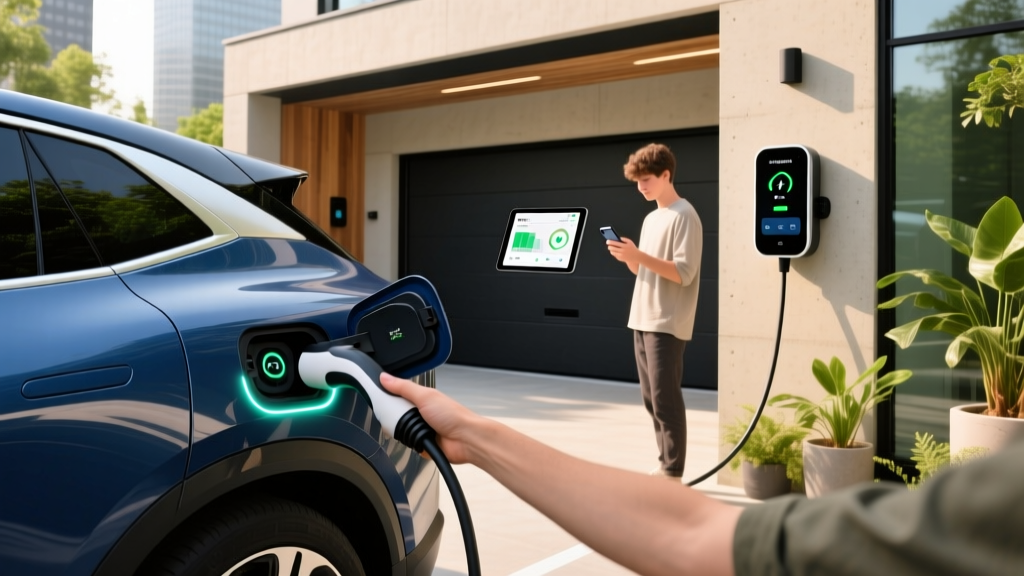
Over 80% of EV charging happens at home. A Level 2 home charger (240V, 32–48 amps) adds 25–40 miles of range per hour of charging — enough to fully replenish any daily commute overnight. Without home charging access, EV ownership becomes significantly more expensive and time-consuming. If you live in an apartment without charging infrastructure or park on the street, seriously evaluate your public charging options before committing.
Battery Degradation Is Slower Than You Think
Modern EV batteries lose roughly 1–2% of capacity per year under normal use. Data from vehicles with 100,000+ miles shows most retain 85–92% of original capacity after 8 years. All 2026 models carry a federally mandated minimum battery warranty of 8 years / 100,000 miles (covering defects and excessive degradation, typically below 70% capacity). LFP chemistry batteries (used in standard-range Tesla Model 3/Y, some BYD models) often show even slower degradation and tolerate regular 100% charging, unlike NMC batteries which benefit from staying between 20–80% SoC for daily use.
EV Myths vs Facts: Clearing the Air
| Myth | Fact |
|---|---|
| "EV batteries need replacing every few years at enormous cost." | Most EV batteries outlast the vehicle. Replacement is rare; when needed, costs range $5,000–$20,000 depending on pack size. Warranties cover 8 years/100K miles minimum. |
| "The electric grid can't handle everyone driving EVs." | Most charging occurs overnight during off-peak hours when grid capacity is underutilized. Smart charging and time-of-use rates manage demand effectively. |
| "EVs are worse for the environment because of battery mining." | Lifecycle analyses from the EPA and Argonne National Lab show EVs produce significantly fewer lifetime emissions than gas vehicles, even accounting for battery manufacturing. The gap widens as the grid gets cleaner. |
| "Charging takes too long for road trips." | A 10–80% DC fast charge takes 18–30 minutes at modern stations — roughly the time for a rest stop, meal, and bathroom break. Planning apps (A Better Route Planner, built-in vehicle navigation) optimize stops automatically. |
| "EVs are all expensive luxury cars." | 2026 models like the Chevrolet Equinox EV ($33,000 base), Hyundai Kona Electric ($32,975), and Nissan Leaf ($28,140) bring EV pricing into mainstream territory — especially after the point-of-sale tax credit transfer. |
| "You can't tow or haul with an EV." | The Ford F-150 Lightning tows up to 10,000 lbs, and the Rivian R1T tows 11,000 lbs. However, towing cuts range by 30–50% due to aerodynamic drag and weight — plan charging stops accordingly. |
Your Decision Framework: Which Electrified Vehicle Fits You?
Use this if/then guide to narrow your powertrain choice before shopping specific models:
Choose a Battery EV (BEV) if:
- You can install a Level 2 charger at home (garage, driveway, or workplace charging available)
- Your daily driving is under 80 miles round-trip (covers 95%+ of American commutes)
- You take road trips fewer than 4–5 times per year (or don't mind planning charge stops)
- You want the lowest per-mile operating cost and minimal maintenance
- You qualify for the federal tax credit (check income and sourcing rules at irs.gov)
Choose a Plug-in Hybrid (PHEV) if:
Stick with a Hybrid (HEV) or Gas Vehicle if:
- You have no access to any charging (apartment with no outlet, street parking only, no workplace charging)
- You regularly tow heavy loads over long distances in cold weather
- Your budget is strictly under $25,000 and you need a newer vehicle (used EV market is growing but limited at this price)
Charging at Home: What It Actually Costs and Requires
Home charging is where EV ownership either clicks or crumbles. Here's the realistic breakdown for a Level 2 installation:
| Item | Typical Cost Range |
|---|---|
| Level 2 Charger Hardware (32–48A, hardwired or NEMA 14-50) | $350–$750 |
| Electrician Labor (240V circuit, 50–60A breaker) | $500–$1,500 |
| Permit & Inspection | $50–$250 |
| Electrical Panel Upgrade (if needed, 100A → 200A) | $1,500–$3,500 |
| Total (no panel upgrade) | $900–$2,500 |
| Total (with panel upgrade) | $2,400–$6,000 |
A dedicated 240V/48A circuit delivers approximately 11.5 kW of charging power — replenishing roughly 35–44 miles of range per hour depending on vehicle efficiency. For a 300-mile-range EV, that's a full charge in 7–8 hours (overnight). Always hire a licensed electrician and pull a permit; unpermitted work can void homeowner's insurance and create fire risk.
Some utilities offer rebates of $200–$500 for Level 2 charger installation, and certain states provide additional incentives. Check with your local utility and state incentive databases before scheduling work.
Frequently Asked Questions
Do I qualify for the $7,500 federal EV tax credit?
Maybe. The §30D credit has three hurdles: (1) your adjusted gross income must be under $150,000 (single), $225,000 (head of household), or $300,000 (joint); (2) the vehicle MSRP must be under $55,000 for sedans or $80,000 for SUVs, trucks, and vans; (3) the vehicle must meet battery critical-mineral and component sourcing requirements that tighten each year. As of 2026, many popular models qualify for the full $7,500, some qualify for $3,750, and others qualify for nothing. The credit can be transferred to the dealer at point of sale as an immediate price reduction. Always verify current eligibility on irs.gov before relying on the credit in your budget.
How long does it take to charge an EV on a road trip?
On a 300-mile trip in a 310-mile-range EV, you'll typically need one 20–25 minute DC fast-charging stop (10–80% SoC). On a 600-mile trip, expect 2–3 stops of 20–30 minutes each, totaling roughly 60–90 minutes of charging. This adds to your travel time but usually aligns with natural rest and meal breaks. Preconditioning the battery (most EVs do this automatically when a charger is set in navigation) is essential for achieving advertised charge speeds.
Will my EV battery need to be replaced?
Statistically, it's unlikely during typical ownership. Real-world fleet data shows average degradation of 1–2% per year. After 10 years and 120,000 miles, most EVs retain 80–90% of original capacity. The 8-year/100,000-mile warranty (longer in California Air Resources Board states — 10 years/150,000 miles) covers defects and capacity loss below approximately 70%. Full battery replacement costs range from $5,000 to $20,000 depending on pack size, but is rarely needed.
What happens if I can't charge at home?
Public-only EV ownership is viable but more expensive and less convenient. DC fast charging at $0.35–$0.55/kWh costs roughly $0.09–$0.14 per mile — close to or exceeding gasoline costs. You'll also spend 2–4 hours per week at charging stations depending on mileage. If home charging is impossible, consider whether your workplace offers Level 2 charging, or whether a PHEV (which only needs occasional charging to maximize its electric range) is a better fit.
Are EVs safe in crashes?
Yes. EVs undergo the same NHTSA and IIHS crash testing as gas vehicles, and many earn top ratings. The battery pack's low placement gives EVs a low center of gravity, reducing rollover risk. Post-crash battery fire incidents are statistically rarer than gasoline vehicle fires per vehicle-mile, according to NHTSA data. First responders receive specific training for EV incidents.
The Bottom Line for Your Move to Electric
Going electric in 2026 is a data-driven decision, not a leap of faith. The vehicles are capable, the charging infrastructure is expanding (with NACS unification opening the Supercharger network to nearly all brands), and the economics favor EVs for anyone with home charging access. The key is matching the right powertrain to your specific driving patterns, climate, and charging situation — not chasing the longest range or fastest charge speed on paper.
Start by confirming your home charging options, calculating your realistic daily and weekly mileage, checking your tax credit eligibility, and test-driving at least two EVs and one PHEV. The numbers in this guide give you the framework; the test drive gives you the feel. When both align, you'll know you're ready for 1 Electric Ave.