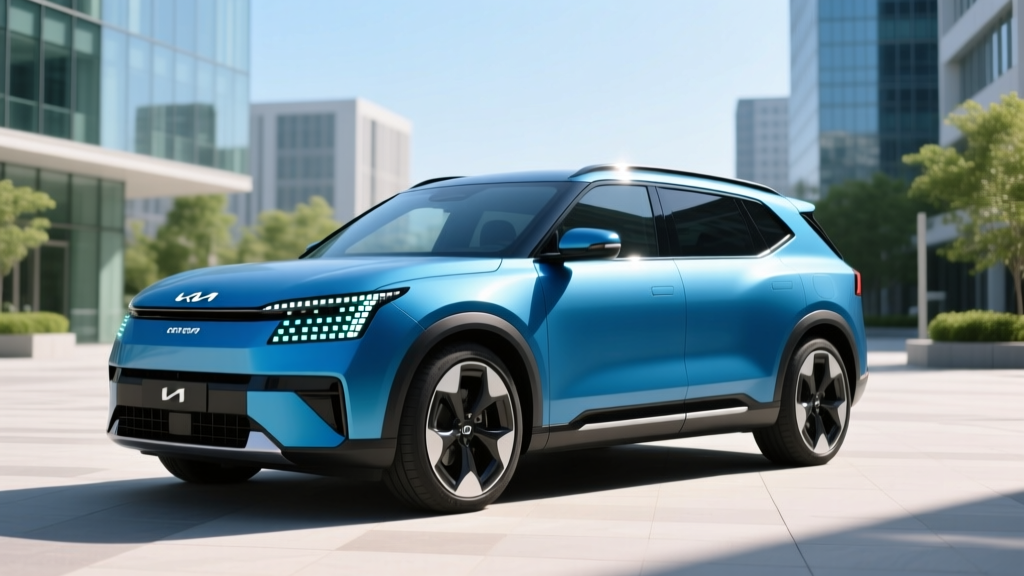
The three-row electric SUV segment has very few serious contenders, and the 2025 Kia EV9 remains the most compelling mainstream option for families who need genuine seven-passenger seating without resorting to a minivan or a six-figure luxury badge. With the 2025 Kia EV9 MSRP officially set by Kia across six trims, buyers now have a clear picture of what this large-format BEV costs before incentives — and more importantly, what it delivers in range, charging speed, and daily usability.
I've spent time with the EV9 in both the single-motor Light RWD and the dual-motor GT-Line AWD configurations, on highway road trips and suburban family duty. What follows is a data-driven breakdown of the numbers that actually matter: real-world range versus the EPA sticker, the charging curve you'll experience at a DC fast charger, the tax credit math under current IRS §30D rules, and the ownership trade-offs Kia doesn't put on the brochure.
2025 Kia EV9 MSRP Official: Trim-by-Trim Pricing
Kia structures the EV9 across two battery sizes and two drivetrain layouts. The entry-level Light trim uses a smaller 76.1 kWh battery with rear-wheel drive, while all other trims step up to the 100.0 kWh pack with either RWD or dual-motor AWD. Here is the official MSRP ladder for the 2025 model year, including the mandatory $1,395 destination charge:
| Trim | Drivetrain | Battery | EPA Range | MSRP (incl. dest.) |
|---|---|---|---|---|
| Light RWD | RWD (single motor) | 76.1 kWh (NMC) | 230 mi | $56,295 |
| Wind RWD | RWD (single motor) | 100.0 kWh (NMC) | 304 mi | $60,895 |
| Land AWD | AWD (dual motor) | 100.0 kWh (NMC) | 282 mi | $65,295 |
| GT-Line AWD | AWD (dual motor) | 100.0 kWh (NMC) | 270 mi | $70,495 |
| GT-Line Prestige AWD | AWD (dual motor) | 100.0 kWh (NMC) | 270 mi | $73,895 |
A critical detail for buyers cross-shopping: the EV9's MSRP falls under the IRS §30D SUV cap of $80,000, meaning every trim technically clears the vehicle-price threshold for the federal tax credit — though buyer income limits and battery-component sourcing rules apply (more on that below). The Wind RWD at $60,895 is the value sweet spot, offering the 304-mile EPA range and full feature set without the AWD premium.
Real-World Range: What the EPA Sticker Doesn't Tell You
EPA estimated: 230 mi (Light RWD) / 304 mi (Wind RWD) / 282 mi (Land AWD) / 270 mi (GT-Line AWD)
Real-world highway (70-75 mph, moderate temps): Expect roughly 255–270 mi from the Wind RWD, and 235–250 mi from the Land AWD. The EV9's boxy shape and 5,000+ lb curb weight penalize highway efficiency more than city driving, where regen braking recovers energy.
Cold weather (below 32°F): Plan for a 20–30% range reduction. The Wind RWD drops to approximately 210–240 mi in freezing conditions. The EV9 uses a heat pump on all trims except the Light, which helps cabin efficiency but doesn't fully offset battery chemistry limitations in deep cold.
According to fueleconomy.gov, the Wind RWD achieves 87 MPGe combined (36 kWh/100mi), while the Land AWD returns 83 MPGe combined (39 kWh/100mi). These are competitive numbers for a vehicle this size, but they translate to roughly 2.8–3.0 miles per kWh in mixed driving — meaning you'll want to plan road-trip charging stops at roughly 200-mile intervals to keep a comfortable buffer.
The 100.0 kWh battery pack uses NMC (nickel-manganese-cobalt) chemistry, which offers higher energy density than LFP but is more sensitive to sustained 100% state of charge. For daily driving, charge to 80% and you'll see approximately 240 usable miles in the Wind RWD — still ample for most commutes and school runs.
Charging Speed: DC Fast Charge and Home Level 2
Charging capability is where the EV9 earns strong marks, particularly for road-trip practicality. The 800-volt architecture (shared with the Hyundai Ioniq 5 and Genesis Electrified GV70) enables peak DC fast-charging rates that outpace most competitors in this price bracket.
| Charging Level | Power / Rate | Speed / Time | Notes |
|---|---|---|---|
| Level 1 (120V household) | ~1.4 kW | ~4 mi/hr of charge | Emergency/trickle only; full charge takes 60+ hours |
| Level 2 (240V home) | 10.9 kW (48A) | ~31 mi/hr; 10–100% in ~9.5 hrs (100 kWh) | Requires NEMA 14-50 or hardwired; full overnight charge |
| DC Fast Charge (CCS/NACS) | Peak 236 kW | 10–80% in ~24 min (100 kWh pack) | 800V architecture; tapers significantly above 80% |
The 236 kW peak rate is impressive, but understanding the charge curve matters more than the headline number. The EV9 sustains roughly 180–200 kW between 10–55% state of charge, then gradually tapers. From 55–80%, expect rates to drop to 120–90 kW. This means the 10–80% time of approximately 24 minutes is achievable at a 350 kW Electrify America or Tesla Supercharger (with NACS adapter), but at a 150 kW station, that same session stretches to roughly 38–42 minutes.
For the 76.1 kWh Light RWD, the peak rate is lower at approximately 170 kW, with a 10–80% time closer to 28 minutes. If road-trip charging speed is a priority, the 100 kWh trims are the clear choice.
Home charging note: The 10.9 kW onboard charger is generous. On a 48-amp Level 2 circuit (hardwired, 60-amp breaker), you'll add about 31 miles of range per hour — enough to fully replenish even the 100 kWh pack overnight. A standard 40-amp Level 2 (like a ChargePoint Home Flex on a 50-amp circuit) delivers about 9.6 kW or ~27 mi/hr, still sufficient for overnight needs. Budget $500–$1,800 for professional Level 2 installation depending on your panel capacity and run length — and confirm with a licensed electrician whether your home's 200-amp service can accommodate the additional load.
Performance and Drivetrain: Quick for a Three-Row SUV
The EV9's performance splits cleanly between the RWD comfort trims and the AWD performance-oriented models:
| Configuration | Horsepower | Torque (lb-ft) | 0–60 mph | Drivetrain |
|---|---|---|---|---|
| Light / Wind RWD | 215 hp | 258 | ~7.7 sec | Rear-wheel drive (single motor) |
| Land / GT-Line AWD | 379 hp | 516 | ~4.5 sec | Dual-motor AWD |
The dual-motor AWD's 4.5-second 0–60 time is genuinely quick for a 5,300-pound vehicle and makes highway merging and passing effortless. The RWD models feel adequate around town but noticeably less urgent when fully loaded with passengers and cargo at altitude or on uphill grades.
Ride quality leans comfortable rather than sporty, which suits the family-SUV mission. The GT-Line adds a sport-tuned suspension and 21-inch wheels that firm up the ride marginally without becoming harsh. All trims feature one-pedal driving via adjustable regen levels (0–3, with i-Pedal for full stop), and the brake blending between regen and friction brakes is among the smoother implementations in the segment.
Interior Space, Cargo, and Family Practicality
This is the EV9's primary reason for existing: genuine three-row usability in an electric package. Here are the dimensions that matter for family logistics:
- Cargo behind 3rd row: 20.2 cu ft (enough for two carry-ons and a stroller)
- Cargo behind 2nd row (3rd row folded): 43.5 cu ft
- Cargo behind 1st row (all rear seats folded): 81.7 cu ft
- 2nd-row legroom: 42.8 inches (class-leading; adults ride comfortably here)
- 3rd-row legroom: 32.0 inches (best for children or short-trip adults)
- Front trunk (frunk): 1.8 cu ft (AWD) / 3.2 cu ft (RWD) — enough for a charging cable kit
The second row is where the EV9 distinguishes itself. Available captain's chairs with power recline and relaxation mode (on Land and above) turn the middle row into a long-haul comfort zone. The flat floor — a benefit of the dedicated E-GMP skateboard platform — eliminates the transmission tunnel hump, making cross-cabin movement easy for kids.
Notable drawbacks: the third row remains tight for adults on longer trips, and the 20.2 cu ft behind the third row is modest compared to a minivan's well. The EV9 does not offer a spare tire — just a tire-inflator kit — which is a road-trip consideration if you frequent areas with poor cell coverage.
Tax Credit Eligibility and True Cost of Ownership
The federal EV tax credit under IRS §30D remains a significant factor in the EV9's value equation, but eligibility is not automatic. Here is the current-year framework:
- Vehicle MSRP cap: Must be ≤ $80,000 for SUVs/vans/pickups. All EV9 trims qualify.
- Buyer AGI limits: $300,000 (married filing jointly), $225,000 (head of household), $150,000 (single). Exceed these and the credit phases out entirely.
- Battery sourcing requirements: The $7,500 credit splits into two halves — $3,750 for critical-minerals sourcing and $3,750 for battery-component assembly. Sourcing rules tighten annually. Check the latest fueleconomy.gov tax credit list for the EV9's current eligibility status, as Kia's supply chain status can shift.
- Point-of-sale transfer: If eligible, you can transfer the credit to the dealer at purchase, reducing your out-of-pocket cost immediately rather than waiting for a tax refund.
- Final assembly: Must occur in North America. The EV9 is assembled in West Point, Georgia — confirmed eligible.
| Trim | MSRP | Est. Credit* | Net Price* |
|---|---|---|---|
| Light RWD | $56,295 | Up to $7,500 | From ~$48,795 |
| Wind RWD | $60,895 | Up to $7,500 | From ~$53,395 |
| Land AWD | $65,295 | Up to $7,500 | From ~$57,795 |
| GT-Line AWD | $70,495 | Up to $7,500 | From ~$62,995 |
*Credit eligibility depends on buyer income, battery sourcing compliance, and point-of-sale transfer. Consult a tax professional and verify current-year status on fueleconomy.gov before purchasing. State and utility incentives may stack on top.
Technology, Driver Assists, and Notable Drawbacks
Kia equips the EV9 with a dual 12.3-inch panoramic display (instrument cluster + infotainment), wireless Apple CarPlay and Android Auto on all trims, and over-the-air update capability. The infotainment system is responsive, though the reliance on touch-capacitive climate controls (no physical knobs) frustrates some drivers during on-the-road adjustments.
Driver assistance falls under Kia's Highway Driving Assist 2 (HDA2), which includes adaptive cruise control with stop-and-go, lane-centering, and automatic lane-change assist when the turn signal is activated. This is an SAE Level 2 system — it requires continuous driver supervision and does not make the EV9 a self-driving vehicle. Hands must remain on the wheel (or be detected via the capacitive steering wheel), and eyes on the road.
The EV9 also features Digital Key 2 (using your smartphone as a key fob), vehicle-to-load (V2L) capability that can power external devices at up to 3.6 kW through an interior outlet or external adapter, and an available head-up display with augmented-reality navigation on the GT-Line Prestige.
- Genuine 3-row seating with usable adult-sized 2nd row
- 800V architecture enables 236 kW peak DC charging
- 304-mile EPA range (Wind RWD) covers most road trips
- Strong federal tax credit eligibility (all trims under $80K cap)
- V2L capability for camping/tailgate/emergency power
- Class-leading 10-year/100,000-mile powertrain warranty
- 3rd row tight for adults; cargo space modest behind 3rd row
- Light RWD (230 mi range) limits road-trip utility
- Real-world highway range drops 10–15% below EPA
- No physical climate knobs; touch-only controls
- Cold-weather range loss of 20–30% without preconditioning
- Insurance premiums run 15–25% above comparable gas SUVs
Warranty Coverage
Kia backs the EV9 with one of the strongest warranty packages in the segment:
- Battery: 10 years / 100,000 miles (capacity retention above 70% of original)
- Powertrain (motors, reduction gear): 10 years / 100,000 miles
- Bumper-to-bumper: 5 years / 60,000 miles
- Roadside assistance: 5 years / 60,000 miles
The 70% capacity-retention threshold is standard for the industry, but the 10-year duration provides meaningful long-term reassurance. Independent data from fleet operators suggests NMC packs in thermally managed systems like the E-GMP platform typically retain 88–92% capacity at 100,000 miles under normal use patterns.
Who Should Buy the 2025 Kia EV9?
Choose the EV9 Wind RWD if: You need three rows primarily for children or occasional adult passengers, your daily commute is under 80 miles round-trip, and you want maximum range (304 mi EPA) at the lowest price point in the lineup.
Choose the EV9 Land AWD if: You live in a region with snow or mountain driving, regularly carry 5+ passengers, and value the 379 hp dual-motor performance for loaded highway merging.
Look elsewhere if: You need maximum cargo volume (consider a minivan), your road trips regularly exceed 500 miles in a day (charging stops add 30+ min each), or your budget is firm below $45,000 after incentives.
The EV9's closest competitors are the Tesla Model X (significantly more expensive, starting ~$80K+), the Rivian R1S (more capable off-road, higher price), and the upcoming three-row electric offerings from legacy automakers still ramping production. For a mainstream-priced, three-row electric SUV with fast charging and strong warranty coverage, the EV9 occupies a near-monopoly position in 2025.
Frequently Asked Questions
What is the real-world range of the 2025 Kia EV9?
The Wind RWD delivers an EPA-estimated 304 miles, but expect approximately 255–270 miles in real-world highway driving at 70–75 mph, and 210–240 miles in freezing temperatures. The Land AWD's 282-mile EPA figure translates to roughly 235–250 miles highway. Always plan charging stops with a 40–50 mile buffer.
How fast does the EV9 charge at home and on the road?
At home on a 48-amp Level 2 charger, the EV9 adds approximately 31 miles of range per hour, fully charging the 100 kWh pack in about 9.5 hours. On a 350 kW DC fast charger, the 10–80% session takes approximately 24 minutes thanks to the 236 kW peak rate and 800V architecture. At a 150 kW station, plan for 38–42 minutes.
Does the 2025 Kia EV9 qualify for the $7,500 federal tax credit?
All EV9 trims fall under the $80,000 SUV MSRP cap, and the vehicle is assembled in Georgia (North American final assembly requirement met). However, full $7,500 credit eligibility depends on your adjusted gross income (≤$300K joint, ≤$150K single) and the battery's compliance with critical-mineral and component-sourcing rules, which tighten annually. Verify current eligibility on fueleconomy.gov and consult a tax professional.
Is the Kia EV9 worth buying over the Tesla Model X or Rivian R1S?
If your priority is value and mainstream practicality, the EV9 wins on price — it undercuts the Model X and R1S by $20,000–$30,000 while offering comparable passenger space and strong charging speed. The Model X offers longer range and Supercharger network access (though the EV9 gains NACS compatibility via adapter). The R1S is more off-road capable and premium but costs significantly more. For most families, the EV9 Wind or Land represents the rational choice.
Can the EV9 tow, and does towing affect range?
The AWD EV9 is rated for 5,000 pounds of towing capacity (4,000 lbs for RWD). Towing a loaded trailer will reduce range by approximately 40–50%, making long-distance towing impractical without very frequent charging stops. For occasional light utility towing (bike rack, small trailer), the EV9 handles the task adequately.