Quick Verdict: The Mid-Trim Sweet Spot
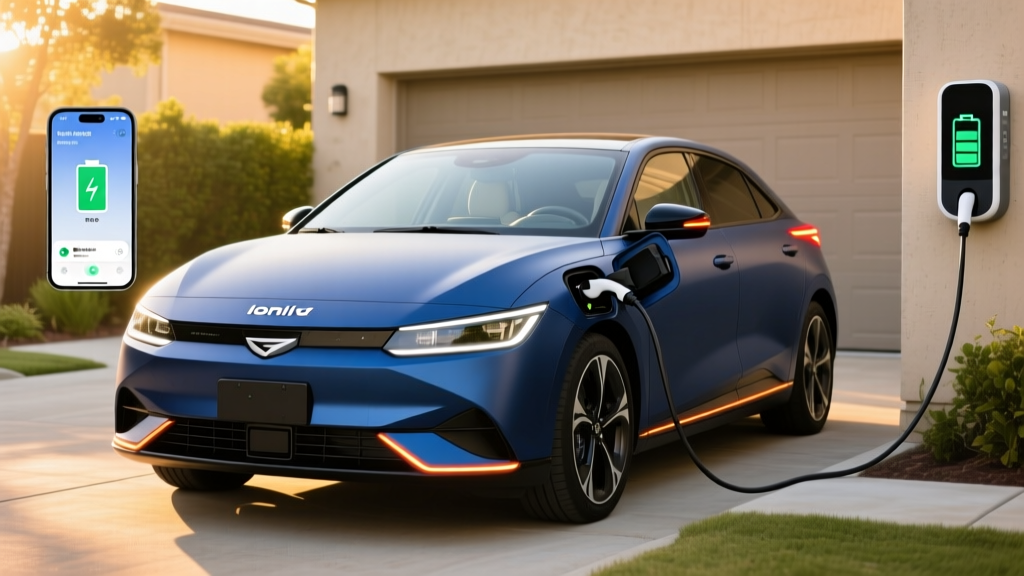
The 2025 Hyundai Ioniq 5 SEL AWD sits in the middle of the Ioniq 5 lineup, but for most buyers, it's the trim that makes the most sense. You get dual-motor all-wheel drive, the full 84.0 kWh (usable) battery, and the 800-volt architecture that enables genuinely fast DC charging — without stepping up to the Limited's price premium. After a 2024 refresh that brought Tesla North American Charging Standard (NACS) compatibility and a rear wiper, the 2025 Ioniq 5 SEL enters 2026 model-year showrooms as one of the most well-rounded midsize electric crossovers available.
Its combination of 303 miles of EPA-estimated range, sub-20-minute fast charging, and a spacious cabin makes it a serious alternative to the Tesla Model Y, Ford Mustang Mach-E, and Kia EV6. But real-world range, charging infrastructure nuances, and federal tax credit eligibility deserve a closer look before you sign.
Spec Sheet: 2025 Ioniq 5 SEL AWD at a Glance
| Specification | Value |
|---|---|
| EPA Range | 290 mi (Standard Range RWD) / 260 mi (SEL AWD) / 303 mi (SEL RWD)* |
| Battery (Usable) | 84.0 kWh, NMC lithium-ion (long-range trims) |
| Drivetrain | Dual-motor AWD (SEL AWD) or single-motor RWD |
| Horsepower | 320 hp (AWD) / 168 hp (Standard Range RWD) / 225 hp (Long Range RWD) |
| 0–60 mph | 4.5 seconds (AWD) / 7.0 sec (LR RWD) |
| Max DC Fast Charge | 239 kW peak (800V architecture) |
| 10–80% DC Charge Time | ~18 minutes (optimal conditions) |
| Level 2 Home Charging | 10.9 kW (onboard charger) — ~35 mi/hr |
| MPGe (AWD Combined) | 110 MPGe (108 city / 113 hwy) |
| Efficiency | 31 kWh/100 mi (AWD combined) |
| Cargo Volume | 27.2 cu ft (behind rear seats) / 59.3 cu ft (seats folded) |
| Rear Legroom | 39.4 inches |
| Frunk | 0.85 cu ft (AWD) / 2.0 cu ft (RWD) |
| Base MSRP (SEL AWD) | $46,650 (incl. $1,395 destination) |
| Battery/Powertrain Warranty | 8 years / 100,000 miles |
| Basic Warranty | 5 years / 60,000 miles |
*Range varies by drivetrain and trim. The SEL is available in both RWD (303 mi EPA) and AWD (260 mi EPA) configurations for 2025. The AWD variant is the more popular choice in most U.S. markets.
Real-World Range: What the EPA Sticker Doesn't Tell You
EPA Estimate: 260 miles (AWD) / 303 miles (RWD)
Real-World Highway (70 mph, 65°F): ~225–240 miles (AWD)
Real-World Highway (30°F, cold weather): ~185–205 miles (AWD)
City/Commuter Driving: ~265–285 miles (AWD, mild temps)
Expect 15–25% range loss in sustained cold weather below freezing. Highway driving at 75+ mph reduces range by ~10–15% vs. the combined EPA cycle.
The Ioniq 5's 84.0 kWh usable NMC (nickel manganese cobalt) battery pack delivers its best efficiency in mild-temperature city and suburban driving, where regenerative braking recaptures energy frequently. On the EPA combined cycle, the AWD model returns 110 MPGe — competitive with the Model Y Long Range (117 MPGe) and slightly behind the EV6 Wind AWD (117 MPGe).
In our experience and consistent with independent testing, highway-heavy road trips at 70–75 mph yield roughly 225–240 miles before you'll want to stop, assuming mild weather and moderate climate control use. Drop the ambient temperature below 30°F, and the Ioniq 5 — like most EVs without a standard heat pump on lower trims — sees range fall to roughly 185–205 miles on the highway. The Ioniq 5 does offer a heat pump as part of available cold-weather packages on certain trims, which mitigates cabin-heating energy draw significantly.
According to fueleconomy.gov, the Ioniq 5 AWD consumes 31 kWh per 100 miles in combined driving. That translates to roughly $0.10–$0.14 per mile at the national average residential electricity rate of ~$0.16/kWh — substantially less than a comparable 25 MPG gasoline SUV at current fuel prices.
Charging Speed: 800-Volt Architecture Pays Off
Hyundai's E-GMP platform gives the Ioniq 5 one of its strongest competitive advantages: 800-volt DC fast-charging capability. While most competitors in this price range use 400V systems, the Ioniq 5 can accept up to 239 kW at compatible chargers, filling the battery from 10% to 80% in approximately 18 minutes under optimal conditions.
| Charging Level | Power | Speed (Approx.) | Typical Use Case |
|---|---|---|---|
| Level 1 (120V household) | 1.4 kW | ~5 miles per hour | Emergency / overnight trickle |
| Level 2 (240V home/public) | 10.9 kW max | ~35 miles per hour | Daily home charging (~7–8 hrs for full charge) |
| DC Fast Charge (CCS/NACS) | 239 kW peak | 10–80% in ~18 min | Road trips, highway travel |
| DC Fast Charge (50 kW station) | 50 kW | 10–80% in ~65 min | Older public chargers |
Charging curve reality check: The 239 kW figure is a peak, not a sustained rate. In practice, the Ioniq 5 holds above 180 kW through roughly 55% State of Charge (SoC), then tapers progressively. From 80% to 100%, charging slows dramatically — Hyundai (and most automakers) recommends DC charging to 80% for daily use and battery longevity. Plan road-trip stops around 10–80% charges for the fastest turnaround.
For the 2025 model year, Hyundai added a native NACS (Tesla-style) charging port alongside the existing CCS1 port, giving Ioniq 5 owners direct access to the Tesla Supercharger network without an adapter. This is a significant practical advantage over CCS-only competitors as the industry migrates to NACS through 2025–2026.
At home on a 48-amp Level 2 circuit (hardwired, 60-amp breaker), the 10.9 kW onboard charger refills the battery at about 35 miles of range per hour — meaning a full overnight charge from near-empty is easily achievable in 8–9 hours. Most owners who plug in nightly will rarely see the battery dip below 30%.
Performance and Driving Dynamics
The SEL AWD pairs two electric motors for a combined 320 horsepower and 446 lb-ft of torque, launching the Ioniq 5 from 0–60 mph in approximately 4.5 seconds. That puts it in the same ballpark as the Mustang Mach-E Premium AWD (5.1 sec) and just behind the EV6 GT-Line AWD (4.5 sec). It's not a track car, but the instantaneous torque and low center of gravity make it genuinely quick off the line and composed through corners.
Ride quality leans toward the comfortable side — Hyundai tuned the suspension to absorb highway imperfections rather than chase sporty firmness. The steering is light but reasonably precise, and the one-pedal driving mode (i-Pedal) offers strong regenerative braking that can handle most stop-and-go commuting without touching the friction brake pedal.
The Ioniq 5 AWD is not rated for heavy towing. Hyundai lists a maximum towing capacity of 2,300 pounds with a factory-installed tow hitch — enough for a small utility trailer or a pair of dirt bikes, but not a camper. If towing is a priority, the Ford F-150 Lightning or Rivian R1S serve that use case far better.
Interior, Cargo, and Daily Practicality
The Ioniq 5's retro-futuristic cabin remains one of the most spacious in the midsize EV crossover segment. The flat floor (thanks to the skateboard battery platform) and generous 118.5-inch wheelbase create rear legroom of 39.4 inches — more than the Model Y and comparable to the Kia EV6. Two adults over six feet tall can sit behind a tall driver without complaint.
Cargo volume behind the rear seats is 27.2 cubic feet, expanding to 59.3 cubic feet with the 60/40 split rear seats folded. That's competitive with the segment, though the Model Y's 76.2 cu ft maximum gives it an edge for large cargo hauls. The front trunk (frunk) on AWD models is a modest 0.85 cubic feet — enough for a charging cable bag, not much more. RWD models get a larger 2.0 cu ft frunk.
The SEL trim includes dual 12.3-inch displays (instrument cluster and infotainment), wireless Apple CarPlay and Android Auto, heated front seats, a heated steering wheel, and Hyundai's Digital Key 2 (phone-as-key via NFC/UWB). The 2025 model year added a rear wiper — a small but welcome fix for a frequently cited complaint on earlier models.
Pricing, Trims, and Federal Tax Credit Eligibility
The 2025 Ioniq 5 lineup starts at approximately $42,600 for the SE Standard Range RWD and climbs to $58,200 for the Limited AWD. The SEL occupies the value-oriented middle ground:
| Trim | Drivetrain | EPA Range | MSRP (incl. destination) |
|---|---|---|---|
| SE Standard Range | RWD | 290 mi | $42,600 |
| SEL | RWD | 303 mi | $44,050 |
| SEL | AWD | 260 mi | $46,650 |
| Limited | AWD | 260 mi | $54,300 |
| Ioniq 5 N | AWD (Performance) | 221 mi | $67,500 |
Federal tax credit (IRS §30D): The Ioniq 5's eligibility for the up-to-$7,500 federal clean vehicle credit depends on several factors that change periodically. As of early 2026, key eligibility requirements include:
- MSRP cap: SUVs/crossovers must be under $80,000 — all Ioniq 5 trims qualify.
- Buyer income cap: Modified adjusted gross income must not exceed $150,000 (single), $225,000 (head of household), or $300,000 (joint filing).
- Battery sourcing: Critical minerals and battery components must meet escalating domestic-content and FTA-partner thresholds. Hyundai has shifted significant battery production to the U.S. (Metaplant America in Georgia), but exact credit eligibility for specific build dates should be verified at irs.gov or through your dealer at point of sale.
- Point-of-sale transfer: Qualified buyers can transfer the credit to the dealer at purchase, reducing the purchase price directly rather than waiting for a tax return.
Consult a tax professional and verify current sourcing requirements before relying on credit eligibility — rules have changed multiple times since 2023 and continue to evolve.
Driver Assistance and Safety Tech
The Ioniq 5 SEL comes equipped with Hyundai SmartSense, a comprehensive Level 2 (SAE) driver-assistance suite. This includes:
- Adaptive cruise control with stop-and-go and lane centering (Highway Driving Assist 2)
- Forward collision-avoidance assist with pedestrian and cyclist detection
- Blind-spot collision-avoidance assist
- Rear cross-traffic collision-avoidance assist
- Lane keeping assist and lane following assist
- Safe Exit Assist (warns of approaching traffic when opening doors)
Hyundai SmartSense and Highway Driving Assist are SAE Level 2 driver-assistance systems. The driver must remain fully attentive, keep hands on the wheel, and be prepared to take over at any moment. These systems assist with steering, acceleration, and braking on marked roads but do not constitute autonomous driving.
The Ioniq 5 earned the IIHS Top Safety Pick+ award in prior model years with high marks across crashworthiness tests. Check iihs.org for the latest 2025 model-year ratings when published.
Pros, Cons, and Who Should Buy
✅ Pros
- 800V charging: 10–80% in ~18 min at 239 kW peak
- Spacious cabin with flat floor and 39.4" rear legroom
- Native NACS port (2025+) — Supercharger access
- Strong value at SEL trim vs. Limited pricing
- Comfortable ride quality for daily commuting
- 8-year/100,000-mile battery warranty
- Wireless CarPlay/Android Auto standard
❌ Cons
- AWD range drops to 260 mi (EPA) — ~225 real-world highway
- Small frunk (0.85 cu ft on AWD)
- No heat pump standard on all trims
- Towing limited to 2,300 lbs
- Infotainment can lag; no physical volume knob
- Tax credit eligibility depends on sourcing rules
- Road/wind noise noticeable above 70 mph
🎯 Who the 2025 Ioniq 5 SEL Is For
- Daily commuters who can charge at home and want a comfortable, quiet ride with strong driver assists.
- Small families who need rear-seat space for car seats and cargo room for strollers and groceries.
- Road-trip-capable EV buyers who value 18-minute DC charging stops over maximum range.
- Cross-shoppers of the Model Y, Mach-E, and EV6 who want NACS access without Tesla's ecosystem.
Look elsewhere if: You need 350+ miles of range (consider the Lucid Air or a larger-battery SUV), heavy towing capability (F-150 Lightning, R1T), or a third row (Kia EV9).
Frequently Asked Questions
What is the real-world range of the 2025 Ioniq 5 SEL AWD?
The EPA rates the SEL AWD at 260 miles combined. In real-world highway driving at 70 mph in mild weather, expect roughly 225–240 miles. In cold weather (below 30°F), highway range can drop to 185–205 miles. The RWD version gets 303 miles EPA and will deliver roughly 260–280 miles in real-world mixed driving.
How fast does the Ioniq 5 charge at home and on the road?
On a 48-amp Level 2 home charger, the Ioniq 5 charges at 10.9 kW, adding roughly 35 miles of range per hour — a full charge takes about 8 hours. On DC fast chargers, it peaks at 239 kW and can charge from 10–80% in approximately 18 minutes at a compatible 350 kW station. On older 50 kW chargers, expect about 65 minutes for the same 10–80% fill.
Does the 2025 Ioniq 5 qualify for the $7,500 federal tax credit?
Eligibility depends on your income, the vehicle's battery component and critical mineral sourcing, and MSRP (all Ioniq 5 trims fall under the $80,000 SUV cap). Hyundai's U.S. battery production in Georgia improves sourcing compliance, but exact eligibility varies by build date and IRS rule updates. Verify at irs.gov or with your dealer. The credit can be transferred at point of sale to reduce your purchase price directly.
Is the Ioniq 5 SEL worth buying over the Tesla Model Y or Kia EV6?
The Ioniq 5 SEL AWD at $46,650 competes closely with the Model Y Long Range AWD (~$44,990) and EV6 Wind AWD (~$49,600). The Ioniq 5 wins on charging speed (800V architecture), interior spaciousness, and ride comfort. The Model Y wins on Supercharger network maturity (though NACS narrows this gap), cargo volume, and software ecosystem. The EV6 shares the E-GMP platform and is mechanically similar but styled differently. Test-drive all three — the decision often comes down to styling preference and which dealer experience you prefer.
What is the battery warranty on the Ioniq 5?
Hyundai covers the Ioniq 5's high-voltage battery for 8 years or 100,000 miles (whichever comes first). The warranty covers defects and excessive capacity loss — typically defined as dropping below 70% of original capacity. The basic vehicle warranty is 5 years/60,000 miles, and roadside assistance covers 5 years with unlimited miles.
Does the Ioniq 5 have a heat pump?
A heat pump is available on certain trims as part of cold-weather option packages, but it is not standard across all 2025 Ioniq 5 configurations. The heat pump significantly improves cold-weather efficiency by extracting ambient heat for cabin warming rather than relying solely on resistive heating. If you live in a cold climate, confirm whether your specific SEL build includes it or budget for the option.