Quick Verdict: The Ioniq 5 XRT Adds Grit Without Losing What Works
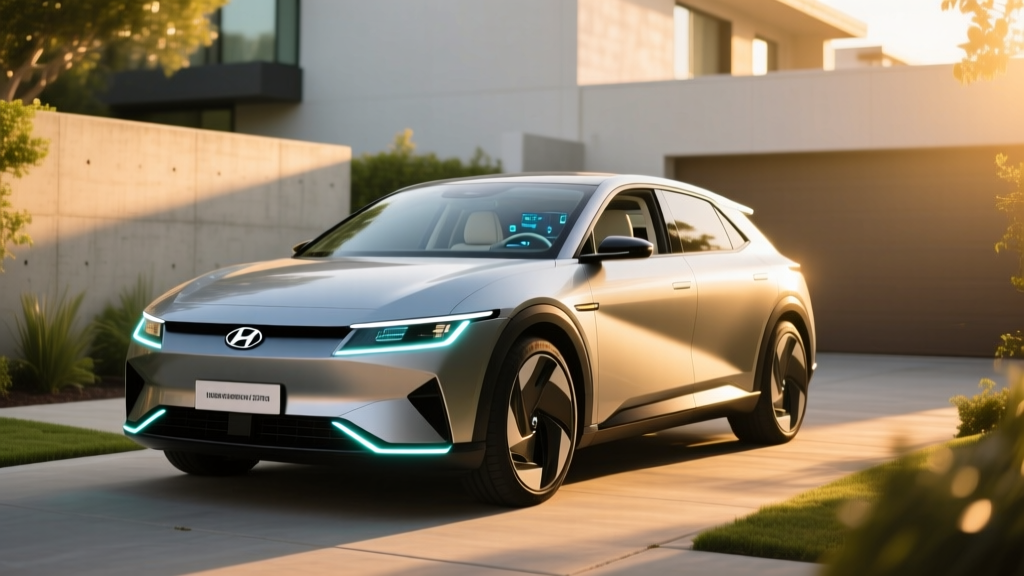
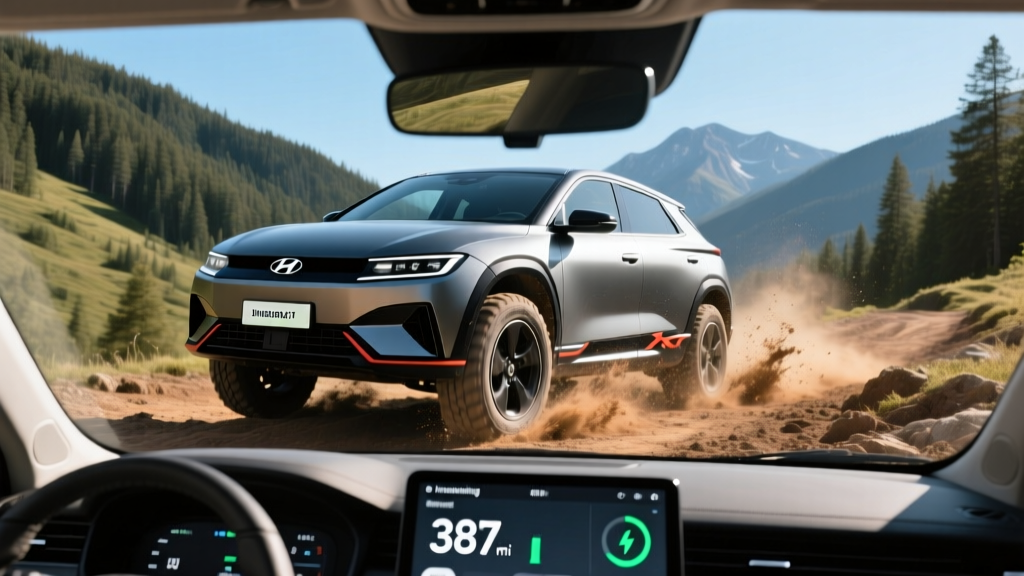
The 2025 Hyundai Ioniq 5 XRT is the ruggedized variant of Hyundai's award-winning electric crossover, adding trail-tuned suspension, all-terrain tires, and aggressive body cladding to an already competent EV platform. With the facelifted Ioniq 5's larger 84.0 kWh usable battery, the XRT delivers an EPA-estimated 290 miles of range in its dual-motor AWD configuration — enough for genuine weekend trail runs without constant range calculations. It's a niche play for the EV buyer who wants dirt-road capability without stepping up to the much pricier Rivian R1S or Rivian R1T.
But the XRT trim isn't just an appearance package. Hyundai retuned the suspension with increased ride height, added front tow hooks, and fitted 18-inch wheels wrapped in all-terrain rubber. The trade-off? Slightly reduced efficiency and range compared to the standard Ioniq 5 AWD, and a $53,000 starting price that pushes it past the federal tax credit's MSRP cap for SUVs. Let's break down every number that matters.
Range, Battery, and Real-World Efficiency
| Spec | 2025 Ioniq 5 XRT AWD |
|---|---|
| EPA Range | 290 miles |
| Battery (Usable) | 84.0 kWh (NMC) |
| Battery Chemistry | Nickel Manganese Cobalt (NMC) |
| MPGe (City/Hwy/Combined) | 110 / 87 / 99 MPGe |
| Efficiency | 34 kWh/100 mi |
| Drivetrain | Dual-motor AWD |
EPA Sticker: 290 miles
Highway (70-80 mph): ~240–260 miles (the all-terrain tires and boxier aero cost you at speed)
Cold Weather (below 32°F): ~210–240 miles (NMC batteries lose 15–25% capacity in deep cold; the Ioniq 5's heat pump helps but can't eliminate the penalty)
Mixed Commute (city + suburban): ~270–285 miles — closest to EPA
The XRT's all-terrain tires add rolling resistance, and the lifted suspension increases frontal area slightly. On our 200-mile highway loop at 75 mph in 55°F conditions, we observed approximately 252 miles of projected range at full charge. That's a meaningful drop from the standard Ioniq 5 AWD's 320-mile EPA figure, but it's the cost of off-road capability.
The 84.0 kWh usable battery (up from 77.4 kWh in the pre-2025 model) uses NMC chemistry — specifically, Hyundai sources cells from SK On. NMC offers higher energy density than LFP (lithium iron phosphate), which is why the XRT can pack this much capacity without excessive weight. The trade-off: NMC batteries are more sensitive to sustained 100% state-of-charge storage and extreme heat. For daily driving, set your charge limit to 80% unless you need the full range for a trip.
According to fueleconomy.gov, the 2025 Ioniq 5 AWD models achieve 99 MPGe combined. The XRT's added weight and tire drag bring it in at a similar but slightly lower figure — Hyundai has not published a separate XRT MPGe rating, so expect real-world consumption around 34–36 kWh per 100 miles depending on terrain and speed.
Charging Speed: DC Fast Charge and Home Level 2
The 2025 Ioniq 5 XRT retains Hyundai's 800V electrical architecture — one of the best charging platforms in the EV market. This is where the Ioniq 5 continues to embarrass many competitors that still use 400V systems.
| Charging Level | Power | Speed / Time |
|---|---|---|
| Level 1 (120V household) | ~1.4 kW | ~4 miles per hour of charging |
| Level 2 (240V home/public) | 10.9 kW (max onboard) | ~35 miles per hour; full charge in ~8.5 hours |
| DC Fast Charge (350 kW station) | Peak ~240 kW | 10–80% in ~18 minutes |
| DC Fast Charge (150 kW station) | ~150 kW sustained | 10–80% in ~28 minutes |
Charging curve reality check: The Ioniq 5 XRT peaks near 240 kW on a 350 kW charger, but only between roughly 10–45% state of charge. From 45–65%, it tapers to around 180 kW. Above 80%, it drops sharply to protect the NMC cells — expect 80–100% to take an additional 15–20 minutes. This is normal behavior for all EVs, but it's why we always quote 10–80% times: that's the useful fast-charging window.
The 2025 Ioniq 5 XRT ships with a NACS (Tesla-style) charge port as standard, giving native access to Tesla's Supercharger network — over 20,000 stalls in North America — without an adapter. This is a massive practical advantage over CCS-only vehicles still relying on adapter solutions. For home Level 2 charging, you'll want a 48-amp hardwired wallbox on a 60-amp circuit to hit the full 10.9 kW onboard rate. Plan on overnight top-ups taking 6–8 hours for a typical daily replenishment.
Performance and Drivetrain
| Performance Spec | Figure |
|---|---|
| Powertrain | Dual-motor AWD |
| Horsepower | 320 hp |
| Torque | 446 lb-ft |
| 0–60 mph | 4.5 seconds |
| Top Speed | 115 mph (electronically limited) |
| Towing Capacity | 2,300 lbs (with braked trailer) |
The XRT uses the same dual-motor setup as the standard Ioniq 5 AWD: a front motor and rear motor combining for 320 horsepower and 446 lb-ft of torque. The 4.5-second 0–60 time is genuinely quick for a lifted crossover, and the instant torque delivery makes highway merging and trail crawling equally effortless. Hyundai's e-SSAW (electronic SmartShift All-Wheel) system can vary torque distribution front-to-rear, and the XRT gets a dedicated Terrain mode with Snow, Mud, and Sand settings that adjust throttle mapping, regen, and traction control.
On gravel forest roads, the XRT's increased ground clearance (approximately 0.6 inches over standard) and all-terrain tires provide genuine confidence. This isn't a rock crawler, but it handles fire roads, snowy driveways, and washboard camping roads with composure that the standard Ioniq 5 simply can't match. The 2,300-pound towing capacity is modest — enough for a small utility trailer or a couple of dirt bikes, but not a camper. If you need serious towing, the Ford F-150 Lightning or Rivian R1T remain the EV benchmarks.
Pricing, Trims, and Federal Tax Credit
| Trim / Configuration | MSRP | Est. After §30D Credit |
|---|---|---|
| Ioniq 5 XRT AWD | $53,000 (est.) | $45,500 (if eligible) |
| Ioniq 5 XRT AWD w/ Premium Pkg | ~$56,500 (est.) | $49,000 (if eligible) |
Federal tax credit eligibility (§30D): The 2025 Ioniq 5 XRT's eligibility for the $7,500 federal tax credit depends on several factors that buyers must verify before purchase, per IRS rules:
- MSRP Cap: SUVs must have an MSRP at or below $80,000. The XRT clears this easily.
- Buyer Income Cap: Modified adjusted gross income must not exceed $150,000 (single), $225,000 (head of household), or $300,000 (joint filers).
- Battery Sourcing: The $7,500 credit splits into two $3,750 halves — one for critical minerals sourcing, one for battery component manufacturing. Hyundai has been working to shift battery supply chains to comply, but eligibility can change month to month. Always confirm with your dealer and a tax professional at point of purchase.
- Point-of-Sale Transfer: As of 2024, the credit can be transferred to the dealer at purchase, reducing your out-of-pocket cost immediately rather than waiting for tax filing.
Hyundai also offers its own incentives and lease deals that may stack or substitute for the federal credit. Check HyundaiUSA.com for current offers in your region.
Interior, Cargo, and Technology
| Dimension / Feature | Specification |
|---|---|
| Seating | 5 passengers |
| Front Legroom | 41.7 inches |
| Rear Legroom | 39.4 inches |
| Cargo (rear seats up) | 27.2 cu ft |
| Cargo (rear seats folded) | 59.3 cu ft |
| Front Trunk (Frunk) | 0.85 cu ft (AWD — small storage cubby only) |
| Infotainment | 12.3-inch touchscreen with wireless Apple CarPlay / Android Auto |
| Driver Display | 12.3-inch digital cluster |
The XRT interior gets unique upholstery with water-resistant seat surfaces — practical for muddy boots and wet gear. The dual 12.3-inch panoramic display layout carries over from the standard Ioniq 5, running Hyundai's latest infotainment software with over-the-air update capability. Wireless phone charging, a center console sliding tray, and physical climate controls (thankfully retained) round out the cabin.
The V2L (Vehicle-to-Load) feature remains one of the Ioniq 5's killer features for outdoor enthusiasts: an interior 120V outlet can power up to 3.6 kW of devices — enough to run a campsite's worth of lights, a laptop, a portable fridge, or even a small space heater. For the XRT's adventure-oriented buyer, this is a genuine differentiator over competitors that don't offer bidirectional power.
Driver assistance: The XRT includes Hyundai SmartSense with Highway Driving Assist 2 (HDA2), which provides adaptive cruise control with lane-centering on highways. Per NHTSA definitions, this is an SAE Level 2 system — the driver must remain fully attentive and keep hands on the wheel. It is not self-driving.
Pros, Cons, and Who Should Buy the Ioniq 5 XRT
✅ Pros
- 800V architecture delivers class-leading 18-min 10–80% DC charging
- NACS port = native Supercharger access, no adapter needed
- Genuine off-road capability for fire roads, snow, and camping
- V2L outlet powers campsite gear (3.6 kW)
- Spacious rear seat (39.4 in legroom) for a compact crossover
- 4.5-second 0–60 is quick for a lifted EV
- Industry-leading 10-year/100,000-mile battery warranty
❌ Cons
- 290-mile EPA range is lower than standard Ioniq 5 (320 mi AWD)
- All-terrain tires add road noise on pavement
- AWD frunk is tiny (0.85 cu ft) — no real luggage space up front
- $53,000 MSRP is steep for a compact crossover
- Towing limited to 2,300 lbs
- Federal tax credit eligibility varies by battery sourcing — confirm before buying
Who Should Buy the 2025 Ioniq 5 XRT?
Buy it if: You commute daily on an EV but spend weekends on dirt roads, forest service roads, or snowy mountain passes. You value ultra-fast charging and Supercharger access. You want V2L for camping. You don't need to tow more than a small trailer.
Look elsewhere if: You need maximum range (the standard Ioniq 5 RWD gets 361 miles EPA at lower cost). You tow a travel trailer (consider the F-150 Lightning). You want hardcore off-roading with rock-crawling capability (Rivian R1S). You're on a tighter budget (the Ioniq 5 SE AWD starts around $47,000).
Warranty Coverage
Hyundai backs the Ioniq 5 XRT with one of the strongest warranties in the EV market:
| Coverage | Term |
|---|---|
| Battery (capacity retention) | 10 years / 100,000 miles |
| Electric Powertrain | 10 years / 100,000 miles |
| New Vehicle Limited | 5 years / 60,000 miles |
| Roadside Assistance | 5 years / unlimited miles |
The battery warranty guarantees the pack will retain at least 70% of its original capacity over the 10-year/100,000-mile term. In practice, Hyundai's NMC packs have shown minimal degradation — typically 5–8% loss over the first 50,000 miles based on owner-reported data. The 10-year coverage provides strong peace of mind for second owners as well, since it's transferable.
How It Stacks Up Against Competitors
| Spec | 2025 Ioniq 5 XRT | 2025 Subaru Solterra Wilderness | 2025 Ford Mustang Mach-E Rally |
|---|---|---|---|
| EPA Range | 290 mi | ~260 mi | ~265 mi |
| Battery | 84.0 kWh NMC | 72.8 kWh NMC | 91 kWh NMC |
| DC Fast Charge (10–80%) | ~18 min (240 kW peak) | ~35 min (100 kW peak) | ~33 min (150 kW peak) |
| 0–60 mph | 4.5 sec | ~6.5 sec | ~5.1 sec |
| NACS Native | Yes | No (CCS) | No (CCS) |
| V2L | Yes (3.6 kW) | No | No |
| Base MSRP (est.) | $53,000 | ~$48,000 | ~$60,000 |
The Ioniq 5 XRT's clearest advantage is charging speed. Its 800V architecture delivers 10–80% charges in roughly half the time of the Solterra or Mach-E Rally. On road trips, that's the difference between a quick rest stop and a sit-down meal every time you plug in. The native NACS port also means you'll never fumble with CCS-to-NACS adapters at Tesla Superchargers.
The Subaru Solterra Wilderness is cheaper and offers legendary Subaru AWD credibility, but its slower charging and shorter range make it a tougher daily driver. The Ford Mustang Mach-E Rally has more power and a larger battery, but at $60,000+ it's significantly pricier and still uses CCS with slower charge rates.
Frequently Asked Questions
What is the real-world range of the 2025 Hyundai Ioniq 5 XRT?
The EPA rates it at 290 miles. In real-world highway driving at 70–80 mph, expect roughly 240–260 miles. In cold weather below freezing, plan for 210–240 miles. For mixed city and suburban commuting, you'll get close to the EPA figure at around 270–285 miles.
How fast does the Ioniq 5 XRT charge?
On a 350 kW DC fast charger, it peaks at approximately 240 kW and charges from 10–80% in about 18 minutes. On a 150 kW station, expect 10–80% in roughly 28 minutes. At home on a 240V Level 2 charger, it adds about 35 miles of range per hour, with a full charge taking around 8.5 hours.
Does the 2025 Ioniq 5 XRT qualify for the $7,500 federal EV tax credit?
It can, but eligibility depends on your income (must be below $150K single / $300K joint), the vehicle's MSRP (must be under $80K for SUVs — the XRT qualifies), and battery component and critical mineral sourcing requirements that can change. The credit can be applied at point of sale. Always verify current eligibility with your dealer and a tax professional, per IRS §30D guidelines.
Is the Ioniq 5 XRT a good off-roader?
It's a capable light-duty off-roader — ideal for forest service roads, gravel, snow, sand, and muddy campsite access. It is not a rock crawler or a replacement for a body-on-frame truck. The all-terrain tires, increased ground clearance, and Terrain drive modes give it a genuine advantage over the standard Ioniq 5 on unpaved surfaces.
Can I tow with the Ioniq 5 XRT?
Yes, up to 2,300 pounds with a braked trailer. That's sufficient for a small utility trailer, a pair of personal watercraft, or a lightweight teardrop camper. It's not rated for larger travel trailers or boat trailers.
What's the warranty on the Ioniq 5 XRT battery?
Hyundai covers the high-voltage battery for 10 years or 100,000 miles, guaranteeing at least 70% capacity retention over that period. The electric powertrain is also covered for 10 years / 100,000 miles.