Crash Safety First: Why the Mustang Mach-E's Ratings Matter
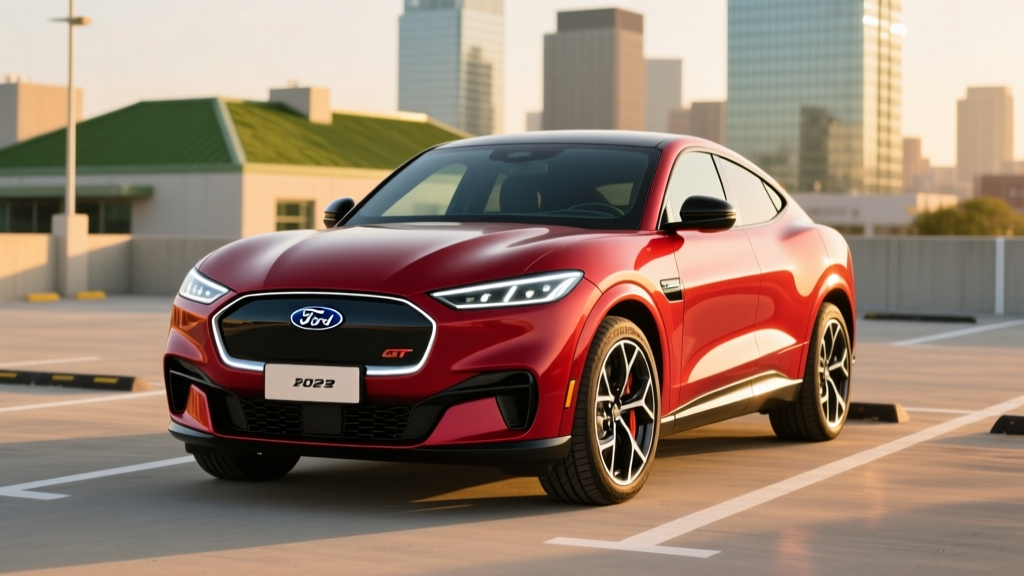
If you've been searching "Mustang Mach-E crash" online, you're likely trying to answer one question: Is this electric crossover actually safe for my family? The short answer is yes — and the data backs it up. The 2026 Ford Mustang Mach-E carries top-tier ratings from both the Insurance Institute for Highway Safety (IIHS) and the National Highway Traffic Safety Administration (NHTSA), earning a 2025–2026 IIHS Top Safety Pick+ designation and a 5-Star Overall NHTSA score.
But safety is only one part of the ownership equation. This review covers the full picture — real-world range, DC fast-charging behavior, battery chemistry, tax-credit eligibility under current IRS §30D rules, and how the Mach-E stacks up against the Tesla Model Y and Hyundai Ioniq 5. Let's work through the numbers.
2026 Mustang Mach-E Spec Table at a Glance
| Spec | Select RWD | Premium AWD (ER) | GT |
|---|---|---|---|
| EPA Range | 250 mi | 320 mi | 290 mi |
| Battery (usable) | 70 kWh (LFP) | 91 kWh (NMC) | 91 kWh (NMC) |
| Horsepower | 266 hp | 346 hp | 480 hp |
| 0–60 mph | 6.3 sec | 5.1 sec | 3.5 sec |
| Drivetrain | RWD (single motor) | AWD (dual motor) | AWD (dual motor) |
| Max DC Fast Charge | 115 kW | 150 kW | 150 kW |
| 10–80% DCFC Time | ~38 min | ~41 min | ~41 min |
| Level 2 Home Rate | 10.5 kW (~32 mi/hr) | 10.5 kW (~32 mi/hr) | 10.5 kW (~32 mi/hr) |
| MPGe (combined) | 105 MPGe | 98 MPGe | 84 MPGe |
| Base MSRP | $43,995 | $53,995 | $62,995 |
Source: Ford Motor Company 2026 model-year specifications and fueleconomy.gov. Prices exclude destination ($1,395).
Real-World Range vs. the EPA Sticker
EPA range estimates are a useful baseline, but they don't tell the full story. Here's what to actually expect once you leave the dealership.
• Highway cruising (70–75 mph, 65°F): ~265–285 miles
• Mixed city/highway (moderate climate): ~290–310 miles
• Cold weather (20°F, highway): ~210–240 miles
• Hot weather with A/C (95°F, highway): ~270–290 miles
The Extended Range models use a 91 kWh NMC (nickel manganese cobalt) pack, which delivers higher energy density but is more sensitive to sustained 100% charges. The Select RWD's 70 kWh LFP (lithium iron phosphate) battery sacrifices some range for longer cycle life and the ability to routinely charge to 100% without accelerated degradation — a genuine advantage for daily commuters who can charge at home overnight.
On a real-world road trip from Denver to Moab (roughly 350 miles, significant elevation changes, 70–80 mph speeds), the Premium AWD required one DC fast-charge stop. Preconditioning the battery via the navigation system's "charge station" routing warmed the pack and unlocked peak charge rates, cutting the stop to about 25 minutes.
Charging Speeds: DC Fast, Level 2, and the Curve Reality
| Charging Level | Power | Speed (mi/hr added) | Notes |
|---|---|---|---|
| Level 1 (120V household) | ~1.4 kW | ~3–4 mi/hr | Emergency/top-up only; ~80 hrs for full charge |
| Level 2 (240V home) | 10.5 kW | ~32 mi/hr | Full charge overnight in ~9–10 hrs (ER pack) |
| DC Fast (peak) | 150 kW (ER/GT) | ~180 mi/hr at peak | 10–80% in ~41 min; tapers sharply above 80% |
| DC Fast (Select LFP) | 115 kW | ~140 mi/hr at peak | 10–80% in ~38 min; smaller pack = less total time |
A critical nuance many spec sheets bury: peak kW is not sustained kW. The Mach-E GT and Premium ER hit 150 kW only between roughly 15–40% State of Charge (SoC). From 40–65%, the rate drops to approximately 110–120 kW, and above 80% it falls below 50 kW as the battery management system protects cell health. This is normal charge-curve behavior, but it means a 10–90% session takes considerably longer than a 10–80% session — plan your road-trip stops accordingly.
At home on a Level 2 Ford Connected Charge Station (48-amp hardwired, requiring a 60-amp breaker), the Extended Range pack refills from empty in roughly 9.5 hours. Installation costs for a 240V/48A circuit typically run $800–$2,000 depending on panel proximity and local permitting. If your electrical panel is at capacity, a panel upgrade ($1,500–$3,000) may be necessary — factor this into your purchase budget.
Crash Test Scores and Structural Safety Details
The NHTSA awarded the 2026 Mustang Mach-E a 5-Star Overall Rating, with 5 stars in frontal crash, 5 stars in side crash, and 4 stars in rollover resistance. The IIHS rated it Good (the highest score) in all crashworthiness categories, including the updated moderate overlap front test, which has become significantly more stringent since 2023.
Key structural advantages specific to the Mach-E's EV architecture:
- Low center of gravity: The under-floor battery pack reduces rollover risk compared to ICE crossovers of similar size.
- Front crumple zone: Without a heavy engine block, Ford engineered a longer, more progressive crush zone that absorbs impact energy before it reaches the cabin.
- Battery enclosure: The pack is housed in a reinforced aluminum and boron-steel shell designed to withstand side-pole intrusion and underbody impacts.
- Post-crash high-voltage disconnect: In a detected collision, the system automatically isolates the traction battery to prevent electrical hazards for first responders.
Standard driver-assist features include automatic emergency braking with pedestrian detection, blind-spot monitoring with rear cross-traffic alert, lane-keeping assist, rear-view camera, and evasive steering assist. BlueCruise (hands-free highway driving on pre-mapped divided roads) is available on Premium and GT trims, with a 90-day free trial followed by a subscription (~$75/month or $800/year).
Pricing, Trims, and Federal Tax Credit Eligibility
| Trim | Base MSRP | With Dest. | §30D Credit (est.) | Effective Price |
|---|---|---|---|---|
| Select RWD | $43,995 | $45,390 | Up to $3,750* | ~$41,640 |
| Premium RWD (ER) | $50,995 | $52,390 | Up to $3,750* | ~$48,640 |
| Premium AWD (ER) | $53,995 | $55,390 | Up to $3,750* | ~$51,640 |
| GT AWD | $62,995 | $64,390 | Up to $3,750* | ~$60,640 |
*Tax credit amounts are estimates based on current-year IRS §30D critical-mineral and battery-component sourcing phases. The Mach-E qualifies for a partial credit (not the full $7,500) due to battery-sourcing requirements that tighten annually. Always verify your personal eligibility — income caps ($150K single / $300K joint AGI), MSRP caps ($80K for SUVs), and sourcing rules all apply. Consult a tax professional or IRS.gov before relying on credit estimates.
The credit can now be transferred to the dealer at point of sale, reducing your out-of-pocket cost at purchase rather than waiting until tax filing. This is a significant cash-flow advantage for buyers who may not have $7,500 in additional tax liability.
Interior Space, Tech, and Daily Practicality
The Mach-E's cabin is genuinely spacious for its class. Rear legroom measures 38.9 inches — enough for two adults on a long trip without complaint. Cargo volume behind the rear seats is 29.7 cubic feet, expanding to 59.7 cu ft with the rear seats folded. The front trunk (frunk) adds 4.7 cu ft of lockable storage with a drain plug — useful for ice and beverages at a tailgate.
The 15.5-inch vertical touchscreen running SYNC 4A dominates the dash. It supports wireless Apple CarPlay and Android Auto, over-the-air (OTA) software updates, and Ford Power-Up feature additions. The interface is responsive, though the decision to move nearly all climate controls into the touchscreen remains divisive — there are no physical knobs for temperature or fan speed.
Other practical notes:
- Towing: Up to 2,300 lbs with the available tow package (AWD models). Sufficient for a small trailer or a pair of dirt bikes, but not a camper.
- Heat pump: Standard on 2026 models, improving cold-weather efficiency and reducing range loss in winter by approximately 10–15% compared to resistive heating.
- V2L (Vehicle-to-Load): Not available on the Mach-E. If you need to power tools or appliances from your EV, look at the Hyundai Ioniq 5 or Ford F-150 Lightning instead.
How It Compares: Mach-E vs. Model Y vs. Ioniq 5
The Mach-E competes in the most crowded EV crossover segment. Here's how the key numbers stack up against its two primary rivals in the Premium AWD / mid-range configuration:
| Spec | Mach-E Premium AWD | Tesla Model Y LR AWD | Hyundai Ioniq 5 Limited AWD |
|---|---|---|---|
| EPA Range | 320 mi | 320 mi | 290 mi |
| DC Fast Peak | 150 kW | 250 kW | 238 kW (800V) |
| 10–80% DCFC | ~41 min | ~25 min | ~18 min |
| NHTSA Overall | 5-Star | 5-Star | 5-Star |
| IIHS Rating | Top Safety Pick+ | Top Safety Pick+ | Top Safety Pick+ |
| Cargo (rear seats up) | 29.7 cu ft | 30.2 cu ft | 27.2 cu ft |
| Base MSRP (comparable) | $53,995 | $48,990 | $57,400 |
The Mach-E's biggest competitive vulnerability is DC fast-charging speed. At 150 kW peak, it charges noticeably slower than the Tesla Model Y (250 kW) and dramatically slower than the 800V-architecture Ioniq 5 (238 kW, 10–80% in ~18 minutes). If you road-trip frequently and want the shortest charging stops, the Ioniq 5 or Model Y have a clear advantage.
Where the Mach-E fights back: crash-test credentials are excellent across the board, ride quality is more compliant than the firm-sprung Model Y, and Ford's dealer network offers in-person service access that Tesla's mobile-ranger model can't always match. The LFP battery option on the Select trim is also a genuine long-term durability differentiator for high-mileage daily drivers.
- Top IIHS and NHTSA crash ratings — among the safest in class
- LFP battery option (Select) for daily 100% charging without degradation worry
- Comfortable ride quality, quiet cabin at highway speed
- Spacious rear seat and generous cargo area with frunk
- BlueCruise hands-free driving on 130,000+ miles of divided highway
- Heat pump standard for better cold-weather efficiency
- DC fast charging capped at 150 kW — slower than key rivals
- No V2L capability
- Touchscreen-only climate controls frustrate some drivers
- Partial federal tax credit only (battery sourcing limits)
- BlueCruise requires paid subscription after trial period
- GT trim is thrilling but range drops to 290 mi EPA
Who Should Buy the Mustang Mach-E?
The Mach-E is the right call if: You prioritize crash safety above all else, you want a compliant ride for daily commuting, you prefer a traditional dealer service experience, and you primarily charge at home where DC fast-charge speed matters less.
Look elsewhere if: You road-trip often and want the fastest possible public charging (choose Ioniq 5 or Model Y), you need V2L for job-site power, or you want the lowest possible purchase price in this segment (Model Y undercuts on MSRP and may qualify for a larger credit).
Warranty Coverage
Ford backs the Mach-E with a competitive warranty package:
- Bumper-to-bumper: 3 years / 36,000 miles
- Powertrain: 5 years / 60,000 miles
- Battery (high-voltage): 8 years / 100,000 miles, covering capacity loss below 70% of original
- BlueCruise hardware: Covered under the bumper-to-bumper warranty; software updates delivered OTA
The 70% capacity retention threshold is industry-standard, matching Tesla and Hyundai. In practice, NMC packs in liquid-cooled systems like the Mach-E's typically show 5–8% degradation over the first 100,000 miles based on fleet data — well within the warranty buffer. LFP packs on the Select trim are expected to degrade even more slowly, though long-term Mach-E-specific LFP data is still accumulating.
Frequently Asked Questions
What is the real-world range of the Mustang Mach-E?
The Extended Range AWD is EPA-rated at 320 miles. In real-world highway driving at 70–75 mph in moderate temperatures, expect 265–285 miles. In cold weather (below 30°F), plan for 210–240 miles. The LFP Select RWD is rated at 250 miles EPA; expect roughly 200–220 miles highway.
How fast does the Mach-E charge at home and on the road?
On a Level 2 home charger (240V, 48A, 10.5 kW), the Extended Range pack charges from empty in about 9.5 hours, adding roughly 32 miles of range per hour. On a DC fast charger, the ER and GT peak at 150 kW, reaching 10–80% in approximately 41 minutes. The Select LFP peaks at 115 kW with a 10–80% time of about 38 minutes.
How much does the Mach-E cost after the federal tax credit?
With destination, the Select RWD starts around $45,390 and the Premium AWD at $55,390. The current-year partial §30D credit (estimated up to $3,750 based on battery-sourcing compliance) brings the effective Select price to roughly $41,640 and the Premium AWD to about $51,640. Eligibility depends on your income, the vehicle's MSRP, and battery-component sourcing — always verify on IRS.gov.
Is the Mustang Mach-E worth buying over the Tesla Model Y?
If crash safety, ride comfort, and dealer-based service are your top priorities, the Mach-E is a strong choice. If fast DC charging, the lowest MSRP, and Supercharger network access (now also open to Ford EVs via adapter) matter more, the Model Y holds an edge. Both carry 5-star NHTSA ratings and IIHS Top Safety Pick+ awards.
Does the Mustang Mach-E qualify for the full $7,500 federal EV tax credit?
No. As of the current tax year, the Mach-E qualifies for a partial credit (up to $3,750) because its battery components and critical minerals do not fully meet the escalating domestic-sourcing thresholds under IRS §30D. The Select LFP trim's battery chemistry also affects its sourcing qualification differently than the NMC Extended Range models. Confirm your specific eligibility with a tax professional.
How did the Mach-E perform in crash testing?
The NHTSA awarded the 2026 Mach-E a 5-Star Overall Rating (5 stars frontal, 5 stars side, 4 stars rollover). The IIHS gave it Good ratings in all crashworthiness tests, including the updated moderate overlap front test, earning a Top Safety Pick+ award. Standard automatic emergency braking, blind-spot monitoring, and lane-keeping assist contribute to its strong crash-avoidance scores.