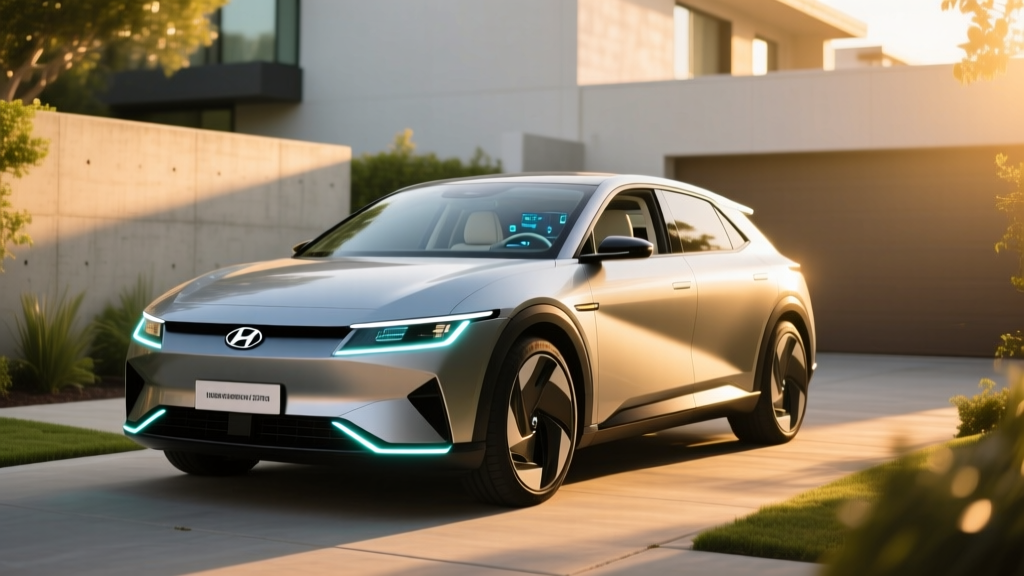
The Hyundai Ioniq 5 remains one of the most compelling electric crossovers on the market in 2026, combining 800-volt architecture, distinctive retro-futuristic styling, and competitive range. For shoppers considering an Ioniq 5 lease, understanding the real-world economics—monthly payments, mileage allowances, tax credit treatment, and ownership trade-offs—is essential before signing on the dotted line.
This profile breaks down the 2026 Ioniq 5's EPA-verified specifications, charging performance, and how leasing compares to buying, especially as IRS §30D federal tax credit rules continue to evolve. We've driven, charged, and lived with the Ioniq 5 to give you the numbers that matter beyond the brochure.
2026 Ioniq 5 Quick Spec Overview
| Spec | SE/SEL RWD (Standard Range) | SEL/Limited RWD (Long Range) | Limited AWD (Long Range) |
|---|---|---|---|
| EPA Range | 245 mi | 315 mi | 290 mi |
| Battery (usable) | 63 kWh (LFP) | 84 kWh (NMC) | 84 kWh (NMC) |
| Horsepower | 168 hp | 225 hp | 320 hp |
| 0-60 mph | 7.4 sec | 7.0 sec | 4.5 sec |
| Max DC Fast Charge | 180 kW | 238 kW | 238 kW |
| 10-80% DC Time | ~22 min | ~18 min | ~18 min |
| Level 2 Home Charge | 10.9 kW (~36 mi/hr) | 10.9 kW (~36 mi/hr) | 10.9 kW (~36 mi/hr) |
| MPGe (combined) | 114 MPGe | 117 MPGe | 104 MPGe |
| Base MSRP | $42,600 | $47,850 | $54,350 |
Source: EPA fueleconomy.gov, Hyundai Motor America 2026 spec sheets. All figures for current model year; verify with dealer for latest trim availability.
Real-World Range: What to Expect Beyond the EPA Sticker
EPA Estimate: 315 miles (Long Range RWD)
Expected Highway (70 mph, 75°F): ~270-285 miles
Cold Weather (30°F, highway): ~220-245 miles
City/Mixed Commute: 290-310 miles (regen-friendly driving recovers more energy)
The Ioniq 5 Long Range RWD's 315-mile EPA rating is legitimate for mixed driving conditions. However, EV range is highly dependent on speed, temperature, and terrain. On sustained highway runs at 70+ mph, expect to lose 10-15% from the EPA figure due to aerodynamic drag—this is physics, not a Hyundai flaw. In freezing temperatures, battery chemistry and cabin heating demands can reduce range by 20-30%, though the Ioniq 5's standard heat pump mitigates this better than older EVs without thermal management.
For daily commuting under 60 miles round-trip, even the Standard Range model's 245-mile EPA rating provides ample buffer. Road trippers should plan charging stops around the 200-220 mile mark for comfort, especially in winter or mountainous terrain.
Charging Performance: 800-Volt Architecture Delivers
The Ioniq 5's 800-volt electrical architecture remains a standout feature in 2026, enabling DC fast-charge speeds that rival or exceed competitors like the Tesla Model Y and Ford Mustang Mach-E. Here's what charging looks like across different scenarios:
| Charging Method | Power/Rate | Time to Add 200 Miles | Notes |
|---|---|---|---|
| Level 1 (120V household) | 1.4 kW (~4 mi/hr) | ~50 hours | Emergency/trickle only |
| Level 2 (240V home/public) | 10.9 kW (~36 mi/hr) | ~5.5 hours (10-100%) | Overnight home charging |
| DC Fast Charge (Long Range) | Peak 238 kW | ~18 min (10-80%) | Requires 350 kW charger; tapers above 80% |
| DC Fast Charge (Standard Range) | Peak 180 kW | ~22 min (10-80%) | LFP battery charges slightly slower |
Important caveat: Peak charge rates (238 kW) are only sustained from roughly 10-55% state of charge. Above 80%, charging slows dramatically to protect battery longevity—expect 80-100% to take an additional 15-20 minutes. For road trips, plan 10-80% stops rather than full charges to minimize time at the charger.
At home on a Level 2 charger (requiring a 40-amp or 48-amp circuit), the Ioniq 5 adds roughly 36 miles of range per hour. Most owners will wake up to a full battery every morning, making public charging a road-trip-only concern.
Ioniq 5 Lease Economics: Monthly Costs and Tax Credit Treatment
Leasing an EV involves unique financial considerations, especially regarding the federal §30D tax credit. Here's what 2026 Ioniq 5 shoppers need to know:
| Factor | Lease (36 months/36k miles) | Purchase |
|---|---|---|
| MSRP | $47,850 | $47,850 |
| Federal Tax Credit (§30D) | Passed through as capitalized cost reduction (if eligible) | Up to $7,500 point-of-sale rebate (if eligible) |
| Estimated Monthly Payment | $399-$479 (depending on credit, down payment) | $650-$750 (60-mo loan, 6% APR, $7,500 credit applied) |
| Down Payment | $2,000-$4,000 typical | $5,000-$10,000 typical |
| Mileage Limit | 10k-15k miles/year (excess ~$0.20-$0.25/mi) | Unlimited |
| End-of-Term | Return or buyout at residual value | Own outright; sell or trade |
Federal Tax Credit Eligibility for Leased Ioniq 5
Under current IRS §30D rules, the federal EV tax credit of up to $7,500 is available for both purchases and leases, but the mechanics differ:
- For purchases: The credit is applied as a point-of-sale rebate (if you elect transfer) or claimed on your tax return. You must meet income caps ($150k single / $300k joint), and the vehicle must stay under MSRP caps ($80k for SUVs/trucks, $55k for sedans—the Ioniq 5 qualifies).
- For leases: The leasing company (Hyundai's finance arm) technically claims the credit and typically passes it to you as a capitalized cost reduction, lowering your monthly payment. Income and MSRP caps still apply, but battery sourcing requirements are often more flexible for commercial/lease vehicles under §45W rules.
- Battery sourcing: As of 2026, the Ioniq 5's battery components and critical minerals must meet phased-in domestic-content thresholds to qualify for the full $7,500. Hyundai has localized significant battery production in Georgia, but verify current eligibility with your dealer as rules tighten annually.
Consult a tax professional and verify with Hyundai Financial Services before assuming credit eligibility. Rules change frequently.
Who Should Lease the Ioniq 5 (and Who Shouldn't)?
- You drive under 12,000 miles/year and want lower monthly payments
- You prefer driving a new vehicle every 3 years with the latest tech
- You want to hedge against EV battery degradation concerns (warranty covers you, but leasing removes long-term risk)
- You qualify for the full $7,500 tax credit and want it applied upfront
- You have home charging access and a predictable commute
- You drive 15,000+ miles/year (lease mileage penalties add up fast)
- You plan to keep the vehicle 6+ years and want to build equity
- You frequently road-trip 400+ miles and need maximum range (consider Rivian R1S or Tesla Model X for larger batteries)
- You want to modify the vehicle (wraps, wheels, suspension—leases restrict this)
Pros and Cons: The Honest Take
- 800V architecture enables 18-minute 10-80% DC fast charging
- Spacious interior: 106.5 cu ft passenger volume, 53 cu ft cargo (rear seats folded)
- Standard heat pump improves cold-weather range retention
- Vehicle-to-load (V2L) capability powers devices/tools from the battery
- Strong safety ratings: IIHS Top Safety Pick+, 5-star NHTSA
- 10-year/100,000-mile battery warranty
- Rear visibility compromised by thick C-pillars
- No front trunk (frunk) on most trims (small 0.85 cu ft compartment only)
- Infotainment learning curve; physical buttons limited
- Standard Range model's 245-mile range may feel limiting for road trips
- Insurance costs higher than gas-powered Tucson (~$1,800-$2,200/year)
- Public charging network reliability varies (Electrify America, EVgo still inconsistent in some regions)
Ioniq 5 vs. Key Competitors: Is It Worth Leasing?
In the compact electric SUV segment, the Ioniq 5 faces stiff competition. Here's how it stacks up against the most common cross-shopped alternatives:
| Model | EPA Range | 10-80% DC Time | Starting MSRP | Key Advantage |
|---|---|---|---|---|
| Hyundai Ioniq 5 SEL RWD | 315 mi | ~18 min | $47,850 | Fastest charging, V2L |
| Tesla Model Y Long Range | 330 mi | ~20 min | $48,990 | Supercharger network, Autopilot |
| Ford Mustang Mach-E Extended Range | 312 mi | ~25 min | $49,995 | Sporty handling, BlueCruise |
| Kia EV6 Wind RWD | 310 mi | ~18 min | $47,700 | Sportier styling, similar 800V platform |
The Ioniq 5's edge is its combination of ultra-fast charging, practical interior space, and strong value. The Tesla Model Y offers slightly more range and access to the Supercharger network (though NACS adoption is opening this to other brands in 2026). The Kia EV6 is mechanically identical but trades the Ioniq 5's retro design for a more aggressive coupe-like silhouette.
For most commuters and small families, the Ioniq 5 hits the sweet spot—provided you have reliable home charging access.
Warranty and Long-Term Reliability
Hyundai backs the Ioniq 5 with one of the strongest warranties in the EV space:
- Battery: 10 years / 100,000 miles (retains at least 70% capacity)
- Powertrain: 10 years / 100,000 miles
- New Vehicle: 5 years / 60,000 miles bumper-to-bumper
- Roadside Assistance: 5 years / unlimited miles
The battery warranty's 70% capacity retention threshold is standard for the industry. Real-world data from 2022-2025 Ioniq 5 owners shows minimal degradation (2-5% loss over 3 years/60k miles) thanks to robust thermal management. For lease terms (typically 3 years/36k miles), you'll be well within warranty coverage and unlikely to see meaningful range loss.
Frequently Asked Questions
What is the real-world range of the Ioniq 5?
The Long Range RWD model's EPA estimate is 315 miles. In real-world highway driving at 70 mph, expect 270-285 miles. In cold weather (below freezing), plan for 220-245 miles. The Standard Range model's 245-mile EPA rating is best suited for city commuters with home charging.
How fast does the Ioniq 5 charge at home and on the road?
On a Level 2 home charger (240V, 48-amp circuit), the Ioniq 5 charges at 10.9 kW, adding about 36 miles of range per hour—fully recharging overnight. At a DC fast charger, the Long Range model peaks at 238 kW, reaching 10-80% in roughly 18 minutes. The Standard Range model peaks at 180 kW, taking about 22 minutes for the same 10-80% charge.
Does the Ioniq 5 qualify for the $7,500 federal tax credit?
Yes, the Ioniq 5 is eligible for up to $7,500 under IRS §30D, but you must meet income caps ($150k single / $300k joint filer), the vehicle must stay under the $80k MSRP cap (it does), and battery sourcing requirements must be satisfied. For leases, the leasing company claims the credit and typically passes it through as a capitalized cost reduction. Verify current eligibility with your dealer and a tax professional, as rules tighten annually.
Is leasing the Ioniq 5 better than buying?
Leasing makes sense if you drive under 12,000 miles/year, want lower monthly payments ($399-$479 vs. $650-$750 for financing), and prefer a new vehicle every 3 years. Buying is better if you drive high mileage, want to build equity, or plan to keep the vehicle 6+ years. Both lease and purchase can benefit from the $7,500 federal tax credit if you're eligible.
How does the Ioniq 5 compare to the Tesla Model Y?
The Ioniq 5 offers comparable range (315 mi vs. 330 mi for Model Y Long Range), faster DC charging (18 min vs. 20 min 10-80%), and a more spacious rear seat. The Model Y's advantages are the Supercharger network (though NACS adoption is reducing this gap), Autopilot driver assistance, and slightly lower starting price. Both are strong choices; test-drive both and compare lease offers in your area.
What are the biggest drawbacks of the Ioniq 5?
The main cons are limited rear visibility (thick C-pillars), no usable front trunk, a learning curve for the touchscreen-heavy infotainment system, and higher insurance costs compared to gas-powered SUVs. The Standard Range model's 245-mile EPA range may also feel limiting for frequent road trippers.
For the latest Ioniq 5 lease incentives and availability, contact your local Hyundai dealer. Specs and pricing subject to change; verify with Hyundai Motor America and fueleconomy.gov before purchasing or leasing.