Quick Verdict: A Supertruck That Actually Delivers
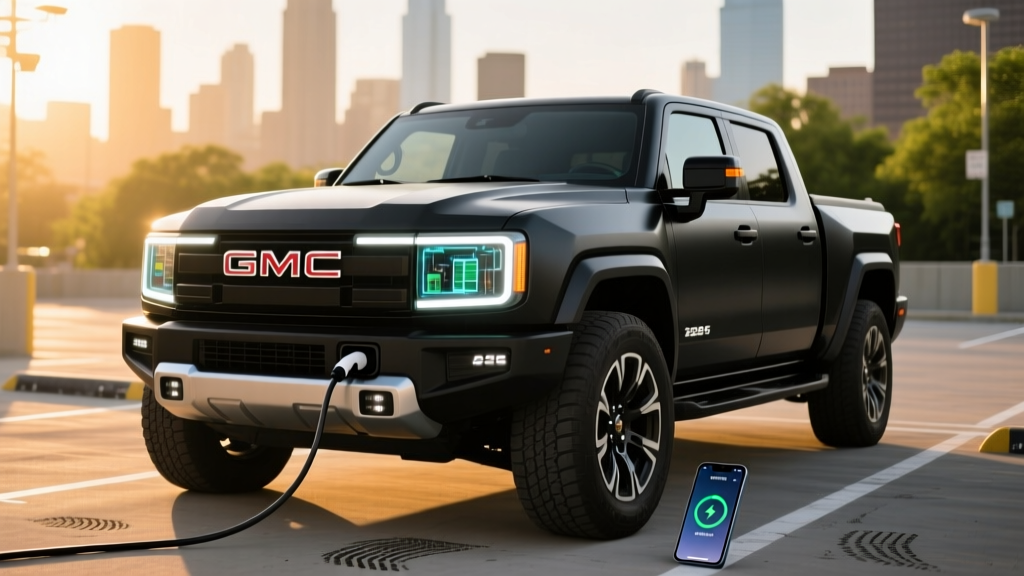
The 2025 GMC Hummer EV Pickup is the most physically imposing electric vehicle on the road, and its specs back up the swagger. With up to 1,000 horsepower, a Watts to Freedom launch mode that hits 60 mph in roughly 3.0 seconds, and an EPA-estimated range reaching 381 miles on the Edition 1 trim, GMC has built a truck that defies its 9,000-pound curb weight. But brute-force performance and headline range numbers only tell part of the story. After spending time with the platform's charging behavior, real-world efficiency, and daily usability, the Hummer EV reveals itself as a surprisingly competent — if undeniably niche — electric truck that demands a very specific buyer.
| Spec | 2X (Standard Range) | 3X (Extended Range) | Edition 1 |
|---|---|---|---|
| EPA Range | ~314 mi | ~350 mi | ~381 mi |
| Battery (Usable) | ~200 kWh (est.) | ~246 kWh (est.) | ~246 kWh (est.) |
| Battery Chemistry | NMC (Nickel Manganese Cobalt) | NMC | NMC |
| Drivetrain | Dual-Motor AWD | Tri-Motor AWD | Tri-Motor AWD |
| Horsepower | 625 hp | 830 hp | 1,000 hp |
| Torque | 7,400 lb-ft (wheel) | 11,500 lb-ft (wheel) | 11,500 lb-ft (wheel) |
| 0–60 mph | ~4.5 sec | ~3.5 sec | ~3.0 sec |
| Max DC Fast Charge | 350 kW (peak) | 350 kW (peak) | 350 kW (peak) |
| 10–80% DC Time | ~34 min | ~40 min | ~40 min |
| Level 2 Home Rate | 11.5 kW (~26 mi/hr) | 11.5 kW (~26 mi/hr) | 11.5 kW (~26 mi/hr) |
| Efficiency | ~47 MPGe / 47 kWh/100mi | ~47 MPGe / 47 kWh/100mi | ~47 MPGe / 47 kWh/100mi |
| Towing Capacity | 7,500 lbs | 7,500 lbs | 7,500 lbs |
| Base MSRP | $99,445 | $106,445 | $112,595 (limited) |
Sources: GMC Hummer EV Official Specs, EPA fueleconomy.gov. Figures may vary by final configuration. Wheel torque is measured at the wheels per GMC methodology.
Range and Efficiency: EPA Numbers vs. What You'll Actually See
Real-World Expectation: 240–300 miles highway; 180–240 miles in freezing temps with towing
The Hummer EV's Ultium battery platform is one of the largest ever fitted to a production vehicle. The Extended Range and Edition 1 trims carry a usable battery capacity estimated at approximately 246 kWh — a staggering figure that directly enables the 381-mile EPA rating on the Edition 1. GMC uses NMC (nickel manganese cobalt) chemistry across the lineup, chosen for its high energy density, which is essential when you're pushing a truck this heavy.
However, physics is unforgiving. The Hummer EV's combined efficiency of roughly 47 MPGe (about 47 kWh per 100 miles, per EPA data) means this truck consumes energy at an extraordinary rate. On a flat, temperate highway at 65 mph, expect real-world range of approximately 270–300 miles on the Edition 1. Push speeds above 75 mph, and aerodynamic drag — the Hummer EV's frontal area is massive — will drop that to 240 miles or less.
Cold weather hits particularly hard. In sub-30°F conditions, NMC chemistry combined with the energy demand of cabin heating and battery thermal management can reduce range by 25–35%. A 381-mile EPA truck may realistically deliver 250–280 miles in a northern winter. If you're towing even a modest 5,000-pound trailer, cut range roughly in half — expect 150–180 miles between charges.
The Standard Range 2X trim, with its smaller battery pack, delivers an EPA-estimated 314 miles, but real-world highway driving will land closer to 240–270 miles under ideal conditions. For road-trippers and towers, the Extended Range 3X or Edition 1 is the pragmatic choice.
Charging Speed: 350 kW Peak, But Read the Fine Print
| Charging Level | Power / Rate | Miles Added | Notes |
|---|---|---|---|
| Level 1 (120V, 12A) | ~1.4 kW | ~2 mi/hr | Emergency only; full charge takes days |
| Level 2 (240V, 48A) | 11.5 kW | ~26 mi/hr | ~18–22 hr for full charge (246 kWh pack) |
| DC Fast Charge (peak) | 350 kW | ~100+ mi in 10 min (peak) | Requires 350 kW-capable station (e.g., Electrify America 350) |
| DC Fast Charge (10–80%) | Variable (tapers) | ~34–40 min total | Peak rate sustained only in narrow SoC window |
The Hummer EV's 800-volt Ultium architecture enables DC fast-charging at up to 350 kW — among the fastest peak rates available on any production vehicle. On a compatible 350 kW charger, GMC claims a 10–80% charge in approximately 34–40 minutes depending on the battery pack size.
Here's where the charging curve matters: peak 350 kW is only sustained in a narrow state-of-charge window, roughly between 10% and 25% SoC. Above 50% SoC, charge rates taper significantly, often dropping below 100 kW. Above 80%, the rate slows to a trickle to protect the NMC cells. This is standard behavior for large NMC packs, but with a ~246 kWh battery, those tapering minutes add up. Expect a 10–80% session to average closer to 150–180 kW sustained, not 350 kW.
At home, the onboard charger maxes out at 11.5 kW on a Level 2, 240V/48A circuit. With the larger 246 kWh pack, a full charge from empty takes roughly 18–22 hours. Most owners will plug in nightly and never fully deplete the pack, making daily home charging practical — you'll typically add 150–200 miles overnight. However, you'll need a 60A dedicated circuit installed by a licensed electrician, which can add $800–$2,000 to your setup cost if your panel supports it. Homes with older 100A electrical panels may require a $2,000–$4,000 panel upgrade.
One practical note: preconditioning the battery before arriving at a DC fast charger is essential. The Hummer EV's navigation system will automatically begin preconditioning when you route to a charger, warming the pack to optimal temperature for maximum charge acceptance. Skip this step and your peak charge rate could drop by 30–50%, especially in cold weather.
Performance: The Physics-Defying Supertruck
Nothing prepares you for the first Watts to Freedom (WTF) launch in a 9,000-pound truck. The Edition 1's tri-motor setup — one front motor, two rear — produces 1,000 horsepower and a claimed 11,500 lb-ft of wheel torque. The 0–60 mph sprint takes approximately 3.0 seconds, placing the Hummer EV in supercar territory. The 3X trim with 830 hp still manages roughly 3.5 seconds, while the dual-motor 2X at 625 hp runs about 4.5 seconds.
All trims feature standard all-wheel drive. The tri-motor trims add torque vectoring on the rear axle, enabling the signature CrabWalk diagonal-drive feature (the rear wheels steer up to 10 degrees in the same direction as the fronts) and an Extract Mode that lifts the air suspension an additional 6 inches for off-road obstacles. Ground clearance tops out at approximately 15.9 inches in Extract Mode, with 49.7 inches of water fording capability.
The Hummer EV's adaptive air suspension delivers a surprisingly compliant highway ride, and the four-wheel steering system makes this 18-foot-long truck manageable in parking lots with a turning circle rivaling some midsize sedans. That said, the sheer mass is always present — brake distances are long, and tire wear will be a recurring ownership expense given the vehicle weight and custom 35-inch Goodyear Wrangler Territory MT tires.
Interior, Cargo, and Tech: Big Truck, Big Screen
The Hummer EV's cabin centers on a 13.4-inch diagonal infotainment touchscreen running GM's Ultifi software platform, supplemented by a 12.3-inch driver instrument cluster. Wireless Apple CarPlay and Android Auto are standard. The interface is responsive, though the sheer number of configurable off-road and drive-mode menus can feel overwhelming at first.
Driver-assistance technology includes GM's Super Cruise — a hands-free highway driving system on over 750,000 miles of mapped roads in the U.S. and Canada. Super Cruise is a SAE Level 2 system, meaning the driver must remain attentive and ready to take over at any time. It is not autonomous driving. An infrared camera monitors driver attention, and the system will issue escalating warnings if you look away. When it works, Super Cruise is excellent for long highway stretches, but it disengages in construction zones, unmapped roads, and heavy rain.
Cargo and passenger space reflect the Hummer EV's full-size truck dimensions:
- Bed length: 5 feet (short bed, due to the Infinity Roof and rear structure)
- Bed volume: ~36.7 cu ft (behind rear seats with MultiPro tailgate)
- Front trunk (frunk): Not available — the front houses the massive power electronics and secondary battery
- Front headroom: ~43.0 inches
- Rear legroom: ~38.4 inches
- Infinity Roof: Removable roof panels store in the frunk-equivalent space behind the rear seats
The short bed is a notable trade-off. If you regularly haul 4x8 sheets of plywood or need a full 6.5-foot bed, the Hummer EV won't accommodate you. The MultiPro tailgate offers six configurations and includes a built-in load step, which partially compensates.
Pricing, Tax Credits, and Ownership Costs
| Trim | Base MSRP | Federal §30D Credit | Est. After-Credit Price |
|---|---|---|---|
| 2X (Standard Range) | $99,445 | See eligibility note | Varies |
| 3X (Extended Range) | $106,445 | See eligibility note | Varies |
| Edition 1 | $112,595 | See eligibility note | Varies |
- MSRP Cap: Pickup trucks must have an MSRP at or below $80,000 to qualify. The Hummer EV (starting at $99,445) exceeds this cap on every trim.
- Result: The Hummer EV does NOT qualify for the $7,500 federal EV tax credit.
- Income Caps: Even if MSRP-eligible, buyers must fall under $300K (joint), $225K (head of household), or $150K (individual) modified AGI.
- Battery Sourcing: Critical mineral and battery component requirements must also be met for full credit — moot here due to MSRP.
- Point-of-Sale Transfer: Available for qualifying vehicles, but again, not applicable to the Hummer EV.
Always verify current rules at IRS.gov §30D and consult a tax professional. Rules are subject to legislative change.
The Hummer EV's price places it squarely in luxury-truck territory. With no federal tax credit due to the $80,000 MSRP cap on pickups, buyers should budget the full sticker plus destination, dealer adjustments, and any optional packages. GMC's Extreme Off-Road Package (standard on Edition 1, optional on 3X) adds underbody armor, front/rear lockers, and the adaptive air suspension.
On the ownership-cost side, electricity costs are a bright spot. At a national average of $0.16/kWh, charging the 246 kWh pack from empty costs roughly $39 — equivalent to about $0.08–$0.10 per mile. Compare that to a gas truck averaging 15 mpg at $3.50/gallon ($0.23/mi), and the per-mile fuel savings are meaningful. However, insurance premiums for the Hummer EV are steep — expect $3,500–$5,500 annually depending on your profile, driven by the vehicle's repair costs, mass, and price. Tire replacement (four 35-inch MT tires) runs $2,000–$2,800 per set and may be needed every 20,000–30,000 miles given the weight.
Warranty and Battery Longevity
GMC backs the Hummer EV's battery and powertrain with an 8-year/100,000-mile warranty, guaranteeing a minimum of 70% battery capacity retention over that period. The bumper-to-bumper limited warranty covers 3 years/36,000 miles. Given the NMC chemistry and the pack's massive size, degradation in absolute terms will be gradual — losing 10–15% capacity over 8 years on a 246 kWh pack still leaves over 200 kWh usable, which is more than most EVs start with.
Battery replacement cost, should it be needed out of warranty, is estimated at $30,000–$45,000+ given the pack size. However, the Ultium platform's modular design is intended to allow individual module replacement rather than a full pack swap, which could significantly reduce out-of-warranty repair costs. Long-term real-world data on Ultium degradation is still accumulating.
Pros and Cons: The Honest Scorecard
- 381-mile EPA range on Edition 1 — among the longest of any EV
- Supertruck performance: 3.0-sec 0–60, 1,000 hp
- 350 kW peak DC fast-charging capability
- Super Cruise hands-free driving on 750K+ miles of highway
- CrabWalk and 4-wheel steering for surprising maneuverability
- Extreme off-road capability with Extract Mode and lockers
- Distinctive design — nothing else looks or feels like it
- Starts at $99,445 — no federal tax credit due to MSRP cap
- ~47 MPGe efficiency is among the lowest of any EV
- Short 5-foot bed limits truck utility
- No frunk — front space consumed by power electronics
- 9,000-lb curb weight drives tire wear, insurance, and energy cost
- Real-world range drops sharply when towing (150–180 mi)
- Level 2 home charging takes 18–22 hr for a full pack
- Sheer size makes urban parking and tight garages challenging
Who Should Buy the 2025 GMC Hummer EV Pickup?
Buy the Hummer EV if:
- You want an electric truck that's a genuine off-road and performance statement, not just a commuter
- You have reliable home Level 2 charging and rarely need to tow more than 5,000 lbs
- You value Super Cruise for frequent highway travel
- Budget is flexible and you understand the total cost of ownership (insurance, tires, energy)
Look elsewhere if:
- You need a practical work truck with a long bed and frequent towing — consider the Ford F-150 Lightning or Rivian R1T
- You're counting on the $7,500 federal tax credit to make the math work
- Your daily driving is mostly urban/suburban and you don't need 1,000 hp
- You want the lowest cost-per-mile EV — the Hummer's efficiency is its weakest metric
Against key competitors, the Hummer EV occupies a unique lane. The Ford F-150 Lightning (starting ~$55,000, up to 320 miles EPA, qualifies for the tax credit on eligible trims) is the practical workhorse choice with a full-size bed and lower cost. The Rivian R1T (starting ~$79,900, up to 352 miles EPA on Max Pack) offers a better balance of off-road capability, a usable 4.5-foot bed with the gear tunnel, and more car-like on-road manners. The Chevrolet Silverado EV (sharing the Ultium platform, starting ~$57,000 for WT, up to 492 miles EPA on 4WT) provides the Ultium tech with a more conventional truck form factor and better efficiency.
The Hummer EV's honest value proposition is as a halo vehicle — a truck you buy because it exists and because nothing else matches the combination of range, power, and presence. If that resonates, it delivers. If you need a tool first and a toy second, the competition offers better utility per dollar.
Frequently Asked Questions
What is the real-world range of the 2025 GMC Hummer EV Pickup?
The EPA rates the Edition 1 at 381 miles, the 3X at approximately 350 miles, and the 2X at 314 miles. In real-world highway driving at 70+ mph, expect 270–300 miles from the Edition 1. In cold weather (below 30°F), range can drop 25–35%, yielding 250–280 miles. Towing a 5,000-lb trailer cuts range roughly in half to 150–180 miles.
How fast does the Hummer EV charge at home and on the road?
On a 350 kW DC fast charger, the Hummer EV peaks at 350 kW but averages roughly 150–180 kW sustained, reaching 10–80% in about 34–40 minutes. At home on a Level 2, 240V/48A circuit, it charges at 11.5 kW, adding approximately 26 miles of range per hour. A full charge of the 246 kWh pack takes 18–22 hours on Level 2.
Does the Hummer EV qualify for the $7,500 federal EV tax credit?
No. Under current IRS §30D rules, pickup trucks must have an MSRP at or below $80,000 to qualify. The Hummer EV starts at $99,445, exceeding this cap on every trim. State and local incentives may still apply — check your jurisdiction's programs.
Is the Hummer EV worth buying over the F-150 Lightning or Rivian R1T?
It depends on priorities. The Hummer EV wins on raw range (381 mi vs. 320 mi for Lightning, 352 mi for R1T Max Pack) and performance (1,000 hp). The F-150 Lightning wins on price, tax-credit eligibility, bed utility, and fleet/work practicality. The Rivian R1T wins on on-road refinement, the gear tunnel storage, and overall versatility. Choose the Hummer EV if you want the ultimate statement truck and budget isn't the primary constraint.
How long will the Hummer EV battery last?
GMC warrants the battery for 8 years/100,000 miles with a minimum 70% capacity retention guarantee. With the NMC chemistry and a ~246 kWh pack, even a 15% degradation over 8 years leaves over 200 kWh usable — more than most competing EVs offer new. Out-of-warranty replacement is estimated at $30,000–$45,000+, though modular Ultium design may allow cheaper partial repairs.
Can I tow with the Hummer EV?
Yes, the Hummer EV is rated to tow up to 7,500 lbs. However, towing significantly impacts range — expect roughly 150–180 miles between charges when pulling a 5,000-lb trailer. For frequent heavy towing, a diesel truck or a PHEV may be more practical until DC fast-charging infrastructure becomes more widespread along towing corridors.
Is Super Cruise self-driving?
No. Super Cruise is an SAE Level 2 driver-assistance system. It provides hands-free steering, acceleration, and braking on mapped compatible highways, but the driver must remain fully attentive and ready to take over immediately. It is not Level 4 autonomous driving like Waymo's robotaxi service.
Sources: GMC Hummer EV Official Specifications, EPA fueleconomy.gov, IRS §30D Clean Vehicle Credit. All specifications and pricing reflect 2025 model year data as available. Verify current pricing and incentive eligibility with your dealer and tax professional.