Quick Verdict: The Hummer EV 2X in 2025
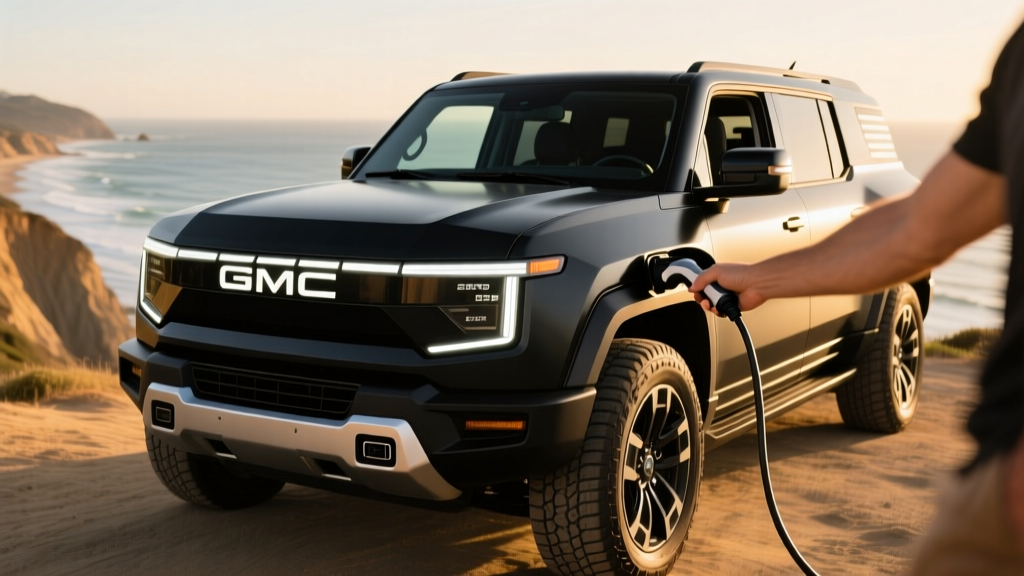
The 2025 GMC Hummer EV 2X is the mid-tier sweet spot in GMC's electric supertruck lineup. It drops the range-topping Edition 1's tri-motor Watt to Watts system in favor of a dual-motor AWD setup that still produces a massive 655 horsepower and 7,400 lb-ft of wheel torque, while preserving the 24-module Ultium battery pack for maximum range. For buyers who want the Hummer EV's signature presence, CrabWalk, and Extract Mode without paying six figures for the 3X, the 2X is the rational choice — though rational is a stretch when you're talking about a 9,000-pound electric pickup.
EPA Range vs. Real-World Expectation
EPA Estimated Range: 314 miles (pickup variant)
Real-World Expectation: Expect 240–270 miles on sustained highway driving at 70+ mph. In cold weather (below 32°F), plan for 190–220 miles due to the massive frontal area, heavy curb weight (~9,063 lbs), and battery thermal demands. City driving with regen braking recovers more energy, often matching or slightly exceeding the EPA sticker.
Battery, Powertrain, and Performance Specs
The 2025 Hummer EV 2X rides on GM's BT1 electric truck platform and shares its core battery architecture with the Chevrolet Silverado EV and GMC Sierra EV. Here's what's under the armor-plated floor:
| Specification | 2025 GMC Hummer EV 2X |
|---|---|
| Battery (usable) | ~212 kWh (24 modules, double-stack) |
| Chemistry | NMC (Nickel Manganese Cobalt) — Ultium pouch cells |
| Drivetrain | Dual-motor AWD (e4WD) |
| Horsepower | 655 hp |
| Wheel Torque | 7,400 lb-ft (at wheels, not motor shaft) |
| 0-60 mph | ~3.5 seconds (est., dual-motor) |
| EPA Range | 314 miles |
| Efficiency | 47 MPGe combined / ~72 kWh/100 mi |
| Curb Weight | ~9,063 lbs |
| Towing Capacity | 7,500 lbs (max) |
| Payload | 1,300 lbs |
| Ground Clearance (max) | 15.9 inches (Extract Mode) |
On chemistry: GM's Ultium platform uses NMC lithium-ion pouch cells manufactured in partnership with LG Energy Solution at their Lansing, Michigan facility. NMC offers higher energy density than LFP, which is critical here — fitting 200+ kWh into a vehicle package already demands double-stacked modules. The trade-off is that NMC is more sensitive to sustained high-state-of-charge storage and extreme heat than LFP. For longevity, GM recommends daily charging limits around 80–90% unless you need the full pack for a road trip.
Performance note: The 2X's 3.5-second 0-60 time is remarkable for a vehicle this heavy, but it's the instant torque delivery that defines the driving experience. Unlike the tri-motor 3X with its Watt to Watts mode (which drops 0-60 to ~3.0 seconds), the 2X doesn't offer the same launch-control theatrics, but in everyday driving the difference is negligible. Both motors provide torque-vectoring capability, and the available rear-locking differential (via the torque vectoring system) aids off-road traction.
Charging Speed: DC Fast Charging and Home Level 2
Charging a 212 kWh battery is where physics meets patience. The Hummer EV 2X supports impressive peak charge rates, but the sheer battery size means full charges take time regardless.
| Charging Level | Power | Speed / Time | Connector |
|---|---|---|---|
| Level 1 (120V) | ~1.4 kW | ~3 miles/hr (not practical for daily use) | J1772 / NACS adapter |
| Level 2 (240V, 48A) | 11.5 kW | ~24 miles/hr; 0–100% in ~19 hours | J1772 (NACS adapter included) |
| Level 2 (240V, 80A) | 19.2 kW | ~40 miles/hr; 0–100% in ~11 hours | Requires 80A-capable EVSE + circuit |
| DC Fast Charge | Up to 350 kW (peak) | 10–80% in ~35 minutes | CCS1 (NACS adapter for Tesla Superchargers) |
Charging curve reality: The 350 kW peak rate is just that — a peak. The Hummer EV's massive battery can accept high power longer than smaller packs, but expect the curve to taper significantly above 60% SoC. In real-world DC fast charging, you'll see sustained rates of 200–280 kW through the 20–60% window, dropping to 100–150 kW from 60–80%, and further declining above 80%. The 10–80% time of approximately 35 minutes is competitive for a pack this large, but it's not the 18-minute sprint you'd get from a Hyundai Ioniq 5 with its smaller 77 kWh battery.
Home charging practicality: Most 2X owners will install a 48-amp Level 2 charger on a 60-amp circuit, adding roughly 24 miles of range per hour. An overnight charge (10 hours) nets about 240 miles — enough to replenish a typical day's driving. For the full 314-mile range from near-empty, plan on a 19-hour Level 2 session, which means you'll rarely charge from 0% at home. The available 19.2 kW / 80A charging option cuts this to about 11 hours but requires a 100-amp dedicated circuit and a compatible EVSE — expect $1,500–$3,000 in electrical upgrades beyond a standard Level 2 install.
NACS transition: For 2025, GM is equipping new Hummer EVs with the NACS (Tesla-style) charge port, and includes a CCS1 adapter for legacy networks. This grants access to Tesla's Supercharger network, which significantly expands route-planning options for road trips. If you're buying a 2024 model-year carryover, you'll get CCS1 with a NACS adapter instead.
Interior, Cargo, and Technology
The Hummer EV's cabin is as oversized as its exterior. The 2X trim comes well-equipped with GMC's Premium trim content:
- Displays: 13.4-inch diagonal infotainment touchscreen + 12.3-inch driver information center, both running GM's latest Ultifi software platform
- Audio: 14-speaker Bose premium system
- Seating: Heated and ventilated front seats, heated steering wheel, heated rear outboard seats
- Roof: Removable sky panels (stored in the frunk) — a signature Hummer EV feature
- Off-road tech: UltraVision camera system with up to 18 camera views, including underbody cameras for trail navigation
Driver assistance (SAE Level 2): The 2X includes GM's Super Cruise hands-free driving system on compatible mapped highways — over 750,000 miles of divided highways in North America as of 2025. Super Cruise is a legitimate Level 2 system: it handles steering, acceleration, and braking on supported roads, but the driver must remain attentive, monitored by a steering-column camera. It is not self-driving. The 2X also includes Enhanced Automatic Emergency Braking, HD Surround Vision, and Rear Cross Traffic Braking as standard.
Cargo dimensions:
- Bed length: 5 feet (short bed, crew cab configuration)
- Frunk (front trunk): ~11.7 cu ft with power-operated eTrunk lid — large enough for the removable roof panels and a full set of charging cables
- Rear seat legroom: 45.2 inches (class-leading, thanks to the flat EV floor)
- Rear seat headroom: 40.1 inches
- Total passenger volume: ~134 cu ft
Notable drawbacks: The 5-foot bed is short for a full-size truck, limiting hauling utility. Visibility is compromised by the thick A-pillars and high hood line — the camera systems help but can't fully compensate. The sheer width (86.7 inches without mirrors) makes tight parking garages and drive-throughs stressful. And at 9,063 lbs, tire wear is accelerated; expect replacement intervals of 20,000–30,000 miles on the factory 35-inch all-terrains, with a set costing $2,000–$2,800.
Pricing, Trims, and Federal Tax Credit Eligibility
The 2025 Hummer EV lineup has been simplified, and the 2X represents the accessible entry point to the dual-motor configuration:
| Trim / Configuration | Base MSRP | Federal §30D Credit | Effective Price |
|---|---|---|---|
| Hummer EV 2X (Pickup, Dual-Motor) | $98,845 | See eligibility note | $91,345–$98,845 |
| Hummer EV 2X (SUV, Dual-Motor) | $100,445 | See eligibility note | $92,945–$100,445 |
| Hummer EV 3X (Pickup, Tri-Motor) | $106,295 | See eligibility note | $98,795–$106,295 |
Destination charge: Add approximately $1,995 to all MSRPs above.
Federal tax credit (§30D) eligibility — critical details: The Hummer EV pickup qualifies as a light truck under IRS rules, meaning the MSRP cap for trucks is $80,000. However, the 2X starts at $98,845 — above the $80,000 MSRP cap for trucks. This means the Hummer EV 2X pickup does not qualify for the $7,500 federal tax credit under current §30D rules, regardless of buyer income or battery sourcing.
§30D Federal EV Tax Credit Requirements (2025)
- MSRP cap (trucks/SUVs/vans): $80,000 — Hummer EV 2X exceeds this
- Buyer income cap: $150K single / $300K joint (MAGI)
- Battery sourcing: Critical minerals and battery components must meet phased-in thresholds from US/FTA countries
- Point-of-sale transfer: Eligible credits can be transferred to the dealer at purchase for an immediate price reduction
- Result for Hummer EV 2X: Not eligible due to MSRP exceeding the cap
For the most current credit rules, always verify with the IRS §30D guidance page before purchasing.
State incentives: Some states offer their own EV rebates or tax credits that may not carry the same MSRP caps. Check your state's energy office or DMV for local programs — Colorado, for example, has offered credits for vehicles over $80,000 MSRP in certain years.
Warranty and Long-Term Ownership Costs
GMC backs the Hummer EV with coverage that reflects its premium positioning and the high cost of its battery system:
- Battery & Propulsion Limited Warranty: 8 years / 100,000 miles (whichever comes first), covering battery capacity retention below 70% of original capacity
- Bumper-to-Bumper Limited Warranty: 3 years / 36,000 miles
- Powertrain Warranty: 5 years / 60,000 miles (covers electric drive unit motors, power electronics)
- Corrosion Warranty: 6 years / 100,000 miles
- Roadside Assistance: 5 years / 60,000 miles
Battery replacement cost: If out of warranty, a full 24-module Ultium pack replacement is estimated at $25,000–$35,000 including labor. However, GM's Ultium architecture allows individual module replacement, which could reduce out-of-warranty costs to $3,000–$5,000 per failed module. Real-world degradation data for the Ultium platform is still accumulating, but GM's testing targets less than 10% capacity loss over 150,000 miles.
Insurance: Expect annual premiums of $3,500–$5,500 depending on your profile, driven by the high replacement cost, repair complexity, and vehicle weight. Get quotes before purchasing — this is a significant ongoing cost that many buyers overlook.
Efficiency cost reality: At 72 kWh/100 miles and a national average electricity rate of $0.17/kWh (2025 EIA data), the Hummer EV 2X costs approximately $12.24 per 100 miles to charge at home. Compare that to a gas-powered GMC Sierra 1500 at 19 MPG combined and $3.50/gallon: $18.42 per 100 miles. The EV saves roughly $6 per 100 miles, or about $900/year at 15,000 miles — meaningful but modest relative to the vehicle's purchase price.
Pros, Cons, and Who Should Buy the Hummer EV 2X
Pros
- 314-mile EPA range is exceptional for a full-size truck
- CrabWalk four-wheel steering enables diagonal movement for tight trails
- Extract Mode raises suspension to 15.9 inches of ground clearance
- Super Cruise hands-free driving on 750K+ miles of highway
- Removable sky panels for open-air driving
- 350 kW DC fast charging handles the massive battery efficiently
- Massive rear-seat legroom (45.2 inches) and spacious frunk
- 655 hp dual-motor AWD with genuine off-road capability
Cons
- $98,845 MSRP exceeds the $80K federal tax credit cap — no §30D credit
- 9,063 lb curb weight means high tire wear and energy consumption
- 5-foot bed limits practical truck utility
- Real-world highway range drops to 240–270 miles; cold weather cuts further
- 86.7-inch width is challenging in urban environments
- Insurance premiums run $3,500–$5,500/year
- Efficiency of 47 MPGe is the lowest in the EV truck segment
- Level 2 charging from empty takes 11–19 hours depending on circuit
Who Is the Hummer EV 2X For?
Buy the 2X if: You want a full-size electric truck with maximum range and genuine off-road capability, you have reliable home Level 2 charging, you value presence and technology over efficiency, and your budget accommodates a ~$100K vehicle without relying on the federal tax credit.
Look elsewhere if: You need a long bed for work hauling (consider the Rivian R1T or Ford F-150 Lightning), you want to maximize tax-credit savings (the F-150 Lightning and Silverado EV qualify), you drive mostly in tight urban areas, or efficiency and low operating cost are your priorities (the Rivian R1T Dual-Motor delivers 352 miles at 70 MPGe).
How the Hummer EV 2X Compares to Key Rivals
The electric truck segment offers alternatives that trade the Hummer's excess for practicality or efficiency:
| Spec | 2025 GMC Hummer EV 2X | 2025 Rivian R1T Dual-Motor Max | 2025 Ford F-150 Lightning Ext. Range |
|---|---|---|---|
| EPA Range | 314 mi | 352 mi | 320 mi |
| Battery | ~212 kWh NMC | 149 kWh NMC | 131 kWh NMC |
| HP | 655 hp | 665 hp | 580 hp |
| 0-60 mph | ~3.5 sec | ~3.5 sec | ~3.8 sec |
| Max DC Charge | 350 kW | 200 kW | 150 kW |
| Bed Length | 5 ft | 4.5 ft (+ Gear Tunnel) | 5.5 ft |
| Towing | 7,500 lbs | 11,000 lbs | 10,000 lbs |
| Base MSRP | $98,845 | $89,800 | $73,990 |
| Federal Credit | Not eligible | Eligible ($7,500) | Eligible ($7,500) |
| MPGe (combined) | 47 | 70 | 70 |
The Rivian R1T Max Pack is the efficiency and range leader while offering the Gear Tunnel for creative storage. The F-150 Lightning Extended Range is the value champion — $25,000 less than the Hummer, eligible for the full tax credit, with a longer bed and higher towing. The Hummer EV 2X wins on presence, off-road technology (CrabWalk, Extract Mode, 18 camera views), and raw battery capacity, but it costs more to buy and operate than either rival.
For a comprehensive efficiency comparison, see the EPA's electric vehicle fuel economy database.
Frequently Asked Questions
What is the real-world range of the 2025 GMC Hummer EV 2X?
The EPA rates the Hummer EV 2X pickup at 314 miles. In real-world highway driving at 70+ mph, expect 240–270 miles. Cold weather (below freezing) can reduce this to 190–220 miles due to increased cabin heating demand, battery thermal management, and higher rolling resistance. City driving with regenerative braking typically yields results closer to or slightly above the EPA estimate.
How fast does the Hummer EV 2X charge at home and on DC fast chargers?
On a DC fast charger, the 2X peaks at 350 kW and charges from 10–80% in approximately 35 minutes, though sustained rates taper above 60% SoC. At home on a 48-amp Level 2 charger (11.5 kW), you'll add about 24 miles of range per hour, or roughly 240 miles overnight. A full 0–100% Level 2 charge takes about 19 hours. The optional 19.2 kW / 80A Level 2 setup cuts full-charge time to about 11 hours but requires a 100-amp circuit.
Does the 2025 Hummer EV 2X qualify for the federal EV tax credit?
No. Under IRS §30D rules, the MSRP cap for trucks, SUVs, and vans is $80,000. The Hummer EV 2X starts at $98,845, which exceeds this cap regardless of buyer income, battery sourcing, or any other factor. State-level incentives may still apply — check your state's EV rebate program. Always verify current rules at irs.gov.
Is the Hummer EV 2X worth buying over the Rivian R1T or Ford F-150 Lightning?
It depends on priorities. The Hummer EV 2X offers unmatched off-road technology (CrabWalk, Extract Mode), the largest battery in any production truck, and a commanding road presence. However, the Rivian R1T Max Pack delivers more range (352 mi), better efficiency (70 MPGe vs. 47), a creative Gear Tunnel, and qualifies for the $7,500 federal credit — all at a lower MSRP. The Ford F-150 Lightning Extended Range is $25,000 cheaper, also credit-eligible, and more practical for daily truck work. Choose the Hummer EV 2X for its unique capabilities and presence; choose the R1T or Lightning for efficiency, value, and tax-credit savings.
What is the battery warranty on the Hummer EV 2X?
GMC provides an 8-year / 100,000-mile battery and propulsion limited warranty. This covers the Ultium battery pack if capacity drops below 70% of original capacity, as well as the electric drive motors and power electronics. The bumper-to-bumper warranty is 3 years / 36,000 miles, and the powertrain warranty (covering additional drivetrain components) is 5 years / 60,000 miles.
Can the Hummer EV 2X tow, and how does towing affect range?
The 2X is rated to tow up to 7,500 pounds. Towing significantly impacts range — expect a 40–60% reduction depending on trailer weight, aerodynamics, and terrain. Towing a 5,000-pound enclosed trailer at highway speeds could cut real-world range to 120–160 miles. For frequent heavy towing, the Rivian R1T (11,000-lb capacity) or F-150 Lightning (10,000-lb capacity) offer higher ratings, though range loss remains a universal EV towing challenge.
What Super Cruise capabilities does the 2X include?
The Hummer EV 2X includes GM's Super Cruise, an SAE Level 2 hands-free driver-assistance system. It operates on over 750,000 miles of compatible divided highways in the US and Canada, handling steering, acceleration, and braking. A driver-monitoring camera ensures you remain attentive. Super Cruise is not autonomous driving — you must be prepared to take over at any time, and it does not function on unmapped surface streets or in construction zones.