Tesla Model Y at a Glance: The Numbers That Matter
The Tesla Model Y remains one of the best-selling electric vehicles in the United States, and for 2026, Tesla has restructured trims and pricing in ways that shift its value proposition. If you've been searching whether the Model Y is cheaper than before, the short answer is nuanced: base pricing has settled around $44,990 for the Long Range Rear-Wheel Drive, but federal tax credits, state incentives, and Tesla's periodic price adjustments can push the effective cost significantly lower for eligible buyers.
This review covers the 2026 Tesla Model Y Long Range RWD and Long Range AWD — the trims most buyers consider — with exact specs, real-world range data, charging performance, and a clear-eyed look at whether it still earns its reputation against rising competition from the Hyundai Ioniq 5, Ford Mustang Mach-E, and Chevrolet Equinox EV.
| Spec | Long Range RWD | Long Range AWD |
|---|---|---|
| Base MSRP | $44,990 | $47,990 |
| EPA Range | 320 miles | 310 miles |
| Battery (usable) | ~75 kWh (NMC) | ~75 kWh (NMC) |
| Max DC Fast Charge | 250 kW | 250 kW |
| 10–80% DC Charge Time | ~25 min | ~25 min |
| Level 2 Home Charge | 11.5 kW (~44 mi/hr) | 11.5 kW (~44 mi/hr) |
| 0–60 mph | 6.5 sec | 4.8 sec |
| Horsepower | 295 hp | 384 hp |
| Drivetrain | Rear-Wheel Drive | Dual-Motor AWD |
| MPGe (combined) | 122 MPGe | 117 MPGe |
| Efficiency | 28 kWh/100 mi | 29 kWh/100 mi |
| Cargo (rear seats up) | 30.2 cu ft | 30.2 cu ft |
| Cargo (rear seats folded) | 72.1 cu ft | 72.1 cu ft |
| Battery Warranty | 8 yr / 120,000 mi | 8 yr / 120,000 mi |
Real-World Range: What the EPA Sticker Doesn't Tell You
EPA Estimated: 320 miles
Real-World Highway (70–80 mph): ~265–285 miles
Real-World Cold Weather (below 32°F): ~220–250 miles
Real-World City/Mixed Commute: ~295–315 miles
The EPA rates the 2026 Model Y Long Range RWD at 320 miles. In practice, that figure represents a mixed-driving cycle with moderate speeds and mild temperatures. On a sustained highway trip at 75 mph in 70°F weather, expect roughly 265–285 miles before needing to stop — a meaningful gap if you're planning road trips through charging-sparse corridors.
Cold weather compounds the loss. In sub-freezing temperatures, lithium-ion batteries experience increased internal resistance, and cabin heating draws substantial energy (the Model Y uses a heat pump, which helps, but doesn't eliminate the penalty). Plan for 220–250 miles of usable range in winter conditions, especially if you're driving at highway speeds without preconditioning.
For city and suburban commuting with frequent regenerative braking opportunities, the Model Y gets much closer to its EPA sticker — often 295–315 miles in mild weather. This is where Tesla's efficiency advantage shows: at 28 kWh/100 mi, the Model Y sips electrons more frugally than most competitors in its class.
Charging Speed: DC Fast Charging and Home Setup
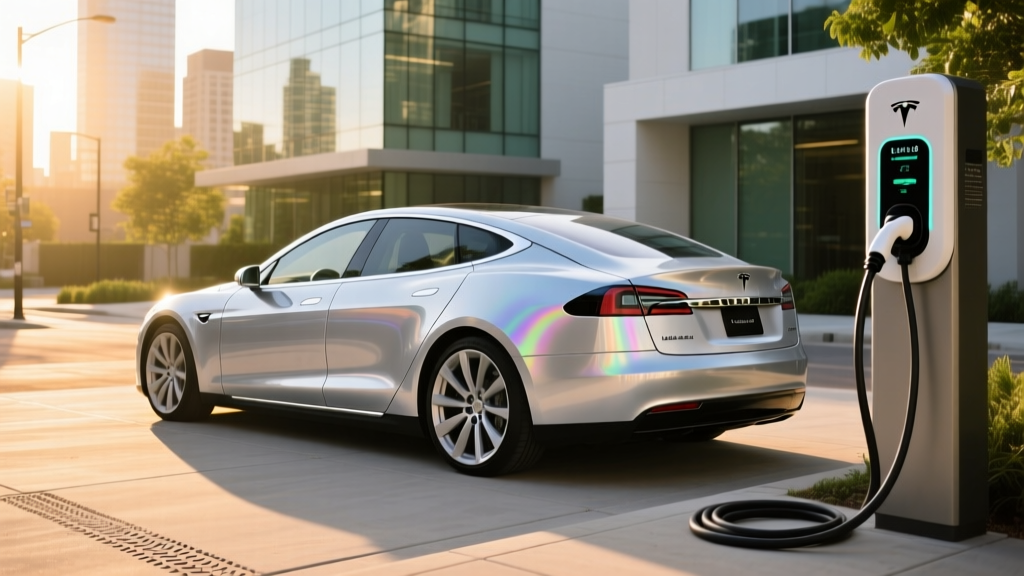
Charging speed is where the Model Y's 250 kW peak DC fast-charge capability needs context. That peak rate applies only at a low state of charge (typically 10–20% SoC) and at a V3 Supercharger or equivalent 250+ kW station. As the battery fills, the charge rate tapers — a physics reality for all lithium-ion packs, not unique to Tesla.
| Charging Level | Power | Speed (Miles Added) | Typical Use Case |
|---|---|---|---|
| Level 1 (120V outlet) | ~1.4 kW | ~5 mi/hr | Emergency / overnight trickle |
| Level 2 (240V, 48A) | 11.5 kW | ~44 mi/hr | Home daily charging (full in ~7 hr) |
| DC Fast (V3 Supercharger) | Up to 250 kW | ~162 mi in 15 min (peak) | Road trips; 10–80% in ~25 min |
| DC Fast (V4 Supercharger) | Up to 250 kW* | Similar to V3 | Newer stations with CCS/NACS |
*The Model Y's onboard architecture caps at ~250 kW regardless of charger capability.
On a V3 Supercharger, a 10–80% session takes approximately 25 minutes under ideal conditions (battery preconditioned, moderate ambient temperature). The charge curve peaks near 250 kW around 15–20% SoC, holds in the 150–200 kW range through about 50%, then tapers to under 100 kW above 70%. This taper is why Tesla's navigation system routes you to arrive at low SoC — it maximizes time spent in the peak-charge window.
For home charging, the Model Y accepts up to 11.5 kW on Level 2 (48 amps on a 60-amp circuit). A Wall Connector or equivalent hardwired Level 2 station will add roughly 44 miles of range per hour, fully replenishing the 75 kWh battery in about 7 hours. Installation costs for a 240V/60A circuit typically run $800–$2,000 depending on panel proximity and whether your home's electrical panel needs an upgrade to 200A service. Always get a quote from a licensed electrician before committing.
The Model Y uses the NACS (North American Charging Standard) connector natively. As of 2026, most major automakers have adopted NACS, and the Supercharger network — now open to non-Tesla EVs via adapter — remains the most reliable DC fast-charging network in the U.S., with uptime consistently exceeding 95% according to third-party monitoring.
Performance and Driving Dynamics
The Long Range RWD posts a 6.5-second 0–60 mph time with 295 horsepower — adequate for merging and passing but noticeably less urgent than the AWD variant's 4.8-second sprint from 384 hp across dual motors. Neither is the Performance trim (3.5 seconds, if you seek it), but the Long Range AWD delivers the kind of effortless acceleration that makes highway overtaking trivial.
Ride quality in the 2026 Model Y benefits from the suspension revisions Tesla introduced with the "Juniper" refresh: improved damping, reduced road noise, and a more compliant feel over broken pavement. It's still firmer than a Hyundai Ioniq 5 or Ford Mustang Mach-E, but no longer harsh. The low center of gravity from the floor-mounted battery pack keeps body roll minimal in corners, and the steering, while numb by sports-sedan standards, is precise and confidence-inspiring.
One-pedal driving via regenerative braking remains a Tesla hallmark. The Model Y's regen is strong enough to bring the car to a near-stop in most traffic situations, reducing brake wear substantially. Expect to go 80,000+ miles on original brake pads with regular regen use.
Interior, Cargo, and Technology
The Model Y's minimalist interior centers on a 15.4-inch touchscreen that controls virtually every vehicle function — climate, navigation, media, vehicle settings, and even the glovebox. The Juniper refresh added ventilated front seats, ambient lighting, a rear-seat touchscreen for passengers, and power-folding second-row seats. Build quality has improved markedly over 2020–2022 models, with tighter panel gaps and higher-grade materials.
Passenger space accommodates five adults comfortably. Rear legroom measures 41.6 inches, and headroom is generous thanks to the glass roof (which does reduce headroom by about an inch versus a conventional steel roof). The optional third row (available only on specific configurations) is best reserved for small children on short trips.
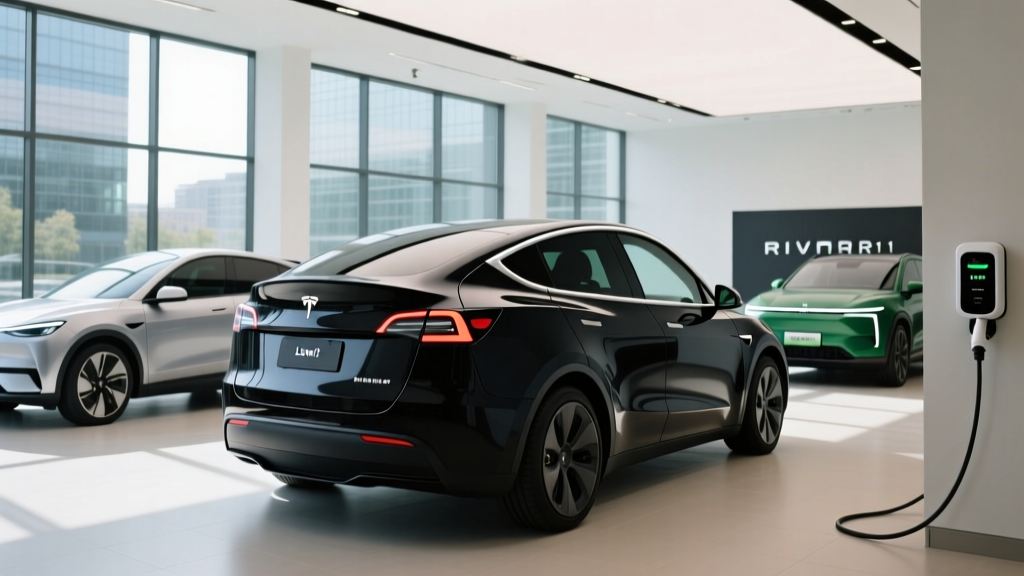
Cargo capacity is a standout: 30.2 cubic feet behind the second row and 72.1 cubic feet with seats folded, plus a front trunk (frunk) adding roughly 4.1 cubic feet. That total beats the Ioniq 5 and Mach-E for usable volume, making the Model Y a legitimate cargo hauler for families, Costco runs, or camping gear.
On the technology front, Tesla's infotainment system remains the benchmark for responsiveness and over-the-air update frequency. Navigation with real-time Supercharger routing, Sentry Mode dashcam recording, and the Tesla app's remote climate/preconditioning controls are genuinely useful daily features. However, the lack of Apple CarPlay and Android Auto continues to frustrate some buyers who prefer their phone's native interface.
Autopilot and FSD: What You Actually Get
Tesla Autopilot and Full Self-Driving (Supervised) are SAE Level 2 driver-assistance systems. The driver must keep hands on the wheel, eyes on the road, and remain prepared to take over at any moment. These systems do not make the Model Y a self-driving vehicle.
Every Model Y ships with Basic Autopilot, which includes Traffic-Aware Cruise Control and Autosteer (lane-centering on marked highways). It works well on divided interstates but requires active supervision and will disengage on faded lane markings or construction zones.
Full Self-Driving (Supervised), currently priced at $8,000 (or $99/month subscription), adds automatic lane changes, Navigate on Autopilot (highway on/off-ramp routing), Autopark, and Smart Summon. As of 2026, FSD has improved substantially in urban environments, but it still makes occasional errors at complex intersections, unprotected left turns, and temporary traffic-control zones. Treat it as an advanced cruise system, not a chauffeur.
Competitor systems like GM's Super Cruise and Ford's BlueCruise offer hands-free driving on pre-mapped highways — a more relaxed experience on those specific routes, though with less geographic coverage than Tesla's camera-based approach.
Pricing, Tax Credits, and Total Cost
Understanding whether the Model Y is cheaper than alternatives requires looking past the sticker price at the full incentive and ownership picture.
| Trim | MSRP | Federal §30D Credit* | Effective Price* |
|---|---|---|---|
| Long Range RWD | $44,990 | Up to $7,500 | ~$37,490 |
| Long Range AWD | $47,990 | Up to $7,500 | ~$40,490 |
| Performance AWD | $52,490 | Up to $7,500 | ~$44,990 |
*Federal §30D credit eligibility depends on multiple factors. See checklist below. Point-of-sale transfer available through registered dealers.
- MSRP Cap: SUVs/crossovers must be under $80,000 — all Model Y trims qualify ✓
- Buyer Income Cap: AGI ≤ $150,000 (single) / $225,000 (head of household) / $300,000 (joint) — check your AGI
- Battery Sourcing: Critical minerals and battery components must meet phased-in domestic/free-trade sourcing thresholds — verify current-year compliance on IRS.gov
- Point-of-Sale Transfer: Eligible buyers can transfer the credit to the dealer at purchase, reducing the out-of-pocket price immediately
- Tax Liability: Credit is non-refundable — you must owe at least $7,500 in federal tax to claim the full amount (unless transferred at POS)
State incentives (California, Colorado, Massachusetts, and others) may stack on top. Consult a tax professional for your specific situation.
When the full $7,500 federal credit applies, the Long Range RWD drops to an effective ~$37,490 — a price point that makes it competitive with the Equinox EV and undercuts the Ioniq 5 SEL AWD after incentives. However, not every buyer qualifies. If your AGI exceeds the caps, or if battery-sourcing rules shift mid-year (as they have in prior years), the effective price reverts to MSRP.
For a five-year ownership estimate, the Model Y's low maintenance costs (no oil changes, minimal brake wear, no transmission fluid), combined with electricity costs averaging $0.13–$0.18/kWh nationally (home charging), typically result in a total cost of ownership that undercuts comparable gas-powered crossovers by $4,000–$8,000 over five years, depending on annual mileage and local electricity rates. Insurance premiums, however, tend to run 15–25% higher than non-electric counterparts — factor this into your budget.
Pros, Cons, and Who Should Buy
- Class-leading efficiency (28 kWh/100 mi)
- Supercharger network access — most reliable DC charging in the U.S.
- Best-in-class cargo volume (72.1 cu ft)
- Strong OTA update cadence adds features post-purchase
- Heat pump standard — better cold-weather efficiency
- Competitive pricing after $7,500 federal credit
- No Apple CarPlay / Android Auto
- FSD ($8,000) still requires full driver supervision
- Ride quality firm compared to Ioniq 5 / Mach-E
- Insurance premiums 15–25% above segment average
- 250 kW peak charge rate trails 800V competitors (Ioniq 5: 350 kW)
- Minimalist interior not to all tastes
Buy the Model Y if: You prioritize efficiency, cargo space, and access to the Supercharger network. It's ideal for families who road-trip regularly, commuters with home charging access, and buyers who want strong resale value in the EV segment. The Long Range RWD at ~$37,490 after the federal credit is genuinely compelling value.
Look elsewhere if: You need hands-free highway driving (GM Super Cruise), prefer physical buttons and CarPlay (Hyundai Ioniq 5, Ford Mach-E), want the fastest DC charging available (Ioniq 5 with 800V architecture charges 10–80% in ~18 minutes at 350 kW), or need three usable rows of seating (Kia EV9).
Frequently Asked Questions
What is the real-world range of the 2026 Model Y?
The EPA rates it at 320 miles (Long Range RWD). Real-world highway driving yields approximately 265–285 miles in mild weather, dropping to 220–250 miles in sub-freezing temperatures. City commuting with regenerative braking can approach 300+ miles.
How fast does the Model Y charge at home and on the road?
On a DC fast charger (V3 Supercharger), 10–80% takes about 25 minutes at a peak rate of 250 kW. At home on a 240V Level 2 charger (11.5 kW), it adds roughly 44 miles per hour, fully charging overnight in about 7 hours.
Does the Model Y qualify for the $7,500 federal tax credit?
It can, but eligibility depends on your adjusted gross income (≤$150K single / ≤$300K joint), the vehicle's battery-sourcing compliance with current-year IRS §30D rules, and the MSRP being under $80,000 (all trims qualify). The credit can be transferred at point of sale to reduce your purchase price directly.
Is the Model Y cheaper than the Hyundai Ioniq 5 or Ford Mach-E?
After the $7,500 federal credit, the Model Y Long Range RWD (~$37,490) is competitive with or cheaper than equivalently equipped Ioniq 5 and Mach-E trims. Before credits, the Model Y's MSRP is higher than some base competitors. Compare total cost of ownership, not just sticker price — Tesla's efficiency advantage and Supercharger access add tangible value for road-trippers.
Is the Model Y a self-driving car?
No. Tesla's Autopilot and FSD (Supervised) are SAE Level 2 driver-assistance systems. You must remain fully engaged — hands on the wheel, eyes on the road — at all times. True self-driving (Level 4) is currently only available through robotaxi services like Waymo in limited metro areas.
What is the battery warranty?
Tesla covers the Model Y's battery and drive unit for 8 years or 120,000 miles, whichever comes first, with a minimum 70% capacity retention threshold. If degradation exceeds 30% within that period, Tesla will replace or refurbish the battery at no cost.