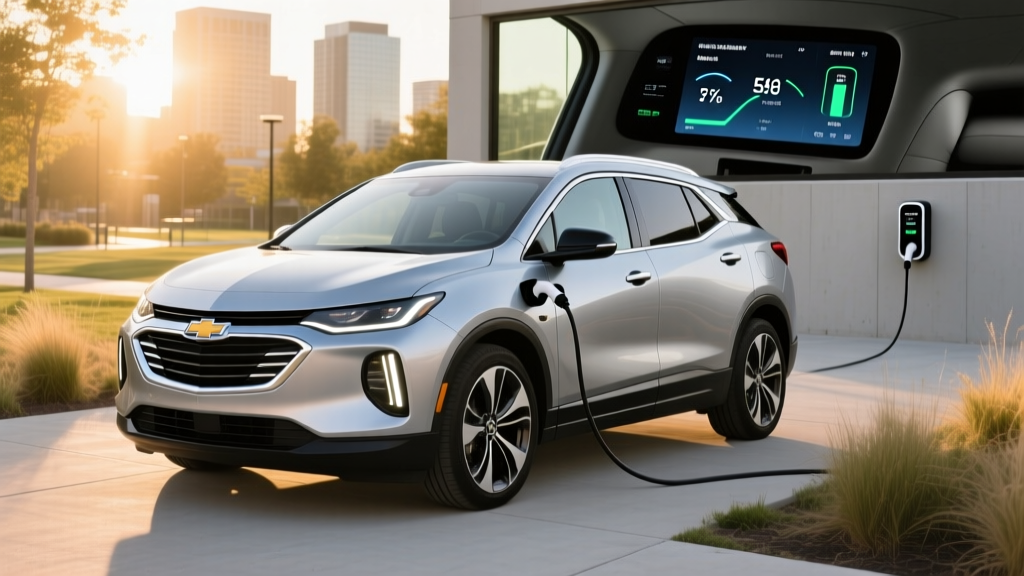
Quick Answer: The 2025 Chevy Equinox Electric is a compact electric SUV offering up to 319 miles of EPA-estimated range, an 85 kWh usable NMC battery, and DC fast charging that peaks at 150 kW (10–80% in roughly 30 minutes). Starting at $33,600 before incentives, it qualifies for up to $7,500 in federal tax credits under current §30D rules if you meet income, MSRP, and battery-sourcing requirements — bringing the effective price to around $26,100 for eligible buyers. Compared to the gas Equinox (~28 MPG combined), the EV saves an estimated $4,200–$5,500 in fuel over five years for a driver covering 12,000 miles/year at $3.50/gallon, though real-world savings depend on your local electricity rates and home-charging access.
Range, Battery & Efficiency: Beyond the EPA Sticker
The 2025 Equinox EV uses GM's Ultium platform with an 85 kWh usable lithium-ion battery pack (NMC chemistry). Front-wheel-drive trims (LT 2, RS) achieve an EPA-estimated 319 miles, while the all-wheel-drive RS and Launch Edition drop to approximately 285 miles EPA. Efficiency lands at roughly 3.0–3.3 miles per kWh depending on trim and drivetrain.
Real-World Range Reality: EPA 319 miles (FWD) is the laboratory number. Expect approximately 260–280 miles on sustained highway driving at 70+ mph, and 200–230 miles in freezing temperatures (below 32°F) where cabin heating and battery resistance take a toll. If your commute is mostly city/suburban with regenerative braking opportunities, you'll come closer to or occasionally exceed the EPA figure. Plan road trips assuming 250 miles of usable range to keep a safety buffer.
| Spec | LT 2 FWD | RS FWD | RS AWD |
|---|---|---|---|
| EPA Range | 319 mi | 319 mi | 285 mi |
| Battery (Usable) | 85 kWh (NMC) | 85 kWh (NMC) | 85 kWh (NMC) |
| Efficiency | ~3.3 mi/kWh | ~3.3 mi/kWh | ~3.0 mi/kWh |
| Horsepower | 213 hp | 213 hp | 288 hp |
| 0–60 mph | ~8.0 sec | ~8.0 sec | ~6.5 sec |
| Max DC Charge Rate | 150 kW | 150 kW | 150 kW |
| 10–80% DCFC Time | ~30 min | ~30 min | ~30 min |
| Level 2 (240V) Rate | 11.5 kW | 11.5 kW | 11.5 kW |
| Base MSRP | $33,600 | $43,400 | $46,100 |
According to fueleconomy.gov, the FWD Equinox EV achieves an estimated 113 MPGe combined, which is competitive with the Hyundai Ioniq 5 and slightly below the Tesla Model Y's efficiency benchmark.
Charging Speed & Home Setup: What You Actually Need
The Equinox EV supports DC fast charging up to 150 kW via the CCS1 connector (NACS adapter available for Tesla Supercharger access). At peak rate, you'll add roughly 100 miles of range in 15 minutes. However, the charge curve tapers noticeably above 80% — a full 10–100% session can stretch to 50+ minutes. For road trips, plan stops at 80% and move on.
| Charging Level | Power (kW) | Miles Added Per Hour | Best Use Case |
|---|---|---|---|
| Level 1 (120V) | 1.4 kW | ~4 mi/hr | Overnight top-off, low-mileage drivers |
| Level 2 (240V, 48A) | 11.5 kW | ~34 mi/hr | Daily home charging, full overnight refill |
| DC Fast (CCS1) | 150 kW peak | ~400 mi/hr (peak) | Road trips, quick top-ups |
For Level 2 home charging, you'll want a 240V outlet (NEMA 14-50) or hardwired station on a dedicated 60-amp circuit. Installation costs vary widely:
| Item | Typical Cost Range |
|---|---|
| Level 2 Charger (hardware) | $350–$700 |
| Electrician (240V install) | $500–$1,500 |
| Permit / inspection | $50–$200 |
| Panel upgrade (if needed) | $1,500–$3,500 |
| Total (no panel upgrade) | $900–$2,400 |
If your home's electrical panel is already at or near capacity (common in older homes with 100A service), a panel upgrade to 200A can add significant cost. Get a quote from a licensed electrician before committing to the vehicle — this is the most overlooked first-time EV buyer expense.
2025 Equinox EV vs. Gas Equinox: The Real Cost Breakdown
The most common question: does going electric actually save money on the Equinox? Let's compare the EV to the 2025 gas-powered Chevy Equinox (1.5L turbo, ~28 MPG combined) over five years and 60,000 miles.
| Cost Category | 2025 Equinox EV (LT 2 FWD) | 2025 Equinox Gas (LT FWD) |
|---|---|---|
| Base MSRP | $33,600 | $28,600 |
| Federal Tax Credit (§30D) | Up to –$7,500* | $0 |
| Effective Purchase Price | ~$26,100 | $28,600 |
| Fuel/Energy (60k mi) | $3,600 (home charging)** | $7,500 (gas @ $3.50/gal) |
| Maintenance (5 yr) | ~$1,200 | ~$2,800 |
| Insurance (5 yr est.) | ~$9,000 | ~$7,800 |
| Total 5-Year Cost | ~$39,900 | ~$46,700 |
* §30D credit eligibility requires meeting income caps ($150K single / $300K joint), MSRP cap ($80K for SUVs), and critical-mineral/battery-component sourcing thresholds. Check IRS.gov for current-year rules. Point-of-sale transfer is available through registered dealers.
** Based on $0.15/kWh national average home electricity. Public DC fast charging at $0.35–$0.50/kWh would increase energy costs to ~$5,400–$7,800 over 60k miles if you rely exclusively on public charging.
The EV wins on total cost of ownership by approximately $6,800 over five years — but only if you qualify for the full tax credit and charge primarily at home. If you don't qualify for the credit and rely on expensive public charging, the gas Equinox may break even or come out slightly ahead.
Federal Tax Credit & Incentives: What You'll Actually Qualify For
The 2025 Equinox EV is positioned to qualify for the full $7,500 federal tax credit under §30D, but eligibility is not automatic. Here's what determines your actual credit:
- Income caps: Modified AGI must not exceed $150,000 (single), $225,000 (head of household), or $300,000 (joint filing)
- MSRP cap: Vehicle MSRP must be at or below $80,000 for SUVs — all Equinox EV trims clear this easily
- Battery sourcing: Increasingly strict critical-mineral and battery-component requirements phase in annually; GM sources some Ultium cells domestically at the Ultium Cells joint-venture plants
- Tax liability: Credit is non-refundable — it can only offset federal tax liability you actually owe (point-of-sale transfer mitigates this)
- Point-of-sale transfer: As of 2024+, you can transfer the credit to the dealer at purchase, receiving it as a price reduction regardless of tax liability
Many states and utilities also offer additional incentives — check AFDC's state incentive database for your specific location, as these vary from $0 to $5,000+ depending on jurisdiction.
Ownership Practicalities: What First-Time EV Buyers Should Know
Beyond the sticker price and range number, here's what shapes the daily experience of owning a 2025 Equinox EV:
Home Charging Is Non-Negotiable for Most Owners
If you can install a Level 2 charger at home (garage, driveway, or dedicated parking spot with electrical access), the Equinox EV refuels while you sleep and you'll rarely visit a public charger outside road trips. If you live in an apartment without charging access or park on the street, you'll depend on public infrastructure — which adds time, cost, and unpredictability. Evaluate your parking situation honestly before buying.
Cold Weather Cuts Range 20–35%
The Equinox EV's battery thermal management system helps, but in sustained sub-freezing temperatures, expect your 319-mile EPA range to shrink to roughly 200–250 miles. If you live in the northern U.S. and commute long distances, plan for this. Preconditioning the battery (available via the infotainment system) before DC fast charging helps restore charging speed in cold weather.
Maintenance Is Genuinely Lower
No oil changes, no transmission fluid, no spark plugs, no exhaust system. You'll still rotate tires, replace cabin air filters, top off washer fluid, and eventually replace brake pads (though regenerative braking extends pad life significantly). GM covers the battery with an 8-year/100,000-mile warranty with a capacity retention threshold of 70% — consistent with industry standards.
Insurance Costs More
EV insurance premiums typically run 15–25% higher than equivalent gas vehicles due to higher repair costs and battery replacement pricing. Budget an extra $200–$400/year compared to the gas Equinox. Shop quotes from multiple carriers before purchase.
Common Misconceptions — Addressed With Data
| Myth | Fact |
|---|---|
| "The battery will need replacing in 5 years and cost $20K" | NMC degradation averages 10–15% over 8 years based on current fleet data. GM warranties 70% capacity at 8yr/100k mi. Full replacement is rare and typically covered under warranty during the coverage period. |
| "319 miles means I can drive 319 miles no matter what" | EPA is a blended test cycle. Sustained highway driving at 75 mph yields ~260–280 miles. Cold weather drops it further to ~200–250 miles. |
| "I'll save $7,500 no matter what" | The §30D credit has income caps, sourcing rules, and requires tax liability (or point-of-sale transfer). Not every buyer qualifies for the full amount. |
| "Public charging is always unreliable" | Network reliability varies. Tesla Superchargers (now accessible via NACS adapter) consistently report 95%+ uptime. Electrify America and EVgo have improved but still experience occasional downtime — always have a backup charger mapped. |
| "EVs are worse for the environment because of battery mining" | Lifecycle analyses (including EPA assessments) show EVs produce fewer total emissions over their lifetime in nearly all U.S. electricity grids, even accounting for battery manufacturing. |
Decision Framework: Is the 2025 Equinox EV Right for You?
Choose the 2025 Equinox EV if:
- You have access to home Level 2 charging (or can install it)
- Your daily driving is under 80 miles round-trip (covers 90%+ of U.S. commutes)
- You qualify for the §30D federal tax credit (income and sourcing requirements)
- You want a compact SUV with 300+ miles of range under $35,000 (before credit)
- You take 1–3 road trips per year and can plan DC fast-charging stops
Stick with the gas Equinox (or consider a PHEV) if:
- You live in an apartment or park on the street with no charging access
- You regularly drive 200+ miles one-way in rural areas with sparse charging infrastructure
- Your household income exceeds the §30D caps and the $5,000 price premium matters
- You live in an extremely cold climate and need maximum range reliability year-round
- You tow frequently (the Equinox EV is not rated for significant towing)
Frequently Asked Questions
Does the 2025 Equinox EV support Tesla Superchargers?
Yes. GM has adopted the NACS connector for future models, and the 2025 Equinox EV can access Tesla Superchargers using a GM-approved NACS adapter. The native port on the 2025 model is CCS1, so you'll need the adapter for Tesla network access — it's typically included or available as a low-cost accessory from the dealer.
How long does it take to charge the Equinox EV at home overnight?
On a Level 2 charger at 11.5 kW, a full charge from 10% to 100% takes approximately 7.5 hours. Most owners plug in at 30–40% remaining and wake up fully charged in 4–5 hours. A standard 120V outlet (Level 1) adds only about 4 miles per hour — adequate for low-mileage days but not practical as a primary charging method.
What is the Equinox EV's cargo space compared to the gas version?
The Equinox EV offers approximately 26.4 cubic feet behind the rear seats and 57.2 cubic feet with the rear seats folded. This is slightly less than the gas Equinox (29.9 / 63.5 cu ft) due to the battery pack raising the floor height modestly. There is no front trunk (frunk) — the space under the hood houses drive electronics.
Will the battery degrade enough to matter?
Based on data from GM's Ultium platform and comparable NMC packs across the industry, expect roughly 10–15% capacity loss over 8 years of typical use. That means your 319-mile range might become ~270–285 miles by year eight. GM's 8-year/100,000-mile warranty covers you if degradation exceeds 30% during that period.
Is the Equinox EV eligible for the $7,500 tax credit in 2025?
The Equinox EV is expected to qualify for up to $7,500 under §30D, but the exact amount depends on battery-sourcing compliance thresholds that tighten annually. Always verify current eligibility on fueleconomy.gov's tax credit page and consult a tax professional for your specific situation. Point-of-sale transfer through a registered dealer is available.