Quick Verdict: The 2024 EV6 Still Sets the Charging Bar
If you bought a 2024 Kia EV6 new or are evaluating one on the used market in 2026, you're looking at one of the most technically accomplished electric crossovers of its generation. Built on Hyundai Motor Group's E-GMP platform with an 800-volt architecture, the EV6 delivers DC fast-charging speeds that rival the Porsche Taycan at a fraction of the price. The Long Range RWD model hits an EPA-estimated 310 miles of range, charges from 10–80% in roughly 18 minutes at a 350 kW station, and starts at a pre-incentive MSRP of $42,600.
But the EV6 isn't flawless. Its sloping roofline cuts into cargo practicality, the infotainment touch-capacitive controls frustrate in daily use, and federal tax credit eligibility is far from guaranteed due to battery-sourcing and MSRP caps. This review breaks down every spec that matters for ownership in 2026 — with real-world numbers, not just the sticker.
Range & Efficiency: EPA Numbers vs. Real-World Driving
The 2024 EV6 comes in three primary powertrain configurations, each with different range and efficiency profiles. Here's the full breakdown per EPA data at fueleconomy.gov:
| Trim / Drivetrain | Battery (kWh) | EPA Range (mi) | MPGe (City/Hwy/Combined) | kWh/100 mi |
|---|---|---|---|---|
| Light RWD (Standard Range) | 58.0 | 232 | 134 / 112 / 123 | 27 |
| Wind / GT-Line RWD (Long Range) | 77.4 | 310 | 134 / 112 / 124 | 27 |
| Wind / GT-Line AWD (Long Range) | 77.4 | 282 | 117 / 99 / 108 | 31 |
| GT AWD (Performance) | 77.4 | 206 | 85 / 74 / 79 | 42 |
EPA sticker: 310 miles (Long Range RWD)
Highway driving (70–80 mph, summer): Expect 260–280 miles. The EV6's aerodynamic crossover shape helps, but sustained highway speeds still reduce range by roughly 10–15% vs. the EPA combined figure.
Cold weather (below 32°F, highway): Plan for 200–230 miles. The EV6 uses a heat pump on Long Range trims (standard on Wind and above in most markets), which mitigates cabin-heating losses, but lithium-ion chemistry inherently loses efficiency in the cold. Preconditioning the battery while plugged in is essential.
City / commuter driving: You'll meet or slightly exceed the EPA number thanks to regenerative braking recapturing energy in stop-and-go traffic.
The 77.4 kWh usable battery pack uses NMC (nickel-manganese-cobalt) chemistry, supplied primarily by SK On. NMC offers higher energy density than LFP, which is why Kia fits this much range into a relatively compact crossover footprint. The trade-off is that NMC cells prefer you don't habitually charge to 100% or let them sit fully depleted — an 80% daily charge limit is the longevity sweet spot.
Charging Speed: The EV6's Killer Feature
The 800-volt E-GMP architecture is what separates the EV6 from most competitors in this price bracket. While rivals like the Tesla Model Y and Ford Mustang Mach-E run 400-volt systems, the EV6 can accept dramatically higher charge rates when paired with a capable station.
| Charging Level | Power / Voltage | Speed | Notes |
|---|---|---|---|
| Level 1 (120V household) | ~1.4 kW | ~4 mi/hr | Emergency / trickle only; full charge takes 50+ hours |
| Level 2 (240V home / public) | 10.9 kW (48A) | ~36 mi/hr | Full 10–100% in ~7.5 hours on Long Range; ideal for overnight |
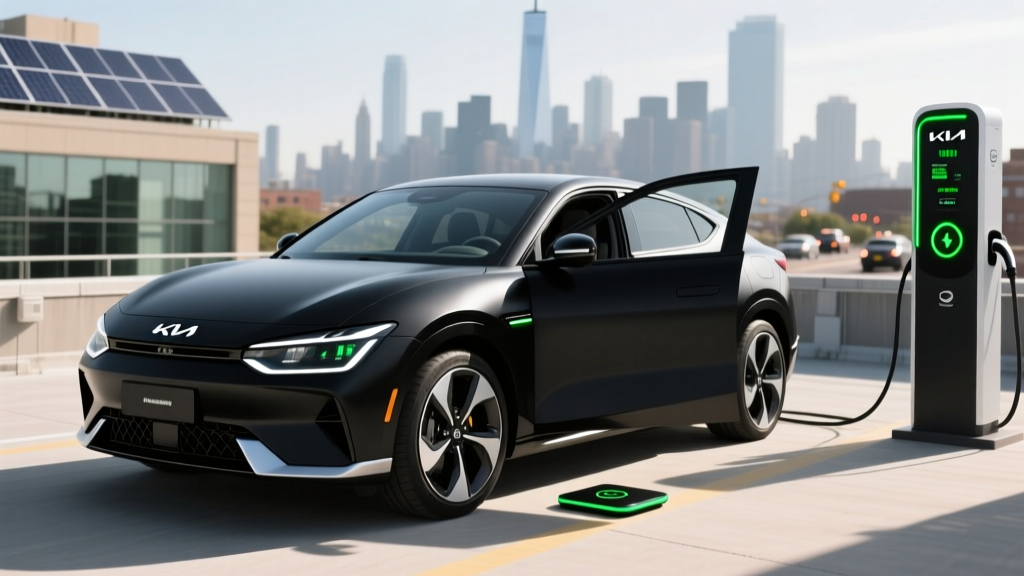
| DC Fast (350 kW station) | Peak 239 kW | 10–80% in ~18 min | Requires 350 kW CCS station; curve tapers sharply above 80% |
| DC Fast (150 kW station) | Peak ~150 kW | 10–80% in ~25 min | More common station type; still very competitive |
Charging curve reality check: The EV6 peaks near 239 kW between roughly 10–45% state of charge, then tapers progressively. You'll see ~180 kW through 60%, ~120 kW through 75%, and a steep drop above 80%. This is normal physics — lithium-ion cells resist accepting high current as they approach full charge to prevent lithium plating and heat damage. The 10–80% time is what matters for road trips, and 18 minutes at a 350 kW charger is among the fastest in the segment.
Connector note for 2026 ownership: The 2024 EV6 shipped with a CCS1 port. Kia has committed to adopting the NACS (Tesla-style) connector starting with the 2025 model year. If you own a 2024 model, you can access Tesla Superchargers using a CCS-to-NACS adapter (Kia has offered these to owners; check with your dealer). At home, any J1772 Level 2 charger works natively.
Performance & Driving Dynamics
The EV6 range spans relaxed commuter to legitimate performance machine. Here's the powertrain breakdown:
| Trim | Drivetrain | Horsepower | Torque (lb-ft) | 0–60 mph |
|---|---|---|---|---|
| Light (Standard Range) | RWD, single motor | 167 hp | 258 | ~7.7 sec |
| Wind / GT-Line (Long Range RWD) | RWD, single motor | 225 hp | 258 | ~6.7 sec |
| Wind / GT-Line (Long Range AWD) | AWD, dual motor | 320 hp | 446 | ~4.6 sec |
| GT | AWD, dual motor | 576 hp | 545 | ~3.4 sec |
The Long Range AWD is the sweet spot for most buyers — 320 hp provides confident highway merging and passing, the dual-motor AWD system handles rain and light snow capably, and you still get 282 miles of EPA range. The GT is a thrilling halo model (it'll embarrass sports cars off the line), but the 206-mile range and firmer ride make it a niche pick.
Regenerative braking is controlled via steering-wheel paddles, offering four levels from coasting (Level 0) to full one-pedal driving (Level 3/i-PEDAL). The integration is smooth — among the best in the segment — and the ability to toggle regen on the fly means you can coast on highway downgrades and maximize regen in city traffic.
Interior, Cargo & Tech: Practical but Polarizing
The EV6's cabin is modern and spacious up front, with 41.2 inches of front legroom and 39.0 inches in the rear — competitive with the Hyundai Ioniq 5 and slightly tighter than the Ford Mustang Mach-E's rear seat. The flat floor (no transmission tunnel) makes the rear middle seat genuinely usable for adults on shorter trips.
Cargo volume:
- Behind rear seats: 24.4 cu ft
- Rear seats folded: 50.2 cu ft
- Front trunk (frunk): 0.7 cu ft (AWD) / 1.8 cu ft (RWD)
The sloping fastback roofline is the cargo penalty. While 50.2 cu ft max is adequate for groceries and luggage, it falls well short of the boxier Hyundai Ioniq 5 (72.6 cu ft max) and Tesla Model Y (~76 cu ft). If you regularly haul tall items, dog crates, or furniture, test-load the EV6 before committing.
Tech highlights:
- Dual 12.3-inch curved displays (instrument cluster + infotainment)
- Wireless Apple CarPlay and Android Auto
- Augmented-reality head-up display (Wind/GT-Line and above)
- Vehicle-to-load (V2L): 1.9 kW onboard power outlet — run a laptop, mini-fridge, or power tools from your car
- Highway Driving Assist 2 (HDA2): Level 2 ADAS with lane-centering, adaptive cruise, and lane-change assist
- Remote Smart Parking Assist (on equipped trims): the car parks itself while you stand outside
The frustration: The dual-purpose touch panel below the main screen — which toggles between climate controls and media shortcuts — is a usability miss. There's no physical feedback, and hitting the wrong mode mid-drive is a real annoyance. Many owners end up using voice commands or the steering-wheel controls to avoid it.
Highway Driving Assist 2 (HDA2) is a SAE Level 2 driver-assistance system. It provides simultaneous steering and speed control on highways, but the driver must remain fully attentive, keep hands on the wheel (or respond to prompts), and monitor the road at all times. It is not autonomous or "self-driving." Kia's system is competitive with Toyota Safety Sense and Honda Sensing but does not offer hands-free driving like GM's Super Cruise or Ford's BlueCruise on approved highways.
Pricing, Trims & Federal Tax Credit Eligibility
The 2024 EV6 launched with a range of trims. Here's the MSRP structure (destination charge included):
| Trim | MSRP (2024) | Est. Federal Credit | Effective Price |
|---|---|---|---|
| Light RWD (Standard Range) | $42,600 | Up to $3,750* | ~$38,850 |
| Wind RWD (Long Range) | $48,700 | Up to $3,750* | ~$44,950 |
| Wind AWD (Long Range) | $52,600 | Up to $3,750* | ~$48,850 |
| GT-Line RWD | $52,200 | Up to $3,750* | ~$48,450 |
| GT-Line AWD | $57,400 | Up to $3,750* | ~$53,650 |
| GT AWD | $61,600 | $0** | $61,600 |
*Critical tax credit caveats (IRS §30D rules): The 2024 EV6's credit eligibility is complicated. Under current IRS §30D rules, the credit is split into two $3,750 halves — one for battery-component manufacturing in North America and one for critical-minerals sourcing. The 2024 EV6's battery cells are manufactured by SK On in Georgia (meeting the component requirement), but critical-mineral sourcing has been a moving target as supply chains shift. Most 2024 EV6 configurations have qualified for $3,750 (half credit), not the full $7,500. Always verify the specific VIN's eligibility on the IRS Clean Vehicle portal before purchase.
**GT trim: At $61,600, the GT exceeds the IRS $55,000 MSRP cap for SUVs/wagons (the EV6 is classified as a small SUV for tax-credit purposes), making it ineligible for the federal credit regardless of sourcing.
Buyer income caps also apply: modified AGI cannot exceed $300,000 (joint), $225,000 (head of household), or $150,000 (single). The credit is non-refundable but can be transferred to the dealer as a point-of-sale discount under current rules.
For the used market in 2026, the Used Clean Vehicle Credit (§25E) offers up to $4,000 (or 30% of the sale price, whichever is lower) on eligible pre-owned EVs priced at $25,000 or less. As 2024 EV6 leases return to dealers, some will land in this bracket — check IRS §25E guidelines for current eligibility.
Warranty, Battery Longevity & Ownership Costs
Kia backs the 2024 EV6 with one of the strongest warranties in the business:
- Battery & drive unit: 10 years / 100,000 miles
- Bumper-to-bumper: 5 years / 60,000 miles
- Powertrain: 10 years / 100,000 miles
- Roadside assistance: 5 years / 60,000 miles
The battery warranty guarantees the pack will retain at least 70% of its original capacity during the coverage period. In practice, E-GMP platform batteries (shared with the Ioniq 5 and GV60) have shown strong early-life degradation curves — typically losing 3–5% in the first year and then stabilizing to roughly 1–2% annual loss. At that rate, a 2024 EV6 should still hold 85%+ capacity at 100,000 miles.
Battery replacement cost (out of warranty, worst case): Industry estimates for the 77.4 kWh NMC pack run $12,000–$16,000 including labor. This is a non-trivial expense, but the 10-year warranty coverage and strong real-world degradation data make it a low-probability scenario for most owners.
Insurance: EV6 premiums run 15–25% higher than comparable gas crossovers, reflecting the vehicle's repair complexity and parts costs. Expect $1,800–$2,400/year for a clean-record driver, varying significantly by state and insurer.
2024 EV6 vs. Key Competitors
The EV6 competes in the most crowded segment of the EV market. Here's how it stacks up against the most common cross-shops:
| Attribute | 2024 Kia EV6 (Wind RWD) | 2024 Hyundai Ioniq 5 (SEL RWD) | 2024 Tesla Model Y (LR RWD) | 2024 Ford Mach-E (Premium RWD ER) |
|---|---|---|---|---|
| EPA Range | 310 mi | 303 mi | 320 mi | 320 mi |
| Battery (kWh) | 77.4 NMC | 77.4 NMC | ~75 NMC | 91 NMC (extended) |
| Peak DC Charge | 239 kW | 239 kW | ~250 kW | ~150 kW |
| 10–80% DCFC | ~18 min | ~18 min | ~20 min | ~38 min |
| 0–60 mph | 6.7 sec | 7.0 sec | 6.1 sec | 6.1 sec |
| Max Cargo (cu ft) | 50.2 | 72.6 | ~76 | 59.7 |
| Base MSRP | $48,700 | $47,450 | $44,990 | $48,995 |
- Fastest DC charging speed is your top priority for road trips
- You prefer Kia's 10-year warranty over competitors
- You want distinctive exterior styling that stands out from the crossover crowd
- V2L capability matters for camping or job-site power
- Hyundai Ioniq 5: You need maximum cargo volume and a more upright seating position (same platform, boxier shape)
- Tesla Model Y: You want the largest Supercharger network access natively, the best software/OTA updates, and more cargo space
- Ford Mach-E: You prefer a more car-like driving position and Ford dealer familiarity for service
Pros, Cons & Who Should Buy the 2024 EV6
- Class-leading 800V DC fast charging (18 min 10–80%)
- 310-mile EPA range on Long Range RWD
- 10-year / 100,000-mile battery warranty
- Sharp, head-turning exterior design
- V2L onboard power (1.9 kW)
- Smooth, powerful regenerative braking with paddle control
- Competitive pricing vs. luxury 800V alternatives (Taycan, e-tron GT)
- Cargo volume (50.2 cu ft max) trails Ioniq 5 and Model Y significantly
- Touch-capacitive climate/media panel is distracting and imprecise
- Federal tax credit limited to $3,750 (not $7,500) due to sourcing rules
- GT trim exceeds MSRP cap — no federal credit
- CCS port requires adapter for Tesla Supercharger access
- Rear visibility is compromised by thick C-pillars and sloping glass
- No hands-free highway driving (HDA2 requires hands on wheel)
Best for: Daily commuters and road-trip enthusiasts who prioritize fast charging and distinctive design over maximum cargo space. The Long Range RWD (Wind trim) offers the best value-to-range ratio. AWD variants suit buyers in snow-belt states. The GT is a weekend toy for performance EV fans who have another daily driver or accept the range penalty.
Not ideal for: Families who need minivan-level cargo flexibility, buyers who want full hands-free highway driving, or anyone whose budget depends on qualifying for the full $7,500 federal credit.
Frequently Asked Questions
What is the real-world range of the 2024 Kia EV6?
The EPA rates the Long Range RWD at 310 miles, but expect 260–280 miles on highway road trips at 70–80 mph, and 200–230 miles in sub-freezing winter conditions. City commuters using regenerative braking will meet or slightly exceed 310 miles. The AWD Long Range drops to 282 EPA / ~240 real-world highway.
How fast does the 2024 EV6 charge at home and on the road?
At home on a 240V Level 2 charger (10.9 kW), the Long Range adds about 36 miles per hour and charges fully in roughly 7.5 hours — perfect for overnight. On DC fast charging, it peaks at 239 kW and reaches 10–80% in about 18 minutes at a 350 kW station, or ~25 minutes at a more common 150 kW charger.
Does the 2024 Kia EV6 qualify for the $7,500 federal tax credit?
Most 2024 EV6 trims qualify for $3,750 (half the maximum) under IRS §30D, meeting the North American battery-component requirement but falling short on the critical-minerals threshold. The GT trim ($61,600 MSRP) exceeds the $55,000 SUV cap and gets no federal credit. Income caps also apply ($150K single / $300K joint). Always verify VIN-level eligibility on the IRS portal before purchasing.
Is the 2024 EV6 worth buying vs. the Ioniq 5 or Model Y?
Yes, if charging speed and Kia's 10-year warranty are your priorities. The EV6 shares its platform with the Ioniq 5 (identical battery and motors), so the choice comes down to styling preference and cargo needs — the Ioniq 5 offers 72.6 cu ft max cargo vs. the EV6's 50.2. The Tesla Model Y wins on native Supercharger access, software, and cargo volume, but the EV6 charges faster and carries a longer warranty.
Can I charge a 2024 EV6 at Tesla Superchargers?
Yes, but you'll need a CCS-to-NACS adapter. The 2024 EV6 has a CCS1 port, and Tesla has opened portions of its Supercharger network to non-Tesla EVs via adapter. Kia has offered adapters to EV6 owners — contact your dealer. Starting with the 2025 model year, Kia switched to native NACS ports.
How long will the 2024 EV6 battery last?
Kia warranties the battery for 10 years / 100,000 miles with a 70% capacity-retention guarantee. Real-world data from E-GMP platform vehicles suggests 3–5% loss in year one, then 1–2% annually. At that trajectory, you'd retain roughly 85% capacity at 100,000 miles and ~80% at 150,000 miles — meaning the 310-mile model would still deliver ~248 miles at 150K miles.