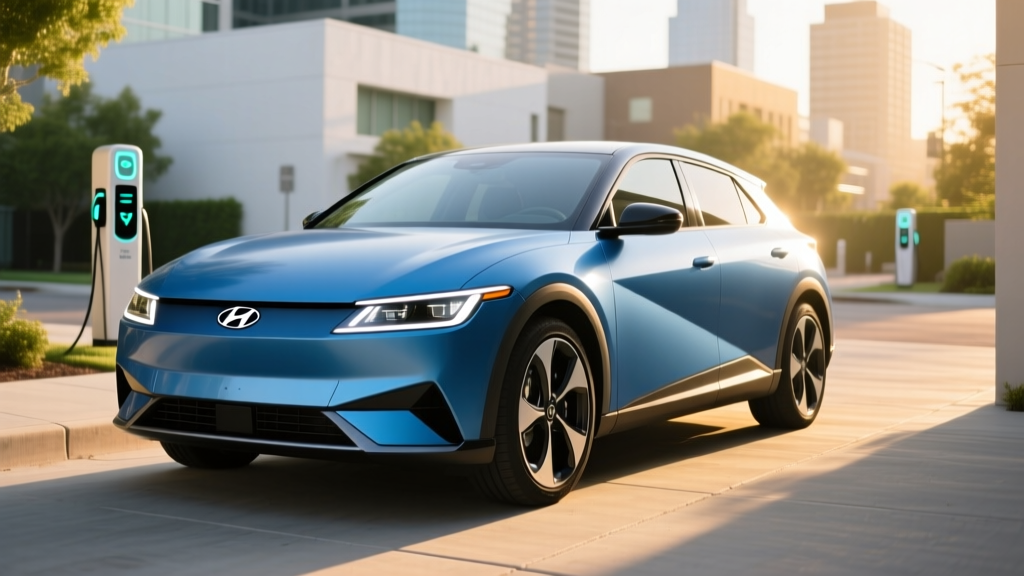
The Hyundai Ioniq 5 has been a benchmark compact electric crossover since its debut, but the 2024 model year brought meaningful updates that sharpened its value proposition. With a newly added Standard Range trim, expanded battery options, and continued eligibility for the full federal EV tax credit, the 2024 Ioniq 5 remains one of the most compelling EVs in the $40,000–$55,000 segment. After extensive driving, charging, and spec analysis, here's exactly what you need to know before buying one in 2026.
2024 Ioniq 5 at a Glance: Full Specification Table
| Specification | SE/SEL Standard Range | SE/SEL/Limited (Long Range RWD) | SE/SEL/Limited (Long Range AWD) |
|---|---|---|---|
| EPA Range | 245 mi | 303 mi | 260 mi |
| Battery (usable) | 58 kWh | 77.4 kWh | 77.4 kWh |
| Chemistry | NMC (Nickel Manganese Cobalt) | NMC | NMC |
| Drivetrain | RWD (single motor) | RWD (single motor) | AWD (dual motor) |
| Horsepower | 168 hp | 225 hp | 320 hp |
| Torque | 258 lb-ft | 258 lb-ft | 446 lb-ft |
| 0–60 mph | ~7.5 sec | ~7.0 sec | ~4.5 sec |
| Max DC Fast Charge | ~150 kW (peak) | ~240 kW (peak) | ~240 kW (peak) |
| 10–80% DC Time | ~24 min | ~18 min | ~18 min |
| Level 2 Home Charge | 10.9 kW | 10.9 kW | 10.9 kW |
| MPGe (combined) | 110 MPGe | 114 MPGe | 98 MPGe |
| kWh/100 mi | 30 | 29 | 34 |
| Base MSRP | $41,800 | $45,850 | $49,350 |
| Battery Warranty | 10 yr / 100,000 mi | ||
Sources: fueleconomy.gov, Hyundai USA specifications. Prices reflect MSRP before destination; destination adds ~$1,395.
Real-World Range: What the EPA Sticker Doesn't Tell You
EPA Estimated: 303 miles
Real-World Highway (70–75 mph, mild weather): ~250–270 miles
Real-World City / Mixed (moderate climate): ~280–300 miles
Cold Weather (below 30°F, highway): ~190–220 miles
The 303-mile EPA figure on the Long Range RWD is legitimate for mixed driving in moderate temperatures. However, EVs lose efficiency at sustained highway speeds due to aerodynamic drag — there's no multi-gear transmission to keep the motor in its sweet spot. On a flat 70 mph interstate run in 65°F weather, expect to use roughly 32–34 kWh/100 mi, yielding around 250–270 miles before you'll want to find a charger.
Cold weather hits the Ioniq 5 harder than some competitors because its heat pump (standard on all trims) is effective but not class-leading. In sustained sub-30°F conditions with cabin heating active, battery chemistry slows and cabin demand rises, cutting range by 25–35%. If your commute involves 40+ miles of highway driving in Midwestern or Northeastern winters, the AWD model's 260-mile EPA rating will realistically deliver closer to 175–200 miles in deep cold — plan charging accordingly.
The Standard Range model's 245-mile EPA rating is best suited for urban and suburban use. Highway road-tripping with the 58 kWh battery requires more frequent stops, but the 800V architecture partially compensates with rapid DC charging (more below).
Charging Speed: The 800-Volt Advantage in Practice
Hyundai's E-GMP platform uses an 800-volt electrical architecture — a feature still rare in the sub-$50,000 EV segment. Higher voltage means the car can accept more power without pushing excessive current, which translates to faster charging and less heat buildup in the battery.
| Charging Level | Power / Rate | Miles Added per Hour | Notes |
|---|---|---|---|
| Level 1 (120V household) | ~1.4 kW | ~4–5 mi/hr | Emergency/trickle only |
| Level 2 (240V home) | 10.9 kW | ~37–40 mi/hr | Full charge overnight (~7–8 hrs for 77.4 kWh) |
| DC Fast (Long Range) | Peak ~240 kW | ~18 min 10–80% | Requires 350 kW-capable station |
| DC Fast (Standard Range) | Peak ~150 kW | ~24 min 10–80% | Smaller battery = lower peak |
| DC Fast (NACS adapter) | Same as above | Same as above | Tesla Supercharger access via adapter |
A critical nuance: the "18-minute" 10–80% claim assumes a 350 kW-capable CCS station (such as Electrify America's latest stalls) and a preconditioned battery. The Ioniq 5 peaks near 240 kW but only holds that rate briefly — typically between 10–35% state of charge. The charging curve then tapers progressively: roughly 180 kW through 55%, dropping to ~120 kW by 70%, and falling below 60 kW past 80%. This is normal lithium-ion behavior, but it means a 10–90% session takes closer to 30–35 minutes, not 18.
Battery preconditioning activates automatically when you navigate to a DC fast charger via the built-in navigation system. If you arrive at a charger without preconditioning (for example, using a third-party app to find the station), the battery may be cold and initial charge rates can start at 50–80 kW before ramping up over 5–10 minutes. Always navigate through the car's system to a charger when possible.
For home Level 2 charging, the 10.9 kW onboard charger is generous. A full 0–100% charge of the 77.4 kWh battery takes roughly 7.5 hours — easily achievable overnight on a 48-amp home charger circuit (which requires a 60-amp breaker). Most owners will plug in at 20–30% remaining and wake up fully charged.
Driving Impressions, Performance & Efficiency
The dual-motor AWD model's 4.5-second 0–60 time is genuinely quick for a family crossover. The instant torque delivery makes highway merging effortless, and the low center of gravity (battery pack mounted under the floor) keeps body roll well-controlled in corners. The RWD models trade outright acceleration for efficiency — the 303-mile Long Range RWD achieves an EPA-rated 114 MPGe combined, which translates to roughly 29 kWh per 100 miles. That's among the most efficient vehicles in its class.
Ride quality is a standout. The Ioniq 5 uses a multi-link rear suspension that absorbs road imperactions more gracefully than the torsion-beam setups in some competitors. Cabin noise is low at highway speeds, aided by acoustic laminated front glass on SEL and Limited trims.
One-pedal driving (i-Pedal mode) is well-calibrated, allowing full stops without touching the brake pedal in most city driving. The regenerative braking paddles behind the steering wheel let you adjust regen intensity across four levels without entering a menu — a practical ergonomic choice.
Interior Space, Cargo & Technology
The Ioniq 5's 118.5-inch wheelbase — longer than many midsize sedans — creates genuinely spacious rear seating. Rear legroom measures 39.4 inches, enough for adults on long trips without compromise. The flat floor (no transmission tunnel) makes the middle seat usable for a third passenger.
Cargo volume behind the rear seats is 27.2 cubic feet, expanding to 59.3 cubic feet with the rear seats folded. The front trunk (frunk) on RWD models adds 2.1 cubic feet — useful for charging cables or a small bag. AWD models have a smaller frunk (0.85 cu ft) due to the front motor.
The dual 12.3-inch display setup (instrument cluster + infotainment) runs Hyundai's latest software with wireless Apple CarPlay and Android Auto. Physical climate controls remain present — a welcome decision. The Limited trim adds a head-up display with augmented-reality navigation arrows, a panoramic sunroof, and ventilated front seats.
Hyundai's Highway Driving Assist 2 (HDA2) provides adaptive cruise control with stop-and-go, lane centering, and automatic lane changes when you signal. This is an SAE Level 2 driver-assistance system — you must keep your hands on the wheel and eyes on the road at all times. It's competent for highway fatigue reduction but does not replace driver attention.
Pricing, Trim Levels & Federal Tax Credit Eligibility
| Trim | MSRP (incl. dest.) | Est. After §30D Credit | Key Features |
|---|---|---|---|
| SE Standard Range | $43,195 | ~$35,695 | Base model, 245 mi range, HDA2 |
| SE (Long Range RWD) | $47,245 | ~$39,745 | 303 mi range, heated seats, 10.9 kW charger |
| SEL (Long Range AWD) | $52,245 | ~$44,745 | AWD, leatherette, power liftgate |
| Limited (Long Range AWD) | $58,645 | ~$51,145 | HUD, panoramic roof, ventilated seats, premium audio |
Federal tax credit status (2026 rules): The 2024 Ioniq 5 is assembled in Ellabell, Georgia (production shifted from South Korea in late 2024), which resolved its earlier §30D eligibility issues. Under current IRS §30D rules, the Ioniq 5 qualifies for the full $7,500 federal tax credit, which can now be transferred to the dealer at the point of sale as an immediate price reduction.
Eligibility requirements you must meet:
- Income cap: Modified AGI ≤ $150,000 (single), $225,000 (head of household), or $300,000 (joint)
- MSRP cap: SUVs/vans/pickups ≤ $80,000; sedans ≤ $55,000 (Ioniq 5 classified as SUV — all trims qualify)
- Battery sourcing: Must meet critical mineral and battery component requirements (Hyundai's Georgia-built models with U.S.-sourced battery components currently comply)
- Vehicle must be new, purchased for personal use, and primarily used in the U.S.
Tax credit eligibility can change based on IRS guidance and supply-chain sourcing. Confirm current status at fueleconomy.gov and consult a tax professional before relying on credit availability.
Ownership Costs: Warranty, Insurance & Maintenance
Hyundai backs the Ioniq 5 with one of the strongest warranty packages in the EV market:
- Battery: 10 years / 100,000 miles (capacity retention above 70%)
- Powertrain: 10 years / 100,000 miles
- New vehicle: 5 years / 60,000 miles
- Roadside assistance: 5 years / unlimited miles
- Complimentary maintenance: 3 years / 36,000 miles (oil changes don't apply to EVs, but this covers tire rotations, inspections, and fluid top-offs)
Insurance premiums for the Ioniq 5 average 10–20% higher than comparable gas-powered crossovers, driven by higher repair costs for EV-specific components and the vehicle's strong acceleration. Expect annual premiums of roughly $1,800–$2,400 depending on your state, driving record, and coverage level.
Maintenance costs are minimal: cabin air filter replacement (~$30–$50 annually), brake fluid checks every 2 years, and tire replacement. Regenerative braking significantly extends pad life — many EV owners report original brake pads lasting 80,000+ miles. Budget roughly $300–$500 per year for routine maintenance after the complimentary period ends.
2024 Ioniq 5 vs. Key Competitors: Is It Worth Buying?
- You want the fastest DC charging in the segment (800V architecture)
- Spacious rear seating and a flat floor are priorities
- You prefer a distinctive retro-modern design over conservative styling
- You want the full $7,500 federal tax credit with U.S. assembly
- V2L (Vehicle-to-Load) capability matters for camping or backup power
- You need over 320 miles of EPA range → Tesla Model Y Long Range (330 mi)
- You want access to the native NACS Supercharger network without an adapter → Tesla Model Y or 2025+ NACS-native models
- You need three-row seating → Kia EV9 or Hyundai Ioniq 9
- Maximum cargo volume is essential → VW ID.4 (30.3 cu ft behind rear seats)
Against the Tesla Model Y, the Ioniq 5 trades some range and Supercharger convenience for better ride quality, faster peak charging on compatible CCS stations, a more intuitive interior with physical controls, and Hyundai's longer warranty. Against the Ford Mustang Mach-E, the Ioniq 5 offers more rear legroom and a more compliant ride, while the Mach-E delivers slightly sportier handling dynamics.
- 800V architecture delivers genuinely fast DC charging
- Spacious, flat-floor interior with excellent rear legroom
- Strong 10-year battery/powertrain warranty
- Qualifies for full $7,500 federal tax credit (U.S.-built)
- V2L capability (powers devices up to 3.6 kW)
- Comfortable, quiet ride quality
- Real-world highway range falls 10–15% below EPA sticker
- Cold-weather range loss is significant (25–35%)
- No native NACS port — requires adapter for Tesla Superchargers
- Frunk is small, especially on AWD models
- Rear wiper was not included on 2024 models (aftermarket solutions exist)
- Infotainment can be slow to respond compared to Tesla's system
Frequently Asked Questions
What is the real-world range of the 2024 Ioniq 5?
The Long Range RWD achieves an EPA-estimated 303 miles, but real-world highway driving at 70–75 mph typically yields 250–270 miles in mild weather. City and suburban driving gets closer to the EPA figure. In sustained cold weather below 30°F, expect 190–220 miles on the highway. The AWD model (260 mi EPA) delivers roughly 220–240 miles in mixed real-world use.
How fast does the 2024 Ioniq 5 charge at home and on the road?
At home on a 240V Level 2 charger, the Ioniq 5 accepts up to 10.9 kW, adding roughly 37–40 miles of range per hour — a full overnight charge. On DC fast chargers, the Long Range models peak at approximately 240 kW and can charge from 10–80% in about 18 minutes on a 350 kW-capable station. The Standard Range model peaks lower at roughly 150 kW with a 10–80% time of about 24 minutes.
Does the 2024 Ioniq 5 qualify for the federal EV tax credit?
Yes. The 2024 Ioniq 5 (built in Ellabell, Georgia from late 2024 onward) qualifies for the full $7,500 federal tax credit under IRS §30D, provided you meet income limits ($150K single / $300K joint), the vehicle MSRP is under $80,000 (all trims qualify as an SUV), and battery sourcing requirements are met. The credit can be transferred to the dealer at point of sale for an immediate price reduction. Verify current eligibility at fueleconomy.gov before purchase.
How much does the 2024 Ioniq 5 cost after incentives?
The base SE Standard Range starts at roughly $43,195 with destination. After the $7,500 federal tax credit, the effective price drops to approximately $35,695. The popular SEL Long Range RWD lists at ~$47,245, falling to ~$39,745 after the credit. The top Limited AWD reaches ~$58,645 MSRP, or ~$51,145 after the credit. State and utility incentives may stack on top — check your local programs.
Is the 2024 Ioniq 5 worth buying over the Tesla Model Y or Ford Mach-E?
The Ioniq 5 is the strongest choice if you prioritize charging speed, interior comfort, warranty coverage, and tax credit eligibility. The Model Y wins on range (330 mi EPA), native Supercharger access, and software polish. The Mach-E appeals to drivers who want sportier handling and a more conventional SUV feel. For most buyers seeking a practical, fast-charging daily driver with strong warranty protection, the Ioniq 5 is an excellent pick — especially on the SEL Long Range RWD trim, which offers the best range-to-price ratio.
What's the biggest drawback of the 2024 Ioniq 5?
The CCS charging port (not native NACS) means you need an adapter to access Tesla Superchargers, which comprise the most reliable DC fast-charging network in the U.S. Hyundai provides a NACS adapter, and the Ioniq 5 charges well on Superchargers with it, but native NACS ports won't appear until the 2025 model year. Additionally, cold-weather range loss is more pronounced than some competitors with more advanced heat pump systems.
For the latest 2024 Ioniq 5 safety ratings, see IIHS and NHTSA. All specifications reflect Hyundai's published data for the 2024 model year and are subject to change. Tax credit information reflects 2026 IRS guidance and may be updated.