Quick Verdict: The 2024 Ioniq 5 Still Sets the Pace
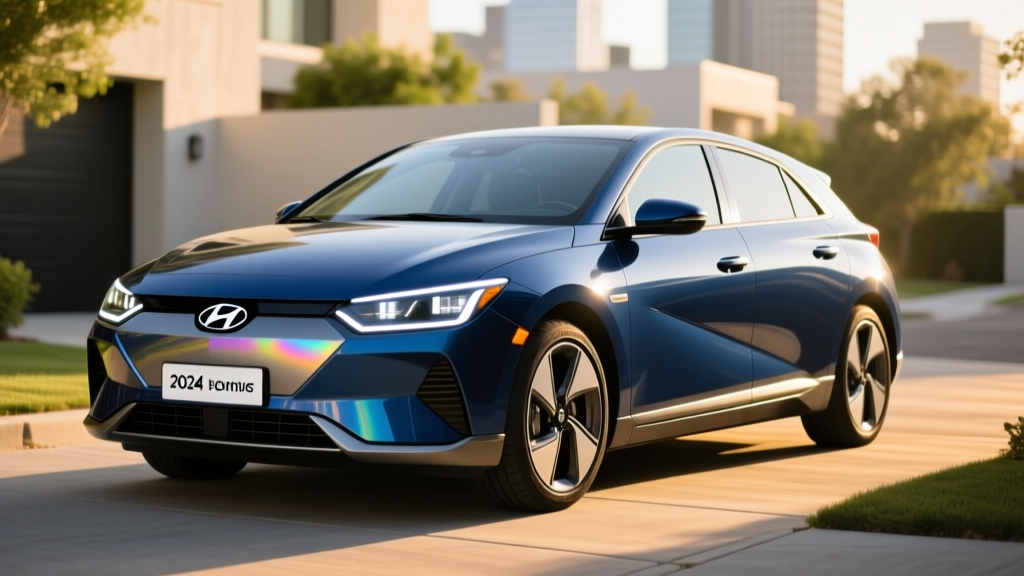
If you're searching for a 2024 Hyundai Ioniq electric for sale, you're likely looking at the Ioniq 5 — Hyundai's retro-futuristic electric crossover built on the dedicated E-GMP platform. (The original Ioniq Electric hatchback was discontinued after 2021; the Ioniq name now spans the Ioniq 5 crossover, Ioniq 6 sedan, and Ioniq 7 SUV.) The 2024 Ioniq 5 remains one of the best-balanced EVs on the market: fast-charging 800V architecture, a usable 303-mile EPA range on Long Range RWD trims, and aggressive pricing that — when combined with federal and state incentives — undercuts most rivals.
For 2024, Hyundai added the XRT trim with rugged cladding and standard AWD, while the high-performance Ioniq 5 N arrived with 641 horsepower. The core lineup, however, continues to emphasize efficiency, charge speed, and interior space. Below, we break down every spec that matters to a real buyer.
Range, Battery & Efficiency: What the EPA Says vs. Reality
The 2024 Ioniq 5 is offered with two battery sizes across four trims. Here's how they stack up:
| Trim | Battery (usable kWh) | Drivetrain | EPA Range (mi) | MPGe (combined) | kWh/100 mi |
|---|---|---|---|---|---|
| SE Standard Range | 58.0 (NMC) | RWD | 220 | 114 | 29 |
| SEL / Limited RWD | 77.4 (NMC) | RWD | 303 | 114 | 29 |
| SEL / XRT / Limited AWD | 77.4 (NMC) | AWD (dual-motor) | 260–290 | 101–110 | 30–33 |
| Ioniq 5 N | 84.0 (NMC) | AWD | 221 | 84 | 40 |
The EPA's 303-mile figure for the Long Range RWD is achievable in mixed city/suburban driving at moderate temperatures. On sustained highway runs at 70–75 mph, expect 250–270 miles before you'll want to stop. In freezing weather (below 30°F), cabin heating and battery thermal losses cut range by roughly 20–30%, dropping real-world highway range to approximately 190–220 miles. The Ioniq 5 does include a standard heat pump on all trims, which mitigates cold-weather loss better than resistive heating, but physics still applies.
The 77.4 kWh battery uses NMC (nickel manganese cobalt) chemistry, which prioritizes energy density over the extreme cycle life of LFP cells. Hyundai's battery management system maintains a top/bottom buffer to reduce degradation, and real-world data from early 2022 owners shows roughly 3–5% capacity loss over the first 40,000 miles — well within normal expectations. According to fueleconomy.gov, the Long Range RWD achieves 114 MPGe combined.
Charging Speed: 800V Architecture Pays Off
The Ioniq 5's headline advantage over rivals like the Ford Mustang Mach-E and Volkswagen ID.4 is its 800-volt electrical architecture, enabling dramatically faster DC fast charging than the more common 400V systems.
| Charging Level | Power / Rate | Time / Miles Added |
|---|---|---|
| Level 1 (120V household) | ~1.2 kW | ~4 mi/hr |
| Level 2 (240V home, 48A) | 10.9 kW | ~36 mi/hr; full charge in ~7.5 hr (77.4 kWh) |
| DC Fast Charge (800V capable) | Peak 235 kW (Long Range) | 10–80% in ~18 min on a 350 kW charger |
| DC Fast Charge (Standard Range) | Peak ~150 kW | 10–80% in ~24 min |
A few critical caveats on those DC fast-charge numbers: The 235 kW peak is only achievable on a 350 kW-capable charger (Electrify America, select EVgo and ChargePoint stations). The charge curve tapers significantly above 80% state of charge — going from 80–100% can take nearly as long as 10–80%. On a more common 150 kW CCS station, expect peak rates around 130–150 kW and 10–80% times closer to 25–30 minutes.
Starting in 2025, Hyundai began transitioning to the NACS (Tesla) charge port on new models. The 2024 Ioniq 5 ships with a CCS1 port, but Hyundai provides a NACS adapter (or you can purchase one), granting access to Tesla's Supercharger network — a major practical advantage for road-trippers. Always confirm adapter inclusion with the specific dealer or listing you're considering.
Performance & Drivetrain: Quick When You Need It
Even the base RWD Ioniq 5 delivers responsive acceleration thanks to instant electric torque. Here's the performance breakdown:
- SE Standard Range RWD: 168 hp, 258 lb-ft torque, 0–60 mph in ~7.0 seconds
- Long Range RWD: 225 hp, 258 lb-ft, 0–60 mph in ~5.0 seconds
- Long Range AWD (dual-motor): 320 hp, 446 lb-ft, 0–60 mph in ~4.5 seconds
- Ioniq 5 N: 641 hp (with N Grin Boost), 568 lb-ft, 0–60 mph in ~3.25 seconds
The AWD models add a front motor for all-weather traction and stronger passing power. The Ioniq 5 N is a dedicated performance variant with track-oriented cooling, simulated gear shifts, and an 84 kWh battery — but its 221-mile EPA range and higher price ($66,000+ MSRP) make it a niche pick. For most buyers, the Long Range AWD at 320 hp hits the sweet spot of performance and practicality.
All trims feature regenerative braking with adjustable levels (0–3 plus i-PEDAL for one-pedal driving), allowing you to recapture energy in stop-and-go traffic and reduce brake wear.
Interior, Cargo & Technology
The Ioniq 5's cabin is one of its strongest selling points. The flat floor (enabled by the E-GMP skateboard platform) and long 118.1-inch wheelbase create genuinely spacious accommodations:
- Front legroom: 41.7 inches
- Rear legroom: 39.4 inches
- Cargo behind rear seats: 27.2 cu ft
- Cargo with rear seats folded: 59.3 cu ft
- Front trunk (frunk): 0.85 cu ft (RWD) / 2.0 cu ft (AWD) — enough for a charging cable bag
The dual 12.3-inch displays (instrument cluster + infotainment) run Hyundai's proven interface with wireless Apple CarPlay and Android Auto. Physical buttons for climate and volume earn praise over touch-only competitors. Available features include:
- Vehicle-to-Load (V2L) — power laptops, appliances, or a campsite from the high-voltage battery via an interior or exterior outlet
- Digital Key (NFC smartphone unlock)
- Highway Driving Assist 2 (HDA2) — adaptive cruise with lane-centering and lane-change assist
- Remote Smart Parking Assist (on Limited trims)
- Augmented-reality head-up display (Limited)
Notable drawbacks: The rear wiper is absent (a common complaint in rain/snow), the frunk is tiny compared to the Ford Mach-E, and the panoramic glass roof (on SEL and above) has no shade, which can increase cabin heat on sunny days.
Pricing, Trims & Federal Tax Credit Eligibility
The 2024 Ioniq 5 is offered in five trims. Below is the MSRP lineup along with tax-credit context:
| Trim | MSRP (incl. destination) | Federal §30D Credit Eligibility |
|---|---|---|
| SE Standard Range | $43,175 | Up to $7,500 (if sourcing & income requirements met) |
| SE (Long Range RWD) | $46,725 | Up to $7,500 |
| SEL (Long Range AWD) | $49,725 | Up to $7,500 |
| XRT (AWD) | $52,275 | Up to $7,500 |
| Limited (AWD) | $58,275 | Up to $7,500 |
The Ioniq 5 is assembled in Ellabell, Georgia (Hyundai's Metaplant America), which makes it eligible for the federal EV tax credit. However, qualifying for the full $7,500 depends on several requirements per IRS guidelines:
- MSRP cap: The vehicle must have an MSRP at or below $80,000 (all Ioniq 5 trims qualify).
- Buyer income cap: Modified AGI must not exceed $150,000 (single), $225,000 (head of household), or $300,000 (joint).
- Battery sourcing: A percentage of critical minerals and battery components must be sourced from the US or FTA-partner countries. The Ioniq 5's Georgia assembly and evolving supply chain generally qualify for at least a partial credit; confirm the exact amount for the specific VIN with your dealer or tax professional.
- Point-of-sale transfer: Starting in 2024, eligible buyers can transfer the credit to the dealer at purchase, receiving it as an immediate price reduction rather than waiting to claim it on a tax return.
Always verify current eligibility on irs.gov and consult a tax professional — battery-sourcing requirements have tightened progressively, and the credit landscape continues to evolve.
If the full $7,500 credit applies, the effective price of a Long Range RWD SE drops to roughly $39,225 — competitive with much smaller EVs. Many states offer additional rebates (California's CVRP, Colorado's state credit, etc.) that can stack on top.
Warranty & Long-Term Ownership
Hyundai backs the Ioniq 5 with one of the strongest warranty packages in the EV segment:
- Battery & drive unit: 10 years / 100,000 miles
- New vehicle limited: 5 years / 60,000 miles
- Anti-perforation: 7 years / unlimited miles
- Roadside assistance: 5 years / unlimited miles
The battery warranty guarantees that the high-voltage pack will retain at least 70% of its original capacity over the 10-year/100,000-mile term. Based on current NMC degradation curves and Hyundai's conservative buffer management, most owners should see well above that threshold in normal use. A full battery replacement outside warranty, if ever needed, currently runs approximately $12,000–$18,000 depending on the pack size — though this cost is expected to decline as battery prices continue to fall.
How It Compares: Ioniq 5 vs. Key Rivals
| Spec | Hyundai Ioniq 5 (LR RWD) | Ford Mustang Mach-E (ER RWD) | Tesla Model Y (LR AWD) | VW ID.4 (Pro S RWD) |
|---|---|---|---|---|
| EPA Range | 303 mi | 320 mi | 308 mi | 291 mi |
| Battery (kWh) | 77.4 (NMC) | 91.0 (NMC) | ~75.0 (NMC) | 82.0 (NMC) |
| Peak DC Charge | 235 kW | 150 kW | 250 kW | 175 kW |
| 10–80% DCFC Time | ~18 min | ~36 min | ~22 min | ~28 min |
| 0–60 mph | 5.0 sec | 6.1 sec | 4.8 sec | 7.7 sec |
| Starting MSRP | $46,725 | $48,995 | $49,990 | $47,290 |
| V2L Capability | Yes | No | No | No |
The Ioniq 5's charging speed advantage is the most tangible differentiator. On a road trip with DC fast-charger stops, the 18-minute 10–80% time means noticeably less waiting compared to the Mach-E or ID.4. The Tesla Model Y matches it on charging infrastructure thanks to the Supercharger network, but the Ioniq 5 now accesses those same stations via adapter.
- Class-leading 800V DC fast-charge speed (235 kW peak, ~18 min 10–80%)
- Spacious flat-floor interior with 39.4" rear legroom
- Strong 10-year/100,000-mi battery warranty
- V2L capability for camping, tailgating, or backup power
- Competitive pricing after §30D tax credit
- Physical climate/volume controls alongside touchscreen
- No rear wiper — visibility suffers in rain and snow
- Frunk is tiny (0.85 cu ft RWD) compared to rivals
- Panoramic glass roof has no retractable shade
- CCS port requires adapter for Tesla Supercharger access
- AWD trims lose 13–43 miles of range vs. RWD
- Infotainment can be sluggish compared to Tesla's interface
Who Should Buy the 2024 Ioniq 5?
The 2024 Ioniq 5 is best suited for:
- Daily commuters who can install a Level 2 home charger and want 300+ miles of real-world weekly driving between charges.
- Small families needing comfortable rear-seat space for car seats and a usable 27 cu ft cargo area for strollers and groceries.
- Road-trippers who value fast DC charging to minimize stop times on long drives — the 800V system is a genuine time-saver.
- Outdoor enthusiasts who'll use V2L to power devices at campsites or job sites.
It's less ideal if you need three-row seating (look at the Ioniq 7 or Kia EV9), serious towing (the Ioniq 5 is rated for only 2,300 lbs with AWD), or if you frequently drive in extreme cold without garage access, where any EV loses meaningful range.
Frequently Asked Questions
What is the real-world range of the 2024 Hyundai Ioniq 5?
The EPA rates the Long Range RWD at 303 miles. In real-world highway driving at 70–75 mph, expect 250–270 miles. In freezing temperatures, plan for 190–220 miles. City and suburban driving at moderate speeds can match or slightly exceed the EPA figure thanks to regenerative braking.
How fast does the Ioniq 5 charge at home and on the road?
On a Level 2 home charger (240V, 48 amps), the Ioniq 5 accepts up to 10.9 kW, adding roughly 36 miles of range per hour and fully charging the 77.4 kWh battery in about 7.5 hours. On a 350 kW DC fast charger, it peaks at 235 kW and charges from 10–80% in approximately 18 minutes.
Does the 2024 Ioniq 5 qualify for the $7,500 federal tax credit?
The Ioniq 5 is assembled in Georgia and generally qualifies, but the full $7,500 depends on your income (AGI caps apply), the vehicle's MSRP (must be ≤$80,000 — all trims qualify), and battery-sourcing requirements that evolve over time. The credit can be transferred to the dealer at point of sale for an immediate price reduction. Verify your specific eligibility at irs.gov or with a tax professional.
Is the 2024 Ioniq 5 worth buying over the Tesla Model Y?
If you prioritize charging speed, interior design, physical controls, and V2L capability, the Ioniq 5 has clear advantages. The Model Y offers a more mature Supercharger network (though the Ioniq 5 now accesses it via adapter), more over-the-air updates, and slightly more cargo space. Both are excellent — your preference on software ecosystem and styling will likely decide it.
What's the biggest drawback of the Ioniq 5?
The lack of a rear wiper is the most universally cited complaint, particularly for buyers in rainy or snowy climates. The small frunk and unshaded glass roof are secondary annoyances. None are deal-breakers, but they're worth testing on a longer demo drive.
Is the Ioniq 5 safe?
The 2024 Ioniq 5 earned the IIHS Top Safety Pick+ award (when equipped with specific headlights) and a 5-star overall rating from NHTSA. Standard safety tech includes forward collision-avoidance assist, blind-spot monitoring, rear cross-traffic alert, and lane-keeping assist.