Quick Verdict: The Budget EV America Still Can't Buy
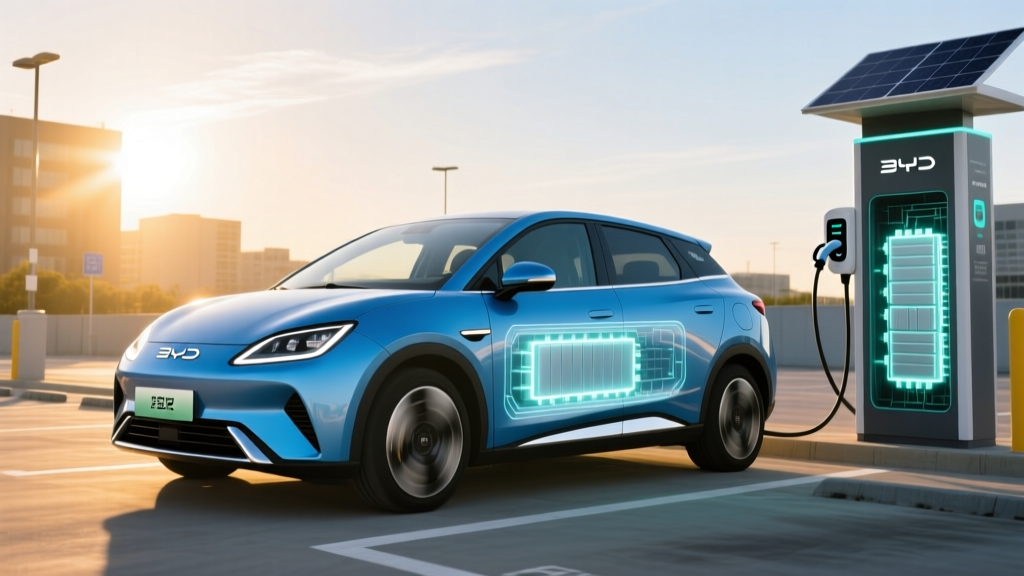
The BYD Seagull is a compact battery-electric hatchback that has become one of the best-selling EVs globally since its 2023 China launch. With a starting price under $10,000 USD equivalent in its home market and up to 405 km (252 miles) on the CLTC cycle, the Seagull has reshaped expectations for affordable electric transportation. But as of early 2026, the BYD Seagull car remains unavailable in the United States — blocked by a combination of 100%+ tariffs on Chinese-built EVs, an absence of US-spec crash testing, and BYD's strategic decision to prioritize other global markets first.
This review covers the Seagull's specifications as sold in export markets (Latin America, Southeast Asia, Australia), real-world range and charging data, and what the Seagull's existence means for US EV buyers weighing affordable alternatives. If you're researching the BYD Seagull car for potential future US availability or to benchmark against domestic budget EVs, here's every number that matters.
Range, Battery, and Real-World Efficiency
The Seagull is offered with two lithium iron phosphate (LFP) Blade Battery packs, both using BYD's proprietary cell-to-body (CTB) integration. LFP chemistry trades some energy density for superior thermal stability, longer cycle life, and zero cobalt or nickel — making it cheaper and safer, though heavier per kWh than NMC alternatives.
| Specification | Vitality Edition | Freedom / Flying Edition |
|---|---|---|
| Battery Capacity (gross) | 30.08 kWh | 38.88 kWh |
| Battery Chemistry | LFP (Blade Battery) | LFP (Blade Battery) |
| CLTC Range | 305 km (190 mi) | 405 km (252 mi) |
| WLTP Range (export markets) | ~240 km (149 mi) | ~320 km (199 mi) |
| Estimated EPA Range (if US-certified) | ~120–135 mi | ~160–180 mi |
| Energy Consumption | ~28–30 kWh/100 mi (est.) | ~27–29 kWh/100 mi (est.) |
The Seagull does not currently appear on fueleconomy.gov, as it has not been EPA-certified for US sale. Any range figures cited for the US market are estimates based on WLTP-to-EPA conversion ratios observed in similar small EVs.
Charging Speed: DC Fast Charge and Home Level 2
Charging capability is where budget EVs often compromise, and the Seagull is no exception. The smaller 30.08 kWh battery supports up to 40 kW DC fast charging, while the 38.88 kWh pack peaks at approximately 50–60 kW. These are modest rates compared to the 150–350 kW capabilities of premium EVs, but they're proportional to the Seagull's smaller battery — a high C-rate isn't necessary when the total energy volume is low.
| Charging Method | Power / Rate | Time / Notes |
|---|---|---|
| DC Fast Charge (peak) | 40 kW (30 kWh) / 60 kW (39 kWh) | 30–80% in ~30 minutes |
| Level 2 AC (export) | 6.6 kW (single-phase) | 0–100% in ~5–6 hours |
| Level 1 AC (120V, US scenario) | ~1.4 kW | 0–100% in ~22–28 hours |
| Charging Port (export) | CCS2 (Europe/Aus) / GB/T (China) | NACS not offered |
The 30–80% DC fast charge time of approximately 30 minutes is adequate for a city-oriented commuter vehicle but means highway road trips require planning. The charge curve is relatively flat for LFP chemistry — BYD's thermal management keeps the pack in its optimal temperature window, so sustained charging rates stay close to peak until approximately 85% State of Charge (SoC), after which the curve tapers sharply. This is typical LFP behavior and one reason manufacturers recommend periodic 100% charges for LFP packs to allow the battery management system (BMS) to recalibrate cell balancing.
On a home Level 2 charger at 6.6 kW, the larger battery adds roughly 30–35 miles of range per hour of charging — sufficient to fully replenish overnight for daily commuters driving under 100 miles round-trip.
Performance, Drivetrain, and Driving Dynamics
The Seagull is a front-wheel-drive, single-motor hatchback designed for urban efficiency rather than performance. BYD's e-Platform 3.0 underpins the vehicle, providing a flat battery floor and relatively long wheelbase for its compact footprint.
| Specification | Value |
|---|---|
| Motor Output | 55 kW (74 hp / 75 PS) |
| Torque | 135 Nm (100 lb-ft) |
| 0–60 mph (est.) | ~11.0–12.5 seconds |
| Top Speed | 130 km/h (81 mph) |
| Drivetrain | FWD, single-speed reduction gear |
| Regenerative Braking | Two levels + standard (no one-pedal mode) |
Acceleration is leisurely by EV standards. The 74-hp motor and approximately 1,100–1,200 kg (2,425–2,645 lb) curb weight yield 0–60 mph times in the 11–12.5 second range — comparable to a base-model gas subcompact. The Seagull is tuned for low-speed responsiveness, with the instant torque delivery characteristic of electric motors making it feel peppy in stop-and-go city traffic up to about 50 km/h (31 mph). Highway merging and passing require planning due to the limited power reserve and the 81 mph top speed governor.
BYD does not offer an all-wheel-drive or dual-motor variant. The Seagull's mission is affordability and efficiency, not performance, and the single-motor FWD layout keeps costs and weight in check.
Interior, Cargo Space, and Technology
For its sub-4-meter exterior length (3,780 mm / 148.8 in), the Seagull maximizes interior volume thanks to the e-Platform 3.0's flat floor and pushed-to-the-corners wheels. The cabin seats four adults, though rear legroom is tight for passengers over 6 feet tall.
| Dimension | Measurement |
|---|---|
| Length | 3,780 mm (148.8 in) |
| Wheelbase | 2,500 mm (98.4 in) |
| Rear Legroom | ~830 mm (32.7 in) |
| Cargo Volume (rear seats up) | ~210 liters (7.4 cu ft) |
| Cargo Volume (rear seats folded) | ~680 liters (24.0 cu ft) |
| Frunk | None |
Technology highlights include a 10.1-inch rotating touchscreen infotainment display (a BYD signature that toggles between landscape and portrait orientation), wireless Apple CarPlay and Android Auto on export models, a digital instrument cluster, and a suite of driver-assist features branded as BYD DiPilot. The DiPilot system on higher trims includes adaptive cruise control, lane-keeping assist, automatic emergency braking, and a 360-degree surround-view camera.
Notable drawbacks include the absence of a front trunk (frunk), limited rear cargo width due to the wheel-well intrusion, hard plastics throughout the cabin (expected at this price point), and no available heat pump on the base Vitality Edition — which exacerbates cold-weather range loss and cabin heating efficiency.
Pricing, Trims, and Tax Credit Eligibility
The Seagull's pricing story depends entirely on the market. In China, BYD aggressively undercut competitors with a starting price of approximately ¥69,800 (~$9,600 USD at early-2026 exchange rates) for the 30 kWh Vitality Edition. Export markets in Latin America, Australia, and Southeast Asia see significantly higher prices due to shipping, tariffs, and dealer markups — typically $18,000–$25,000 USD equivalent depending on the country and trim.
| Market / Trim | Local Price | Approx. USD |
|---|---|---|
| China – Vitality (30 kWh) | ¥69,800 | ~$9,600 |
| China – Freedom (39 kWh) | ¥85,800 | ~$11,800 |
| Australia (est. export) | AUD $30,000–$35,000 | ~$19,000–$22,500 |
| Mexico (Dolphin Mini) | MXN $359,000–$399,000 | ~$18,500–$20,500 |
| United States | Not available — no US MSRP | |
Warranty and Ownership Costs
In China and most export markets, BYD backs the Seagull with a 6-year / 150,000 km (93,000 mi) vehicle warranty and an 8-year / 150,000 km battery warranty covering defects and capacity degradation below 70% State of Health (SoH). These terms are competitive with global EV standards, though they fall short of the 8-year / 100,000-mile minimum that US regulations and competitors like Hyundai (10-year / 100,000-mile) offer in the American market.
LFP chemistry is a long-term ownership advantage. Independent battery research and BYD's own cycle-life testing suggest the Blade Battery can endure 3,000+ full charge cycles before reaching 80% SoH — translating to over 500,000 km (310,000+ mi) of driving before meaningful degradation. For a budget commuter vehicle, this means the battery will very likely outlast the rest of the car. LFP cells also resist thermal runaway far better than NMC, reducing fire risk in collision or overcharge scenarios — a factor NHTSA has increasingly scrutinized across the EV fleet.
Insurance costs for the Seagull would likely be low in the US market given its modest repair costs, low power output, and small battery — though no US actuarial data exists yet.
How the BYD Seagull Car Compares to US Budget EV Alternatives
Since the Seagull isn't buyable in the US, here's how its specifications compare against the closest American-market budget EVs for shoppers who want affordable electric transportation today:
| Spec | BYD Seagull (39 kWh) | Chevy Bolt EV (2025) | Nissan LEAF S |
|---|---|---|---|
| Est. EPA Range | ~165 mi (est.) | 259 mi | 149 mi |
| Battery (kWh) | 38.88 LFP | 65 NMC | 40 NMC |
| DC Fast Charge (peak kW) | ~60 kW | 55 kW (CCS) | 50 kW (CHAdeMO) |
| 0–60 mph | ~12 sec | ~6.5 sec | ~7.9 sec |
| US MSRP | N/A | ~$28,900 | ~$29,135 |
| US Tax Credit | N/A | Eligible (verify sourcing) | Not eligible (Japan-built) |
The Seagull's closest US rival in spirit is the Chevrolet Bolt EV, which offers substantially more range (259 mi EPA), better performance, and full US market support — but at roughly three times the Seagull's China price. The Nissan LEAF S matches the Seagull's approximate range but uses the aging CHAdeMO connector, limiting DC fast-charging access as the US network consolidates around NACS and CCS.
Who the BYD Seagull Car Suits Best
Ideal use case: Urban commuters in markets where the Seagull is sold, driving under 80 miles per day with access to home Level 2 charging. The Seagull excels as a second car, rideshare vehicle, or first EV for cost-conscious buyers in developing markets.
Not suited for: US buyers (not available), highway-heavy commuters needing 200+ mile range, cold-climate drivers without garage parking, or anyone needing more than two passengers and minimal cargo.
Pros and Cons
Pros
- Extremely low purchase price in available markets
- LFP Blade Battery offers excellent longevity and safety
- Surprisingly spacious cabin for sub-4m footprint
- Rotating 10.1" touchscreen with modern infotainment
- Low running costs: ~$0.04–$0.06/mi equivalent
- Quick city acceleration from instant EV torque
Cons
- Not available in the United States
- Limited real-world range (~155–190 mi mixed, less in cold)
- Modest 60 kW DC fast-charge speed
- 74 hp motor struggles at highway speeds
- No heat pump on base trim (efficiency penalty in winter)
- No frunk; cargo space tight at 7.4 cu ft (seats up)
- No US crash-test data (NHTSA/IIHS)
Frequently Asked Questions
What is the real-world range of the BYD Seagull car?
In mixed city/highway driving at moderate temperatures, the 38.88 kWh Seagull delivers approximately 175–193 miles (280–310 km). Highway-only driving at 68+ mph reduces this to roughly 143–155 miles. Cold weather (below 41°F) can cut range by 20–35%, yielding as little as 110–130 miles from the larger battery in winter conditions. The 30 kWh Vitality Edition delivers roughly 130–150 real-world miles in mixed use.
How fast does the BYD Seagull charge?
On DC fast charging, the Seagull peaks at 40 kW (30 kWh battery) or 60 kW (39 kWh battery), achieving a 30–80% charge in approximately 30 minutes. On a home Level 2 charger at 6.6 kW, a full charge takes 5–6 hours. The Seagull does not support NACS (Tesla) connectors in any market — export models use CCS2 or GB/T depending on the region.
How much does the BYD Seagull cost?
In China, the Seagull starts at approximately $9,600 USD for the 30 kWh Vitality Edition and $11,800 for the 39 kWh Freedom Edition. Export market pricing typically ranges from $18,000 to $25,000 USD equivalent. The vehicle is not sold in the United States, so there is no US MSRP.
Does the BYD Seagull qualify for the federal EV tax credit?
No. The BYD Seagull is not available for purchase in the United States and has not received EPA certification. Even if it were sold in the US, its China-manufactured battery and critical mineral supply chain would likely disqualify it under the §30D battery-component and critical-mineral sourcing requirements outlined by the IRS. Additionally, the 100% tariff on Chinese-built EVs imposed in 2024 makes importing the Seagull economically unviable.
Is the BYD Seagull worth buying vs competitors?
In markets where it's sold, the Seagull offers unmatched value for urban commuters who need an affordable, efficient, low-maintenance EV with sufficient range for daily driving under 80 miles. Compared to the Chevy Bolt EV or Nissan LEAF in the US, it sacrifices range and performance for a dramatically lower price — but US buyers don't have the option to make that tradeoff. For American shoppers, the Bolt EV (259 mi EPA, ~$28,900 before credits) remains the budget EV benchmark.
Will the BYD Seagull ever come to the United States?
As of early 2026, BYD has not announced US market entry for the Seagull or any passenger vehicle. BYD executives have stated that the US market is not a near-term priority due to the tariff environment and geopolitical friction. BYD is instead expanding aggressively in Europe, Latin America, Southeast Asia, and Australia. If US trade policy shifts — or if BYD establishes a North American manufacturing facility — the Seagull could theoretically arrive, but no timeline exists.