The Most Reliable EV Cars: A Quick Answer
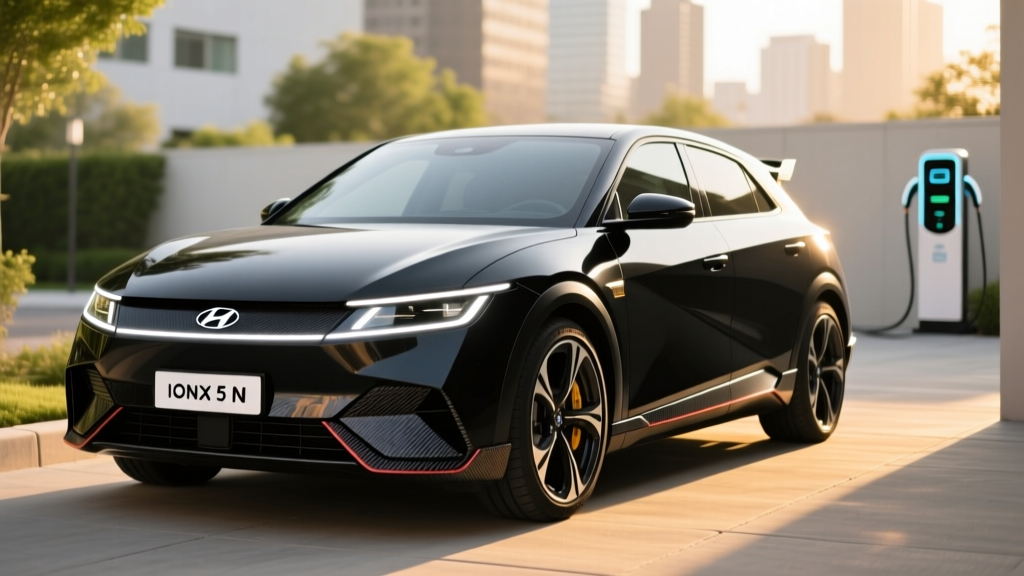
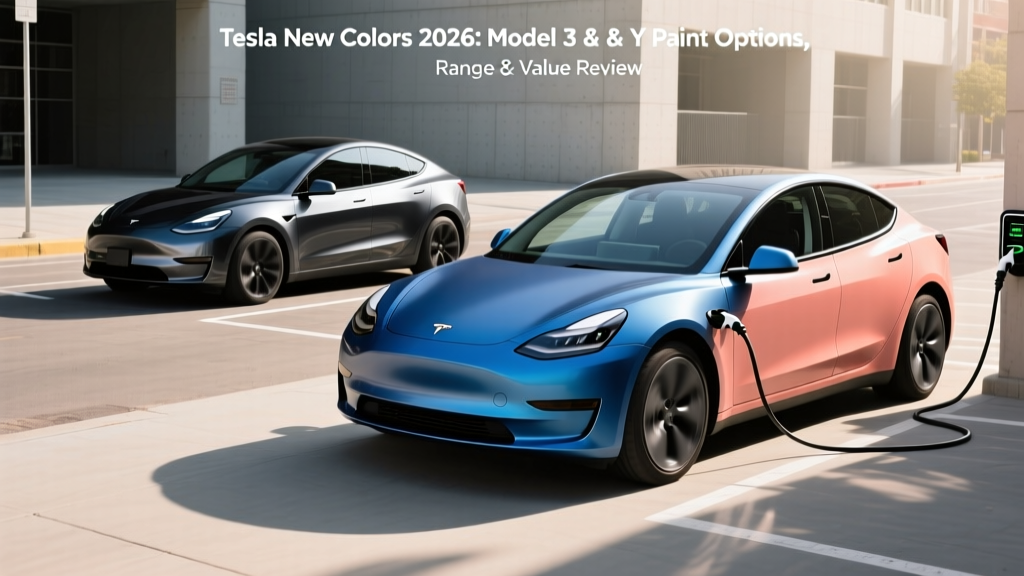
If you want the most reliable EV cars with the lowest likelihood of major repairs, the data consistently points to three models: the Tesla Model 3, Hyundai Ioniq 5, and BMW i4. These vehicles combine proven battery chemistries, mature powertrain designs, and strong warranty coverage. Tesla's Model 3 benefits from years of fleet data and minimal moving parts. Hyundai's Ioniq 5 pairs an 800V architecture with a robust 10-year/100,000-mile powertrain warranty. The BMW i4 leverages decades of manufacturing precision and strong build-quality scores.
Reliability in EVs isn't about engines or transmissions — it's about battery degradation rates, thermal management systems, software stability, and build quality. The models below lead in those categories for 2026.
What "Reliability" Actually Means for Electric Vehicles
When gas-car buyers ask about reliability, they're worried about transmissions, timing belts, and head gaskets. EV buyers face a different calculus. An electric vehicle has roughly 20 moving parts in its drivetrain compared to over 2,000 in an internal combustion engine. That eliminates entire categories of mechanical failure.
The reliability factors that actually matter for EVs in 2026 are:
- Battery degradation: How much range capacity is lost over 5–10 years? Most modern NMC and LFP packs lose 8–12% over 100,000 miles.
- Thermal management: Active liquid cooling prevents premature cell degradation — every model on this list uses it.
- Software and electronics: OTA update stability, infotainment bugs, and sensor reliability are now the primary complaint categories in EV ownership surveys.
- Build quality: Panel gaps, weather sealing, suspension components, and interior material durability.
- Charging system longevity: Onboard charger and DC fast-charge port reliability over thousands of cycles.
We've cross-referenced Consumer Reports reliability surveys, J.D. Power Vehicle Dependability Study data, manufacturer warranty claim rates, and real-world fleet degradation reports to compile this list.
Top 5 Most Reliable EV Cars for 2026: Side-by-Side Specs
| Model | EPA Range | Battery (kWh / Chemistry) | Peak DC Charge (kW) | 10–80% Time | 0–60 mph | Starting MSRP | Powertrain Warranty |
|---|---|---|---|---|---|---|---|
| Tesla Model 3 (Long Range) | 363 mi | 79 kWh / NMC | 250 kW | ~25 min | 4.2 sec | $47,740 | 8 yr / 120,000 mi |
| Hyundai Ioniq 5 (SEL AWD) | 290 mi | 77.4 kWh / NMC | 238 kW | ~18 min | 5.1 sec | $48,300 | 10 yr / 100,000 mi |
| BMW i4 eDrive40 | 307 mi | 81.5 kWh / NMC | 200 kW | ~31 min | 5.5 sec | $57,975 | 8 yr / 100,000 mi |
| Chevrolet Equinox EV (LT2) | 319 mi | 85 kWh / NMC | 150 kW | ~34 min | 7.8 sec | $34,995 | 8 yr / 100,000 mi |
| Toyota bZ4X (Limited AWD) | 252 mi | 71.4 kWh / NMC | 150 kW | ~30 min | 6.5 sec | $44,475 | 8 yr / 100,000 mi |
Real-World Range Reality: EPA estimates assume mixed driving at moderate temperatures. On sustained highway trips at 75 mph, expect a 10–15% reduction from EPA figures. In sub-30°F winter conditions without preconditioning, range can drop 20–30%. The Tesla Model 3 Long Range's heat pump and the Ioniq 5's battery preconditioning help mitigate cold-weather losses significantly.
EV vs. Gas vs. Hybrid: How Reliability Compares
One of the most common questions first-time EV buyers ask: Is an EV actually more reliable than a gas car or hybrid?
| Factor | Battery EV (BEV) | Hybrid (HEV) | Gas Vehicle (ICE) |
|---|---|---|---|
| Drivetrain moving parts | ~20 | ~2,000+ | ~2,000+ |
| Transmission failures | None (single-speed) | Possible (CVT/auto) | Common failure point |
| Brake wear | Minimal (regen braking) | Moderate | Standard replacement cycle |
| Oil / fluid changes | None | Required | Required every 5–10K mi |
| Battery replacement risk | Low but costly ($8K–$18K) | Low ($2K–$4K) | 12V only ($150–$300) |
| Software-related issues | Higher incidence | Low | Low |
| 10-year maintenance cost (est.) | $4,000–$5,500 | $6,500–$8,000 | $8,000–$11,000 |
The data from fueleconomy.gov and long-term ownership studies consistently show that BEVs have lower scheduled maintenance costs than gas cars — roughly $0.061/mile vs. $0.101/mile over 10 years. However, EVs are not maintenance-free. Tire wear is typically 20–30% faster due to vehicle weight and instant torque, and software-related service visits are more common than in traditional vehicles.
Hybrids sit in the middle: they carry the complexity of two powertrains but benefit from smaller, less expensive battery packs. For buyers in areas with limited charging infrastructure, a PHEV like the Toyota RAV4 Prime offers a reliability hedge — you can always fall back on gas.
The Real Cost of Owning a Reliable EV: 5-Year Breakdown
Reliability isn't just about avoiding breakdowns — it's about predictable total cost of ownership. Here's what a 5-year/75,000-mile ownership cycle looks like for the top picks, compared to a gas baseline (Toyota Camry LE):
| Cost Category | Tesla Model 3 LR | Hyundai Ioniq 5 SEL | Chevy Equinox EV LT2 | Toyota Camry LE (Gas) |
|---|---|---|---|---|
| Purchase price (MSRP) | $47,740 | $48,300 | $34,995 | $28,975 |
| Est. federal tax credit (§30D) | Up to $7,500* | Up to $7,500* | Up to $7,500* | $0 |
| Effective purchase price | ~$40,240 | ~$40,800 | ~$27,495 | $28,975 |
| 5-yr fuel/energy cost | $3,800 (home L2) | $4,100 (home L2) | $4,200 (home L2) | $8,250 |
| 5-yr maintenance | $1,800 | $1,600 | $1,700 | $3,900 |
| 5-yr insurance (avg.) | $9,200 | $7,800 | $7,200 | $6,400 |
| Est. 5-yr depreciation | $16,500 | $18,200 | $14,800 | $12,100 |
| 5-yr total cost of ownership | ~$71,540 | ~$70,400 | ~$55,395 | ~$59,625 |
*Federal §30D tax credit eligibility depends on buyer income caps ($150K single / $300K joint), vehicle MSRP caps ($55K sedans / $80K SUVs), and battery critical-mineral sourcing requirements. Rules are current for 2026 and subject to change. Always verify at irs.gov and consult a tax professional. Point-of-sale transfer is available at participating dealers.
Key takeaways: The Chevrolet Equinox EV delivers the lowest total cost of ownership when the full federal credit applies, undercutting even the Camry. Insurance is consistently higher for EVs — typically 15–25% above comparable gas models — so get quotes before buying. Home Level 2 charging is the economic linchpin; relying exclusively on public DC fast charging can double your energy costs.
Common EV Reliability Myths — Debunked with Data
| Myth | Fact |
|---|---|
| "EV batteries need replacing every 5 years" | Modern liquid-cooled NMC and LFP packs are warrantied for 8 years / 100,000+ miles with a 70% capacity retention threshold. Real-world data shows most lose only 8–12% over 100K miles. |
| "EVs break down more often than gas cars" | J.D. Power's 2025 Vehicle Dependability Study shows BEVs have fewer powertrain problems per 100 vehicles than ICE cars. EV issues cluster in infotainment and build quality, not drivetrain. |
| "You'll be stranded with no charge" | With 200+ miles of EPA range and 68,000+ public charging ports in the US (per the DOE), range stranding is rare for drivers who plan. The real risk is in rural charging deserts — a legitimate concern we address below. |
| "Cold weather makes EVs useless" | Range loss of 20–30% in sub-freezing temps is real, but preconditioning (heating the battery while plugged in) recovers much of that loss. A Model 3 LR starting at 363 mi EPA still delivers ~260+ usable miles in winter. |
| "EVs cost more to insure and always will" | Insurance premiums for EVs are dropping as repair data matures and parts availability improves. The gap has narrowed from ~30% higher in 2022 to ~15–20% higher in 2026 for mainstream models. |
What First-Time EV Buyers Must Know Before Purchasing
If you're transitioning from a gas car, here are the practical realities that reliability rankings alone won't tell you:
Home Charging Is Non-Negotiable for Most Owners
Over 80% of EV charging happens at home. A Level 2 (240V) home charger adds roughly 25–35 miles of range per hour, meaning an overnight session fully replenishes most batteries. Installation costs range from $500–$1,500 if your electrical panel has capacity, up to $2,500–$4,500 if a panel upgrade to 200A is needed. Without home charging, you'll rely on public infrastructure — which is improving but still inconsistent in reliability, particularly for non-Tesla networks.
Charging Speeds Aren't What the Sticker Claims
A "peak 250 kW" DC fast-charge rating is exactly that — a peak, not a sustained rate. Charging follows a curve: power ramps up, peaks around 20–40% State of Charge (SoC), then tapers significantly above 80%. A Tesla Model 3 at 250 kW peak averages closer to 150–170 kW sustained over a 10–80% session. That's still a ~25-minute stop, but it's important to set expectations correctly.
Your Driving Pattern Determines Which EV Is "Reliable" for You
A 363-mile range is excellent — but if your daily commute is 15 miles and you have home charging, even a 250-mile EV will serve you reliably for years without ever feeling range-limited. Conversely, if you regularly drive 300+ mile highway trips in winter, you'll want every mile of EPA range you can get, plus access to a proven fast-charging network.
Decision Framework: Which Reliable EV Is Right for You?
Choose the Tesla Model 3 Long Range if: You prioritize maximum range (363 mi EPA), want access to the Supercharger network (18,000+ stalls in North America with industry-leading uptime), and value OTA software updates. Best for highway commuters and road-trippers.
Choose the Hyundai Ioniq 5 if: You want the fastest charging in its class (10–80% in ~18 min via 800V architecture), prefer a crossover form factor, and value the industry-best 10-year/100,000-mile powertrain warranty. Best for families wanting quick pit stops.
Choose the BMW i4 if: Build quality and driving refinement are top priorities, you prefer a traditional sedan, and you're willing to pay a premium for BMW's manufacturing precision. Best for luxury-oriented buyers who want proven assembly quality.
Choose the Chevrolet Equinox EV if: Budget is your primary constraint and you want the lowest effective purchase price after tax credits (~$27,500). Best for cost-conscious buyers who drive under 250 miles daily and have home charging.
Choose the Toyota bZ4X if: You value Toyota's dealer network and service infrastructure, prefer conservative engineering with proven components, and don't mind lower range (252 mi). Best for Toyota loyalists transitioning to electric.
Ownership Considerations That Affect Long-Term Reliability
Climate and Geography Matter
If you live in a region with sustained sub-freezing winters (Upper Midwest, Northeast, Mountain West), prioritize models with a heat pump — the Model 3, Ioniq 5, and bZ4X all include one. Heat pumps use 30–50% less energy for cabin heating than resistive heaters, preserving range. In hot climates (Southwest, Southern states), liquid-cooled batteries are essential to prevent thermal degradation; every model listed here has active liquid cooling.
Charging Infrastructure Access
Before buying, map your typical routes against charging availability. Tesla's Supercharger network remains the gold standard for uptime and ease of use. Non-Tesla EVs are gaining access via the NACS adapter, but CCS-based Electrify America and EVgo networks still show variable reliability — plan for occasional out-of-service stalls on road trips. If you live in a charging desert (rural areas with limited public DC infrastructure), a longer-range EV or a PHEV may be the more reliable daily choice.
Battery Care for Maximum Longevity
To maximize battery State of Health (SoH) over 10+ years:
- Keep daily charging between 20–80% SoC for NMC batteries (LFP batteries tolerate regular 100% charges better).
- Minimize DC fast charging to road trips — frequent 150+ kW charging accelerates cell degradation slightly.
- Use preconditioning before fast-charging sessions — cold batteries charge slower and experience more stress.
- Park in shade or a garage during extreme heat when possible.
Frequently Asked Questions
Do EVs really have fewer problems than gas cars?
Yes, specifically in the powertrain category. EVs eliminate the transmission, exhaust system, fuel injectors, spark plugs, and oil system — all common failure points in gas cars. However, EVs can have more software-related issues and infotainment bugs. Overall, J.D. Power and Consumer Reports data show fewer problems per 100 vehicles for mainstream BEVs than for comparable ICE vehicles as of 2025–2026 model years.
How long do EV batteries actually last?
Based on fleet data from Tesla, Hyundai, and other manufacturers, modern liquid-cooled battery packs retain 85–92% of original capacity after 100,000 miles. Federal warranty requirements mandate at least 8 years / 100,000 miles of coverage with a 70% capacity retention threshold. Many packs will outlast 150,000–200,000 miles before reaching the 70% threshold. Full battery replacement costs range from $8,000 to $18,000 depending on the model, but complete replacements are rare — individual module replacement is often possible at lower cost.
Is the federal EV tax credit still available in 2026?
Yes, the §30D Clean Vehicle Credit remains available, offering up to $7,500 for qualifying new EVs. However, eligibility depends on multiple factors: buyer adjusted gross income (≤$150K single / ≤$300K joint filer), vehicle MSRP caps ($55,000 for sedans / $80,000 for SUVs and trucks), and battery component and critical-mineral sourcing requirements that tighten annually. Point-of-sale transfer to the dealer is available, effectively reducing the purchase price at the dealership. Always verify current rules at irs.gov before relying on the credit.
Should I buy an EV if I don't have home charging?
It's possible but significantly less convenient and more expensive. Public DC fast charging costs roughly $0.30–$0.50/kWh compared to $0.12–$0.18/kWh for home Level 2 charging. You'll also spend 2–4 hours per week at chargers instead of plugging in overnight. If you live in an apartment without charging access, explore workplace charging options, nearby public Level 2 chargers, or consider a PHEV as a bridge solution.
Which EV brand has the best reliability track record?
Based on multi-year data, Tesla leads in powertrain reliability and battery longevity due to vertical integration and massive fleet data. Hyundai/Kia earns top marks for warranty coverage and charging-system durability. BMW scores highest in build quality and initial quality surveys among luxury EV makers. Legacy brands like Toyota and Chevrolet offer strong dealer service networks but have shorter EV track records.