The Verdict: Honda's First EV Is a Practical Family Cruiser, Not a Tech Disruptor
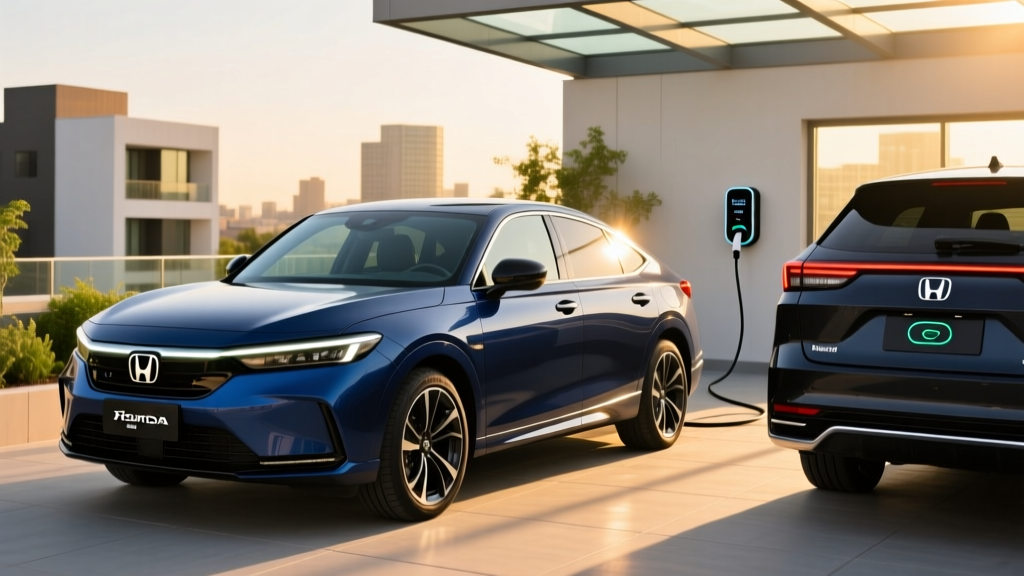
The 2024 Honda Prologue Touring represents a deliberate strategy: rather than reinvent the electric SUV from scratch, Honda partnered with General Motors to build on the Ultium platform shared with the Chevrolet Blazer EV and Cadillac Lyriq. The result is a midsize two-row crossover that prioritizes comfort, straightforward ergonomics, and Honda's reputation for reliability over headline-grabbing performance or cutting-edge software. For the Touring trim specifically — the mid-tier option with all-wheel drive — you get a well-equipped daily driver with 281 miles of EPA-estimated range, but one that trades charging speed and efficiency against sharper competitors like the Hyundai Ioniq 5 and Tesla Model Y.
After spending time with the Prologue Touring across mixed driving conditions, the takeaway is clear: this EV makes sense for Honda loyalists transitioning to electric, families who value ride comfort over sportiness, and buyers who want a no-nonsense interface. It falls short on DC fast-charging speed, highway efficiency, and software refinement — areas where the EV segment has moved quickly. Let's break down the exact numbers that matter.
Spec Sheet: 2024 Honda Prologue Touring AWD at a Glance
| Specification | 2024 Honda Prologue Touring AWD |
|---|---|
| EPA Range | 281 miles |
| Battery (usable) | 85 kWh, NMC (nickel manganese cobalt) |
| Drivetrain | Dual-motor AWD |
| Horsepower / Torque | 288 hp / 325 lb-ft |
| 0-60 mph | ~5.8 seconds |
| Max DC Fast Charge | 150 kW (peak) |
| 10-80% DC Charge Time | ~32 minutes (estimated) |
| Level 2 Home Charging | 11.5 kW (~30 mi/hr) |
| EPA Efficiency | 95 MPGe combined (35 kWh/100 mi) |
| Cargo (rear seats up / folded) | 25.2 cu ft / 57.7 cu ft |
| Rear Legroom | 38.6 inches |
| Battery Warranty | 8 years / 100,000 miles |
| Base MSRP (Touring AWD) | $51,900 (incl. destination) |
| Federal Tax Credit (§30D) | Up to $7,500 (eligibility varies) |
Range & Efficiency: 281 Miles on Paper, Less on the Highway
EPA estimate: 281 miles. In real-world highway driving at 70-75 mph, expect approximately 230-250 miles before needing to charge. In cold weather (below 32°F), that figure can drop to 190-210 miles. City and suburban driving with regenerative braking returns results closer to the EPA sticker, around 265-280 miles.
The Prologue Touring's 85 kWh NMC battery pack sits within GM's Ultium platform architecture. Honda quotes 281 miles of EPA-estimated range for the dual-motor AWD Touring trim, while the single-motor FWD EX and Touring trims achieve 296 miles. For context, the Hyundai Ioniq 5 Long Range AWD delivers 290 miles from a smaller 77.4 kWh pack — a meaningful efficiency gap that shows up at the charger and your electric bill.
The Prologue's combined EPA efficiency rating of 95 MPGe (35 kWh per 100 miles) trails several competitors. The Ioniq 5 AWD achieves 101 MPGe, and the Tesla Model Y Long Range hits 122 MPGe. This matters practically: over 12,000 miles of annual driving, the Prologue consumes roughly 4,200 kWh compared to the Model Y's ~3,480 kWh. At a national average residential electricity rate of $0.16/kWh, that's a difference of about $115 per year — not dramatic, but indicative of the Prologue's less aerodynamic profile and heavier curb weight (~4,900 lbs for the Touring AWD).
According to fueleconomy.gov, the Prologue AWD's highway efficiency drops noticeably — a common trait among boxier crossover designs. On a 250-mile road trip at sustained highway speeds with climate control running, you'll want to plan a charge stop around the 200-mile mark to maintain a comfortable buffer.
Charging Speed: The Prologue's Biggest Practical Limitation
| Charging Level | Power / Rate | Miles Added per Hour | Notes |
|---|---|---|---|
| Level 1 (120V household) | ~1.4 kW | ~4 mi/hr | Emergency/trickle only |
| Level 2 (240V home) | 11.5 kW | ~30 mi/hr | Full charge in ~9.5 hours |
| DC Fast Charge (peak) | 150 kW | Up to ~220 mi/hr (peak) | 10-80% in ~32 minutes |
Home Level 2 charging is where the Prologue performs well. Its 11.5 kW onboard charger is competitive, adding roughly 30 miles of range per hour and enabling a full overnight charge from a standard 48-amp Level 2 home station. Most owners will rarely need public charging if they can install a Level 2 setup at home.
DC fast charging is where this EV falls behind the current segment standard. The Prologue's peak rate of 150 kW is modest by 2024-2026 expectations. The Hyundai Ioniq 5 and Kia EV6, built on 800-volt architectures, peak at 230-240 kW and complete a 10-80% charge in roughly 18 minutes. The Tesla Model Y peaks around 250 kW. Honda estimates the Prologue's 10-80% session takes approximately 32 minutes under optimal battery temperature conditions.
That 14-minute gap matters on road trips. More importantly, the Prologue's charge curve tapers noticeably above 80% State of Charge (SoC), as is typical with NMC chemistry. Charging from 80-100% on DC can add another 20+ minutes, so plan your stops to stay in the 10-80% sweet spot. The Prologue supports battery preconditioning — warming the pack before arriving at a charger — which helps achieve peak rates in cooler weather, but you must use the built-in navigation routing to activate it.
Honda includes two years of complimentary charging credits through a partnership with Electrify America and EVgo networks (terms vary by model year and region). The Prologue uses the CCS1 connector natively, with NACS adapter compatibility expected as Honda transitions to the Tesla-standard plug in subsequent model years.
Performance & Driving Impressions: Comfortable, Not Sporty
The dual-motor AWD Touring produces 288 horsepower and 325 lb-ft of torque, delivering a 0-60 mph time of approximately 5.8 seconds. That's adequate for highway merging and confident passing, but it trails the Kia EV6 GT-Line AWD (5.1 seconds) and Tesla Model Y Long Range (4.8 seconds). The Prologue was tuned for comfort, not corner-carving — the ride is well-damped over broken pavement, and cabin noise isolation is strong at highway speeds.
Honda's regenerative braking system offers adjustable levels via steering-wheel paddles, allowing everything from a coasting feel to near one-pedal driving. The highest regen setting doesn't bring the car to a complete stop, so you'll still use the friction brakes at intersections. Steering is light and numb by enthusiast standards, but predictable and easy for daily commuting.
The Touring trim comes standard with 20-inch wheels wrapped in all-season tires. The larger wheels do slightly reduce range versus the 19-inch wheels on the EX trim, and they transmit more road imperfections into the cabin. If comfort is your priority, the EX with smaller wheels is worth considering.
Interior, Cargo & Technology
The Prologue's interior follows Honda's recent design language: physical buttons for climate and volume, a 11.3-inch touchscreen running a Google Built-in infotainment system, and a 11-inch digital instrument cluster. The Google integration means native Google Maps navigation, Google Assistant voice commands, and Play Store app availability — a meaningful upgrade over Honda's older infotainment systems.
Passenger space is generous for a midsize crossover. Rear legroom measures 38.6 inches, and the rear seatbacks recline for long-trip comfort. Cargo volume behind the second row is 25.2 cubic feet, expanding to 57.7 cubic feet with the seats folded. There is no front trunk (frunk) — the Ultium platform packaging in this application does not provide one, which is a missed opportunity for additional storage.
The Honda Sensing suite comes standard and includes adaptive cruise control with low-speed follow, lane-keeping assist, blind-spot monitoring, and rear cross-traffic alert. This is an SAE Level 2 driver-assistance system, meaning the driver must remain fully engaged with hands on the wheel and eyes on the road at all times. It is not a self-driving system. The lane-centering is competent on well-marked highways but can hunt in faded lanes or construction zones — typical for this class of ADAS.
Notable tech drawbacks: the Prologue lacks a true one-pedal driving mode, the phone-as-key feature has been inconsistent for some owners, and over-the-air update cadence has been slower than Tesla or Rivian. Wireless Apple CarPlay and Android Auto are standard on the Touring trim.
Pricing, Trims & Federal Tax Credit Eligibility
| Trim | Drivetrain | EPA Range | MSRP (incl. destination) |
|---|---|---|---|
| EX | FWD | 296 mi | $47,400 |
| EX | AWD | 281 mi | $50,400 |
| Touring | FWD | 296 mi | $48,900 |
| Touring | AWD | 281 mi | $51,900 |
| Elite | AWD | 273 mi | $58,550 |
The 2024 Honda Prologue Touring AWD starts at $51,900 including destination. The Touring trim adds leather-trimmed seats, a 12-speaker Bose audio system, a panoramic moonroof, a hands-free power tailgate, and a surround-view camera over the EX. Our as-tested Touring AWD with no additional packages landed at approximately $52,500.
Federal Tax Credit (§30D): The Prologue has been eligible for up to $7,500 under the IRS §30D clean vehicle credit, subject to several conditions that change periodically. Per IRS guidelines, key requirements include:
- MSRP cap: SUVs must have an MSRP at or below $80,000 (Prologue qualifies on all trims)
- Buyer income cap: Modified AGI must not exceed $150,000 (single), $225,000 (head of household), or $300,000 (joint)
- Battery sourcing: Critical minerals and battery component requirements phase in annually and affect the credit amount — the Prologue's GM-sourced Ultium battery has met partial to full credit requirements depending on the production batch and model year
- Point-of-sale transfer: As of 2024, eligible buyers can transfer the credit to the dealer for an immediate price reduction at purchase
Always verify current eligibility with your tax professional and the IRS before purchasing, as battery-sourcing rules tighten annually and can reduce the credit from $7,500 to $3,750 or zero for specific vehicles produced in certain windows.
Warranty & Ownership Costs
Honda covers the Prologue's battery and electric powertrain components for 8 years or 100,000 miles, whichever comes first. This warranty guarantees the battery will retain a minimum capacity (typically 70% of original, per industry standard) during the coverage period. The limited vehicle warranty is 3 years / 36,000 miles, which is average for the segment.
Long-term NMC battery degradation data for the Ultium platform is still accumulating. Based on industry averages for liquid-cooled NMC packs, expect approximately 8-12% capacity loss over the first 100,000 miles under normal use. Avoiding frequent DC fast charging above 80% SoC and minimizing deep discharges below 10% will help preserve State of Health (SoH).
Insurance costs for the Prologue Touring AWD run approximately 10-15% higher than a comparably priced gas-powered Honda Passport, based on national averages. EV insurance premiums reflect higher repair costs and parts pricing. Get quotes before purchasing to budget accurately.
How It Compares: Prologue Touring vs. Key Rivals
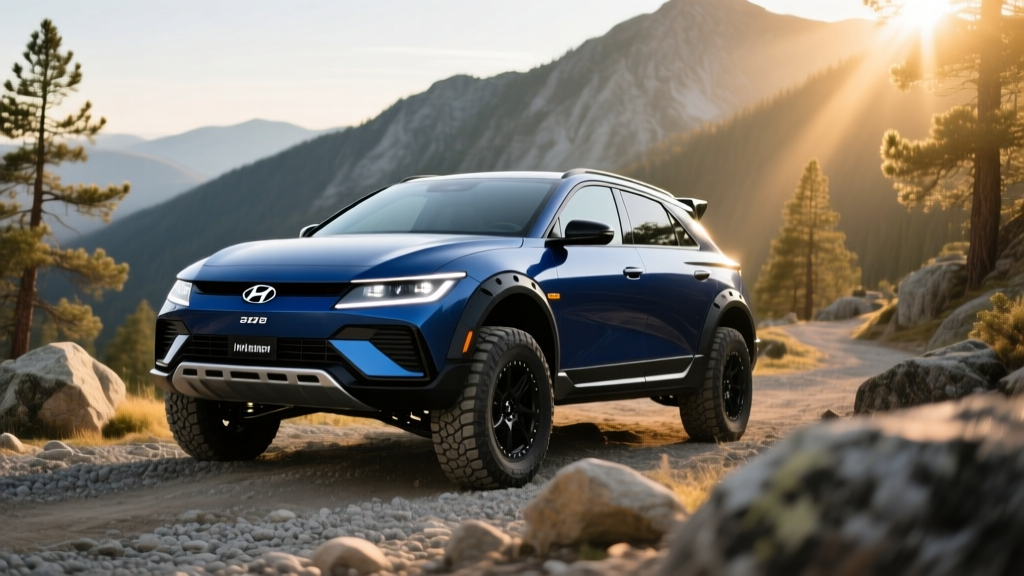
Stacked against the Hyundai Ioniq 5 SEL AWD (~$52,000, 290 mi range, 240 kW peak charging), the Prologue gives up charging speed and efficiency but wins on ride comfort, cabin quietness, and brand familiarity for Honda buyers. Against the Tesla Model Y Long Range (~$48,000 after price adjustments, 310 mi range, 250 kW peak), the Prologue trails on nearly every performance metric but offers a more traditional dealership experience, physical controls, and no reliance on Tesla's ecosystem.
The Chevrolet Blazer EV 2LT AWD shares the Ultium platform and starts lower (~$47,000), but its interior quality and software execution have drawn criticism. The Prologue benefits from Honda's interior fit-and-finish, which is noticeably more polished.
Choose the Prologue Touring if: You prioritize ride comfort and cabin quietness, prefer traditional dealership service, want Google Built-in infotainment, and charge primarily at home.
Look elsewhere if: Road-trip charging speed is critical (Ioniq 5/EV6), you want maximum range per dollar (Model Y), or you need a third row (Kia EV9).
Pros & Cons
- Comfortable, quiet ride quality
- Generous rear-seat legroom (38.6 in)
- Google Built-in infotainment
- Strong Honda Sensing ADAS suite
- 11.5 kW Level 2 onboard charger
- Competitive Touring trim equipment
- 150 kW peak DC charging is slow for the class
- 95 MPGe trails rivals (Ioniq 5: 101, Model Y: 122)
- No front trunk (frunk)
- Regen doesn't enable full one-pedal driving
- Higher starting price than some competitors
- 20-inch wheels hurt ride on rough roads
Frequently Asked Questions
What is the real-world range of the 2024 Honda Prologue Touring AWD?
The EPA estimates 281 miles, but real-world highway driving at 70-75 mph yields approximately 230-250 miles. Cold weather (below freezing) can reduce range to 190-210 miles. City driving with regenerative braking returns closer to the EPA figure, around 265-280 miles.
How fast does the Prologue charge at home and on the road?
At home on a 240V Level 2 charger, the Prologue accepts up to 11.5 kW, adding about 30 miles per hour for a full charge in roughly 9.5 hours. On DC fast chargers, it peaks at 150 kW, completing a 10-80% session in approximately 32 minutes under optimal conditions.
Does the 2024 Honda Prologue qualify for the federal EV tax credit?
The Prologue has been eligible for up to $7,500 under IRS §30D, subject to buyer income limits, MSRP caps (under $80,000 for SUVs), and battery-sourcing requirements that change annually. Verify current eligibility at irs.gov and with a tax professional before purchasing.
Is the Honda Prologue worth buying over the Hyundai Ioniq 5 or Tesla Model Y?
If ride comfort, cabin quietness, and Honda's dealership network matter most to you, the Prologue is a solid choice. If fast-charging speed, efficiency, and range-per-dollar are higher priorities, the Ioniq 5 and Model Y are objectively stronger EVs on those metrics.
What battery does the Prologue use and how long will it last?
The Prologue uses an 85 kWh (usable) NMC lithium-ion battery built on GM's Ultium platform. It's warrantied for 8 years / 100,000 miles. Based on industry NMC data, expect roughly 8-12% capacity loss over 100,000 miles with proper charging habits (avoiding frequent 100% charges and deep discharges).
Does the Prologue have a frunk?
No. Unlike some competitors (Ioniq 5, Ford Mustang Mach-E, Rivian R1S), the Prologue does not offer a front trunk. Cargo space is limited to the 25.2 cu ft rear cargo area (57.7 cu ft with seats folded).