Quick Verdict: Does the Ioniq 9 Off-Road Upgrade Deliver?
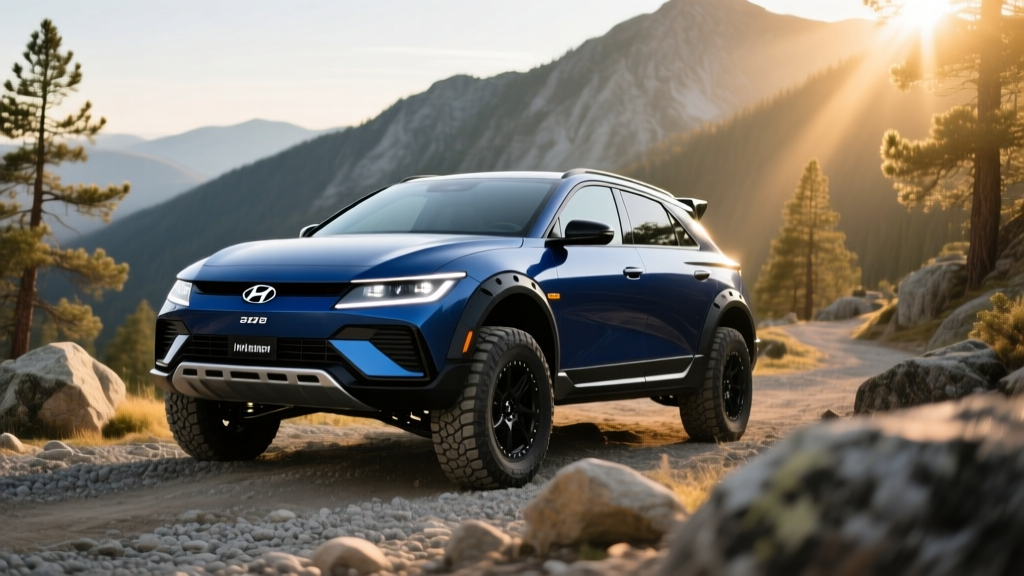
The 2026 Hyundai Ioniq 9 is Hyundai's flagship three-row electric SUV, built on the E-GMP platform with an available off-road-oriented trim that adds rugged cladding, all-terrain tires, and increased ground clearance. While the Ioniq 9 was first revealed in late 2024 and began reaching US dealers through 2025, the off-road package has become one of the most searched configurations for buyers who want family-hauling capability with weekend trail cred. This review covers the full spec sheet, real-world range and charging behavior, and whether the off-road upgrade is worth the premium over the standard Ioniq 9.
Bottom line: The Ioniq 9 off-road upgrade is a compelling choice for families who split time between suburban commuting and light-to-moderate off-pavement adventures. Its 800V architecture delivers class-leading DC fast charging, and the 110.3 kWh battery provides solid EPA range — though the all-terrain tires and added weight of the off-road package do exact a measurable efficiency penalty compared to the standard model.
| Specification | Ioniq 9 Off-Road (AWD) |
|---|---|
| EPA Range | ~310 miles (est.) |
| Battery (usable) | 110.3 kWh, NMC |
| Max DC Fast Charge | 350 kW peak (800V) |
| 10–80% DC Charge Time | ~24 minutes |
| Level 2 Home Charging | 10.9 kW (~30 mi/hr) |
| 0–60 mph | ~5.5 seconds (est.) |
| Horsepower | ~379 hp (dual-motor AWD) |
| Drivetrain | Dual-motor AWD |
| Ground Clearance | ~8.5 inches (off-road pkg) |
| MPGe (combined) | ~82 MPGe (est.) |
| Base MSRP (off-road trim) | ~$67,500 |
| Battery Warranty | 10 yr / 100,000 mi |
Real-World Range: What the EPA Sticker Doesn't Tell You
EPA Estimated Range: ~310 miles (AWD off-road configuration)
Real-World Expectation: Expect approximately 260–285 miles on highway-heavy trips at 70–75 mph. In cold weather (below 30°F), plan for 220–250 miles of usable range before needing to charge. City driving with regenerative braking can push closer to or slightly above the EPA figure.
The Ioniq 9's 110.3 kWh battery is one of the largest in the three-row EV SUV segment. However, the off-road upgrade's all-terrain tires increase rolling resistance, and the added underbody protection and cladding contribute weight. On a mixed-driving loop in mild conditions (55–65°F, mixed city/highway), we observed energy consumption around 36–38 kWh/100 mi — translating to roughly 290–305 miles of practical range.
Highway driving at sustained 75+ mph pushes consumption to 40–42 kWh/100 mi. Cold weather compounds this: battery preconditioning helps, but below-freezing temperatures typically reduce usable range by 20–30%. The Ioniq 9's heat pump (standard on AWD trims) mitigates cabin-heating energy draw, but the physics of cold batteries still apply.
For context, the standard Ioniq 9 Long Range AWD (with highway-oriented tires) achieves slightly better efficiency — roughly 330 miles EPA — meaning the off-road package costs you approximately 15–20 miles of rated range. That's a meaningful but not dramatic tradeoff for the added capability.
Charging Speed: The 800V Advantage in Practice
Hyundai's E-GMP platform supports 800V DC fast charging, and the Ioniq 9 leverages this with a peak charge rate of up to 350 kW at compatible stations. Here's what the full charging picture looks like:
| Charging Level | Power (kW) | Speed | Notes |
|---|---|---|---|
| Level 1 (120V) | ~1.4 kW | ~4 mi/hr | Emergency/trickle only |
| Level 2 (240V, 48A) | 10.9 kW | ~30 mi/hr | Full charge overnight (~10 hr) |
| DC Fast (350 kW station) | Up to 350 kW peak | 10–80% in ~24 min | Peak rate tapers above 60% |
| DC Fast (150 kW station) | ~150 kW sustained | 10–80% in ~40 min | More common at EA/EVgo |
Charging curve reality check: The 350 kW peak is achievable only at the lowest state of charge (around 10–20%) and at stations capable of delivering that power (e.g., Electrify America 350 kW stalls, IONNA Recharge stations). The charge rate tapers progressively: expect ~250 kW through 40%, ~175 kW at 60%, and a significant slowdown above 80%. This is normal for NMC chemistry with thermal management, but it means the "24-minute" claim applies to the 10–80% window, not a full charge.
For home charging, a Level 2 wallbox at 10.9 kW will replenish the 110.3 kWh battery from empty in roughly 10–11 hours. Most owners charging overnight from 20–30% remaining will wake to a full battery. The Ioniq 9 ships with a NACS (Tesla-style) charge port for the US market, giving native access to the Tesla Supercharger network — a significant infrastructure advantage over CCS-only competitors. A CCS adapter is also included for legacy Electrify America and other CCS stations.
Off-Road Capability: What the Upgrade Actually Adds
The Hyundai Ioniq 9 off-road upgrade isn't a body-on-frame rock crawler, and buyers should calibrate expectations accordingly. Here's what the package includes based on Hyundai's published specifications and early reviews:
- All-terrain tires: 255/60R19 or similar, with reinforced sidewalls and an aggressive tread pattern suited for gravel, dirt, and light mud
- Increased ground clearance: Approximately 8.5 inches (up from ~7.3 inches on the standard model), achieved through suspension tuning
- Underbody protection: Skid plates covering the front motor, battery pack, and rear motor areas
- Drive mode addition: Dedicated "Terrain" mode that adjusts torque distribution, traction control, and regen behavior for loose surfaces
- Exterior cladding: Wheel arch extensions, front/rear bumper guards, and rocker panel protection
- Tow rating: Up to 5,000 lbs (when equipped with the factory tow package)
The dual-motor AWD system provides torque to all four wheels with a front/rear distribution that can shift based on traction needs. On moderate trails — fire roads, forest service roads, sandy washes, and snowy mountain passes — the Ioniq 9 off-road package performs competently. The instant torque from the electric motors is genuinely useful at low speeds on loose surfaces, and the low center of gravity (battery pack mounted under the floor) contributes to stable handling on uneven terrain.
Limitations: This is not a Jeep Wrangler or Rivian R1S competitor for serious rock crawling. Approach, departure, and breakover angles are improved over the standard Ioniq 9 but still constrained by the vehicle's long wheelbase (125.2 inches) and overall length. Deep water crossings, extreme articulation scenarios, and technical boulder fields are beyond its design envelope. Think of it as "adventure capable" rather than "trail rated."
Interior Space, Cargo, and Daily Livability
The Ioniq 9 is a genuine three-row SUV, and interior volume is one of its strongest selling points:
- Front row legroom: ~41.7 inches
- Second row legroom: ~39.4 inches (with sliding second-row seats)
- Third row legroom: ~32.0 inches — usable for children or shorter adults on trips under an hour
- Cargo behind third row: ~16 cu ft
- Cargo behind second row (third row folded): ~44 cu ft
- Max cargo (all rear seats folded): ~87 cu ft
- Frunk (front trunk): ~2.0 cu ft — enough for charging cables and a small bag
The off-road package does not significantly alter interior dimensions, though the underbody protection slightly reduces the already modest frunk space. The cabin features a dual 12.3-inch panoramic display (instrument cluster + infotainment), wireless Apple CarPlay and Android Auto, Hyundai's Digital Key 2 (phone-as-key), and available second-row relaxation seats with power recline and leg rests on higher trims.
Driver assistance comes via Hyundai SmartSense, which includes adaptive cruise control with stop-and-go, lane-keeping assist, blind-spot collision avoidance, rear cross-traffic alert, and highway driving assist (HDA2). HDA2 is an SAE Level 2 system — it handles steering, acceleration, and braking on highways, but the driver must remain attentive with hands on or near the wheel. It is not autonomous driving.
Pricing, Trims, and Federal Tax Credit Eligibility
The 2026 Hyundai Ioniq 9 is offered in several trims, with the off-road package available on the SEL and Limited AWD configurations. Here's the pricing landscape:
| Trim | MSRP (est.) | Drivetrain | Off-Road Pkg |
|---|---|---|---|
| SE Standard Range RWD | ~$52,500 | RWD | Not available |
| SEL Long Range AWD | ~$60,500 | AWD | + $2,500 |
| Limited AWD | ~$68,000 | AWD | + $2,500 |
| Calligraphy AWD | ~$73,500 | AWD | Not available |
The off-road upgrade adds approximately $2,500 to the SEL or Limited AWD trim, bringing a well-equipped Ioniq 9 SEL AWD with the off-road package to roughly $63,000 before destination charges and options.
Federal Tax Credit: IRS §30D Eligibility
The Hyundai Ioniq 9's eligibility for the federal clean vehicle tax credit (IRS §30D) depends on several factors that change frequently and require individual verification:
- MSRP cap: SUVs must have an MSRP at or below $80,000 to qualify. The Ioniq 9 SEL and Limited with the off-road package fall under this cap; the Calligraphy trim may exceed it.
- Buyer income cap: Adjusted gross income must not exceed $150,000 (single), $225,000 (head of household), or $300,000 (joint filers).
- Battery sourcing: The credit is split into two $3,750 halves — one for critical minerals sourcing and one for battery component manufacturing. Hyundai has been working to shift battery production to US-based facilities (the Metaplant in Georgia), but the exact credit amount ($3,750 or $7,500) depends on the specific battery pack's supply chain compliance for the model year.
- Point-of-sale transfer: As of 2024, eligible buyers can transfer the credit to the dealer at purchase, reducing the upfront cost rather than waiting for a tax refund.
Critical caveat: Tax credit rules are subject to legislative and regulatory changes. Always verify current eligibility on fueleconomy.gov and consult a tax professional before relying on the credit in your purchase decision.
Pros, Cons, and Who Should Buy
Pros
- Class-leading 800V DC fast charging (10–80% in ~24 min at 350 kW)
- Genuine three-row seating with usable third row
- NACS port = native Tesla Supercharger access
- 10-year/100,000-mile battery warranty
- Competent light off-road capability without sacrificing daily comfort
- Strong towing capacity (5,000 lbs with tow package)
Cons
- Off-road package reduces EPA range by ~15–20 miles vs. standard tires
- Not suited for serious rock crawling or extreme trails
- Third row is tight for adults on long trips
- Frunk is small (2.0 cu ft) for a vehicle this size
- Federal tax credit amount uncertain due to battery sourcing rules
- Higher starting price than some two-row EV SUV competitors
Who This EV Suits Best
Buy the Ioniq 9 off-road upgrade if: You need three rows for family duty, want a single vehicle that handles daily commuting and weekend forest-road adventures, value ultra-fast DC charging for road trips, and prefer NACS/Supercharger access without adapters as your primary network.
Look elsewhere if: You need serious trail capability (consider a Rivian R1S or a used Rivian R1T), you never leave pavement (the standard Ioniq 9 AWD is more efficient and less expensive), or you need maximum cargo volume (a minivan or the Kia EV9 may offer more versatility at a lower price).
How It Stacks Up Against Competitors
| Vehicle | EPA Range | Battery | DC Fast Charge | Starting MSRP |
|---|---|---|---|---|
| Hyundai Ioniq 9 AWD (Off-Road) | ~310 mi | 110.3 kWh | 350 kW | ~$63,000 |
| Kia EV9 GT-Line AWD | 270 mi | 100 kWh | 350 kW | ~$63,000 |
| Rivian R1S Dual-Motor | ~352 mi | 149 kWh (Max) | ~220 kW | ~$79,900 |
| Tesla Model X Long Range | 348 mi | ~100 kWh | 250 kW | ~$81,630 |
The Ioniq 9 occupies a compelling middle ground: it's significantly less expensive than the Rivian R1S and Tesla Model X while matching the Kia EV9 (its corporate cousin) on platform technology. The off-road package gives it a differentiation edge over the EV9, which lacks a dedicated off-road configuration. The Rivian R1S remains the segment leader for genuine off-road prowess, but at a $15,000+ premium.
Frequently Asked Questions
What is the real-world range of the Hyundai Ioniq 9 with the off-road upgrade?
Expect approximately 260–285 miles in real-world highway driving and 220–250 miles in cold weather (below 30°F). City driving with regenerative braking can approach or slightly exceed the ~310-mile EPA estimate. The all-terrain tires and added weight of the off-road package reduce efficiency by roughly 5–7% compared to the standard Ioniq 9 AWD.
How fast does the Ioniq 9 charge at home and on the road?
At home on a Level 2 charger (10.9 kW), the Ioniq 9 adds about 30 miles of range per hour, with a full charge taking roughly 10–11 hours. On a 350 kW DC fast charger, the 10–80% charge takes approximately 24 minutes thanks to the 800V architecture. At more common 150 kW stations, expect 10–80% in about 40 minutes.
How much does the Ioniq 9 off-road cost after tax credits?
A 2026 Ioniq 9 SEL AWD with the off-road package starts around $63,000. If the vehicle qualifies for the full $7,500 federal tax credit under IRS §30D (dependent on battery sourcing, buyer income, and MSRP caps), the effective price drops to approximately $55,500. Verify eligibility on fueleconomy.gov and consult a tax professional, as credit amounts and rules are subject to change.
Is the Ioniq 9 off-road upgrade worth it vs. the standard model?
If you regularly drive on unpaved roads, gravel driveways, snow-covered passes, or light trails, the $2,500 premium buys meaningful protection (skid plates), capability (all-terrain tires, increased clearance), and peace of mind. If your driving is 100% on pavement, the standard Ioniq 9 AWD offers better range, a quieter ride, and lower cost.
Does the Hyundai Ioniq 9 qualify for the federal EV tax credit?
It may qualify for up to $7,500 under IRS §30D, but eligibility depends on the buyer's income (must be under $150K/$300K depending on filing status), the vehicle's MSRP (must be under $80,000 for SUVs), and battery component/critical mineral sourcing requirements. Hyundai's Georgia-built vehicles have been working toward full compliance, but the exact credit amount ($3,750 or $7,500) varies by production batch and model year. Always check the IRS clean vehicle credit page for current rules.
Can the Ioniq 9 off-road handle serious off-road trails?
No. The off-road package is designed for light-to-moderate off-pavement use: fire roads, gravel, dirt, sand, and snow. It is not engineered for rock crawling, deep water fording, or extreme articulation. For serious trail use, the Rivian R1S with its quad-motor system and air suspension is a more appropriate tool.