If you've seen an Aptera, a Lectra, or an Arcimoto FUV on the road and wondered whether an electric three-wheel car is a viable daily driver, here's the direct answer: electric three-wheel cars in 2026 are legitimate low-speed, short-range commuters that can save thousands on fuel and maintenance — but they are not highway-capable replacements for a full-size EV. Most models deliver 40–100 miles of EPA-estimated range, top speeds of 60–110 mph, and base prices between $3,995 and $45,000. They qualify as autocycles or NEVs (Neighborhood Electric Vehicles) under federal and state regulations, which means lighter licensing requirements in some states but also significant insurance and safety limitations. This guide breaks down the real numbers, the ownership math, and the decision framework to help you decide if one fits your garage.
What Exactly Is an Electric Three-Wheel Car?
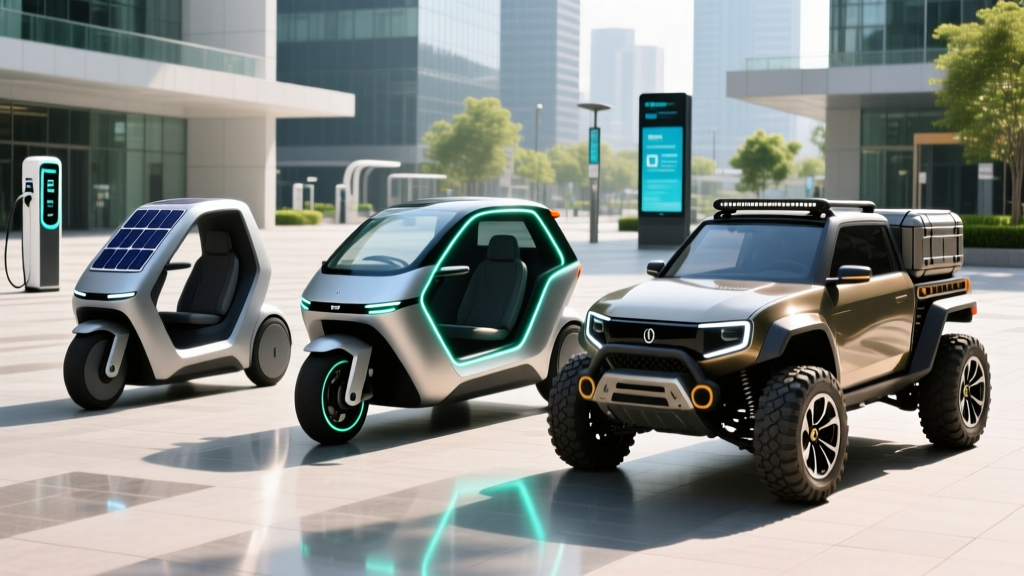
Electric three-wheel cars — sometimes called electric trikes, autocycles, or enclosed three-wheelers — are battery-electric vehicles with three wheels arranged either in a "tadpole" layout (two front, one rear) or a "delta" layout (one front, two rear). The U.S. Department of Transportation classifies most of them under FMVSS as either motorcycles/autocycles or Low-Speed Vehicles (LSVs/NEVs), depending on their top speed and weight.
This classification matters enormously for buyers:
- Autocycles (top speed > 25 mph, typically 60–110+ mph): Require a standard driver's license or motorcycle endorsement depending on state. Can use highways where permitted. Examples: Aptera (announced), Arcimoto FUV (discontinued 2024), Polaris Slingshot (ICE, not EV).
- NEVs / LSVs (top speed 20–25 mph): Restricted to roads with speed limits ≤ 35 mph. Require a standard license in most states. Examples: various imported micro-NEVs, neighborhood runabouts.
The 2026 Electric Three-Wheel Car Market: Who's Selling What
The three-wheel EV market in 2026 is smaller and more volatile than the four-wheel EV segment. Several startups have entered, stalled, or exited. Here's what's actually available or in active production as of early 2026:
| Model | Status | EPA Range | Battery (kWh) | Top Speed | Base MSRP |
|---|---|---|---|---|---|
| Aptera Launch Edition | Pre-order / Limited deliveries | 250–1,000 mi* | 25–100 kWh | 110 mph | $25,900–$46,900 |
| Lectra eCruiser | In production | ~60 mi | ~7 kWh (LFP) | 55 mph | $9,995 |
| NIU NQi GT (3-wheel variant) | Limited US | ~45 mi | 3.5 kWh | 45 mph | $3,995 |
| Vanderhall Brawley (announced) | Announced / Not shipping | ~200 mi (est.) | ~40 kWh (est.) | 100+ mph | $34,995 (est.) |
* Aptera range varies by trim/battery pack. 1,000-mile figure applies to the top-tier 100 kWh pack with solar augmentation; the 250-mile base pack is the entry model. Specs are preliminary until EPA certification is published. Source: Aptera Motors.
Important caveat: The Arcimoto FUV, once the most recognizable three-wheel EV, ceased production in 2024 after Arcimoto's financial difficulties. Used FUVs appear on the secondary market (~$12,000–$18,000) but carry no active warranty support. Buyer beware.
Range, Charging, and Efficiency: The Real Numbers
Electric three-wheel cars benefit from low curb weight (typically 1,200–2,200 lbs) and excellent aerodynamics in the case of enclosed models like the Aptera. This translates to efficiency figures that dwarf four-wheel EVs.
Charging Speeds
Three-wheel EVs typically use smaller batteries, so charging is measured in hours, not minutes:
| Level | Power (kW) | Miles Added/Hour | Full Charge Time (60 kWh pack) |
|---|---|---|---|
| Level 1 (120V household) | 1.2–1.4 kW | 6–10 mi/hr | 43–50 hours |
| Level 2 (240V home) | 6.6–7.7 kW | 35–50 mi/hr | 8–9 hours |
| DC Fast Charge (where equipped) | 30–50 kW | N/A (minutes-based) | 10–80% in ~35–50 min |
Most three-wheel EVs use the standard J1772 connector for Level 1 and Level 2 AC charging. DC fast charging availability varies: the Aptera is expected to support CCS1 at up to ~50 kW, while smaller NEVs like the Lectra typically ship with Level 1/2 only. For a 7 kWh battery (Lectra), a standard 120V outlet adds a full charge overnight — no special equipment needed.
Efficiency Comparison
The efficiency advantage of three-wheel designs is substantial:
- Aptera (estimated): ~120–150 MPGe combined (pending EPA certification)
- Tesla Model 3 RWD: 132 MPGe combined (fueleconomy.gov)
- Lectra eCruiser: ~100–110 MPGe equivalent
The Aptera's ultra-low drag coefficient (claimed Cd of 0.13) and minimal weight give it a theoretical edge even over the most efficient four-wheel EVs, but real-world MPGe depends heavily on speed, climate, and terrain.
Electric Three-Wheel Car vs. Gas Car vs. Hybrid: Cost Comparison
The financial case for a three-wheel EV depends entirely on your driving pattern. Here's a five-year total cost of ownership (TCO) comparison for a 12,000-mile/year commuter:
| Cost Factor | Aptera (250 mi, $25,900) | Honda Civic Gas ($26,000) | Toyota Prius Hybrid ($29,000) |
|---|---|---|---|
| Purchase price | $25,900 | $26,000 | $29,000 |
| Federal tax credit (§30D) | TBD — likely ineligible* | $0 | $0 |
| Fuel/energy (5 years) | $2,400** | $10,500 | $5,250 |
| Maintenance (5 years) | $500 | $3,500 | $3,000 |
| Insurance (5 years est.) | $7,500*** | $6,000 | $6,000 |
| Depreciation (est.) | $12,000**** | $8,500 | $8,000 |
| 5-Year Total | ~$48,300 | ~$54,500 | ~$51,250 |
* The §30D federal EV tax credit requires vehicles to meet battery sourcing, critical minerals, and MSRP caps per IRS guidelines. Three-wheel autocycles may not qualify if classified as motorcycles rather than four-wheeled vehicles under IRS code. Consult a tax professional.
** Assumes $0.14/kWh national average home charging, 3.5 mi/kWh efficiency.
*** Three-wheel autocycle insurance is typically 20–40% higher than comparable four-wheel vehicles due to limited actuarial data and specialty classification.
**** Depreciation for niche/low-volume vehicles is historically steeper than mass-market models.
The takeaway: Energy and maintenance savings are real — the Aptera saves roughly $8,100 in fuel and $3,000 in maintenance over five years versus the Civic. But those savings are partially offset by higher insurance premiums and potentially steeper depreciation on a niche vehicle. The Prius hybrid splits the difference and remains the lowest-risk option for cost-conscious buyers who need highway capability.
Federal Tax Credits, Incentives, and the Three-Wheel Loophole
Here's where three-wheel EV buyers face a frustrating reality: the §30D Clean Vehicle Credit was written primarily for four-wheeled passenger vehicles. The IRS defines a qualifying clean vehicle under IRC 30D as having four wheels and a gross vehicle weight rating (GVWR) under 14,000 lbs. Three-wheel autocycles technically fall outside this definition.
Some state-level incentives (California's CVRP, Colorado's EV tax credit, New York's Drive Clean Rebate) may cover three-wheel EVs, but eligibility varies by jurisdiction and program year. Always verify with your state's energy or DMV office before purchasing.
Real-World Ownership: What First-Time Buyers Need to Know
Buying a three-wheel EV is not like walking into a Toyota dealership. Here are the practical realities that no spec sheet will tell you:
Home Charging Access Is (Usually) Simple
The good news: most three-wheel EVs have small enough batteries that Level 1 (standard 120V outlet) charging is genuinely viable for daily use. A Lectra eCruiser with a 7 kWh pack charges fully in 5–6 hours on a regular household outlet. No $800–$2,000 Level 2 installation required unless you want faster turnaround. The Aptera's larger packs (25–100 kWh) will benefit from a Level 2 home charger, which typically costs $1,200–$2,500 installed depending on your electrical panel capacity.
Insurance Is More Expensive and Harder to Find
Three-wheel autocycles are classified as motorcycles in many states, meaning you may need a motorcycle endorsement (or a special autocycle endorsement where available). Insurance companies have limited actuarial data on these vehicles, which translates to premiums 20–40% higher than equivalent four-wheel cars. Not all insurers will write policies for three-wheel EVs — Progressive and GEICO are among the more accommodating carriers, but quotes vary wildly by state.
Safety: The Honest Assessment
Three-wheel vehicles have inherent stability trade-offs compared to four-wheel designs. Tadpole configurations (two wheels front) are significantly more stable under braking and cornering than delta layouts. The Aptera uses a tadpole design with a reinforced composite safety cell, but it has not been crash-tested by NHTSA or IIHS as of early 2026. No three-wheel EV currently on the US market carries an IIHS Top Safety Pick rating. For context, the NHTSA's 5-star safety ratings apply to standard passenger vehicles — autocycles and NEVs are generally exempt from the same crash-test requirements.
Climate and Terrain Limitations
Three-wheel EVs with small batteries and no active thermal management (most NEVs) suffer significant range loss in cold weather — expect 25–40% reduction below freezing. The Aptera claims a heat pump for cabin heating, which would mitigate some cold-weather loss, but independent cold-weather testing data is not yet available. If your commute involves sustained highway speeds above 65 mph, steep grades, or harsh winters, a three-wheel EV's advantages diminish considerably.
Common Misconceptions About Electric Three-Wheel Cars
| Myth | Fact |
|---|---|
| "They qualify for the $7,500 federal tax credit." | The §30D credit requires four wheels. Most three-wheel EVs are ineligible. Always verify with the IRS or a tax professional before purchasing. |
| "A 1,000-mile range means I'll never need to charge." | That figure (Aptera top trim) requires optimal conditions, solar contribution, and a $46,900 battery pack. Real-world highway range at 70 mph will be significantly lower. |
| "Three-wheelers tip over easily." | Modern tadpole-layout autocycles with low centers of gravity are far more stable than historical three-wheel designs. However, they still have different handling dynamics than four-wheel cars, especially in emergency maneuvers. |
| "They're just as safe as regular cars." | No three-wheel EV has been crash-tested by NHTSA or IIHS. They lack the mass, crumple zones, and safety infrastructure of mainstream vehicles. Treat them as motorcycle-adjacent in terms of risk. |
| "I can drive them anywhere." | NEVs (≤25 mph) are legally restricted to low-speed roads. Autocycles can use highways in most states, but some states prohibit them from limited-access freeways. Check your state's DMV rules. |
Decision Framework: Should You Buy an Electric Three-Wheel Car?
- Your daily commute is under 50 miles round-trip on roads with speed limits ≤ 55 mph
- You have access to home charging (even a standard 120V outlet works for smaller packs)
- You live in a mild climate (minimal sub-freezing driving)
- You want to minimize fuel and maintenance costs and accept higher insurance/depreciation risk
- You're comfortable with motorcycle-adjacent safety profiles and lack of crash-test data
- You want a second/commuter vehicle, not your only car
- You need highway capability for regular long-distance travel
- You live in a region with harsh winters or extreme heat
- You need to carry more than one passenger regularly
- You want NHTSA/IIHS crash-test ratings and proven safety records
- You want to qualify for the $7,500 federal tax credit (requires four wheels under §30D)
- This will be your only vehicle
- You need readily available service centers and dealer support
Frequently Asked Questions
Do I need a motorcycle license to drive an electric three-wheel car?
It depends on your state and the vehicle classification. Most states require a standard driver's license for autocycles (three-wheeled vehicles with a steering wheel and car-like controls), but some states require a motorcycle endorsement or a special autocycle endorsement. NEVs (top speed ≤ 25 mph) typically require only a standard license. Check your state DMV for specific requirements.
Can I drive an electric three-wheel car on the highway?
Autocycles with top speeds above 55 mph can legally use most highways, though some states restrict them from limited-access interstates. NEVs (top speed ≤ 25 mph) are legally prohibited from roads with speed limits above 35 mph. The Aptera's claimed 110 mph top speed would make it highway-capable in all states once it ships.
How long do the batteries last in electric three-wheel cars?
Battery longevity depends on chemistry and usage. LFP (lithium iron phosphate) batteries, used in some smaller three-wheel EVs, typically retain 80% capacity after 2,000–3,000 charge cycles — roughly 100,000–150,000 miles. NMC batteries degrade faster but offer more energy density. Most manufacturers offer 3–5 year battery warranties, but the niche market means long-term replacement availability is uncertain. Always ask about the battery warranty and replacement cost before purchasing.
Are electric three-wheel cars worth it compared to a used EV?
A used four-wheel EV like a 2022 Chevrolet Bolt EV (available for $15,000–$20,000 on the used market) offers 259 miles of EPA range, NHTSA crash-test ratings, mainstream insurance, dealer service, and potential eligibility for the $4,000 used EV tax credit under §25E. For most buyers, a used four-wheel EV is a lower-risk, more practical choice. Three-wheel EVs make sense primarily for enthusiasts, efficiency maximizers, or those with very specific short-commute needs who value the novelty and ultra-low running costs.
What happens if a three-wheel EV startup goes out of business?
This is a real risk. Arcimoto's 2024 shutdown left FUV owners without warranty support or a parts supply chain. When buying from a low-volume startup, consider: Is there a parts and service network? What's the company's financial health? Can independent mechanics service the vehicle? If the answer to any of these is "no," factor that risk into your decision. Established brands with three-wheel offerings (currently very few) carry less risk.