The Texas EV Incentive Reality Check
If you're searching for a Texas EV tax credit, here's the blunt answer: Texas does not offer a statewide purchase incentive or tax credit for electric vehicles as of 2026. Unlike states such as Colorado (up to $5,000) or California's Clean Fuel Reward program, the Lone Star State leaves EV incentives entirely to the federal government and local utility companies. That doesn't mean buying an EV in Texas is a bad financial move — it just means you need to understand exactly where the savings come from and where they don't.
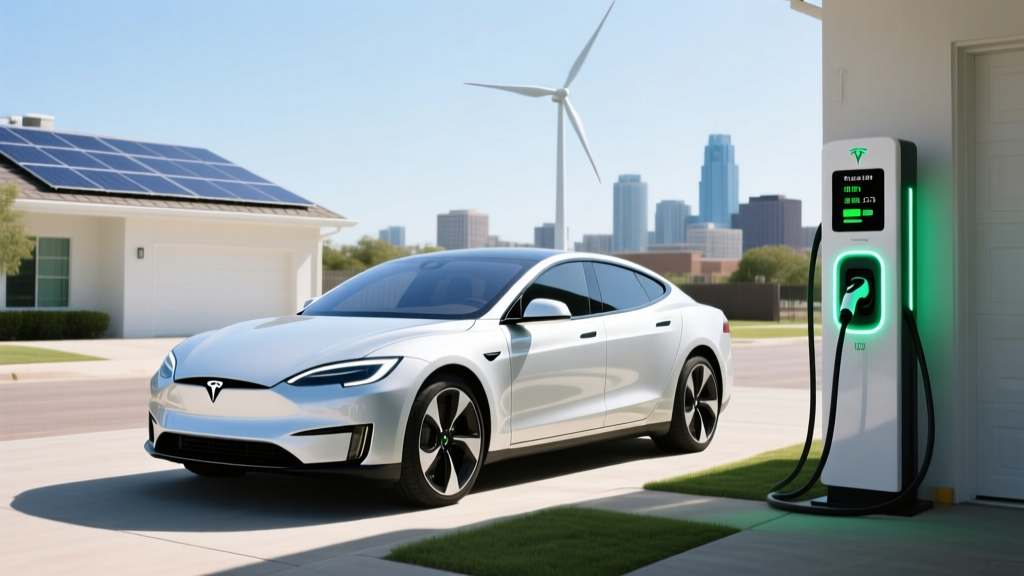
This guide walks through the real numbers: the federal §30D tax credit (up to $7,500, with strict eligibility rules), utility rebates from Texas providers like Oncor and Austin Energy, and a full 5-year total cost of ownership comparison against a gas vehicle. We'll use a popular Texas EV — the 2026 Tesla Model Y Long Range (EPA 320 miles, $44,990 base MSRP) — versus a comparably equipped Toyota RAV4 AWD ($32,675 MSRP, 29 MPG combined) as our benchmark.
Federal §30D Tax Credit: What Texans Actually Qualify For
The IRS §30D Clean Vehicle Credit remains the primary financial incentive for Texas EV buyers in 2026. The credit is worth up to $7,500, split into two halves: $3,750 for meeting critical-mineral sourcing requirements and $3,750 for battery-component sourcing. But "up to" is the operative phrase — eligibility is gated by a web of rules that disqualify many buyers and many vehicles.
2026 §30D Eligibility Checklist
- Income caps (modified AGI): $150,000 single / $225,000 head of household / $300,000 joint filers
- MSRP caps: $55,000 for sedans; $80,000 for SUVs, vans, and pickup trucks
- Battery sourcing: Critical minerals must be sourced from the US or a free-trade-agreement country (partial credit if only one requirement met)
- Final assembly: Vehicle must be assembled in North America
- FEOC restriction: No battery components from a Foreign Entity of Concern (primarily targeting Chinese supply chains)
- Point-of-sale transfer: You can apply the credit at the dealership to reduce your purchase price immediately — no need to wait until tax filing
- Nonrefundable: The credit cannot exceed your total tax liability for the year
As of the 2026 model year, qualifying vehicles for the full $7,500 include the Tesla Model Y, Ford F-150 Lightning, and select GM Ultium-based vehicles. However, several popular models — including many Hyundai and Kia EVs — have seen their credit amounts fluctuate as supply chains shift. Always verify current eligibility on fueleconomy.gov before purchasing, as the list updates frequently.
Texas Utility Rebates and Local Incentives
With no state-level credit, Texas EV buyers rely on utility-company rebates to offset costs. These vary dramatically depending on your provider and municipality:
Notable Texas Utility EV Programs (2026)
- Austin Energy: Up to $1,200 rebate for Level 2 home charger purchase and installation; discounted off-peak charging rates
- Oncor (Dallas/Fort Worth area): Periodic rebates for residential EV charger installation (historically $250–$500); check current availability
- Entergy Texas: Time-of-use rate plans that reduce overnight charging costs by 30–40%
- CenterPoint Energy (Houston area): EV rate pilot programs with off-peak discounts
- Southwestern Electric Power Co. (SWEPCO): Limited charger rebates for residential customers
Note: Utility incentive programs change frequently. Contact your provider directly or check their EV program page for current offerings and funding availability.
Texas also has no state vehicle inspection emissions requirement for EVs (they're exempt from emissions testing), and EVs are exempt from the state's emissions-related inspection in counties that require it. You'll still pay standard registration fees — there is no EV registration discount in Texas, and in fact Texas charges an additional $200 annual EV registration fee to offset lost gas-tax revenue.
5-Year Total Cost of Ownership: EV vs Gas in Texas
Here's where the math gets interesting. We compared a 2026 Tesla Model Y Long Range ($44,990 MSRP, AWD) against a 2026 Toyota RAV4 LE AWD ($32,675 MSRP) over 5 years and 75,000 miles (15,000 miles/year). The Model Y qualifies for the full $7,500 federal credit when purchased by an eligible buyer.
| Category | Tesla Model Y LR | Toyota RAV4 AWD |
|---|---|---|
| Purchase Price (MSRP) | $44,990 | $32,675 |
| Federal Tax Credit (§30D) | −$7,500 | $0 |
| Effective Purchase Price | $37,490 | $32,675 |
| Energy/Fuel (75,000 mi) | $3,375 (home charging) | $8,621 (gas) |
| Maintenance (5 years) | $1,500 | $3,750 |
| Insurance (5 years avg) | $11,250 | $7,500 |
| Depreciation (est.) | $18,745 | $11,436 |
| TX Registration (5 yr, incl. EV fee) | $1,775 | $875 |
| Total 5-Year Cost | $74,135 | $64,857 |
| Cost Per Mile | $0.99 | $0.86 |
The Model Y costs roughly $9,300 more over five years in this scenario, primarily due to higher insurance premiums and steeper depreciation. However, the energy and maintenance savings are substantial — $7,496 combined over five years. Your individual results will vary based on local electricity rates, driving patterns, insurance profile, and whether you qualify for the full tax credit.
Charging vs Gasoline: The Per-Mile Cost Breakdown
Texas has some of the lowest electricity rates in the nation, which is a genuine advantage for EV owners. The state's average residential rate in 2026 is approximately $0.135/kWh, though off-peak rates on time-of-use plans can drop to $0.08–$0.10/kWh.
Cost Per Mile: Model Y vs RAV4
Tesla Model Y Long Range:
- Efficiency: 28 kWh/100 mi (118 MPGe combined, per EPA)
- Home charging cost (avg $0.135/kWh): $0.038/mi
- Home charging cost (off-peak $0.09/kWh): $0.025/mi
- DC fast charging (avg $0.35/kWh): $0.098/mi
Toyota RAV4 AWD:
- Efficiency: 29 MPG combined (EPA)
- Gas cost ($3.25/gal Texas avg regular): $0.112/mi
- Gas cost ($3.75/gal): $0.129/mi
Annual fuel savings (15,000 mi, home charging): $1,110 – $1,365 per year
Home charging is where the savings materialize. If you rely primarily on DC fast charging — at $0.30–$0.45/kWh on networks like Electrify America or Tesla Superchargers — the per-mile cost nearly matches gasoline. Texas's expansive geography and highway-heavy driving patterns mean road-trippers will spend more on Supercharging than city drivers who charge at home overnight.
Maintenance Savings: Where EVs Genuinely Win
EVs have dramatically fewer moving parts than internal combustion vehicles. No engine, no transmission, no exhaust system, no spark plugs, no oil. The maintenance savings are real and measurable.
| Service Item | EV (Model Y) | Gas (RAV4) |
|---|---|---|
| Oil changes | $0 | $450–$600 |
| Brake pads (front) | $0–$200 (regen extends life) | $300–$500 |
| Brake pads (rear) | $0–$200 | $250–$400 |
| Transmission fluid | $0 | $150–$300 |
| Engine air filter | $0 | $100–$150 |
| Cabin air filter | $75–$120 | $75–$120 |
| Tire rotation | $150–$250 | $150–$250 |
| Coolant service | $0–$100 | $100–$200 |
| Wiper blades / misc. | $100–$150 | $100–$150 |
| Total (estimated) | $425–$1,020 | $1,575–$2,570 |
Regenerative braking is the hidden hero here. By using the electric motor to decelerate, regen dramatically reduces brake-pad wear — many EV owners report original brake pads lasting 100,000+ miles. Tesla recommends cabin air filter replacement every 2–3 years and tire rotation every 6,250 miles, but that's essentially it for routine service. One caveat: EVs are heavier and produce more instant torque, which accelerates tire wear. Budget for tire replacement 10–20% sooner than you would on a comparable gas vehicle.
Insurance Costs: The Uncomfortable Truth
EV insurance premiums are typically 15–30% higher than equivalent gas vehicles. For the Tesla Model Y, the national average premium in 2026 is approximately $2,250/year, compared to roughly $1,500/year for a Toyota RAV4 — a difference of about $750 annually, or $3,750 over five years.
The reasons are structural, not arbitrary:
- Higher repair costs: EV battery packs and power electronics are expensive to repair or replace after collision damage
- Specialized labor: Fewer certified EV repair shops mean higher labor rates
- Vehicle price: Higher MSRP translates to higher comprehensive and collision premiums
- Total-loss frequency: Battery damage in moderate collisions can push repair costs past the vehicle's total-loss threshold
Texas-specific factors add to the equation. The state's high rate of uninsured motorists, hail damage exposure, and urban congestion in Houston, Dallas, and Austin all push base rates upward. That said, shopping quotes from EV-friendly insurers (Geico, State Farm, USAA, and Tesla's own insurance program where available) can narrow the gap significantly. Always get insurance quotes before purchasing — the premium difference can add up to $3,000–$5,000 over five years of ownership.
Depreciation and Resale Value Trends
EV depreciation has been volatile. In 2023–2024, Tesla's aggressive price cuts on new vehicles cratered used-EV values — some models lost 40–50% of their value in two years. The market has stabilized somewhat by 2026, but EVs still generally depreciate faster than comparable Toyota or Honda gas vehicles.
Our estimate for the Model Y Long Range: expect approximately 42–50% depreciation over five years / 75,000 miles, depending on battery health, market conditions, and trim. That translates to roughly $18,000–$22,500 in lost value from the effective (post-tax-credit) purchase price. The RAV4 AWD, benefiting from Toyota's historically strong resale value, is estimated at 35–40% depreciation over the same period.
Key factors that influence EV resale value in 2026:
- Battery State of Health (SoH): Buyers check battery degradation; under 90% SoH at 5 years hurts value
- Remaining warranty: Tesla's 8-year/120,000-mile battery and drive-unit warranty provides buyer confidence
- Charging standard: Vehicles with NACS (native Tesla connector) hold value better than CCS-only models now that the industry has standardized on NACS
- Technology obsolescence: Rapid improvements in range and charging speed make older EVs feel dated faster than gas cars
- Price competition: New-EV price cuts directly undercut used-EV values
Who Should Buy an EV in Texas? A Decision Framework
Choose an EV in Texas If:
- You can install a Level 2 home charger (240V, ideally 48A / 11.5 kW) and your electrical panel has capacity
- You qualify for the full $7,500 federal tax credit (income within limits, vehicle meets sourcing rules)
- Your daily driving is under 200 miles, with occasional road trips manageable via Supercharger/DCFC networks
- You drive 12,000+ miles per year (fuel savings scale with mileage)
- Your utility offers off-peak or time-of-use rates for overnight charging
Stick with Gas or Hybrid If:
- You live in an apartment or lack access to reliable home or workplace charging
- Your income exceeds §30D caps, and the vehicle you want doesn't qualify for the credit
- You regularly tow heavy loads or drive 300+ miles daily in rural West Texas
- You plan to keep the vehicle under 3 years (depreciation may outweigh fuel savings)
- Insurance quotes for the EV are more than 35% higher than your current vehicle
Frequently Asked Questions
Does Texas have a state EV tax credit in 2026?
No. Texas does not offer a state-level EV purchase tax credit or rebate. The primary purchase incentive is the federal §30D Clean Vehicle Credit (up to $7,500), and some Texas utility companies offer charger-installation rebates or discounted off-peak electricity rates.
How much does it really cost to own an EV over 5 years in Texas?
For a Tesla Model Y Long Range with the $7,500 federal credit, our analysis estimates approximately $74,000 over 5 years / 75,000 miles — including purchase, energy, maintenance, insurance, depreciation, and registration. That's roughly $9,000–$10,000 more than a comparable Toyota RAV4 AWD, primarily due to higher insurance and depreciation. However, energy and maintenance savings total approximately $7,500 over the same period.
Do I qualify for the federal EV tax credit?
Eligibility depends on your modified adjusted gross income (under $150K single / $300K joint), the vehicle's MSRP (under $55K sedans / $80K SUVs and trucks), and battery-sourcing compliance. The vehicle must also be assembled in North America and free of FEOC battery components. Check fueleconomy.gov for the current qualifying-vehicle list and the IRS §30D page for full rules.
How much do I save on fuel and maintenance with an EV in Texas?
Texas's low electricity rates ($0.135/kWh average) make home charging very economical — approximately $0.038/mile for a Model Y versus $0.112/mile for gas in a RAV4. Over 15,000 miles/year, that's roughly $1,100 in annual fuel savings. Maintenance savings add another $400–$600/year from eliminated oil changes, fewer brake replacements, and no transmission service.
Are EVs more expensive to insure in Texas?
Yes, typically 15–30% more than comparable gas vehicles. A Model Y averages around $2,250/year in Texas versus $1,500 for a RAV4. Higher repair costs, specialized labor, and elevated vehicle prices drive the difference. Get quotes from multiple insurers — Tesla Insurance, Geico, and USAA often offer competitive EV rates.
How well do EVs hold their value compared to gas cars?
EVs generally depreciate faster than top-resale gas vehicles like the RAV4. Expect 42–50% depreciation over 5 years for a Model Y, versus 35–40% for a RAV4. Battery health, charging-standard compatibility (NACS holds an edge), and new-EV pricing shifts all affect resale. The gap may narrow as the used-EV market matures and battery longevity data becomes more established.
Is the $200 Texas EV registration fee a big deal?
It's a real cost — $1,000 over five years — but relatively minor compared to insurance and depreciation. The fee exists to offset lost gas-tax revenue that funds Texas road maintenance. At roughly 1.8 cents per mile driven (at 11,000 miles/year), it's comparable to the gas tax a fuel-efficient vehicle would pay.