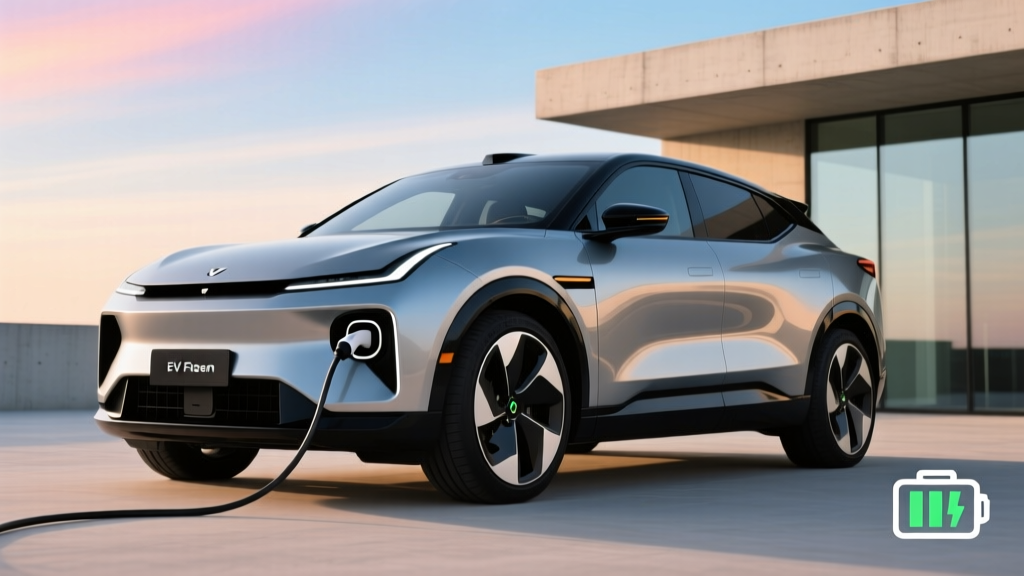
The 2024 Fisker Ocean arrived with ambitious promises: up to 360 miles of EPA-estimated range, a solar-roof gimmick, and a starting price that undercut established rivals. But the story of the Ocean is now inseparable from Fisker Inc.'s June 2024 bankruptcy filing, production halts, and the liquidation of remaining inventory. This review examines the 2024 Fisker Ocean as it exists today — a discontinued EV with genuine engineering strengths, real ownership risks, and a complicated legacy that any prospective buyer (new or used) must understand before signing anything.
Quick Verdict: A Capable EV With a Complicated Future
The 2024 Fisker Ocean is a legitimately competitive electric SUV on paper and in practice. Its range figures are among the best in the midsize EV SUV segment, its ride quality is composed, and Henrik Fisker's design eye delivered a handsome, distinctive vehicle. However, buying one in 2026 means accepting orphan-vehicle risk: no factory warranty support, uncertain parts availability, limited dealer service infrastructure, and software that will never receive another over-the-air update. If you're considering one from the used market or a liquidation sale, the price must reflect these realities — not just the spec sheet.
| Spec | Ocean Sport (FWD) | Ocean Ultra / Extreme (AWD) |
|---|---|---|
| EPA Range | 250 miles | 360 miles (Extreme w/ 20" wheels) |
| Battery (Usable) | ~106 kWh (Hyper Range) | ~106 kWh (Hyper Range, NMC) |
| Battery Chemistry | NMC (Nickel Manganese Cobalt) | NMC |
| Horsepower | 275 hp | 550 hp (Hyper Mode) |
| 0-60 mph | ~6.9 sec | ~3.7 sec |
| Drivetrain | FWD (single motor) | AWD (dual motor) |
| Max DC Fast Charge | ~170 kW (peak) | ~200 kW (peak) |
| 10-80% DC Charge | ~38 min | ~33 min |
| Level 2 Home Charge | 11 kW onboard charger | 11 kW onboard charger |
| MPGe (Combined) | ~85 MPGe | ~91 MPGe (Extreme) |
| Cargo Volume | 32.5 cu ft (rear seats up) / 67.3 cu ft (folded) | Same |
| Original Base MSRP | $38,999 | $61,999 (Ultra) / $68,999 (Extreme) |
Range and Efficiency: Real-World vs. EPA Sticker
EPA Estimated: 360 miles
Real-World Highway (70-75 mph, moderate temps): ~290-310 miles
Real-World Cold Weather (below 32°F, mixed driving): ~240-270 miles
City / Stop-and-Go (regenerative braking advantage): ~330-350 miles
The Fisker Ocean Extreme's 360-mile EPA figure was among the highest of any production EV SUV at launch, rivaling the Tesla Model X Long Range and exceeding the Rivian R1S and Hyundai Ioniq 5. The Sport trim's 250-mile EPA rating (with the same battery but FWD and heavier wheel/tire configurations in some builds) reflects the efficiency penalty of the single-motor calibration and equipment weight distribution.
The Hyper Range battery pack uses a CATL-sourced NMC (nickel manganese cobalt) chemistry with approximately 113 kWh gross / 106 kWh usable capacity. NMC offers higher energy density than LFP, which is how Fisker packaged this much capacity into a midsize crossover footprint — but it also means the pack is more sensitive to sustained high SoC storage and extreme temperatures than an LFP pack would be.
Efficiency in real-world testing hovered around 31-34 kWh/100 mi for the AWD models, which translates to roughly 2.9-3.2 miles per kWh. That's competitive with the Ford Mustang Mach-E Extended Range but trails the more aerodynamically optimized Tesla Model Y Long Range (~28 kWh/100 mi). At highway speeds above 75 mph, the Ocean's boxy SUV profile and 20-inch wheel option noticeably erode efficiency — expect range to drop 15-20% below the EPA sticker on sustained interstate drives.
The Fisker Ocean's "Solar Roof" (officially the "Fisker Intelligent Solar Roof") was a headline feature, but its contribution is modest: Fisker claimed up to 1,500 miles of added range per year under ideal conditions. In practice, that translates to roughly 1-3 miles of range per day of full sun — a nice supplement for vampire-drain offset, not a meaningful range extender.
Charging Speed: DC Fast, Level 2, and Connector Reality
| Charging Level | Power / Rate | Time or Miles Added | Connector |
|---|---|---|---|
| Level 1 (120V household) | ~1.4 kW | ~4-5 miles per hour | J1772 |
| Level 2 (240V home/public) | 11 kW (max onboard) | ~30-35 miles per hour; full charge ~10-11 hrs | J1772 |
| DC Fast Charge (peak) | ~200 kW (AWD) / ~170 kW (FWD) | 10-80% in ~33-38 min | CCS1 |
The Ocean's DC fast-charging performance is its most debated specification. Fisker initially targeted 250 kW peak capability but delivered vehicles with real-world peaks closer to 170-200 kW depending on trim and battery temperature. On a 350 kW-capable Electrify America or EVgo station, the Ocean's charge curve ramps to peak around 15-20% SoC, sustains above 150 kW through roughly 50% SoC, then tapers progressively. The 10-80% session takes approximately 33 minutes for the AWD Hyper Range pack under optimal thermal conditions — competitive but not class-leading compared to the Hyundai Ioniq 5's 18-minute 10-80% time on its 800V architecture.
A critical note for 2026 buyers: the Fisker Ocean uses the CCS1 connector. With the industry's ongoing transition to NACS (Tesla's North American Charging Standard), CCS owners will increasingly rely on adapters for Tesla Supercharger access. Fisker did not ship the Ocean with a NACS adapter, and no OEM-backed Fisker adapter program exists post-bankruptcy. Third-party CCS-to-NACS adapters (such as those from Lectron or A2Z) are available for ~$200-$300, but compatibility and safety certification should be verified before purchase.
Home Level 2 charging via the 11 kW onboard charger is adequate for overnight replenishment. A full 10-100% session takes approximately 10-11 hours on a 48-amp Level 2 circuit. Most owners will charge from 20-80% overnight in roughly 6 hours, which covers daily driving needs easily. Installation of a home Level 2 charger (such as a ChargePoint Home Flex or Emporia Level 2) typically costs $800-$2,000 including equipment and electrician labor, depending on panel capacity and run length.
Performance and Driving Dynamics
The dual-motor AWD Ocean (Ultra and Extreme trims) delivers 550 horsepower in "Hyper Mode" — a launch-control-adjacent setting accessed through the infotainment screen. The 3.7-second 0-60 mph time puts it in the same territory as the Tesla Model Y Performance and well ahead of the Ford Mustang Mach-E GT on pure acceleration. The single-motor Sport's 275 hp and ~6.9-second 0-60 is adequate for daily driving but won't impress in a segment where buyers expect effortless passing power.
Where the Ocean genuinely excels is ride quality. Fisker invested heavily in chassis tuning, and the result is a composed, quiet, and comfortable highway cruiser that absorbs road imperfections better than the stiffer-sprung Tesla Model Y. Steering is precise if somewhat light, and the regenerative braking system offers adjustable levels — though it does not quite achieve true one-pedal driving at the strongest setting, requiring occasional friction-brake use at stops.
The Ocean is not rated for towing by Fisker, which limits its utility for buyers who need to pull a small trailer or boat — a notable gap versus the Rivian R1S (7,700 lb capacity) or even the Hyundai Ioniq 5 (up to 2,300 lb with the tow package).
Interior, Tech, and Cargo Space
The Ocean's cabin is airy and visually striking, with a 17.1-inch rotating center touchscreen ("Revolve" screen) that toggles between a full "Control" mode and a simplified "Hollywood" mode for media. The digital instrument cluster is a separate 12.3-inch display. Wireless Apple CarPlay and Android Auto were not available at launch — Fisker used its own infotainment OS built on a Qualcomm Snapdragon platform, which received mixed reviews for responsiveness and app availability. Post-bankruptcy, no further software updates will arrive, meaning any bugs present in the final OTA release are permanent.
Cargo space measures 32.5 cubic feet behind the second row and 67.3 cubic feet with the rear seats folded — competitive with the Tesla Model Y (30.2 / 76.2 cu ft) and comfortably larger than the Hyundai Ioniq 5 (27.2 / 59.3 cu ft). The rear seats offer generous legroom (~38.5 inches), and the flat floor (no transmission tunnel) makes the middle seat usable for adults on shorter trips.
A front trunk (frunk) is present but small — roughly 1.5 cubic feet, enough for a charging cable bag or small grocery run, not a full suitcase. The Ocean also features a "California Mode" that opens all windows simultaneously with one button press and a "Dog Mode" that maintains cabin climate for pets, though the latter's long-term reliability is now an open question without software support.
The driver-assistance suite, branded "Fisker Intelligent Pilot," includes adaptive cruise control, lane-keeping assist, automatic emergency braking, and blind-spot monitoring. This is a Level 2 SAE system — it requires active driver supervision at all times and does not offer hands-free highway driving like GM's Super Cruise or Ford's BlueCruise. Reviews noted the system was competent but not segment-leading, with occasional phantom braking and lane-centering hesitation in construction zones.
Pricing, Tax Credits, and the Bankruptcy Discount
| Trim | Original MSRP | Federal §30D Credit Eligibility (When Sold New) | Effective Price (New, with Credit) |
|---|---|---|---|
| Ocean Sport | $38,999 | Eligible for up to $7,500 (met MSRP cap & sourcing at time of sale) | ~$31,499 |
| Ocean Ultra | $61,999 | Eligible for up to $7,500 (SUV MSRP cap: $80,000) | ~$54,499 |
| Ocean Extreme | $68,999 | Eligible for up to $7,500 | ~$61,499 |
Critical 2026 update: Because Fisker Inc. ceased operations and the Ocean is no longer produced, the federal §30D new-vehicle tax credit is no longer available for any new Fisker Ocean purchase. The credit requires the vehicle to be purchased new from a manufacturer with active IRS qualification, and Fisker's dissolution removes it from eligibility. Buyers purchasing a used Ocean may qualify for the §25E used EV credit (up to $4,000 or 30% of sale price, whichever is lower), subject to income caps ($75,000 single / $150,000 joint), a sale price cap of $25,000, and the vehicle being at least two model years old. Consult IRS.gov §30D and §25E guidance and a tax professional before relying on credit eligibility.
In the used and liquidation market, Fisker Oceans have appeared at steep discounts — reports from late 2024 and 2025 indicated Sport models selling for $20,000-$28,000 and Extreme trims for $35,000-$45,000, depending on mileage and condition. These prices can make the Ocean one of the most affordable long-range EV SUVs on the market — but the orphan-vehicle risks (detailed below) must factor into the value equation.
Warranty, Service, and Orphan-Vehicle Risk
When sold new, the Fisker Ocean carried a 6-year/60,000-mile basic warranty and an 8-year/100,000-mile battery and powertrain warranty — competitive with the segment standard. However, with Fisker Inc.'s bankruptcy and liquidation, factory warranty claims are effectively unenforceable. Some third-party warranty companies may offer aftermarket coverage, but they are unlikely to cover proprietary EV powertrain components with no OEM parts pipeline.
Parts availability is the most serious long-term concern. Body panels, the proprietary rotating screen assembly, the solar roof, and Fisker-specific suspension components have no aftermarket supply chain. Collision repair could become prohibitively expensive or impossible for certain damage types. The CATL battery pack, while sourced from a major global supplier, was configured to Fisker's specifications — replacement pack availability and BMS (battery management system) compatibility are uncertain.
Fisker's service model relied on a mix of mobile service technicians and partnerships with third-party repair networks. Most of these relationships dissolved with the bankruptcy. Owners are largely on their own for maintenance, though the EV's reduced mechanical complexity (no oil changes, no transmission fluid, fewer moving parts) mitigates some routine-service concerns.
Insurance is another variable. Several major insurers have flagged the Ocean as a high-risk vehicle for claims due to parts scarcity, and premiums may be elevated compared to a Tesla Model Y or Hyundai Ioniq 5 with similar values. Always get insurance quotes before purchasing.
Battery Longevity and Degradation Expectations
The CATL-supplied NMC pack in the Ocean is a high-quality unit from one of the world's largest battery manufacturers. NMC chemistry typically exhibits 10-15% capacity loss over 1,000-1,500 full charge cycles, which translates to roughly 150,000-225,000 miles before the battery falls below 85-90% of original capacity. For most owners, this means the battery should remain functional well beyond 10 years of typical use.
To maximize pack life, NMC batteries benefit from:
- Daily charging to 80% rather than 100% (use 100% only for long trips)
- Avoiding prolonged storage above 90% SoC or below 10% SoC
- Preconditioning the battery before DC fast charging (the Ocean's software supports this, though the feature's effectiveness was debated in owner forums)
- Minimizing repeated DC fast charging when Level 2 is available
Without Fisker's backend telemetry, owners cannot access the same cloud-based State of Health (SoH) monitoring that Tesla or Rivian provide. Third-party OBD-II tools (such as those from OBDeleven or generic EV CAN-bus readers) may offer some battery health data, but Fisker-specific support is limited.
Pros, Cons, and Who Should Buy the 2024 Fisker Ocean
Pros
- Class-leading EPA range (360 mi on Extreme trim)
- Comfortable, quiet ride quality — superior to Tesla Model Y
- Distinctive design with premium interior materials
- Strong AWD performance (3.7 sec 0-60 mph)
- Generous cargo space (32.5 cu ft rear / 67.3 cu ft folded)
- Steep used-market discounts make it a value play
- Solar roof offsets vampire drain (modest but real benefit)
Cons
- Manufacturer bankrupt — no factory warranty or support
- Parts scarcity, especially body panels and proprietary components
- No further OTA software updates; existing bugs are permanent
- CCS1 connector only; NACS adapter required for Supercharger access
- Infotainment system received mixed reviews; no wireless CarPlay/Android Auto
- No towing rating
- Insurance may be costly or difficult to secure
- Resale value highly uncertain
Who this EV suits: The 2024 Fisker Ocean is best suited for a risk-tolerant buyer who values range and comfort over long-term support certainty. It works well as a commuter and family hauler for households with home Level 2 charging, especially those who drive under 300 miles daily and rarely need DC fast charging. It is not ideal for buyers who need reliable road-trip charging infrastructure, plan to keep the vehicle 8+ years, need towing capability, or want guaranteed warranty coverage.
Frequently Asked Questions
What is the real-world range of the 2024 Fisker Ocean?
The EPA rates the Ocean Extreme at 360 miles and the Sport at 250 miles. In real-world highway driving at 70-75 mph, expect roughly 290-310 miles from the Extreme and 200-220 from the Sport. Cold weather (below 32°F) reduces range by an additional 15-25%, bringing the Extreme down to approximately 240-270 miles in winter mixed driving.
How fast does the Fisker Ocean charge?
On a DC fast charger, the Ocean peaks at approximately 170-200 kW depending on trim, achieving a 10-80% charge in roughly 33-38 minutes under optimal conditions. On a home Level 2 charger (240V, 48A), the 11 kW onboard charger adds about 30-35 miles per hour, fully replenishing the pack in approximately 10-11 hours.
Does the Fisker Ocean qualify for the federal EV tax credit?
As of 2026, the new-vehicle §30D credit is no longer available because Fisker Inc. is dissolved and the vehicle is no longer in production. Used Oceans may qualify for the §25E used EV credit (up to $4,000), subject to a $25,000 sale price cap, income limits, and the vehicle being at least two model years old. Always verify current rules at IRS.gov and consult a tax professional.
Is the Fisker Ocean worth buying vs. competitors?
If you can acquire one at a steep discount ($25,000-$40,000) and accept orphan-vehicle risk, the Ocean offers range and comfort that rivals the Tesla Model Y, Hyundai Ioniq 5, and Ford Mustang Mach-E at a lower price. However, if you prioritize long-term service support, reliable software, and strong resale value, a Model Y or Ioniq 5 remains a safer purchase even at a higher price. The Ocean is a value play for informed, risk-tolerant buyers — not a worry-free ownership experience.
Can I get the Fisker Ocean serviced?
Fisker's authorized service network no longer exists. Independent EV mechanics and mobile technicians can handle basic maintenance (cabin air filters, brake fluid, tire rotation), but proprietary repairs (battery, powertrain, screen assembly, solar roof) are problematic due to parts scarcity. Some owners have reported success using Fisker owner forums and community-sourced repair guides.
Will the Fisker Ocean get software updates?
No. With Fisker Inc. dissolved, the OTA update pipeline is shut down. The software version on any given Ocean is its final version. Known issues — including infotainment lag, occasional phantom braking, and connectivity quirks — will not receive patches.
What connector does the Fisker Ocean use?
The Ocean uses the CCS1 connector for DC fast charging and the J1772 connector for Level 1 and Level 2 AC charging. To access Tesla Superchargers, you will need a third-party CCS-to-NACS adapter.
Sources: EPA range and efficiency data via fueleconomy.gov; IRS EV credit rules at irs.gov; original manufacturer specifications from Fisker Inc. press materials (archived).