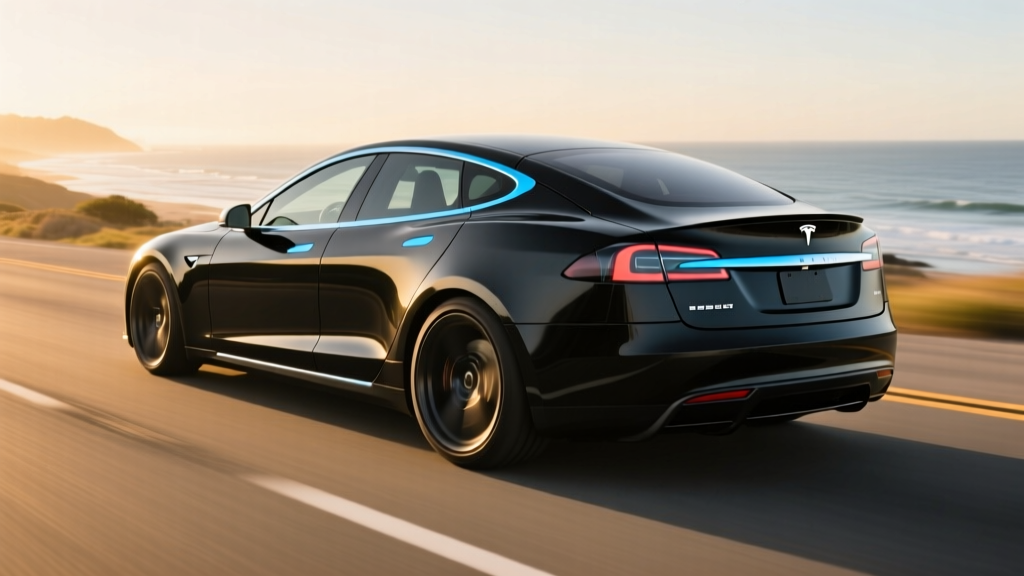
Tesla Model Y at a Glance: The Autopilot Benchmark
The Tesla Model Y remains the best-selling electric vehicle in the United States for good reason: it pairs a usable 320-mile EPA range with the most widely deployed driver-assistance system on the road. If you've been searching for clarity on Autopilot in Tesla vehicles — what it actually does, what it costs, and whether the Model Y is worth the investment in 2026 — this review gives you the exact numbers, real-world caveats, and ownership economics you need to decide.
For 2026, the Model Y receives a refreshed interior, a slightly larger battery pack on Long Range trims, and continued access to Tesla's Supercharger network, which now exceeds 6,000 stations in North America. The vehicle qualifies for the full $7,500 federal tax credit under IRS §30D for eligible buyers, and as of 2026, that credit can be transferred to the dealer at the point of sale — effectively reducing your purchase price on day one.
| Spec | Long Range AWD | Performance AWD |
|---|---|---|
| EPA Range | 320 miles | 295 miles |
| Battery (usable) | 78.1 kWh, NMC | 78.1 kWh, NMC |
| Max DC Fast Charge | 250 kW (peak) | 250 kW (peak) |
| 10–80% DCFC Time | ~22 minutes | ~22 minutes |
| Level 2 Home Charge | 11.5 kW (~44 mi/hr) | 11.5 kW (~44 mi/hr) |
| 0–60 mph | 4.8 seconds | 3.5 seconds |
| Horsepower | 384 hp (dual motor) | 456 hp (dual motor) |
| Drivetrain | AWD (dual motor) | AWD (dual motor) |
| Efficiency | 122 MPGe / 28 kWh/100mi | 111 MPGe / 30 kWh/100mi |
| Cargo (rear seats up) | 30.2 cu ft | 30.2 cu ft |
| Cargo (rear seats folded) | 72.1 cu ft | 72.1 cu ft |
| Rear Legroom | 36.5 inches | 36.5 inches |
| Battery Warranty | 8 yr / 120,000 mi | 8 yr / 120,000 mi |
| Base MSRP | $44,990 | $49,990 |
Real-World Range: What the EPA Sticker Doesn't Tell You
The EPA rates the 2026 Model Y Long Range at 320 miles. That number is achievable under ideal conditions: moderate temperatures (60–75°F), mixed city/highway driving at or under 65 mph, with climate control set to a reasonable level. But real-world range is rarely ideal.
- EPA Sticker: 320 miles
- Highway (70–75 mph, mild weather): ~270–290 miles
- Highway (70–75 mph, 30°F or below): ~220–250 miles
- City / stop-and-go (mild weather): ~310–320 miles (regen braking helps)
- Worst case (cold, highway, hilly): ~200–220 miles
Cold weather is the single biggest range killer in any EV. The Model Y uses a heat pump (standard since 2021), which reduces cabin-heating energy draw compared to resistive heaters — but battery chemistry itself slows in freezing temperatures, and you'll see 20–30% range loss on sub-30°F highway trips. Tesla's preconditioning feature, which warms the battery while you're still plugged in, mitigates this significantly. Always precondition before a cold-weather departure if you can.
According to fueleconomy.gov, the Long Range AWD achieves 122 MPGe combined, translating to roughly 28 kWh per 100 miles. That's among the most efficient vehicles in its class — the Hyundai Ioniq 5 AWD uses about 30 kWh/100mi, and the Ford Mustang Mach-E AWD sits around 31 kWh/100mi.
Autopilot in Tesla: What You Get, What You Pay, and What It Can't Do
Every 2026 Model Y ships with Basic Autopilot at no additional cost. This includes Traffic-Aware Cruise Control (maintains set speed and following distance) and Autosteer (keeps the vehicle centered in a clearly marked lane). It works well on divided highways and in stop-and-go traffic, and it's one of the smoothest Level 2 systems available.
However, it is critical to understand what Autopilot is — and isn't.
Tesla Autopilot and Full Self-Driving (Supervised) are Level 2 driver-assistance systems under the SAE J3016 framework. This means the system can control steering and acceleration simultaneously, but the driver must remain fully engaged, with hands on or near the wheel and eyes on the road, at all times. The vehicle is not driving itself. You are legally and operationally responsible.
Enhanced Autopilot ($6,000 add-on) adds Auto Lane Change, Autopark, Summon, and Navigate on Autopilot (automatic highway interchange navigation). It's useful for frequent highway commuters but doesn't approach autonomous driving.
Full Self-Driving (Supervised) — $8,000 add-on extends capability to city streets, recognizing traffic lights, stop signs, and making turns. In our testing, FSD (Supervised) handles routine suburban driving competently but still requires regular interventions — perhaps once every 10–20 miles in complex urban environments. Construction zones, faded lane markings, and unprotected left turns remain weak points. Tesla continues to improve the system via over-the-air updates, but it is not a substitute for an attentive driver.
- Drive the car without your supervision — you must monitor at all times
- Handle all construction zones, detours, or unmapped roads reliably
- Replace the need for car insurance or driver attention
- Function identically in all weather — heavy rain, snow, and glare degrade camera performance
- Qualify as "self-driving" — only Level 4 services (Waymo, Zoox) operate without a human driver
For most buyers, Basic Autopilot is sufficient. It's standard, it's competent, and it handles 90% of highway driving scenarios. Enhanced Autopilot is a reasonable upgrade for road-trippers. FSD (Supervised) is best reserved for those who enjoy being early adopters and understand they're paying for a system that's still maturing.
Charging Speed: Supercharger Access and Home Setup
Charging speed is where the Model Y continues to shine, largely because of Tesla's vertically integrated Supercharger network. Here are the exact numbers:
| Charging Level | Power (kW) | Miles Added per Hour | Notes |
|---|---|---|---|
| Level 1 (120V household) | ~1.4 kW | ~5 mi/hr | Emergency/trickle only |
| Level 2 (240V, 48A home) | 11.5 kW | ~44 mi/hr | Full charge overnight (~7–8 hrs) |
| DC Fast Charge (V3 Supercharger) | 250 kW peak | ~1,000 mi/hr (peak) | 10–80% in ~22 min; tapers above 80% |
| DC Fast Charge (V4 Supercharger) | 250 kW peak | ~1,000 mi/hr (peak) | Newer stations with cable management |
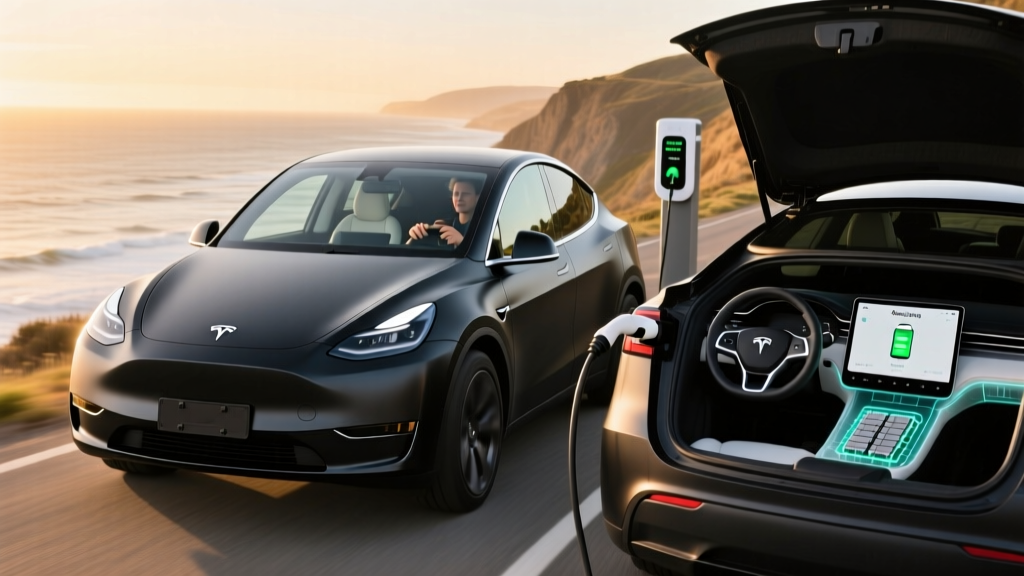
Understanding the charge curve: The 250 kW peak rate applies only between roughly 10–30% state of charge (SoC). From 30–60%, expect sustained rates around 150–180 kW. Above 80%, the rate drops sharply to protect battery health — often below 50 kW. This is why Tesla (and every other manufacturer) quotes 10–80% times rather than 0–100%. If you arrive at a Supercharger at 10% SoC, you'll reach 80% in about 22 minutes. Charging from 80–100% will add another 25–30 minutes. Plan accordingly on road trips: it's faster to charge to 80% and move on than to wait for a full battery.
Home charging setup: Tesla includes a Mobile Connector with every Model Y. For daily home charging, most owners install a Tesla Wall Connector ($420 for the unit) on a 60A circuit, which delivers the full 48A / 11.5 kW. A typical professional installation runs $800–$2,000 depending on panel proximity and local permitting. If your home has a 200A electrical panel with spare capacity, installation is straightforward. Older homes with 100A panels may need a $1,500–$3,000 panel upgrade — factor this into your budget.
The Model Y uses the NACS (North American Charging Standard) connector natively. As of 2025, Ford, GM, Rivian, Volvo, and others have adopted NACS, meaning Tesla's Supercharger network is becoming the de facto national fast-charging standard. Non-Tesla EVs are beginning to access Superchargers via adapter, but Tesla owners still enjoy the most seamless plug-and-charge experience.
Pricing, Trims, and Federal Tax Credit Eligibility
The 2026 Model Y lineup is straightforward — two main trims, with optional add-ons:
| Trim / Option | MSRP | After $7,500 §30D Credit* |
|---|---|---|
| Long Range AWD | $44,990 | ~$37,490 |
| Performance AWD | $49,990 | ~$42,490 |
| Enhanced Autopilot (add-on) | +$6,000 | — |
| Full Self-Driving Supervised (add-on) | +$8,000 | — |
| Destination fee | +$1,390 | — |
*Federal tax credit eligibility depends on multiple requirements. See checklist below.
- Vehicle MSRP cap: SUVs must be ≤ $80,000 (Model Y qualifies)
- Buyer income cap: Modified AGI ≤ $150,000 (single) / $300,000 (joint)
- Battery sourcing: Critical minerals and battery components must meet phased-in domestic/free-trade sourcing thresholds — Tesla's US-built batteries currently meet these requirements
- Assembly: Vehicle must be assembled in North America (Model Y is built in Fremont, CA and Austin, TX)
- Point-of-sale transfer: As of 2024+, you can transfer the credit to the dealer at purchase, reducing your out-of-pocket cost immediately rather than waiting for a tax return
- Verify before purchasing: Rules change — check IRS.gov §30D page for current-year requirements
Interior, Cargo, and Daily Livability
The 2026 Model Y interior continues Tesla's minimalist approach — a single 15.4-inch center touchscreen handles navigation, media, climate, and vehicle settings. There is no instrument cluster; speed and range info appear on the left side of the main screen. The refresh adds ventilated front seats, ambient lighting, and slightly softer-touch materials on the dashboard and door panels.
Cargo space is one of the Model Y's strongest practical advantages: 30.2 cubic feet behind the second row, expanding to 72.1 cubic feet with the 60/40 rear seats folded. The rear trunk opening is wide and low, making it easy to load strollers, luggage, or groceries. The front trunk (frunk) adds 4.1 cubic feet — useful for charging cables, a small bag, or groceries you want separated from the main cargo area.
Passenger space is adequate for a family of four. Rear legroom measures 36.5 inches — sufficient for adults on shorter trips, though taller passengers (6'2"+) will find the rear seat cushion a bit low and flat for long journeys. The panoramic glass roof creates an airy feel but does reduce headroom slightly compared to vehicles with a conventional steel roof.
Tech highlights:
- Over-the-air software updates that add features post-purchase
- Sentry Mode (360° camera-based security recording while parked)
- Dog Mode (maintains cabin temperature for pets with a display message for passersby)
- Theater Mode (streams Netflix, YouTube, Disney+ on the center screen while parked)
- Phone-as-key via Bluetooth (no fob needed)
Notable drawbacks:
- No physical buttons for climate, wipers, or glovebox — everything is screen-based
- Turn signals on the steering wheel (not a stalk) take adjustment
- Rear visibility is compromised by the sloping roofline — rely on the backup camera
- No Apple CarPlay or Android Auto — Tesla's native infotainment only
- Ride quality is firm, especially with the 20-inch Performance wheels
Model Y vs. Key Competitors: Is It Still the One to Beat?
The compact electric SUV segment is crowded in 2026. Here's how the Model Y stacks up against its most common cross-shops:
| Spec | Tesla Model Y LR | Hyundai Ioniq 5 AWD | Ford Mach-E ER AWD |
|---|---|---|---|
| EPA Range | 320 mi | 290 mi | 300 mi |
| Battery | 78.1 kWh NMC | 77.4 kWh NMC | 91 kWh NMC |
| Peak DCFC | 250 kW | 238 kW | 150 kW |
| 10–80% Time | ~22 min | ~18 min | ~38 min |
| 0–60 mph | 4.8 sec | 5.1 sec | 5.1 sec |
| Cargo (seats up) | 30.2 cu ft | 27.2 cu ft | 29.7 cu ft |
| Base MSRP (AWD) | $44,990 | $49,500 | $48,995 |
| §30D Credit | Eligible | Eligible | Eligible |
| NACS Native | Yes | No (CCS) | No (CCS → NACS adapter) |
- You want the longest real-world range in the segment
- Access to the Supercharger network is a priority for road trips
- You value OTA updates and the Tesla software ecosystem
- Cargo volume is a top priority
- Fastest DC charging speed (10–80% in 18 min) matters more than peak range
- You prefer physical buttons and a more conventional interior layout
- V2L (vehicle-to-load) capability for powering devices is important
- You want a more traditional crossover driving feel with BlueCruise hands-free highway driving
- Ford dealer service proximity is more convenient than Tesla service centers
Ownership Costs: 5-Year Total Cost of Ownership
Purchase price is only part of the equation. The Model Y's 5-year ownership profile benefits from low fuel (electricity) costs, minimal maintenance, and strong — though declining — resale value.
| Category | Estimated Cost |
|---|---|
| Purchase price (after §30D credit) | ~$37,490 |
| Home charging install (Level 2) | $1,200–$2,000 |
| Electricity (75,000 mi @ $0.15/kWh avg) | ~$3,150 |
| Insurance (avg $2,400/yr × 5) | ~$12,000 |
| Maintenance (tires, cabin filter, wiper fluid) | ~$1,800 |
| Estimated depreciation (5 yr) | ~$14,000–$17,000 |
| Total (approx.) | ~$69,600–$73,400 |
Compare to a similarly priced gas SUV (e.g., BMW X3): ~$5,500 in fuel + ~$3,500 in maintenance over 5 years, but lower purchase price and insurance. The Model Y saves on fuel and maintenance but carries higher insurance premiums.
Insurance note: Tesla vehicles cost 20–40% more to insure than comparable gas SUVs, driven by higher repair costs (aluminum body panels, sensor recalibration, proprietary parts). Get quotes before purchasing — your mileage will vary significantly by state, age, and driving record.
Warranty coverage:
- Basic vehicle: 4 years / 50,000 miles
- Battery & drive unit: 8 years / 120,000 miles (retains ≥70% capacity)
- Tesla guarantees the battery will retain at least 70% of its original capacity during the warranty period. Real-world data from high-mileage Tesla owners suggests NMC packs in the Model Y typically retain 88–92% capacity at 100,000 miles with normal charging habits.
Who Should Buy the 2026 Tesla Model Y?
- Best-in-class EPA range (320 mi) for the segment
- Supercharger network access — most reliable DC fast-charging in North America
- Spacious cargo area (72.1 cu ft max)
- Strong efficiency (122 MPGe combined)
- Over-the-air updates continuously add features
- $7,500 federal tax credit eligible (point-of-sale transfer)
- Competent standard Autopilot for highway driving
- Screen-only controls frustrate some drivers
- Firm ride quality, especially on 20" wheels
- No Apple CarPlay / Android Auto
- Insurance premiums 20–40% above segment average
- FSD (Supervised) is expensive ($8,000) and still requires full driver attention
- Rear-seat comfort for tall adults is mediocre
- Service center availability varies by region
The Model Y is best for: Commuters who drive 30–80 miles daily and can charge at home, small families needing cargo flexibility, and road-trippers who value the Supercharger network. If you take 3+ road trips per year of 200+ miles, the Supercharger ecosystem is a genuine advantage over CCS-reliant competitors, where charger uptime and payment fragmentation remain issues in 2026.
The Model Y is less ideal for: Buyers who prioritize a plush ride, physical controls, or traditional dealer service experiences. If you can't install a home charger and rely exclusively on public charging, the convenience advantage narrows — though Superchargers remain the most reliable option.
Frequently Asked Questions
What is the real-world range of the 2026 Tesla Model Y?
The EPA rates the Long Range AWD at 320 miles. In real-world highway driving at 70–75 mph in mild weather, expect 270–290 miles. In freezing temperatures on the highway, that drops to 220–250 miles. City driving with regenerative braking can match or slightly exceed the EPA figure.
How fast does the Model Y charge at home and on the road?
On a home Level 2 charger (240V, 48A), the Model Y adds about 44 miles of range per hour — a full charge takes roughly 7–8 hours overnight. On a V3 Supercharger, it peaks at 250 kW and charges from 10–80% in approximately 22 minutes. Remember: kW is the rate of power delivery (like water pressure), while kWh is the total energy stored (like tank size).
Does the 2026 Model Y qualify for the federal EV tax credit?
Yes, the Model Y qualifies for the full $7,500 federal tax credit under IRS §30D, provided you meet the income cap ($150K single / $300K joint modified AGI) and the vehicle MSRP is under $80,000 (it is). The credit can be transferred to the dealer at the point of sale, reducing your purchase price immediately. Always verify current eligibility on IRS.gov, as sourcing rules and thresholds can change.
Is Tesla Autopilot worth the extra cost?
Basic Autopilot is standard and handles highway cruising well — most buyers won't need more. Enhanced Autopilot ($6,000) adds useful highway features like auto lane change. FSD (Supervised) at $8,000 is a bet on future capability; today, it still requires constant supervision and isn't meaningfully better than Basic Autopilot for most daily driving. If you're not an early adopter, stick with the free system.
How does the Model Y compare to the Hyundai Ioniq 5 and Ford Mach-E?
The Model Y leads in range (320 vs. 290–300 mi), cargo space, and charging network access. The Ioniq 5 charges faster (10–80% in 18 min vs. 22 min) and offers a more conventional interior with physical buttons. The Mach-E provides a comfortable ride and Ford's BlueCruise hands-free highway system. All three qualify for the $7,500 tax credit. Your choice depends on whether range and network (Tesla), charging speed and design (Ioniq 5), or ride comfort and dealer service (Mach-E) matter most.
How long will the Model Y battery last?
Tesla warranties the battery for 8 years or 120,000 miles, guaranteeing at least 70% capacity retention. Real-world data from fleet operators and high-mileage owners suggests NMC batteries in the Model Y retain roughly 88–92% capacity at 100,000 miles with normal use. To maximize longevity, avoid frequent 100% charges (daily charge to 80–90%) and minimize DC fast charging when Level 2 is available. Full battery replacement, if ever needed out of warranty, costs approximately $12,000–$16,000 at current pricing.
Is Autopilot in Tesla actually self-driving?
No. Tesla Autopilot and Full Self-Driving (Supervised) are SAE Level 2 driver-assistance systems. They can manage steering, acceleration, and braking in many scenarios, but the driver must remain fully attentive and ready to take over at any moment. Only Level 4 robotaxi services like Waymo operate without a human driver in defined areas. Tesla's naming conventions have drawn scrutiny from NHTSA — understand the system's limits before relying on it.