The 2014 BMW i3: A Pioneer That Still Divides
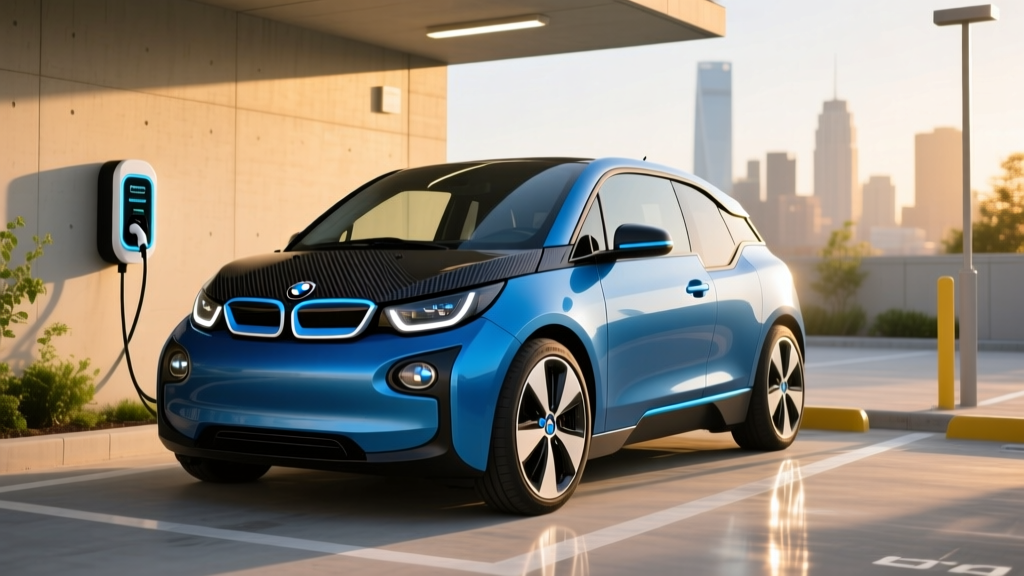
Launched a decade before most legacy automakers committed to serious EV platforms, the 2014 BMW i3 was unlike anything on the road. Its carbon-fiber-reinforced plastic (CFRP) passenger cell, optional gasoline range extender, and quirky tall-hatchback silhouette made it an instant conversation piece. In 2026, it exists exclusively on the used market — BMW ended i3 production in 2022 — and it occupies a fascinating niche: an affordable entry into electric driving for urban commuters who understand its compromises.
This review covers the pure battery-electric (BEV) version of the 2014 i3, which was the volume seller. We'll address the range extender (REx) variant where relevant. If you're shopping for a used i3 today, the numbers below reflect original factory specs paired with what you should realistically expect from a 12-year-old EV battery in 2026.
Range, Battery, and Real-World Efficiency
The 2014 BMW i3 BEV shipped with a 22 kWh gross lithium-ion battery pack (approximately 18.8 kWh usable). BMW selected Samsung SDI NMC (nickel-manganese-cobalt) pouch cells arranged in eight modules of eight cells each. This chemistry offered strong energy density for its era but is more sensitive to high-state-of-charge storage and extreme temperatures than the LFP packs common in today's budget EVs.
Real-World Expectation: In moderate city driving (55°F, flat terrain, moderate HVAC), expect 70–80 miles. Highway driving at 70 mph drops this to roughly 60–65 miles. In cold weather (below 30°F) without preconditioning, range can fall to 50–55 miles — a 30–35% reduction typical of NMC packs without a heat pump. A 2014 model in 2026 may show additional degradation; budget 10–15% below these figures for a pack with 80,000+ miles unless a battery health report confirms strong State of Health (SoH).
The i3's efficiency was genuinely impressive. The EPA rated it at 124 MPGe combined (137 city / 111 highway), translating to roughly 27 kWh per 100 miles. That efficiency figure remains competitive with far newer EVs — the i3's featherweight 2,799-pound curb mass and skinny 155/70R19 low-rolling-resistance tires meant it needed very little energy to move.
| Specification | Value |
|---|---|
| Battery Gross Capacity | 22 kWh |
| Battery Usable Capacity | ~18.8 kWh |
| Cell Chemistry | NMC (Samsung SDI pouch) |
| EPA Range | 81 miles |
| EPA Efficiency | 124 MPGe (27 kWh/100 mi) |
| Battery Warranty (Original) | 8 years / 100,000 miles (≥70% capacity) |
Battery degradation note: The original 8-year/100,000-mile battery warranty has expired on all 2014 models as of 2022. When shopping used, request a battery health diagnostic from a BMW dealer or use an OBD-II reader with BMW-specific software (such as BimmerCode or ENCOM) to check remaining capacity. Packs that have been DC fast-charged frequently or stored at 100% SoC in hot climates may show 15–25% degradation, reducing practical range to 60–65 miles.
Charging: DC Fast, Level 2, and Level 1 Speeds
The 2014 i3's charging capability reflects its era. DC fast charging was an option (not standard) on early models, so verify the specific vehicle has the DC fast-charge port — a second port on the driver's side rear quarter panel — before purchasing. Without it, you're limited to Level 2 AC charging only.
| Charging Level | Power (kW) | Time / Rate | Notes |
|---|---|---|---|
| Level 1 (120V household) | ~1.4 kW | ~12–14 hours (0–100%) | Emergency/trickle only |
| Level 2 (240V, 32A) | 7.4 kW | ~3 hours (0–100%) | Standard onboard charger |
| DC Fast Charge (CCS Combo) | Up to 50 kW | ~28 min (10–80%) | Optional on 2014; CCS1 connector |
The 50 kW DC fast-charge peak was respectable in 2014 but feels dated now. The i3's small battery means 50 kW actually represents roughly a 2.5C charge rate, and the pack's thermal management (air-cooled with a refrigerant chiller, not a full liquid loop) causes the charge curve to taper aggressively above 70% SoC. In practice, you'll see 44–50 kW from 10–50%, then a steep taper — the final 80–100% can take as long as the first 80%. Plan DC fast-charge stops around the 80% mark to avoid wasting time at the trough of the curve.
For home charging, a 240V Level 2 station at 32 amps adds roughly 25 miles of range per hour of charging. A full charge from empty takes about three hours — convenient for overnight topping up. Most 2014 i3 owners will find that a basic Level 2 home charger (such as a ChargePoint Home Flex or Emporia Vue, set to 32A) covers daily needs completely.
Performance, Drivetrain, and Driving Dynamics
The 2014 i3 is a rear-wheel-drive EV powered by a single synchronous electric motor mounted at the rear axle. Output is 170 horsepower and 184 lb-ft of torque — numbers that sound modest but feel urgent in a car weighing under 2,800 pounds.
| Specification | Value |
|---|---|
| Drivetrain | Rear-wheel drive (RWD) |
| Motor Type | AC synchronous (rear-mounted) |
| Horsepower | 170 hp |
| Torque | 184 lb-ft |
| 0–60 mph | 7.0 seconds |
| Top Speed | 93 mph (electronically limited) |
| Curb Weight | 2,799 lbs |
The instant torque delivery makes the i3 feel quicker than its 7.0-second 0–60 time suggests, especially in city traffic where it darts between 20–50 mph with genuine enthusiasm. The steering is light but communicative, and the tight 32.8-foot turning circle makes it a joy in parking garages. Regenerative braking is aggressive — lift off the accelerator and the i3 decelerates sharply, enabling true one-pedal driving in most urban scenarios.
Where the i3 falls short is highway composure. The tall, narrow body generates noticeable crosswind sensitivity, and the skinny tires offer modest grip in wet conditions. This is a city car that can handle highway duty — not a highway car that tolerates city driving.
Interior, Cargo, and Technology
The i3's cabin was a radical departure from BMW's traditional leather-and-wood aesthetic. Sustainable materials dominate: eucalyptus wood trim, kenaf (natural fiber) door panels, and recycled-plastic textiles. The result is an airy, minimalist space that still feels modern.
Practical dimensions tell a mixed story:
- Front headroom: 39.6 inches (generous)
- Front legroom: 40.5 inches
- Rear headroom: 37.2 inches
- Rear legroom: 31.9 inches (tight for adults)
- Cargo (rear seats up): 15.1 cubic feet
- Cargo (rear seats folded): 39.2 cubic feet
The rear-hinged "coach doors" (freestyle doors with no B-pillar) create a wide opening for loading but require the front door to be opened first for rear passenger exit — a quirk that frustrates in tight parking spots.
Technology in the 2014 model centers on BMW's iDrive 4.2 infotainment system with a 6.5-inch display (10.25-inch with the optional Technology + Driving Assistant package). Standard features include Bluetooth, USB, and a basic navigation system. The available Driving Assistant Plus package adds forward collision warning, pedestrian detection, and adaptive cruise control — rudimentary by 2026 ADAS standards but useful. Note that these are SAE Level 0–1 driver aids; the 2014 i3 has no lane-keeping or automated steering capability.
Pricing, Trims, and Used-EV Tax Credit
When new, the 2014 BMW i3 BEV started at an MSRP of $42,275 (including destination). The range-extended (REx) variant added approximately $3,850. A well-equipped model with the Technology + Driving Assistant package, LED headlights, and DC fast charging pushed past $48,000.
In the 2026 used market, a 2014 i3 BEV typically sells for $8,000–$14,000 depending on mileage, condition, battery health, and whether DC fast charging is equipped. REx models command a $1,000–$2,000 premium.
- Exceptionally efficient (124 MPGe)
- Lightweight, fun city driving dynamics
- Unique carbon-fiber construction resists rust
- Qualifies for the $4,000 used-EV tax credit (income/price dependent)
- Tight turning circle, easy parking
- 81-mile EPA range is limiting even for commuting
- DC fast charging was optional — not all cars have it
- Battery warranty has expired; replacement cost is $10,000–$16,000+
- Rear seat and cargo space are tight
- Parts availability declining post-production
Does the 2014 BMW i3 Qualify for a Federal Tax Credit?
The new-vehicle §30D federal tax credit no longer applies — the i3 is discontinued and only available used. However, the IRS §25E Used Clean Vehicle Credit may apply when you purchase a 2014 i3 from a licensed dealer in 2026. This credit provides 30% of the sale price, up to $4,000, if you meet all requirements:
- Sale price cap: The vehicle must sell for $25,000 or less (most 2014 i3s qualify)
- Buyer income limits: Adjusted gross income ≤ $75,000 (single), $112,500 (head of household), $150,000 (joint)
- Dealer requirement: Must be purchased from a licensed dealer (private-party sales excluded)
- Vehicle age: Must be at least two model years old (2014 easily qualifies)
- First transfer since Aug 16, 2022: The vehicle must not have been resold under this credit previously after that date — verify with the dealer
- Point-of-sale transfer: You may elect to transfer the credit to the dealer at purchase for an immediate price reduction
On a $12,000 2014 i3, 30% equals $3,600 — bringing your effective cost to approximately $8,400. Consult a tax professional to confirm eligibility based on your specific situation, as IRS rules are subject to change.
Who Should Buy the 2014 BMW i3?
The 2014 i3 fits a specific buyer profile well:
Ideal for: Single or two-person urban households with reliable home Level 2 charging, a daily commute under 50 miles round-trip, and a second vehicle available for longer trips. The i3 excels as a dedicated city commuter — efficient, easy to park, and genuinely fun to drive at legal urban speeds.
Not ideal for: Families needing rear-seat space, anyone without home charging access (the 81-mile range makes public-charging dependence impractical), cold-climate buyers without a garage (range loss is severe), or anyone who regularly drives more than 60 miles in a day.
If you're cross-shopping, the 2015–2017 Nissan Leaf (24–30 kWh, 84–107 mile EPA range) offers more cargo space and a larger dealer network for battery service. The 2017+ Chevrolet Bolt EV (60 kWh, 238-mile EPA range) is far more versatile but commands $14,000–$18,000+ on the used market. The i3 wins on driving enjoyment, efficiency, and uniqueness — but loses on range and practicality.
Frequently Asked Questions
What is the real-world range of the 2014 BMW i3?
Expect 70–80 miles in moderate city driving, 60–65 miles at highway speeds, and as little as 50–55 miles in cold weather without preconditioning. A 2026-used example with battery degradation may deliver 10–15% less than these figures.
How fast does the 2014 i3 charge?
On a 50 kW DC fast charger (optional equipment), the i3 reaches 10–80% in approximately 28 minutes. On a 240V Level 2 home charger at 7.4 kW, a full charge takes about 3 hours, adding roughly 25 miles of range per hour.
What does a 2014 i3 cost after tax credits in 2026?
Used 2014 i3s sell for $8,000–$14,000. If you qualify for the §25E used-EV credit (income limits apply, purchase from a licensed dealer, sale price under $25,000), you can receive up to $4,000 — potentially bringing your net cost to $8,400 on a $12,000 example.
Is the 2014 BMW i3 worth buying vs. competitors?
It's worth buying if you prioritize driving dynamics, efficiency, and low purchase price over range and space. If you need more than 80 miles of range, look at a used Chevy Bolt EV or second-generation Nissan Leaf instead.
How much does a replacement battery cost?
BMW does not publish a standard replacement price, but dealer quotes and independent shops report $10,000–$16,000+ for a refurbished or new 22 kWh pack. Given the car's used value, a battery failure often totals the vehicle.
Does the 2014 i3 have a gasoline range extender?
Yes — the i3 REx variant includes a 647cc two-cylinder BMW motorcycle engine that acts as a generator to maintain battery charge. It adds approximately 65–70 miles of extended range but does not drive the wheels directly. The REx adds weight and complexity and was not eligible for the full $7,500 new-vehicle credit in some years due to emissions rules.