Quick Verdict: The Fastest SUV Ever Built Has Real Tradeoffs
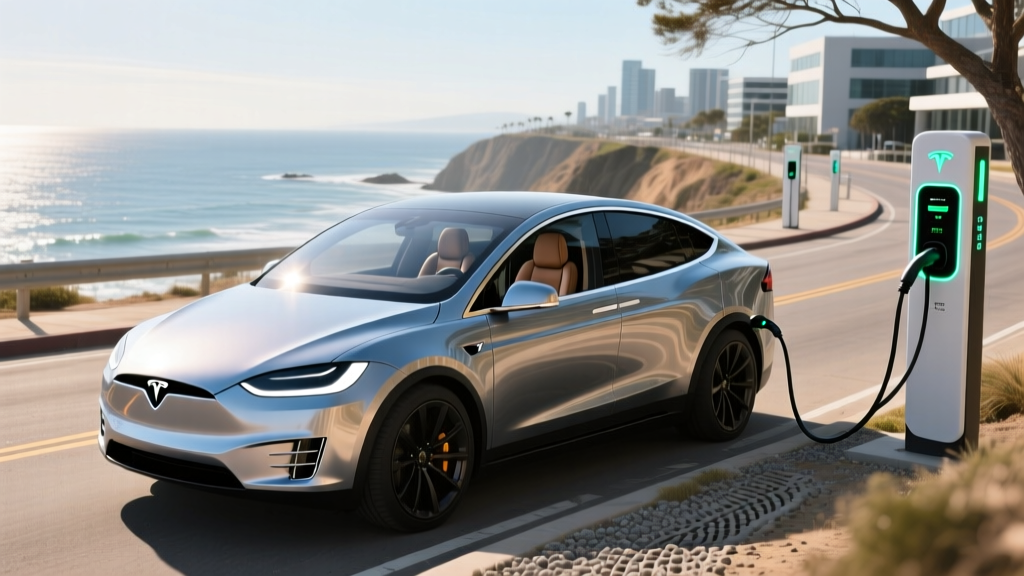
The 2023 Tesla Model X Plaid is an engineering paradox: a 5,185-pound, three-row SUV that hits 60 mph in 2.5 seconds while offering 333 miles of EPA-estimated range and access to the most reliable DC fast-charging network in North America. For buyers who need supercar acceleration, family hauling, and road-trip capability in one vehicle, nothing else matches this combination.
But the Plaid badge commands a steep premium over the standard Dual Motor Model X, and real-world range at highway speeds falls well short of the EPA sticker. This review breaks down exact charging speeds, ownership economics, tax credit eligibility under current IRS §30D rules, and the practical limitations that spec sheets don't show.
| Spec | Value |
|---|---|
| EPA Range | 333 miles |
| Battery (usable) | ~95 kWh, NMC (nickel manganese cobalt) |
| Drivetrain | Tri-Motor AWD (1 front, 2 rear) |
| Horsepower | 1,020 HP |
| 0–60 mph | 2.5 seconds |
| Top Speed | 163 mph |
| Max DC Fast Charge | 250 kW (V3 Supercharger) |
| 10–80% DC Charge | ~32 minutes |
| Level 2 Charge Rate | 11.5 kW (~34 mi/hr) |
| MPGe (combined) | 98 MPGe |
| Efficiency | 34 kWh/100 mi |
| Cargo (behind 3rd row) | 14.8 cu ft |
| Cargo (max, seats folded) | 75.1 cu ft |
| Seating | 5, 6, or 7 passengers |
| Towing Capacity | 5,000 lbs |
| Base MSRP | $109,990 (before delivery) |
| Battery Warranty | 8 years / 150,000 miles |
Range and Efficiency: EPA Sticker vs. Real-World Miles
EPA Estimated: 333 miles
Real-World Highway (70–80 mph): ~250–275 miles
Real-World Cold Weather (below 32°F): ~220–260 miles
Mixed City/Suburban: ~290–315 miles
The 2023 Model X Plaid's 333-mile EPA rating is achieved through a blend of city and highway driving at moderate temperatures. In our experience and consistent with independent testing, sustained highway travel at 75+ mph reduces range by 18–25% due to the Plaid's tri-motor weight penalty and the SUV's large frontal area. At 80 mph on a flat interstate in 70°F conditions, expect roughly 260 miles before the battery reaches 10%.
Cold weather compounds this loss. The Model X uses a heat pump for cabin and battery conditioning, which is more efficient than resistive heating, but NMC batteries still lose 15–25% of usable capacity in sub-freezing temperatures. A winter road trip in the Midwest may yield 230–250 miles of real range even with preconditioning active.
Efficiency sits at 34 kWh per 100 miles (combined), which translates to 98 MPGe per fueleconomy.gov. This is competitive for a 5,185-pound tri-motor SUV, though the standard Dual Motor Model X achieves a slightly better 101 MPGe combined thanks to lower weight and less drivetrain loss.
Charging Speed: Supercharger Network Advantage
The Model X Plaid charges at up to 250 kW on Tesla V3 Superchargers — the peak rate for Tesla's current architecture. However, as with all EVs, peak kW is not sustained kW. The charging curve tells the real story:
| Charging Level | Power / Rate | Miles Added per Hour | Notes |
|---|---|---|---|
| Level 1 (120V / 12A) | ~1.4 kW | ~3–4 mi/hr | Emergency/trickle only |
| Level 2 (240V / 48A) | 11.5 kW | ~34 mi/hr | Home Wall Connector; full charge ~9 hrs |
| DC Fast (V3 Supercharger) | Peak 250 kW | ~175 mi in 15 min | 10–80% in ~32 min; tapers above 60% |
| DC Fast (V4 Supercharger) | Up to 250 kW* | Similar to V3 | *Model X capped at 250 kW on current architecture |
Charge curve reality: The Model X Plaid sustains close to 250 kW from roughly 10% to 35% State of Charge (SoC), then gradually tapers. Between 50–60%, power drops to approximately 150 kW, and above 80% it falls below 60 kW. This is why the 10–80% time is ~32 minutes rather than the ~18 minutes a sustained 250 kW rate would theoretically allow. For road trips, plan stops around 15–20 minutes each if you arrive at 10–15% and depart at 70–75%.
Preconditioning matters. Navigate to a Supercharger using the car's built-in navigation, and the battery thermal management system will heat or cool the pack to optimal charging temperature before you arrive. Without preconditioning — for example, arriving at a non-Tesla DC charger via a third-party app — peak charge rates may be 30–50% lower, especially in cold weather.
Non-Tesla charging: The 2023 Model X ships with a CCS adapter (included) and can also use Tesla's NACS connector natively. With the adapter, you can access Electrify America, EVgo, and other CCS networks, though charge speeds may be limited by those stations' hardware.
Performance: 1,020 HP in a Three-Row SUV
The tri-motor Plaid powertrain produces 1,020 horsepower and delivers a manufacturer-claimed 2.5-second 0–60 mph time. Independent testing by outlets including Car and Driver and Motor Trend has verified sub-2.6-second runs on prepped surfaces. This makes the Model X Plaid the quickest production SUV ever sold, outpacing the Lamborghini Urus and Porsche Cayenne Turbo GT.
But straight-line speed is only part of the story. The Plaid's dual rear motors enable torque vectoring that sharpens corner exit, and the air suspension lowers the ride height at speed for improved stability. The steering is precise if numb, and the 5,185-pound curb weight is felt during direction changes. This is a drag-strip king and highway cruiser, not a canyon carver.
Towing: Rated at 5,000 lbs, the Model X Plaid can handle a small boat or utility trailer. However, towing at highway speeds can cut range by 35–50%, reducing effective range to 160–200 miles. Plan charging stops accordingly.
Interior, Cargo, and Daily Practicality
The Model X interior is minimalist and tech-forward, centered on a 17-inch landscape touchscreen that controls nearly all vehicle functions. The 2023 model includes a second-row 8-inch screen for rear passengers, a yoke-style steering wheel (a conventional round wheel is available at no cost), and a 22-speaker audio system.
Seating configurations:
- 5-seat: Two captain's chairs in the second row with a center console; most cargo space behind row two
- 6-seat: Two captain's chairs plus a third-row bench for two; good for families who need occasional third-row access
- 7-seat: Bench second row plus third row; maximum passenger count but tight third-row legroom (32.7 inches)
Second-row legroom is generous at 40.9 inches. Third-row legroom at 32.7 inches is suitable for children or short trips only. The falcon-wing rear doors provide excellent overhead clearance for loading child seats but add mechanical complexity and have been a historical reliability concern, though Tesla has revised the mechanism multiple times since the 2016 launch.
Cargo volume:
- Behind third row: 14.8 cu ft
- Behind second row (third row folded): 37.1 cu ft
- Maximum (all rear seats folded): 75.1 cu ft
- Front trunk (frunk): 6.6 cu ft
Pricing, Trims, and Federal Tax Credit Eligibility
| Item | Amount |
|---|---|
| Base MSRP (Plaid) | $109,990 |
| Destination / Order Fee | ~$1,390 |
| Typical Options (FSD, paint, wheels) | +$8,000–$22,000 |
| As-Tested Price (well-equipped) | $120,000–$135,000 |
| Federal §30D Tax Credit | $0 — exceeds MSRP cap |
The 2023 Model X Plaid does not qualify for the $7,500 federal EV tax credit. Under current IRS §30D rules, SUVs must have an MSRP at or below $80,000 to be eligible. At $109,990, the Plaid far exceeds this threshold. The standard Dual Motor Model X (starting around $79,990) may qualify depending on exact configuration, battery sourcing, and buyer income — but the Plaid never will.
Key §30D eligibility rules for reference (per irs.gov):
- MSRP caps: $80,000 for SUVs, vans, pickups; $55,000 for sedans
- Buyer income caps: $300,000 joint / $225,000 head of household / $150,000 single (modified AGI)
- Battery sourcing: Critical minerals and battery component requirements phase in annually; verify specific VIN eligibility at the time of purchase
- Point-of-sale transfer: Eligible credits can be transferred to the dealer at purchase for an upfront price reduction
State and local incentives vary by jurisdiction and may still apply. Check your state's energy office or DMV for current programs.
Warranty and Long-Term Ownership
Tesla provides the following coverage on the 2023 Model X Plaid:
- Battery & Drive Unit Warranty: 8 years or 150,000 miles, whichever comes first, with minimum 70% capacity retention
- Basic Vehicle Limited Warranty: 4 years or 50,000 miles
The 150,000-mile battery warranty is longer than the standard Model X (120,000 miles) and reflects Tesla's confidence in the Plaid's thermal management under high-performance use. NMC chemistry in Tesla's large-pack vehicles has shown degradation curves of approximately 8–12% over the first 100,000 miles based on fleet data, stabilizing afterward.
Insurance: Expect premiums 30–50% higher than a comparably priced ICE luxury SUV. The Plaid's 1,020 HP, aluminum-intensive construction, and Tesla's direct repair network all contribute to elevated rates. Get quotes before ordering — annual premiums of $3,500–$5,500 are common depending on driver profile and state.
Maintenance: No oil changes, no spark plugs, no transmission fluid. Cabin air filter replacement (~$100–$150 every 2 years), tire rotation, and wiper fluid are the primary recurring costs. However, the Plaid's 22-inch performance tires ($400–$600 each) wear faster than standard all-season rubber and should be budgeted at $1,600–$2,400 per set every 25,000–35,000 miles depending on driving style.
Standout Tech and Driver Assistance
The 2023 Model X Plaid includes Tesla's full tech suite:
- Autopilot (standard): Adaptive cruise control, lane centering, automatic emergency braking, blind-spot monitoring — SAE Level 2 driver assistance requiring continuous driver engagement
- Full Self-Driving (Supervised) — $8,000 option or $199/month: Adds automatic lane changes, navigate-on-Autopilot, traffic light/stop sign recognition, and FSD Beta city-street driving. Still SAE Level 2 — the driver must remain fully attentive and is legally responsible for the vehicle at all times
- 17-inch primary display + 8-inch rear display
- Gaming: Up to 10 teraflops of GPU power supports AAA-level games while parked
- Over-the-air updates: Regular software improvements to performance, UI, and driver-assist features
- Sentry Mode & Dashcam: Continuous recording via external cameras when parked or driving
ADAS Limitation Notice: Tesla Autopilot and FSD (Supervised) are SAE Level 2 systems. They do NOT make the vehicle self-driving. The driver must keep hands on the wheel (or demonstrate attentiveness via the cabin camera), monitor the road, and be prepared to take over instantly. Misuse of these systems has resulted in serious crashes and NHTSA enforcement actions.
2023 Model X Plaid vs. Key Competitors
At this price and performance level, the Model X Plaid has no direct equivalent. But buyers cross-shop it against these alternatives:
| Model X Plaid | BMW iX M60 | Mercedes EQS SUV 580 | Lotus Eletre R | |
|---|---|---|---|---|
| 0–60 mph | 2.5 sec | 3.6 sec | 4.4 sec | 2.95 sec |
| EPA Range | 333 mi | 288 mi | 305 mi | ~304 mi (est.) |
| Max DC Charge | 250 kW | 200 kW | 200 kW | 350 kW |
| Base MSRP | $109,990 | $111,500 | $105,550 | $120,000+ |
| Seating | 5/6/7 | 5 | 5/7 | 5 |
| Charging Network | Supercharger (native) | CCS (public) | CCS (public) | CCS (public) |
The Model X Plaid wins on acceleration, third-row availability, and charging infrastructure. The BMW iX M60 offers a more refined interior and traditional luxury dealership experience. The Mercedes EQS SUV prioritizes ride comfort over performance. The Lotus Eletre R is the closest performance rival but lacks Tesla's Supercharger ecosystem and has limited service centers in the US.
Choose the Model X Plaid if: You need sub-3-second acceleration, three-row seating, and reliable long-distance charging via the Supercharger network — and you're willing to accept Tesla's minimal-luxury interior and premium pricing without a federal tax credit.
Look elsewhere if: You prioritize traditional luxury materials and dealership service (BMW iX, Mercedes EQS), need a federal tax credit (standard Dual Motor Model X may qualify), or rarely use more than two rows of seating.
Pros and Cons
Pros
- 2.5-second 0–60 mph — fastest production SUV
- 333-mile EPA range is strong for a 1,020 HP tri-motor
- Tesla Supercharger network reliability for road trips
- Available 6- and 7-seat configurations
- 5,000-lb towing capacity
- Over-the-air updates continuously improve the vehicle
- 8-year / 150,000-mile battery warranty
Cons
- No federal tax credit (exceeds $80K MSRP cap)
- Real-world highway range drops to ~250–275 miles
- Insurance premiums 30–50% above comparable luxury SUVs
- Falcon-wing doors add mechanical complexity
- Yoke steering wheel is polarizing (round wheel available)
- Minimal luxury trim for a $110K+ vehicle
- Performance tires are expensive and wear quickly
Frequently Asked Questions
What is the real-world range of the 2023 Model X Plaid?
The EPA rates it at 333 miles, but real-world highway driving at 70–80 mph yields approximately 250–275 miles. In cold weather (below 32°F), expect 220–260 miles. City and suburban driving with regenerative braking can approach the EPA number at 290–315 miles.
How fast does the Model X Plaid charge at home and on the road?
At home on a Level 2 Tesla Wall Connector (240V/48A), it charges at 11.5 kW, adding about 34 miles per hour — a full charge takes roughly 9 hours. On a V3 Supercharger, it peaks at 250 kW and charges from 10–80% in approximately 32 minutes. Actual speed depends on battery temperature and state of charge.
Does the 2023 Model X Plaid qualify for the federal EV tax credit?
No. The IRS §30D credit caps SUV eligibility at $80,000 MSRP. The Model X Plaid starts at $109,990, making it ineligible regardless of buyer income or battery sourcing. The standard Dual Motor Model X may qualify if configured below the cap and meeting all sourcing and income requirements.
How much does the Model X Plaid cost after incentives?
With no federal credit available, the out-of-pocket cost is the full MSRP plus destination (~$111,380) plus any options. State and local incentives vary — some states offer rebates or HOV lane access for EVs regardless of price. Consult your state's energy office for current programs.
Is the Model X Plaid worth buying over competitors?
If you need three-row seating, sub-3-second acceleration, and the Supercharger network for road trips, no competitor matches this package. If luxury interior quality and traditional dealership service matter more, the BMW iX M60 or Mercedes EQS SUV are worth considering. Test-drive both before deciding.
What is the battery warranty and expected lifespan?
Tesla warrants the Plaid's battery for 8 years or 150,000 miles with at least 70% capacity retention. Fleet data on Tesla's NMC large packs suggests 8–12% degradation over the first 100,000 miles, with slower loss afterward. A full battery replacement outside warranty currently costs approximately $20,000–$28,000 at Tesla service centers.
Can the Model X Plaid tow, and how does it affect range?
Yes, it's rated for 5,000 lbs. However, towing a trailer at highway speeds can reduce range by 35–50%, bringing effective range to 160–200 miles. Use Tesla's trip planner with the trailer weight entered to estimate charging stops accurately.
Sources: EPA fueleconomy.gov, IRS §30D Clean Vehicle Credits, Tesla Model X Specifications