The Original Tesla Roadster: America's First Serious Electric Sports Car
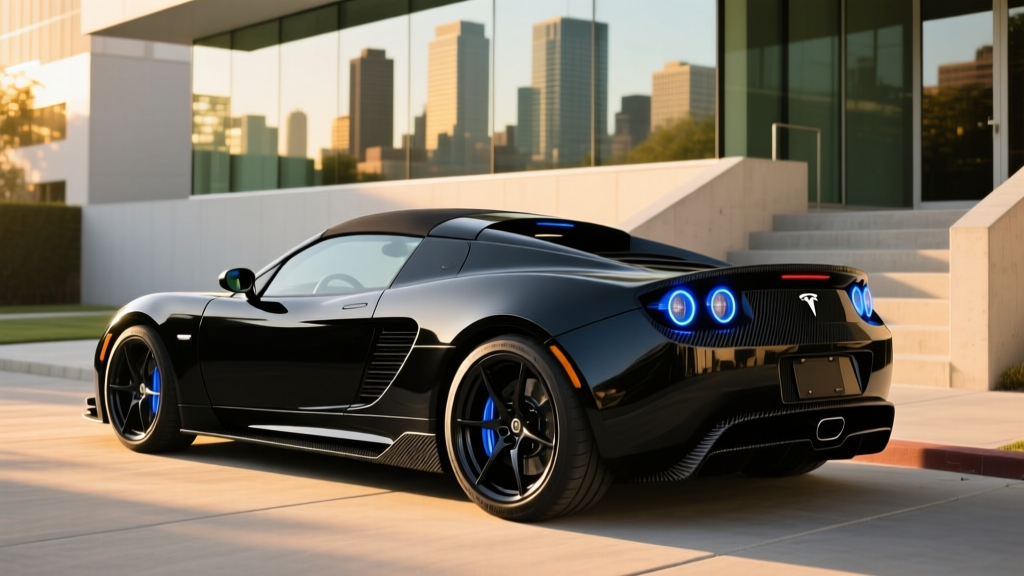
Before the Model S redefined the luxury sedan, before the Model 3 brought EVs to the masses, there was the original Tesla Roadster. Produced from 2008 to 2012, this Lotus Elise-based two-seater proved that a battery-electric car could deliver supercar performance without tailpipe emissions. Only 2,450 units were built worldwide, making it one of the rarest EVs ever sold — and a vehicle that commands serious attention in today's collector market.
This isn't a review of a car you can walk into a dealership and buy new. The original Roadster is a legacy vehicle — a discontinued, low-volume pioneer that remains relevant in 2026 for collectors, EV historians, and enthusiasts evaluating its place in automotive history. Below, we break down every spec that matters: range, charging, performance, battery chemistry, and what ownership looks like today.
| Spec | Roadster 1.5 / 2.0 | Roadster Sport |
|---|---|---|
| EPA Range | 244 miles (ideal); ~220 mi adjusted | 244 miles (ideal); ~220 mi adjusted |
| Battery Capacity | 53 kWh (usable ~48 kWh) | 53 kWh (usable ~48 kWh) |
| Battery Chemistry | Lithium Cobalt Oxide (LiCoO₂, NMC variant) | Lithium Cobalt Oxide (LiCoO₂, NMC variant) |
| Motor Output | 248 hp / 200 lb-ft | 288 hp / 295 lb-ft |
| 0–60 mph | 3.9 seconds | 3.7 seconds |
| Top Speed | 125 mph (electronically limited) | 125 mph |
| Drivetrain | RWD, single-speed gearbox | RWD, single-speed gearbox |
| Curb Weight | 2,690 lbs | 2,690 lbs |
| EPA Efficiency | 135 MPGe (combined) | ~130 MPGe |
| Energy Consumption | ~280 Wh/mi | ~290 Wh/mi |
| Original MSRP | $109,000 (2008) | $128,500 (2009) |
| 2026 Collector Value | $100,000–$175,000+ | $120,000–$200,000+ |
| Units Produced | ~2,450 total (all variants) | |
Range & Real-World Efficiency: What 244 Miles Actually Meant
The original Tesla Roadster carried a 244-mile range rating — a staggering figure in 2008, when most EVs couldn't crack 80 miles. However, this number requires context. Tesla originally quoted range using a proprietary "ideal" driving cycle that was more generous than the EPA's standardized testing protocol. When evaluated under the EPA's stricter methodology, the Roadster's effective range drops to approximately 220 miles in mixed driving.
Sticker Range: 244 miles (Tesla ideal cycle)
EPA-Adjusted Estimate: ~220 miles mixed driving
Real-World Highway (70 mph): ~170–190 miles
Cold Weather (below 40°F): ~140–165 miles
Aggressive Canyon/Track Driving: ~100–130 miles
The Roadster's battery pack contains 6,831 individual 18650-format lithium-ion cells — the same form factor later used in the Model S, though with different chemistry. These cells use a lithium cobalt oxide (LiCoO₂) cathode, which offers high energy density but is less thermally stable than the NMC (nickel manganese cobalt) or LFP (lithium iron phosphate) chemistries used in modern EVs. Tesla's battery management system (BMS) was revolutionary for its time, actively cooling and balancing cells to prevent thermal runaway.
Efficiency sits at roughly 280 Wh/mile — respectable for a sports car but higher than modern EVs thanks to improvements in motor efficiency, aerodynamics, and regenerative braking over the past 15 years. For reference, a 2026 Tesla Model 3 RWD achieves approximately 250 Wh/mile while offering similar performance.
Charging: The Roadster's Biggest 2026 Limitation
Charging is where the original Roadster shows its age most clearly. This vehicle predates the CCS, CHAdeMO, and NACS connector standards entirely. It uses a proprietary Tesla Roadster Connector — a round, 7-pin plug unique to this model and incompatible with any modern Tesla Supercharger or public charging network without adapters.
| Charging Level | Power / Connector | Rate | Full Charge Time |
|---|---|---|---|
| Level 1 (120V) | ~1.4 kW / NEMA 5-15 | ~5 miles/hour | ~44 hours |
| Level 2 — Standard (240V) | ~3.3 kW / Roadster Connector | ~12 miles/hour | ~18 hours |
| Level 2 — HPWC (240V) | ~16.8 kW / Roadster Connector + HPWC | ~56 miles/hour | ~3.5 hours |
| DC Fast Charging | Not supported | N/A | N/A |
The High Power Wall Connector (HPWC) was Tesla's solution for Roadster owners who needed faster home charging. At 70 amps / 240V, it could deliver up to 16.8 kW — remarkably fast for 2008 and still competitive with many Level 2 home chargers in 2026. However, the HPWC is a proprietary unit that's increasingly difficult to source as a replacement.
No DC fast charging is the critical limitation. You cannot plug a Roadster into a Supercharger, Electrify America, or any public DC fast-charging station. The vehicle's onboard charger maxes out at 16.8 kW AC. This makes the Roadster strictly a home-base vehicle — road trips require meticulous planning around overnight Level 2 stops, and even then, a full charge takes 3.5+ hours at best.
Third-party adapter solutions exist (such as Jdapter and Quick Charge Power's Roadster-to-J1772 adapters) that allow the car to use standard Level 2 public chargers at the 3.3 kW rate, but they add cost and complexity. Expect to pay $500–$1,200 for a quality adapter.
Performance: The Numbers That Changed the Industry
The original Roadster exists in two main variants: the standard Roadster (1.5 and 2.0) and the higher-output Roadster Sport. Both share the same rear-mounted, 3-phase, 4-pole AC induction motor, but the Sport uses a hand-wound stator and upgraded inverter to extract more power.
In the standard Roadster, output is 248 horsepower and 200 lb-ft of torque, enough for a 3.9-second 0–60 mph time. The Sport bumps that to 288 hp and 295 lb-ft, dropping the sprint to 3.7 seconds. Both versions are electronically limited to 125 mph.
These numbers were extraordinary in 2008. The Roadster Sport could out-accelerate a Porsche 911 Carrera of the same era, and it did so with instant, linear torque delivery that no internal-combustion sports car could match. The single-speed gearbox (a two-speed transmission was originally planned but scrapped due to reliability issues) means there's no shift interruption — just relentless, silent acceleration.
Weight sits at 2,690 lbs, remarkably light by modern EV standards (a 2026 Model 3 weighs ~3,862 lbs). This lightness comes from the Lotus Elise's bonded aluminum chassis and carbon-fiber body panels, which Tesla retained. The low weight also means the Roadster handles with the agility you'd expect from a Lotus — sharp turn-in, minimal body roll, and communicative steering through the unassisted rack.
The tradeoff? The ride is firm, cabin noise is significant (especially from the power electronics whine at low speeds), and the single-speed gearbox limits top-end performance. Above 80 mph, acceleration tapers noticeably compared to multi-speed ICE sports cars.
Battery Longevity, Degradation & Replacement Reality
The Roadster's battery pack was warranted for 3 years / 36,000 miles with an optional Extended Battery Warranty covering 5 years / 50,000 miles. By modern EV standards — where 8-year/100,000-mile battery warranties are standard — this coverage is minimal. More critically, nearly all original Roadsters are now well past any factory warranty coverage.
Battery degradation is the single biggest concern for any original Roadster buyer in 2026. The lithium cobalt oxide cells, combined with the vehicle's age (14–18 years old), mean significant capacity loss is expected. Tesla's own data and owner reports suggest:
- Average degradation at 10 years: 15–25% capacity loss
- Average degradation at 15 years: 20–35% capacity loss
- Worst-case scenarios: 40%+ loss in vehicles stored improperly or frequently deep-cycled
A Roadster with 25% degradation would see its real-world range drop from ~220 miles to approximately 165 miles. At 35% loss, you're looking at roughly 140 miles — still usable for local driving but a significant reduction.
Battery replacement is the elephant in the room. Tesla offered an official battery replacement program (the "Energy Storage System" or ESS replacement) at a cost of approximately $29,000–$40,000 depending on the era. However, Tesla has largely discontinued support for original Roadster battery packs, and sourcing replacement cells that match the original specifications is increasingly difficult. Some specialist shops — notably Gruber Power Services — offer third-party Roadster battery rebuilds and repairs, typically in the $20,000–$35,000 range.
The battery's thermal management system (liquid cooling/heating) is critical to longevity. Roadsters stored in climate-controlled environments and kept at moderate state of charge (40–80%) have shown markedly better capacity retention than those subjected to extreme temperatures or frequent 100% charges.
Interior, Cargo & Daily Usability
The Roadster's cabin is essentially a Lotus Elise interior with Tesla-specific modifications: a center touchscreen (a 7-inch unit that was cutting-edge in 2008 but dated by 2026 standards), unique gauge cluster, and EV-specific controls. Build quality reflects its low-volume, hand-assembled origins — panel gaps vary, and some interior materials haven't aged gracefully.
Practical dimensions:
- Cargo space: ~4.5 cubic feet (rear trunk, behind the motor)
- Seating: 2 passengers only
- Headroom: ~37.5 inches
- Legroom: ~42.5 inches
- Frunk (front trunk): Small storage area for the mobile charge cable
The Roadster is not a daily driver in any practical sense. The cabin is cramped, visibility is limited by the low seating position and thick rear pillars, and ingress/egress requires genuine athleticism. The removable hardtop (standard) or optional soft top provide weather flexibility, but this is fundamentally a weekend toy, not a commuter vehicle.
The infotainment system lacks modern features — no Apple CarPlay, no Android Auto, no over-the-air updates beyond basic firmware. The navigation system uses outdated map data that Tesla no longer updates. Bluetooth audio streaming was added in later model years (2.0 and Sport) but remains basic.
Pricing, Collector Value & Tax Credit Status
The original Roadster launched at $109,000 MSRP in 2008 (equivalent to approximately $158,000 in 2026 dollars when adjusted for inflation). The Roadster Sport commanded $128,500. These were among the most expensive cars on the road at the time.
In today's collector market, values have fluctuated but generally trended upward, especially for low-mileage examples with documented battery health:
| Condition | Mileage | Estimated Value (2026) |
|---|---|---|
| Concours / Low-Mileage (<5,000 mi) | Under 5,000 | $175,000–$250,000+ |
| Excellent / Fresh Battery | 5,000–20,000 | $130,000–$175,000 |
| Good / Original Battery | 20,000–50,000 | $100,000–$140,000 |
| Driver / Needs Battery Work | 50,000+ | $65,000–$100,000 |
Federal tax credit status: The original Tesla Roadster does not qualify for the IRS §30D federal EV tax credit in 2026. The credit applies only to new vehicle purchases, and the Roadster has been out of production since 2012. Even the now-reduced used-EV credit (§25E, up to $4,000) requires the vehicle to be purchased from a licensed dealer for under $25,000 — a threshold no Roadster meets.
Insurance costs are significant. As a rare, high-value collector vehicle, expect annual premiums of $2,500–$5,000+ through specialty insurers like Hagerty or Grundy, which offer agreed-value collector car policies. Standard insurers may decline coverage or quote prohibitively high rates.
Who Should Buy the Original Tesla Roadster in 2026?
- You want a piece of EV history — the car that proved electric performance was viable
- You have climate-controlled garage storage and can maintain proper battery care
- You're a collector who values rarity (2,450 built) over daily practicality
- You have $20,000–$40,000 set aside for potential battery replacement
- You primarily drive locally and don't need DC fast charging
- You need a daily driver with modern tech, safety features, and practicality
- You want fast public charging capability for road trips
- You're concerned about battery replacement costs and parts availability
- You need more than two seats or meaningful cargo space
- You expect modern ADAS features (the Roadster has none)
The original Roadster's closest comparison in today's market isn't another EV — it's a collector-grade sports car like a low-production Porsche or Ferrari. It competes on historical significance and exclusivity, not on specs versus a 2026 Tesla Model S Plaid or Lucid Air.
Pros, Cons & Final Verdict
- Historic significance — the EV that launched Tesla and the modern electric car movement
- Lotus-derived chassis delivers exceptional handling and steering feel
- Still quick: 3.7–3.9 second 0–60 mph holds up in 2026
- Extreme rarity (2,450 units) supports strong collector appreciation
- Lightweight (2,690 lbs) — no modern EV comes close
- Instant torque and silent, linear acceleration remain thrilling
- No DC fast charging — road trips require overnight stops
- Proprietary connector limits public charging access without adapters
- Battery degradation is significant at 14–18 years old; replacement costs $20K–$40K
- No modern driver-assist features (no AEB, no lane-keeping, no adaptive cruise)
- Dated infotainment with no smartphone integration
- Limited Tesla service support; parts sourcing is increasingly difficult
- Cramped cabin, difficult ingress/egress, firm ride
The original Tesla Roadster is not a rational purchase in 2026 by any practical metric. It's slower than a Model 3 Performance, has less range than a Model Y, can't fast-charge, and carries significant battery-risk exposure. But that's not the point. This car is an artifact — the proof of concept that forced the entire automotive industry to take electrification seriously. For collectors who understand that context and can absorb the ownership costs, it remains a compelling and appreciating piece of automotive history.
Frequently Asked Questions
What is the real-world range of the original Tesla Roadster?
With a healthy battery, expect approximately 220 miles in mixed driving, 170–190 miles on the highway at 70 mph, and 140–165 miles in cold weather (below 40°F). Vehicles with significant battery degradation (20–35% loss, common at this age) will see proportionally lower range — potentially as low as 140 miles mixed.
How fast does the original Roadster charge?
The Roadster has no DC fast-charging capability. On a standard 240V Level 2 outlet at 3.3 kW, it adds about 12 miles per hour (18 hours for a full charge). With the optional High Power Wall Connector at 16.8 kW, charging speeds up to roughly 56 miles per hour, achieving a full charge in about 3.5 hours. Level 1 (120V) adds only about 5 miles per hour.
Does the original Tesla Roadster qualify for any federal EV tax credit?
No. The IRS §30D new clean vehicle credit applies only to new purchases, and the Roadster hasn't been produced since 2012. The §25E used-EV credit (up to $4,000) requires a sale price under $25,000 through a licensed dealer — no Roadster meets that threshold. Always consult a tax professional for your specific situation.
How much does a Tesla Roadster cost in 2026?
Collector market values range from approximately $65,000 for a high-mileage example needing battery work to $250,000+ for a concours-condition, low-mileage car with a fresh battery replacement. Most well-maintained examples with decent battery health trade between $100,000 and $175,000.
Is the original Roadster worth buying vs. a modern Tesla?
They serve entirely different purposes. A 2026 Model 3 Performance ($52,990 MSRP) will outperform the Roadster in every measurable spec — faster, longer range, DC fast charging, full ADAS, modern infotainment, and a full warranty. The Roadster is a collector vehicle valued for historical significance and rarity, not spec-sheet competition.
What battery chemistry does the original Roadster use?
The original Roadster uses lithium cobalt oxide (LiCoO₂) cells in the 18650 cylindrical format — 6,831 cells per pack. This chemistry provides high energy density but is less thermally stable than modern NMC or LFP chemistries. Tesla's liquid-cooled battery management system was essential to keeping these cells safe and is a key reason the packs lasted as long as they did.
Can I charge a Tesla Roadster at a Supercharger?
No. The original Roadster uses a proprietary connector that predates the Tesla Supercharger network. It is not compatible with any Supercharger, CCS, CHAdeMO, or NACS connector. Third-party adapters allow Level 2 (AC) charging at public J1772 stations, but at a limited 3.3 kW rate.