Quick Verdict: The Efficiency Benchmark Still Stands
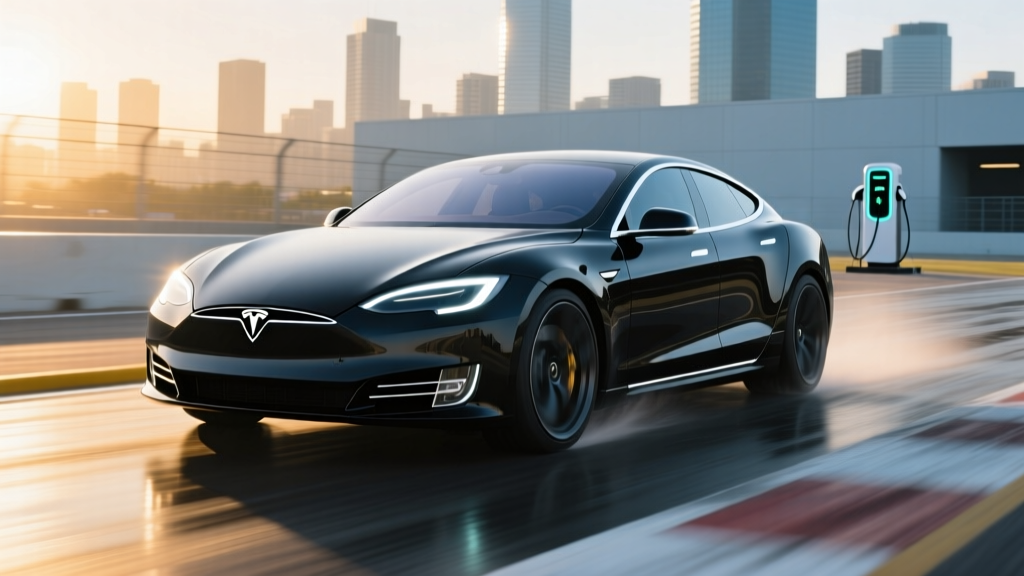
The 2026 Tesla Model 3 remains the default sedan against which every other EV in the $35,000–$50,000 bracket is measured. Tesla's industry-leading efficiency, the seamless one-pedal driving experience enabled by aggressive regenerative braking, and access to the Supercharger network keep it ahead of rivals like the Hyundai Ioniq 6, BMW i4, and Polestar 2. But the gap has narrowed: competitors now match or exceed its interior quality, ride comfort, and in some cases, charging speed. If you prioritize software integration, range per dollar, and the regen braking Tesla has tuned better than anyone, the Model 3 Long Range AWD at $42,490 (before incentives) is the sweet spot.
Range, Efficiency & Real-World Expectations
| Trim | EPA Range | Battery (usable) | Chemistry | MPGe (city/hwy/combined) | kWh/100 mi |
|---|---|---|---|---|---|
| RWD (Standard) | 272 mi | 57.5 kWh | LFP | 140 / 124 / 132 | 25 |
| Long Range RWD | 363 mi | 75 kWh (est.) | NMC | 139 / 123 / 131 | 26 |
| Long Range AWD | 346 mi | 75 kWh (est.) | NMC | 134 / 118 / 126 | 27 |
| Performance AWD | 315 mi | 75 kWh (est.) | NMC | 124 / 109 / 117 | 29 |
The RWD trim uses an LFP (lithium iron phosphate) battery, which sacrifices some energy density for longer cycle life, lower fire risk, and the ability to charge to 100% daily without degradation concerns. The Long Range and Performance trims use NMC (nickel manganese cobalt) chemistry, which packs more energy into a smaller pack but Tesla recommends daily charging to 80% for longevity.
Regen Braking: How Tesla Tuned One-Pedal Driving Right
The keyword that brings many shoppers here — regen braking Tesla has implemented — deserves a focused look. Tesla was not the first automaker to offer regenerative braking, but it was the first to build an entire driving philosophy around it. The Model 3's single-motor regen setting (Tesla removed the adjustable "Low" regen option in U.S. models starting in 2021) delivers up to ~0.3 g of deceleration the moment you lift off the accelerator. This is strong enough to bring the car to a complete stop in most traffic without touching the brake pedal.
Why this matters for efficiency: Regen braking recovers kinetic energy that would otherwise be lost as heat through friction brakes. In city driving, the Model 3 recaptures roughly 15–25% of its consumed energy through regen, which is why its city MPGe exceeds its highway MPGe — the opposite of a gas car. Tesla's software seamlessly blends regen deceleration with the friction brakes when you do press the pedal, so the transition is imperceptible.
What you should know as a new owner:
- Adaptation period: Most drivers adjust within 1–2 days. Your left foot becomes essentially unused.
- Cold-weather limitation: When the battery is cold (below ~50°F / 10°C), regen is reduced or temporarily disabled. You will need to use the friction brakes until the pack warms up. The dotted line on the regen indicator in the instrument panel shows available regen capacity.
- Wet/icy roads: Tesla's stability control manages regen torque per wheel, but some drivers prefer gentle friction braking on ice. There is no way to reduce regen strength in current U.S. Model 3s — plan your following distance accordingly.
- Brake pad longevity: Because regen handles most deceleration, Model 3 brake pads routinely last 100,000+ miles. However, Tesla recommends periodically applying the friction brakes firmly to prevent rotor rust and pad glazing.
Charging Speed & Infrastructure
| Charging Level | Power (kW) | Speed | Notes |
|---|---|---|---|
| Level 1 (120V household) | ~1.4 kW | ~4 mi/hr | Emergency/trickle only |
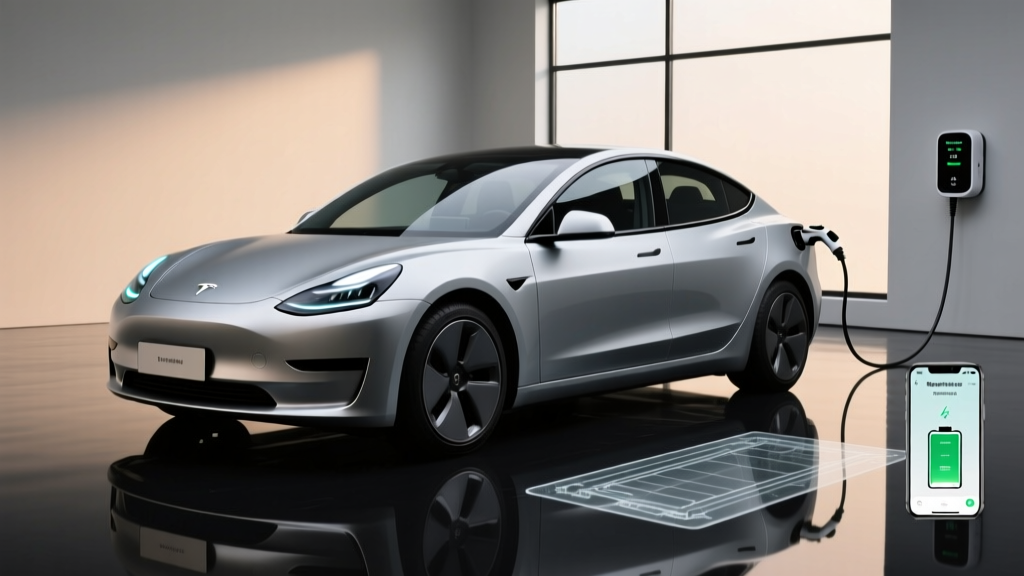
| Level 2 (240V, 32A Mobile Connector) | 7.7 kW | ~29 mi/hr | Included with vehicle |
| Level 2 (240V, 48A Wall Connector) | 11.5 kW | ~44 mi/hr | Requires 60A circuit; ~$500 equipment + $500–$1,500 install |
| DC Fast Charge (RWD) | 170 kW peak | 10–80% in ~25 min | NACS connector; tapers above 60% |
| DC Fast Charge (Long Range / Perf.) | 250 kW peak | 10–80% in ~22 min | NACS connector; sustains ~150 kW to ~55% SoC |
Tesla's NACS (North American Charging Standard) connector is now the de facto EV standard in North America, with Ford, GM, Rivian, Hyundai, and others adopting it. The Model 3 charges natively on every Tesla Supercharger without adapters — a significant reliability advantage, as Tesla's network consistently posts uptime above 99.5%.
Charging curve reality: The 250 kW peak on Long Range models is not sustained. The pack accepts peak power only between ~10–30% state of charge. From 30–55%, expect ~150–170 kW. Above 80%, charging slows dramatically to protect battery health — plan to unplug at 80% on road trips unless you need the extra miles.
Preconditioning tip: Always navigate to a Supercharger using the car's built-in navigation. This triggers battery preconditioning, warming the pack to optimal temperature for faster charging. Arriving at a Supercharger without preconditioning can add 5–10 minutes to your 10–80% session, especially in cold weather.
Performance, Powertrain & Handling
| Trim | Drivetrain | Horsepower | 0–60 mph | Top Speed |
|---|---|---|---|---|
| RWD | Rear-wheel drive | 271 hp | 5.8 sec | 125 mph |
| Long Range RWD | Rear-wheel drive | 346 hp | 4.9 sec | 125 mph |
| Long Range AWD | Dual-motor AWD | 384 hp | 4.2 sec | 125 mph |
| Performance AWD | Dual-motor AWD | 510 hp | 2.9 sec | 163 mph |
The "Highland" refresh (introduced for the 2024 model year and carried through 2026) transformed the Model 3's ride quality. New frequency-selective dampers, additional acoustic glass, and revised suspension bushings make it substantially quieter and more composed over rough pavement than the pre-2024 car. The steering remains quick but numb — Tesla prioritizes efficiency over feedback.
The Performance trim adds adaptive dampers, a track mode, and larger brakes. It is genuinely a sports sedan competitor to the BMW M3 in straight-line acceleration, though it lacks the chassis communication of a true driver's car.
Interior, Cargo & Technology
The minimalist cabin centers on a 15.4-inch touchscreen that controls virtually every function — there are no physical buttons for climate, mirrors, or glovebox. This remains polarizing: some owners love the clean aesthetic, others find it distracting. The 2026 model year adds ventilated front seats across all trims, ambient lighting, and rear-seat ventilation controls via an 8-inch rear touchscreen.
Dimensions & cargo:
- Front headroom: 40.3 in | Rear headroom: 37.8 in
- Front legroom: 42.7 in | Rear legroom: 35.2 in
- Trunk: 21.0 cu ft (rear seats up) | 64.9 cu ft (rear seats folded)
- Frunk (front trunk): 3.1 cu ft — fits a charging cable bag and a small backpack
Rear seat space is the Model 3's persistent weakness vs. the Hyundai Ioniq 6 or BMW i4. Adults over 6 feet will find headroom tight due to the sloping roofline. The center rear seat is best reserved for children.
Driver assistance: Basic Autopilot (traffic-aware cruise control and lane centering) is standard. Full Self-Driving (Supervised) is a $8,000 option or $99/month subscription. Per SAE definitions, FSD is a Level 2 system — you must remain attentive and keep your hands on or near the wheel at all times. It is not autonomous driving.
Pricing, Trims & Federal Tax Credit
| Trim | Base MSRP | As-Tested (typical) | Est. Price After §30D Credit* |
|---|---|---|---|
| RWD | $38,990 | $39,990 (w/ paint) | ~$31,490 |
| Long Range RWD | $42,490 | $43,990 | ~$34,990 |
| Long Range AWD | $47,490 | $49,490 (w/ FSD sub) | ~$39,990 |
| Performance AWD | $52,990 | $55,490 | ~$45,490 |
* Federal tax credit caveats (IRS §30D, 2026 rules): The up-to-$7,500 credit is not automatic. Per IRS guidelines, eligibility requires:
- MSRP cap: Sedans must be under $55,000 (all Model 3 trims qualify).
- Buyer income cap: AGI ≤ $150,000 (single), $225,000 (head of household), $300,000 (joint).
- Battery sourcing: Critical minerals and battery components must meet escalating North American/free-trade-partner thresholds. Tesla's U.S.-built battery packs have largely met these requirements, but verify current-year compliance at the point of sale.
- Point-of-sale transfer: You can apply the credit as an instant rebate at purchase (reducing your down payment) rather than waiting for a tax refund. The dealer handles the IRS registration.
Always confirm eligibility with your tax professional before relying on the credit in your purchase budget.
Warranty & Ownership Costs
Tesla's warranty is competitive but not class-leading:
- Basic vehicle: 4 years / 50,000 miles
- Battery & drive unit (RWD): 8 years / 100,000 miles, minimum 70% capacity retention
- Battery & drive unit (Long Range / Performance): 8 years / 120,000 miles, minimum 70% capacity retention
Real-world battery degradation data from Tesla's fleet shows the average Model 3 retains ~90% of its original capacity after 100,000 miles. LFP packs in the RWD trim degrade even more slowly, with many owners reporting <5% loss at 80,000 miles. Out-of-warranty battery replacement costs remain steep — approximately $12,000–$16,000 depending on pack size — but catastrophic failure is rare.
Insurance premiums for the Model 3 run 15–30% higher than comparable gas sedans, reflecting repair costs for the aluminum-intensive structure and sensor suite. Average annual premiums: $1,800–$2,600 depending on state and driver profile. Tesla offers its own insurance product in many states, which uses real-time driving data to set monthly rates — safe drivers can save significantly.
Who the 2026 Model 3 Suits Best
Pros
- Best-in-class efficiency (kWh/100 mi) across all trims
- Supercharger network access with native NACS — most reliable DC charging in North America
- One-pedal regen braking reduces brake wear and boosts city range
- Over-the-air updates continuously add features
- Strong resale value relative to non-Tesla EVs
- LFP battery on RWD allows daily 100% charging without degradation worry
Cons
- Rear seat headroom and legroom are tight for adults over 6'
- All-screen interface is distracting for some drivers; no physical buttons
- No adjustable regen strength in U.S. market
- FSD (Supervised) remains Level 2 — not autonomous despite the name
- Insurance costs are above segment average
- Build quality improved with Highland but still inconsistent panel gaps reported
Buy the Model 3 if: You commute in stop-and-go traffic where regen braking shines, you value Supercharger reliability for road trips, you want the most range per dollar in a premium sedan, and you are comfortable with a screen-centric interface.
Look elsewhere if: You regularly carry rear-seat adults, you want physical climate controls, you need adjustable regen (look at the Hyundai Ioniq 6 or BMW i4), or you want a traditional luxury dealership experience.
Frequently Asked Questions
What is the real-world range of the 2026 Tesla Model 3?
The EPA rates the Long Range AWD at 346 miles. In real-world highway driving at 70 mph in mild weather, expect ~290–310 miles. City driving with heavy regen braking can push range above the EPA estimate. In sub-freezing temperatures without preconditioning, expect a 20–30% reduction — roughly 240–260 miles from the Long Range AWD.
How fast does the Model 3 charge at home and on the road?
At home on a 48A Tesla Wall Connector (240V), the Model 3 adds ~44 miles of range per hour — a full overnight charge covers any daily driving. On DC fast chargers, the Long Range peaks at 250 kW and charges 10–80% in approximately 22 minutes. The RWD peaks at 170 kW with a 10–80% time of ~25 minutes.
Does the 2026 Model 3 qualify for the $7,500 federal EV tax credit?
Most buyers will qualify, but it is not universal. The MSRP on all trims is under the $55,000 sedan cap. Your adjusted gross income must be under $150K (single) or $300K (joint). Battery sourcing requirements must be met for the current tax year — verify at purchase. The credit can be applied at the point of sale as an instant price reduction.
Is regen braking on the Tesla Model 3 adjustable?
No. In the U.S. market, Tesla removed the "Low" regen option in 2021. The Model 3 operates in a single, strong regen mode designed for one-pedal driving. When you lift off the accelerator, the car decelerates at up to ~0.3 g. This is a core part of the Tesla driving experience and contributes significantly to its efficiency advantage.
How does the Model 3 compare to the Hyundai Ioniq 6 and BMW i4?
The Ioniq 6 offers comparable range (up to 361 mi EPA), a more spacious rear seat, and adjustable regen via steering-wheel paddles — but its public charging experience relies on third-party networks. The BMW i4 provides superior ride quality, physical controls, and a traditional luxury feel, but starts ~$10,000 higher and offers less range. The Model 3 wins on efficiency, Supercharger access, and price-to-range ratio.
What does it cost to own a Model 3 over five years?
According to fueleconomy.gov, the Long Range AWD Model 3 costs approximately $600/year in electricity (at $0.16/kWh national average) vs. ~$1,800/year in gasoline for a comparable 30 MPG sedan. Combined with lower maintenance (no oil changes, minimal brake wear), the Model 3 saves roughly $6,000–$8,000 in operating costs over five years, partially offset by higher insurance and the purchase premium.