Quick Verdict: The Luxury EV Sedan Benchmark
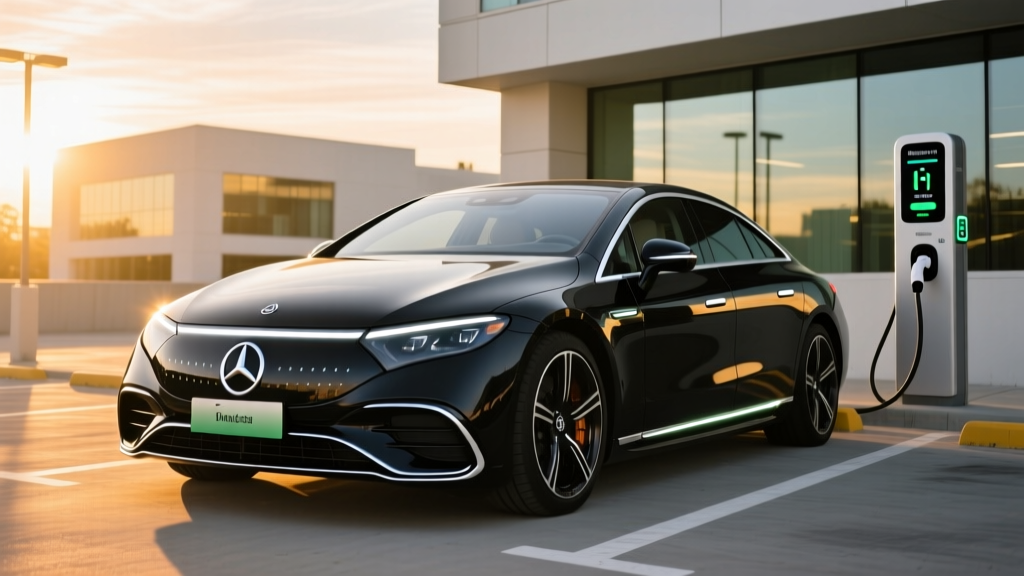
The 2023 Mercedes-Benz EQS remains the standard by which luxury electric sedans are measured. With up to 350 miles of EPA-estimated range, a 107.8 kWh usable NMC battery, and one of the lowest drag coefficients of any production car (Cd 0.20), it delivers a compelling blend of efficiency and opulence. But at a starting MSRP above $104,000, and with evolving federal tax credit rules, buyers need to weigh its real-world capabilities against a growing field of competitors including the BMW i7, Lucid Air, and Tesla Model S.
This review breaks down exact range figures, charging curves, ownership economics, and the nuances of §30D tax credit eligibility for the 2023 model year — so you can make a spec-driven decision.
Range, Efficiency, and Real-World Expectations
The 2023 EQS comes in two primary powertrains with distinct EPA range ratings:
| Trim | Drivetrain | EPA Range | MPGe (Combined) | kWh/100 mi |
|---|---|---|---|---|
| EQS 450+ | RWD | 350 mi | 97 MPGe | 35 |
| EQS 580 4MATIC | AWD (Dual-Motor) | 345 mi | 93 MPGe | 36 |
| EQS 450 4MATIC | AWD (Dual-Motor) | 340 mi | 94 MPGe | 36 |
Source: fueleconomy.gov
The EQS 450+ carries a 350-mile EPA sticker, but real-world results vary meaningfully. In highway driving at 70-75 mph, expect 290–315 miles before needing a charge. In cold weather (below 32°F), range drops to approximately 250–280 miles due to battery heating demands and cabin climate load. City driving with regenerative braking can actually exceed the EPA estimate, with some owners reporting 360+ miles in mild conditions. The EQS's exceptional aerodynamics (Cd 0.20) help it retain efficiency at speed better than most SUVs, but the physics of a 5,800-lb sedan still apply.
Both trims share the same 107.8 kWh usable battery pack (120 kWh gross) using NMC (nickel manganese cobalt) lithium-ion chemistry. NMC offers higher energy density than LFP, which is critical for fitting this much capacity into a sedan floorpan, though it requires more careful thermal management to minimize long-term degradation.
Charging Speed: DC Fast, Level 2, and the Curve
Mercedes-Benz equips the 2023 EQS with a 200 kW peak DC fast-charging capability on CCS1 connectors. Here is what that means in practice:
| Charging Level | Power / Rate | Time / Range Added |
|---|---|---|
| DC Fast Charge (CCS1) | 200 kW peak | 10–80% in ~31 minutes |
| DC Fast Charge (sustained avg) | ~140 kW avg (10-80%) | ~190 miles in 15 min |
| Level 2 (240V, 48A) | 11.5 kW onboard | ~35 miles per hour of charging |
| Level 2 (240V, 32A) | 7.7 kW | ~23 miles per hour of charging |
| Level 1 (120V, 12A) | 1.4 kW | ~4 miles per hour of charging |
Charging curve reality: The EQS hits its 200 kW peak only between roughly 10-30% state of charge. Above 50% SoC, the rate tapers progressively — dropping to around 100 kW by 70% and further to ~50 kW above 85%. This is standard behavior for NMC packs protecting cell longevity, but it means the full 10-80% session averages closer to 140 kW, not the headline 200 kW figure. Mercedes' preconditioning feature (activating battery warm-up when you navigate to a DC charger) is essential for achieving peak rates — without it, a cold battery may peak at only 120-130 kW.
For home charging, the onboard 11.5 kW charger means a full 0-100% charge takes roughly 10-11 hours on a 48-amp Level 2 station — easily achievable overnight. Most EQS owners install a 48A hardwired wallbox (such as a ChargePoint Home Flex or Emporia Vue) on a 60-amp circuit, which provides ample daily replenishment. Budget $500-$1,500 for a quality Level 2 home station and $800-$2,500 for professional electrical installation, depending on panel proximity and local permit requirements.
Performance and Drivetrain
| Spec | EQS 450+ | EQS 450 4MATIC | EQS 580 4MATIC |
|---|---|---|---|
| Horsepower | 329 hp | 355 hp | 516 hp |
| Torque | 406 lb-ft | 419 lb-ft | 631 lb-ft |
| 0-60 mph | 5.9 sec | 5.3 sec | 4.1 sec |
| Drivetrain | RWD (single motor) | AWD (dual motor) | AWD (dual motor) |
| Top Speed | 130 mph | 130 mph | 130 mph |
Even the base RWD 450+ delivers smooth, effortless acceleration typical of a large EV — the single rear motor provides strong low-end torque that makes highway merging and city driving feel effortless. The 580 4MATIC's 4.1-second 0-60 time is genuinely quick for a 5,800-lb luxury sedan, and its dual-motor AWD system provides confident traction in wet and light snow conditions.
Ride quality is a standout. The standard AIRMATIC air suspension with adaptive damping absorbs road imperfections with the composure expected of an S-Class successor. Rear-axle steering (standard on 580, optional on 450 trims) reduces the turning circle to as little as 35.8 feet — remarkable for a 207-inch-long vehicle — making parking maneuvers surprisingly manageable.
Interior, Cargo, and Standout Technology
The 2023 EQS interior is defined by the available MBUX Hyperscreen — a 56-inch curved glass panel spanning the entire dashboard, integrating a 17.7-inch central OLED touchscreen, a 12.3-inch digital instrument cluster, and a 12.3-inch passenger display. It is visually stunning, though some users find the touch-capacitive climate controls less intuitive than physical knobs. A more conventional dual-screen layout (without the Hyperscreen) is standard on the 450+.
Passenger space:
- Front legroom: 41.7 inches
- Rear legroom: 42.4 inches
- Front headroom: 40.4 inches
- Rear headroom: 38.3 inches
Rear-seat comfort is exceptional, with available heated, ventilated, and massaging outboard seats, plus a rear tablet controller for climate and media. The flat floor (no transmission tunnel) makes the middle seat more usable than in most luxury sedans.
Cargo volume: 22.0 cubic feet behind the rear seats — competitive with the Audi A8 and significantly more than the Tesla Model S (28 cu ft with frunk included, but 24.6 cu ft rear-only). The EQS does not have a frunk; the hood is sealed and houses HVAC and electronics components. A 60/40 split-folding rear seat expands utility for longer items.
Driver assistance: The EQS ships with Mercedes-Benz DRIVE PILOT hardware, which includes LiDAR, cameras, and ultrasonic sensors. However, in the US market for the 2023 model year, only SAE Level 2 driver-assist features are active — specifically Active Distance Assist DISTRONIC (adaptive cruise) and Active Steering Assist. These require continuous driver engagement and hands on the wheel. DRIVE PILOT's conditional Level 3 capability (hands-off, eyes-off at speeds up to 40 mph in heavy traffic on approved highways) was initially limited to Nevada and California with strict operational design domain restrictions. This is not autonomous driving — it is an advanced driver-assist system with specific use-case limitations.
Active Steering Assist and DISTRONIC are SAE Level 2 systems. The driver must remain fully attentive, keep hands on the wheel (or respond to prompts), and be prepared to take over at any moment. DRIVE PILOT Level 3, where available, only operates under 40 mph on divided highways with clear lane markings and good weather. It does not function in construction zones, rain, or on surface streets.
Pricing, Trims, and Federal Tax Credit Eligibility
| Trim | Base MSRP (2023) | Federal Tax Credit | Effective Price (with credit) |
|---|---|---|---|
| EQS 450+ Sedan | $104,400 | Not eligible (MSRP cap) | $104,400 |
| EQS 450 4MATIC Sedan | $107,400 | Not eligible (MSRP cap) | $107,400 |
| EQS 580 4MATIC Sedan | $125,900 | Not eligible (MSRP cap) | $125,900 |
| EQS 450+ SUV | $104,400 | Potentially eligible* | ~$96,900* |
| EQS 580 4MATIC SUV | $125,900 | Not eligible (MSRP cap) | $125,900 |
*The EQS SUV is classified as an SUV under IRS rules and falls under the $80,000 MSRP cap for SUVs/trucks/vans. However, most EQS SUV trims exceed this cap. Check current IRS §30D guidelines for exact eligibility.
Tax credit reality check: The 2023 EQS sedan is not eligible for the $7,500 federal EV tax credit under §30D because it exceeds the $55,000 MSRP cap for sedans. This is a significant factor for cost-conscious buyers. The EQS SUV faces similar challenges given its pricing above $80,000. Additionally, buyer income caps apply ($150,000 single / $300,000 joint AGI), and battery critical-mineral sourcing requirements must be met. Always verify eligibility with a tax professional and the latest IRS guidance before assuming credit availability.
State-level incentives may partially offset cost — states like California, Colorado, and New York offer additional rebates or tax credits for EVs in this price range, though many have their own income or price caps. Consult your state's energy or DMV website for current programs.
Warranty, Battery Longevity, and Ownership Costs
Mercedes-Benz provides the following coverage for the 2023 EQS:
- New Vehicle Limited Warranty: 4 years / 50,000 miles
- EV Battery Warranty: 8 years / 100,000 miles (whichever comes first), covering capacity below 70% of original
- Powertrain Warranty: 8 years / 100,000 miles (electric motors, power electronics)
- Roadside Assistance: 4 years / 50,000 miles
The 70% capacity retention threshold is standard among luxury EV makers and aligns with BMW, Audi, and Porsche. Independent data from fleet operators suggests NMC packs in thermally managed systems like the EQS typically retain 88-92% capacity after 100,000 miles — well above the warranty floor. Mercedes' liquid cooling and active thermal management system is among the most sophisticated in the industry, cycling coolant through the pack during charging, driving, and preconditioning.
Estimated battery replacement cost: If out of warranty, a full EQS battery replacement is estimated at $25,000–$35,000 including labor, based on current OEM pricing for comparable NMC packs. However, module-level repair (replacing individual failed modules rather than the entire pack) can reduce this to $5,000–$12,000 at specialized EV service centers.
5-year estimated cost of ownership (EQS 450+):
- Depreciation: ~$42,000 (luxury EVs depreciate faster than ICE equivalents — expect 40-45% loss over 5 years)
- Electricity (15,000 mi/yr at $0.14/kWh national avg): ~$5,250 total
- Insurance: ~$12,000–$15,000 over 5 years (premium EV insurance rates)
- Maintenance: ~$2,500 (no oil changes; cabin filters, brake fluid, tire rotation)
- Tires: ~$2,000–$3,000 (EV-weight tires wear faster; expect 25,000-35,000 miles per set)
How the 2023 EQS Compares to Key Rivals
| Spec | 2023 EQS 450+ | 2023 BMW i7 xDrive50 | 2023 Lucid Air Pure | 2023 Tesla Model S LR |
|---|---|---|---|---|
| EPA Range | 350 mi | 318 mi | 410 mi | 405 mi |
| Battery (usable) | 107.8 kWh | 101.7 kWh | 88 kWh | ~100 kWh |
| Peak DC Charge | 200 kW | 195 kW | 220 kW | 250 kW |
| 10-80% DCFC Time | ~31 min | ~34 min | ~25 min | ~27 min |
| 0-60 mph | 5.9 sec | 4.5 sec | 5.2 sec | 3.1 sec |
| Base MSRP | $104,400 | $119,300 | $87,400 | $89,990 |
| Federal Tax Credit | No | No | No (sedan cap) | No (sedan cap) |
The EQS trades outright range and charging speed for unmatched interior refinement, ride comfort, and cabin quietness. The Lucid Air Pure offers 60 more miles of EPA range at $17,000 less, making it the efficiency-and-value pick. The Tesla Model S Long Range dominates on performance and Supercharger access. The BMW i7 leans into traditional luxury with a more conventional design language. The EQS wins on aerodynamic efficiency, Hyperscreen technology, and S-Class-level rear-seat luxury — but loses on price-to-range ratio and federal incentive access.
Choose the EQS 450+ if: You prioritize cabin quietness, ride comfort, and cutting-edge MBUX tech above all else; you have reliable home Level 2 charging; you drive primarily in moderate climates; and you value the Mercedes brand experience.
Choose the Lucid Air Pure if: Maximum range per dollar is your priority; you want a more compact luxury sedan footprint; you value the fastest 10-80% charging times in the segment.
Choose the Tesla Model S if: You need Supercharger network access for frequent road trips; you prioritize performance (3.1-sec 0-60); you want the lowest entry price in the luxury EV sedan segment.
Choose the BMW i7 if: You prefer a more traditional luxury sedan design; you want BMW's proven iDrive infotainment; rear-seat entertainment and executive comfort are paramount.
Pros, Cons, and Who Should Buy
- Class-leading 350-mile EPA range (450+)
- Exceptionally quiet, refined cabin
- AIRMATIC air suspension ride quality
- MBUX Hyperscreen is visually stunning
- Rear-axle steering for tight maneuverability
- Strong regenerative braking (up to 0.3g)
- Spacious rear seat with 42.4" legroom
- No federal tax credit (exceeds MSRP cap)
- Hyperscreen touch climate controls can distract
- No front trunk (frunk)
- Heavy at 5,800 lbs — tire wear is accelerated
- Steep depreciation curve typical of luxury EVs
- CCS1 only — no native NACS (Tesla) access without adapter
- DRIVE PILOT Level 3 availability very limited in US
Best suited for: Executive commuters and luxury sedan buyers who have access to reliable home Level 2 charging, drive primarily in moderate or warm climates, and value interior refinement and technology over raw performance or maximum range-per-dollar. The EQS is an excellent daily driver for 30-80 mile commutes and can handle road trips with 30-minute DC fast-charge stops, but it is not the most cost-effective choice in the luxury EV segment.
Frequently Asked Questions
What is the real-world range of the 2023 EQS?
The EPA rates the EQS 450+ at 350 miles, but real-world highway driving at 70+ mph typically yields 290-315 miles. In cold weather below freezing, expect 250-280 miles. City driving with frequent regenerative braking can exceed the EPA estimate, reaching 360+ miles in ideal conditions.
How fast does the 2023 EQS charge?
On a DC fast charger, the EQS peaks at 200 kW and charges from 10-80% in approximately 31 minutes. The sustained average rate is closer to 140 kW due to tapering above 50% SoC. On a 48-amp Level 2 home charger (11.5 kW), it adds about 35 miles of range per hour, meaning a full charge takes roughly 10-11 hours.
Does the 2023 EQS qualify for the $7,500 federal EV tax credit?
No. The EQS sedan exceeds the $55,000 MSRP cap for sedans under IRS §30D rules, making it ineligible regardless of buyer income or battery sourcing. The EQS SUV is classified as an SUV ($80,000 cap) but most trims also exceed that threshold. Always verify with a tax professional and current IRS guidance.
Is the 2023 EQS worth buying vs. the Lucid Air or Tesla Model S?
It depends on priorities. The EQS wins on interior luxury, ride comfort, and cabin technology. The Lucid Air Pure offers 60 more miles of range at $17,000 less. The Tesla Model S provides superior performance, Supercharger access, and a lower price. If S-Class-level refinement is your non-negotiable, the EQS is the right choice. If range-per-dollar or performance-per-dollar matters more, look to Lucid or Tesla.
What is the battery warranty on the 2023 EQS?
Mercedes-Benz covers the high-voltage battery for 8 years or 100,000 miles (whichever comes first), guaranteeing a minimum of 70% capacity retention. The powertrain (motors and power electronics) is also covered for 8 years / 100,000 miles. Real-world NMC degradation in thermally managed packs typically stays above 88% capacity at 100,000 miles.
Can I charge the 2023 EQS at a Tesla Supercharger?
Not natively. The 2023 EQS uses a CCS1 connector, while Tesla Superchargers use NACS. However, Mercedes-Benz has since offered a NACS adapter for EQS owners, and an increasing number of Supercharger stations are opening to non-Tesla EVs via the Magic Dock adapter. Check Mercedes-Benz USA for the latest adapter availability and Supercharger compatibility maps.