Quick Verdict: Still a Luxury EV Benchmark in the Used Market
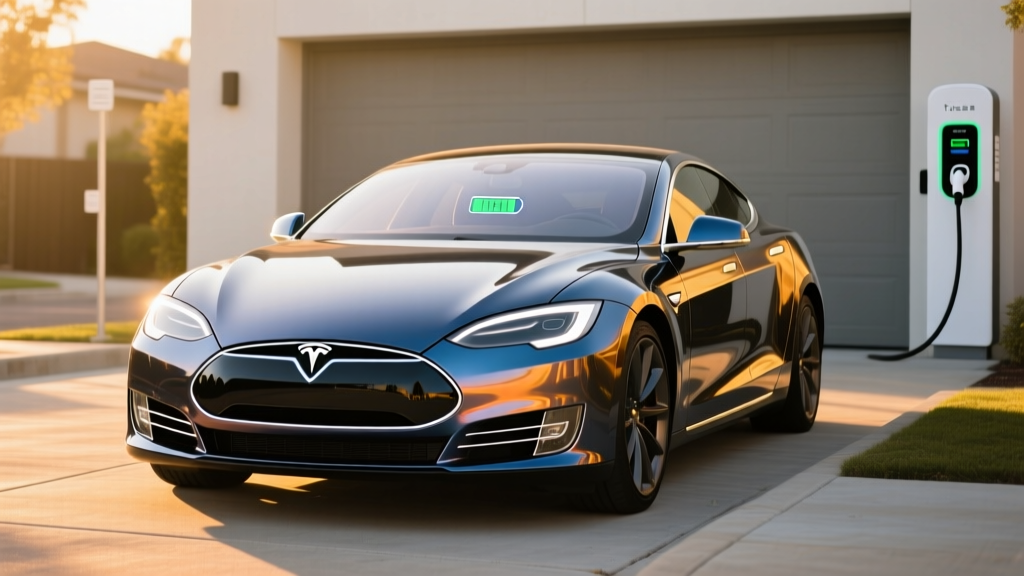
The 2019 Tesla Model S 100D occupies a unique position in the used-EV landscape. It was the last model year before Tesla's 2021 "Palladium" refresh redesigned the sedan from the ground up, and it carried the largest usable battery Tesla had ever fitted to a production car at that point. With an EPA-estimated 335 miles of range, dual-motor all-wheel drive, and access to the Supercharger network, the 100D remains one of the most capable long-distance electric sedans available on the secondary market — even against newer competitors.
But buying a six-year-old EV requires careful scrutiny of battery health, charging hardware limitations, and the realities of owning a vehicle that predates Tesla's current architectural advances. This profile covers every spec, real-world expectation, and ownership consideration you need before signing the paperwork.
| Spec | Value |
|---|---|
| EPA Range | 335 miles |
| Battery (Usable) | ~98 kWh (NMC chemistry) |
| Drivetrain | Dual-motor AWD |
| Horsepower | ~417 hp (combined) |
| 0–60 mph | 4.1 seconds |
| MPGe (Combined) | 102 MPGe |
| Efficiency | 33 kWh/100 mi |
| Max DC Fast Charge | ~120 kW (V2 Supercharger) |
| 10–80% DC Charge | ~45 minutes |
| Level 2 Home Charge | 11.5 kW (~34 mi/hr) |
| Cargo Volume | 26.3 cu ft (rear) + 5.3 cu ft (frunk) |
| Rear Legroom | 35.4 inches |
| Battery Warranty (Original) | 8 years / 150,000 miles |
| Original MSRP | ~$94,000 (base) |
Range & Efficiency: EPA Sticker vs. Real-World Miles
The 2019 Model S 100D earned an EPA-estimated 335 miles of range — a figure that placed it at the top of the EV market when new. The 100 kWh battery pack (approximately 98 kWh usable) uses NMC (nickel manganese cobalt) chemistry, which prioritizes energy density over the cycle-life longevity of LFP packs. For a luxury sedan designed for cross-country travel, that tradeoff made sense.
Real-World Range Expectations:
- Mixed city/highway (moderate climate): ~290–320 miles
- Sustained highway (70–75 mph): ~260–290 miles
- Cold weather (below 32°F / 0°C): ~220–260 miles (20–30% reduction typical for NMC packs without a heat pump)
- Aggressive driving / mountain terrain: ~240–270 miles
The 2019 Model S does not have a heat pump — it uses resistive cabin heating, which draws significantly more energy in winter conditions than the heat pumps Tesla introduced with the 2021 refresh. Plan for meaningful range loss in cold climates.
Efficiency is rated at 102 MPGe combined (33 kWh per 100 miles) per fueleconomy.gov. That's competitive for a large luxury sedan, though newer EVs like the Lucid Air and refreshed Model S achieve better efficiency through improved aerodynamics and powertrain refinements.
Charging Speed: Supercharger V2 and Home Level 2
Charging hardware is where the 2019 Model S 100D shows its age most clearly. Tesla's V3 Supercharger network (capable of 250 kW) was just beginning deployment in 2019, and the Model S 100D's battery management system caps DC fast-charging at approximately 120 kW peak even when connected to a V3 stall. The newer Model S Plaid and Long Range variants (2021+) can accept up to 250 kW.
| Charging Level | Power / Rate | Speed / Time |
|---|---|---|
| Level 1 (120V outlet) | ~1.4 kW | ~4 mi/hr added |
| Level 2 (240V, 48A) | 11.5 kW | ~34 mi/hr added |
| DC Fast (V2 Supercharger) | ~120 kW peak | 10–80% in ~45 min |
| DC Fast (V3 Supercharger) | Capped ~120 kW | 10–80% in ~45 min (no V3 advantage) |
| CCS Adapter (Electrify America, etc.) | ~120 kW peak | Similar to Supercharger V2 |
Charging curve reality: The 100D's large battery means it sustains relatively high charge rates longer than smaller packs — you'll see close to 100+ kW from roughly 10% to 50% SoC, then a gradual taper. Above 80%, charging slows dramatically to protect cell health, as with all lithium-ion packs. Expect the final 20% (80–100%) to add another 30–40 minutes.
For home charging, the onboard charger accepts up to 11.5 kW on a 48-amp Level 2 circuit (requiring a 60-amp breaker). A full overnight charge from near-empty takes roughly 9–10 hours. Most owners with daily commutes of 30–60 miles will only need to replenish 10–20 kWh overnight, which takes 1–2 hours on Level 2.
Performance & Drivetrain
The 100D uses Tesla's dual-motor all-wheel-drive setup — one AC induction motor on each axle. Combined output is approximately 417 horsepower, delivering a 0–60 mph time of 4.1 seconds. That's brisk for a full-size luxury sedan, though the Performance variant (with Ludicrous Mode) cuts that to 2.4 seconds.
The adaptive air suspension provides adjustable ride height and damping, which helps with both highway stability and navigating steep driveways or snow-covered roads. However, air suspension on the 2019 Model S has a known maintenance history — replacement struts can cost $1,500–$2,500 per corner if they fail out of warranty.
Interior, Tech & Driver Assistance
The pre-refresh Model S interior uses a portrait-oriented 17-inch touchscreen that controls virtually every vehicle function — climate, navigation, media, vehicle settings, and even the glovebox release. The 2019 model year received the updated "Hardware 3" (HW3) Autopilot computer, which is significant because it supports Tesla's current Full Self-Driving (Supervised) software. Earlier Model S vehicles with HW2 or HW2.5 cannot run the latest FSD builds without a costly retrofit.
Driver assistance: Basic Autopilot (Traffic-Aware Cruise Control and Autosteer) comes standard. Enhanced Autopilot and Full Self-Driving (Supervised) were optional add-ons. FSD (Supervised) is a SAE Level 2 system — the driver must remain fully engaged, with hands on the wheel and eyes on the road, at all times. It is not a self-driving system.
ADAS Limitations: Tesla Autopilot and FSD (Supervised) are SAE Level 2 driver-assist systems. They do not replace an attentive driver. The system can struggle with construction zones, faded lane markings, adverse weather, and complex intersections. The driver is legally responsible for all vehicle operation.
Cargo and passenger space: The Model S offers 26.3 cubic feet behind the rear seats and 5.3 cubic feet in the front trunk (frunk), for a total of 31.6 cu ft. That's generous for a sedan. Rear legroom is 35.4 inches — adequate for adults but tighter than the BMW 5 Series or Mercedes E-Class. The hatchback-style liftback (rather than a traditional trunk) makes loading bulky items easier.
Pricing, Used Market & Federal Tax Credit
When new, the 2019 Model S 100D started at approximately $94,000 before options and destination charges. Well-equipped examples with Enhanced Autopilot, premium interior upgrades, and larger wheels pushed past $110,000.
In the 2026 used market, a 2019 Model S 100D with 60,000–90,000 miles typically sells for $35,000–$50,000 depending on condition, mileage, battery health, and Autopilot package. Low-mileage examples with FSD transferable to the new owner command a premium.
Does It Qualify for the Federal Used-EV Tax Credit?
The §25E Previously Owned Clean Vehicle Credit (not §30D, which applies only to new vehicles) offers up to $4,000 or 30% of the sale price (whichever is lower) for qualifying used EVs. Here are the current IRS requirements as of 2026:
- Sale price cap: Vehicle must sell for $25,000 or less
- Buyer income cap: AGI must not exceed $75,000 (single), $112,500 (head of household), or $150,000 (joint)
- Vehicle age: Must be at least 2 model years old (2019 qualifies)
- Dealer requirement: Must purchase from a licensed dealer (private-party sales excluded)
- First transfer since 2022: The credit can only be claimed once per vehicle after August 16, 2022
The practical reality: Most 2019 Model S 100D examples sell well above the $25,000 price cap, meaning the vast majority of buyers will not qualify for the federal used-EV credit. If you find a high-mileage example priced at or below $25,000 from a dealer, and your income falls within the caps, the credit could reduce your cost by up to $4,000. Check current rules at IRS.gov.
Note: The new-vehicle §30D credit (up to $7,500) does not apply to used purchases. State and local incentives may also be available — check your state's energy office or AFDC incentive database.
Battery Health, Warranty & Long-Term Ownership
The 2019 Model S 100D's battery and drive unit warranty was 8 years or 150,000 miles (whichever comes first), with a minimum 70% capacity retention guarantee. For a 2019 model, that warranty window is expiring or has already expired in 2027, depending on the original in-service date. This is a critical consideration for used buyers.
Battery degradation data: Tesla's NMC packs in the 100 kWh configuration typically show 8–12% degradation over the first 100,000 miles based on fleet data aggregated by TeslaFi and community reports. A 100D that started with 335 miles of EPA range may display 295–310 miles at 100% charge after 70,000 miles — a normal and acceptable loss. Rapid degradation beyond 15% should trigger a warranty claim if still within the coverage window.
Battery replacement cost: Out of warranty, a replacement 100 kWh pack from Tesla costs approximately $15,000–$22,000 (parts and labor), depending on whether a refurbished or new pack is installed. Third-party shops may offer lower pricing. This is the single largest financial risk of owning an older Model S.
Pre-purchase checklist for used buyers:
- Request a battery health report (State of Health %) from Tesla or pull data via the car's Service Menu
- Verify HW3 Autopilot computer is installed (Settings → Software → look for "Autopilot Computer: Hardware 3")
- Check air suspension functionality — cycle through ride heights and listen for compressor strain
- Confirm whether FSD is included and transferable (Tesla's FSD transfer policy changes periodically)
- Review service history for drive unit replacements, MCU (screen) upgrades, and recall completion
Pros & Cons
Pros
- 335-mile EPA range still competitive in 2026
- Access to Tesla Supercharger network (reliability leader)
- Over-the-air updates still supported
- HW3 Autopilot computer (supports current FSD builds)
- Spacious hatchback cargo area + frunk
- Air suspension for adjustable ride height
- Strong performance (4.1s 0–60) for a luxury sedan
Cons
- DC fast-charging capped at ~120 kW (slower than modern EVs)
- No heat pump (significant cold-weather range loss)
- Battery warranty expiring or expired (replacement $15K–$22K)
- Pre-refresh interior feels dated vs. 2021+ Model S
- Air suspension and MCU are known failure points
- Rear legroom tighter than German luxury rivals
- Likely ineligible for federal used-EV tax credit (above $25K cap)
- No CCS native port (adapter required for non-Tesla networks)
Who Should Buy the 2019 Model S 100D?
Choose the 2019 Model S 100D if:
- You want a long-range luxury EV for road trips and rely on the Supercharger network
- Your budget is $35K–$50K and you want maximum range per dollar on the used market
- You value OTA updates and a still-supported software platform
- You can charge at home and don't depend solely on public DC fast charging
Look elsewhere if:
- You live in a cold climate and need a heat pump for winter efficiency (consider 2021+ Model S, Hyundai Ioniq 5, or Kia EV6)
- You need the fastest possible DC charging for frequent road trips (120 kW peak is slow by 2026 standards)
- You want current-generation interior design and rear-seat comfort (the 2021+ refresh or Lucid Air are better)
- You need a battery warranty with remaining coverage (look for CPO or newer models)
Frequently Asked Questions
What is the real-world range of the 2019 Tesla Model S 100D?
The EPA rates it at 335 miles, but expect 260–290 miles on sustained highway drives, and as low as 220–260 miles in freezing weather due to the lack of a heat pump and NMC battery chemistry. In mild city driving, 300–320 miles is achievable.
How fast does the 2019 Model S 100D charge?
On DC fast charging (Supercharger or CCS adapter), it peaks at approximately 120 kW, achieving a 10–80% charge in about 45 minutes. At home on a 48-amp Level 2 charger (11.5 kW), you gain roughly 34 miles of range per hour.
Does the 2019 Model S 100D qualify for the federal EV tax credit?
The new-vehicle §30D credit no longer applies. The used-EV §25E credit (up to $4,000) requires a sale price of $25,000 or less and buyer income within IRS caps. Most 2019 Model S 100D examples sell above $25,000, making them ineligible in practice. Verify current rules at IRS.gov.
Is the 2019 Model S 100D worth buying vs. newer used EVs?
It depends on your priorities. For pure range and Supercharger access at $35K–$50K, it's hard to beat. But if you need fast DC charging, a heat pump, or a modern interior, the 2021+ Model S Long Range, Hyundai Ioniq 5, or a used Lucid Air Pure may be better choices — though typically at higher prices.
What are the biggest risks of buying a used 2019 Model S 100D?
The primary risks are battery degradation beyond warranty coverage (replacement costs $15,000–$22,000), air suspension failure ($1,500–$2,500 per corner), and the MCU1 touchscreen potentially needing replacement. A pre-purchase inspection and battery health report are essential.
Does the 2019 Model S 100D support Tesla's Full Self-Driving?
Yes, provided the vehicle has the Hardware 3 (HW3) Autopilot computer, which most 2019 models received. FSD (Supervised) is a Level 2 driver-assist system that requires full driver engagement — it is not autonomous driving. FSD purchase transfers depend on Tesla's current policy at time of sale.