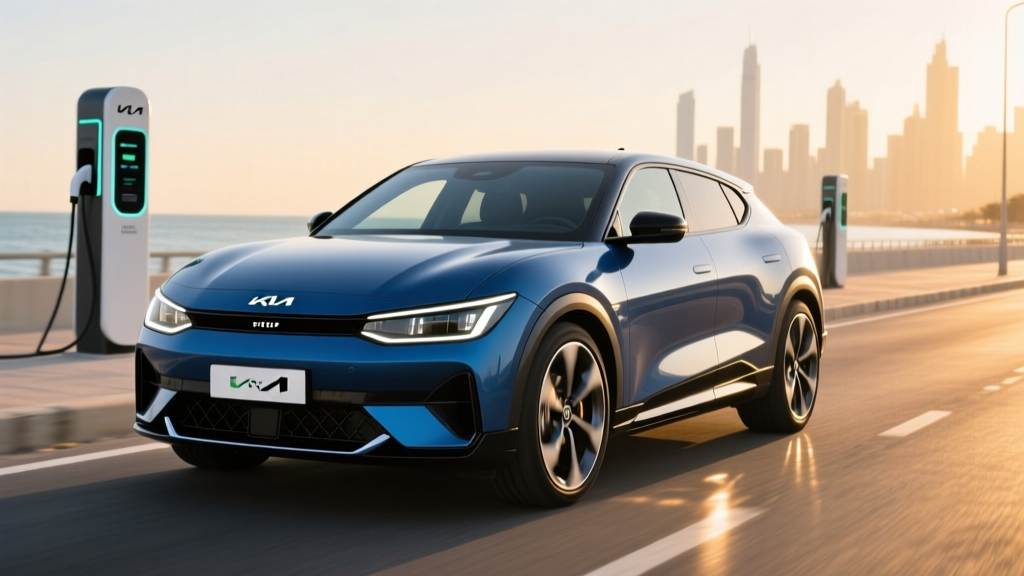
Quick Verdict: The 2023 Kia EV6 Wind in 2026
The 2023 Kia EV6 Wind remains one of the most compelling used and certified-pre-owned electric SUVs available in 2026. Built on Hyundai Motor Group's E-GMP 800V architecture, it delivers class-leading DC fast-charging speeds, a spacious cabin, and a 310-mile EPA range that holds up credibly in real-world driving. For buyers navigating the current used-EV market, the Wind trim — positioned between the base Light and top GT-Line — offers the best balance of features, range, and value.
With the federal used-EV tax credit (§25E) potentially shaving up to $4,000 off a qualifying pre-owned example, and Kia's transferable 10-year/100,000-mile powertrain warranty still in effect for many 2023 models, the EV6 Wind punches well above its current market price.
Range, Battery, and Efficiency
The 2023 EV6 Wind comes equipped with the long-range 77.4 kWh usable battery pack (NMC lithium-ion chemistry — nickel manganese cobalt). In the rear-wheel-drive (RWD) configuration, the EPA rates it at 310 miles of combined range. The all-wheel-drive (AWD) variant drops to 282 miles EPA due to the added front motor and weight.
EPA sticker: 310 mi (RWD) / 282 mi (AWD)
Expect in practice: 260–285 mi on mixed highway driving at 70–75 mph. In cold weather (below 32°F), plan for 210–245 mi due to battery resistance and cabin heating load. City/regenerative driving can match or slightly exceed the EPA figure.
The EV6's heat pump (standard on Wind and above) mitigates cold-weather loss better than many competitors, but physics is physics — a 15–25% range reduction in deep winter is normal for NMC packs.
| Spec | RWD | AWD |
|---|---|---|
| EPA Range | 310 mi | 282 mi |
| Battery (usable) | 77.4 kWh, NMC | |
| MPGe (combined) | 117 MPGe | 106 MPGe |
| kWh/100 mi | 29 | 32 |
| Horsepower | 225 hp | 320 hp |
| Torque | 258 lb-ft | 446 lb-ft |
| 0–60 mph | 7.2 sec | 5.1 sec |
| Drivetrain | Rear motor | Dual motor |
| Max DC Charge Rate | 239 kW (peak) | |
| 10–80% DC Time | ~18 min (optimal conditions) | |
| Level 2 Rate | 10.9 kW (48A) | |
| Cargo (rear seats up) | 24.4 cu ft | |
| Cargo (rear seats folded) | 50.2 cu ft | |
| Rear Legroom | 39.4 in | |
Efficiency is a strong suit. At 29 kWh/100 mi (RWD), the EV6 Wind is among the most efficient midsize electric crossovers in its class, translating to lower per-mile charging costs whether you're at home or on the road. According to fueleconomy.gov, the RWD Wind achieves 134 MPGe city / 98 MPGe highway.
Charging Speed: 800V Architecture Makes a Difference
This is where the EV6's E-GMP platform separates itself from most competitors. The 800V electrical architecture allows DC fast-charging at up to 239 kW peak — a figure that, more importantly, sustains well through the critical 10–80% state-of-charge window.
| Level | Power | Speed | Notes |
|---|---|---|---|
| Level 1 (120V) | ~1.4 kW | ~4 mi/hr | Emergency/trickle only |
| Level 2 (240V, 48A) | 10.9 kW | ~35 mi/hr | Full charge in ~7.5 hrs |
| DC Fast (350 kW station) | 239 kW peak | 10–80% in ~18 min | Requires CCS adapter or native CCS station |
| DC Fast (150 kW station) | ~130 kW avg | 10–80% in ~28 min | More common station type |
Charging curve reality: The EV6 pulls its peak ~239 kW between roughly 10–55% SoC, then tapers progressively. From 55–80%, expect rates to drop to 100–130 kW. This taper is normal for NMC chemistry protecting cell longevity. The 18-minute 10–80% figure assumes a 350 kW-capable charger (like Electrify America's newest stalls), preconditioned battery, and moderate ambient temperatures. On a typical 150 kW station, budget closer to 28 minutes.
NACS adapter note for 2026: The 2023 EV6 shipped with a CCS1 port. Kia now offers an official NACS adapter (or you can source a third-party unit) enabling access to Tesla Supercharger V3/V4 stalls. At V3 stalls (250 kW max), the EV6 will charge near its peak rate. This dramatically expands road-trip charging options compared to CCS-only access.
Performance and Driving Impressions
The RWD Wind's 225 hp and 7.2-second 0–60 time aren't headline-grabbing, but they're more than adequate for merging, passing, and daily driving. Electric torque delivery makes it feel quicker than the numbers suggest around town. The AWD variant's 320 hp and 5.1-second sprint bring genuine sportiness.
Ride quality leans toward the comfortable side of sporty — the Wind lacks the adaptive suspension found on the GT-Line but handles broken pavement and highway expansion joints with composure. Steering is precise if slightly light on feedback. Regenerative braking offers four levels (selectable via paddle shifters), with the strongest setting enabling near one-pedal driving, though it doesn't come to a complete hold without touching the brake.
Interior, Tech, and Practicality
The EV6's cabin is one of its strongest selling points. The Wind trim includes:
- Dual 12.3-inch curved displays (instrument cluster + infotainment)
- Wireless Apple CarPlay and Android Auto
- Heated and ventilated front seats, heated steering wheel
- Highway Driving Assist 2 (HDA2) — SAE Level 2 driver assistance with lane-centering and adaptive cruise
- Remote Smart Parking Assist (on equipped examples)
- Vehicle-to-Load (V2L) capability — power laptops, appliances, or camp gear from the onboard outlet
Cargo and space: With 24.4 cu ft behind the rear seats and 50.2 cu ft folded, the EV6 Wind offers practical SUV utility. Rear legroom at 39.4 inches is generous — adults ride comfortably on longer trips. The front trunk (frunk) on AWD models is small (~0.7 cu ft, enough for a charging cable bag); RWD models get a slightly larger 1.8 cu ft frunk.
Drawbacks to note: The infotainment system uses a touch-sensitive climate control bar that doubles as a media shortcut bar — it's fiddly and prone to accidental inputs. Rear visibility is compromised by the thick C-pillar and sloping roofline, making the surround-view camera (included on Wind) essential for parking. Some owners report the heads-up display on the Wind trim is smaller and less feature-rich than the augmented-reality unit on the GT-Line.
Pricing, Tax Credits, and Ownership Costs
When new, the 2023 EV6 Wind carried an MSRP starting at $50,900 (RWD) and $52,900 (AWD), before destination. In the 2026 used and CPO market, expect to find examples ranging from $28,000 to $38,000 depending on mileage, condition, and region.
| Item | RWD | AWD |
|---|---|---|
| Original MSRP | $50,900 | $52,900 |
| Typical 2026 Used/CPO Price | $29,000–$36,000 | $31,000–$38,000 |
| Federal Used-EV Credit (§25E) | Up to $4,000 (30% of sale price, max $4,000) | |
| Effective Price After Credit | From ~$25,000 | From ~$27,000 |
Tax credit eligibility (IRS §25E — used EVs): The federal used-EV credit provides 30% of the sale price, up to a maximum of $4,000. Per IRS guidelines, you must:
- Buy from a licensed dealer (private sales don't qualify)
- Have modified adjusted gross income below $75,000 (single) / $150,000 (married filing jointly) / $112,500 (head of household)
- The vehicle must be at least 2 model years old (a 2023 model qualifies in 2025+)
- The sale price must be $25,000 or less to claim the full $4,000 — above that, you receive 30% of the price
- You can only claim this credit once every 3 years
Always consult a tax professional and confirm eligibility before finalizing a purchase. Point-of-sale transfer is available at participating dealers.
Warranty and Battery Longevity
Kia's warranty coverage is among the best in the industry, and it transfers to subsequent owners on CPO vehicles:
- Basic: 5 years / 60,000 miles
- Powertrain: 10 years / 100,000 miles (original owner; transfers as 5yr/60k to second owner unless CPO)
- EV Battery: 10 years / 100,000 miles — guaranteed to retain at least 70% of original capacity. Per NHTSA and owner reports, NMC packs in the E-GMP platform are showing minimal degradation in the 2–4% range after 30,000–50,000 miles.
Battery replacement cost: Out of warranty, a full EV6 battery replacement runs $12,000–$18,000 based on current dealer estimates. However, module-level repair is often possible for isolated cell issues at significantly lower cost. The 70% capacity retention warranty threshold is standard but worth noting — it means Kia won't replace a pack that still holds 71% even if you've lost 29% of range.
Pros and Cons
Pros
- 239 kW DC fast charging — among the fastest in its class
- 310-mile EPA range (RWD) is genuinely road-trip capable
- Spacious cabin with 39.4" rear legroom
- V2L outlet adds camping/emergency utility
- Strong efficiency at 29 kWh/100 mi (RWD)
- Excellent 10-year battery warranty
- NACS adapter access to Supercharger network
Cons
- Touch-sensitive climate/media bar is frustrating
- Rear visibility is poor — camera is mandatory
- AWD range drops to 282 mi
- Small frunk, especially on AWD
- Used-EV credit phase-out: price must be ≤$25,000 for full $4,000
- No Apple CarPlay/Android Auto wireless on some early builds (check VIN)
Who Should Buy the 2023 Kia EV6 Wind?
Best for: Daily commuters with home Level 2 charging who take 2–4 road trips per year. The 310-mile range and 18-minute fast-charging capability make highway travel practical, while the spacious interior handles family duties. The Wind's feature set (ventilated seats, HDA2, V2L) delivers premium value without the GT-Line's price premium.
Consider alternatives if: You need maximum cargo space (the Hyundai Ioniq 5 offers a flat load floor and slightly more volume), you tow regularly (the EV6 is rated for only 2,300 lbs with trailer brakes), or you live in extreme cold without garage parking (LFP-equipped rivals like the base Tesla Model Y may better suit, though with less range).
Frequently Asked Questions
What is the real-world range of the 2023 Kia EV6 Wind?
In mixed driving at moderate temperatures, expect 260–285 miles from the RWD model and 240–260 from the AWD. Cold weather (below freezing) reduces this by 15–25%. Highway driving at 75+ mph also cuts range by roughly 10–15% versus the EPA combined figure.
How fast does the EV6 Wind charge at home and on the road?
At home on a 240V/48A Level 2 charger, it adds roughly 35 miles of range per hour, filling the pack in about 7.5 hours. On a 350 kW DC fast charger, it peaks at 239 kW and charges 10–80% in approximately 18 minutes. On a more common 150 kW station, plan for about 28 minutes for the same 10–80% session.
Does the 2023 EV6 Wind qualify for the federal EV tax credit?
As a used vehicle in 2026, it can qualify for the §25E used-EV credit (up to $4,000) if purchased from a dealer, your income is below IRS thresholds ($75K single / $150K married), and the sale price is at or below $25,000 for the full credit. The original §30D new-vehicle credit no longer applies. Check current rules at IRS.gov.
Is the EV6 Wind worth buying versus competitors in 2026?
Against the Hyundai Ioniq 5 (its platform sibling), the EV6 trades a bit of cargo space and retro styling for slightly better range and a sportier driving position. Versus the Tesla Model Y, the EV6 offers a quieter ride, more intuitive controls, and comparable charging speed — but less Supercharger convenience without the NACS adapter. Against the Ford Mustang Mach-E, the EV6 charges faster and rides more comfortably. On balance, it's one of the strongest used-EV values available.
What's the biggest concern when buying a used 2023 EV6 Wind?
Verify battery state of health (SoH) through a dealer diagnostic or the car's built-in battery health readout. Confirm whether the powertrain warranty transferred (second owners get 5yr/60k unless it's a Kia CPO). Check for the NACS adapter if Supercharger access matters to you. And test the touch-sensitive climate bar — many owners find it annoying enough to be a dealbreaker.
Can the EV6 Wind use Tesla Superchargers?
Yes, with Kia's official NACS adapter (or a compatible third-party adapter). The EV6's CCS1 port connects to NACS-equipped Superchargers, and at V3 stalls (250 kW), you'll charge near the EV6's peak rate. Kia's infotainment and the Kia Access app support Supercharger routing as of recent software updates.