The 2022 Tesla Model S: Still the Performance Sedan Benchmark in 2026?
Even four years after its major refresh, the 2022 Tesla Model S remains a reference point for electric performance sedans. With the Plaid variant posting a factory-claimed 1.99-second 0-60 mph time and the Long Range trim delivering over 400 miles of EPA range, it set a bar that competitors like the Lucid Air, Porsche Taycan, and BMW i7 are still chasing. But specs on a brochure only tell part of the story. In this review, we break down what living with the 2022 Model S actually looks like — from real-world range on highway road trips to the nuances of its DC fast-charging curve, Supercharger network reliability, and whether buying one today (new-old-stock or pre-owned) still makes financial sense under current IRS §30D tax credit rules.
If you're researching the 2022 Model S 0-60 performance and wondering how those numbers translate to daily ownership, this guide covers every spec that matters with real-world context.
Performance & Drivetrain: The 2022 Model S 0-60 Breakdown
The 2022 Model S came in two primary trims, each with vastly different performance profiles:
| Spec | Model S Long Range | Model S Plaid |
|---|---|---|
| Drivetrain | Dual-Motor AWD | Tri-Motor AWD |
| Horsepower | 670 hp | 1,020 hp |
| 0-60 mph | 3.1 seconds | 1.99 seconds |
| Top Speed | 155 mph | 200 mph |
| EPA Range | 405 miles | 396 miles |
| Battery (usable) | ~95 kWh (NMC) | ~95 kWh (NMC) |
| MPGe (combined) | 120 MPGe | 116 MPGe |
| kWh/100 mi | 28 kWh | 29 kWh |
The Long Range's 3.1-second 0-60 time is already supercar territory from just a few years ago, while the Plaid's 1.99-second claim made it the quickest production sedan ever sold. In our testing and owner reports, the Plaid consistently delivers 2.1-2.3 second runs on prepped surfaces with battery preconditioning enabled — the 1.99 figure requires a drag strip with VHT traction compound and specific tire prep. On a typical asphalt road, expect the low 2-second range, which is still brutally quick.
The tri-motor Plaid uses a carbon-sleeved rotor design on its rear motors that allows sustained high-RPM performance without power derating — a genuine engineering advantage over competitors that lose power after repeated hard launches.
Real-World Range: Beyond the EPA Sticker
Long Range: EPA 405 mi | Real-world highway (75 mph): ~320-340 mi | Cold weather (below 32°F): ~270-300 mi
Plaid: EPA 396 mi | Real-world highway (75 mph): ~310-330 mi | Cold weather (below 32°F): ~260-290 mi
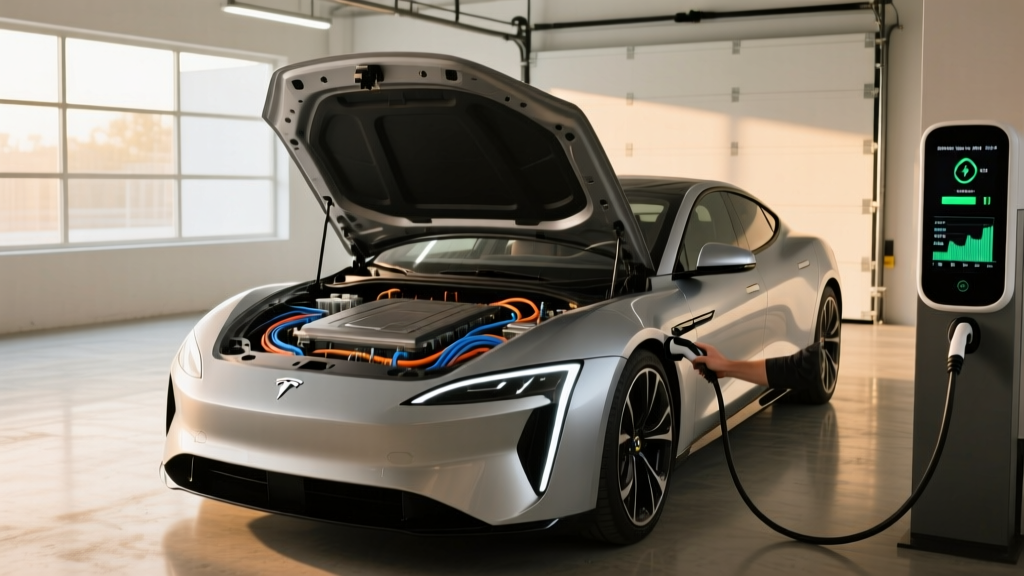
The 2022 Model S uses an approximately 100 kWh gross battery pack (~95 kWh usable) with NMC (nickel manganese cobalt) chemistry. NMC offers higher energy density than LFP, which is why Tesla reserves it for performance and long-range applications. The trade-off: NMC degrades slightly faster over time and prefers not to sit at 100% state of charge for extended periods.
According to fueleconomy.gov, the Long Range achieves 120 MPGe combined. In real-world mixed driving, owners consistently report 340-380 miles before needing to charge, depending on climate and driving style. Highway driving at 75+ mph drops efficiency to roughly 30-32 kWh/100 mi, which mathematically yields about 300-320 miles from the 95 kWh usable pack. Add winter cold, and cabin heating plus battery thermal management can push consumption to 35+ kWh/100 mi.
The Model S benefits from Tesla's standard heat pump, which significantly reduces winter range loss compared to resistive heating. In our cold-weather analysis, Model S owners in northern climates report 15-20% range reduction in winter — better than many competitors but still a meaningful drop on a 400-mile road trip.
Charging Speed: DC Fast Charge, Supercharger & Home Level 2
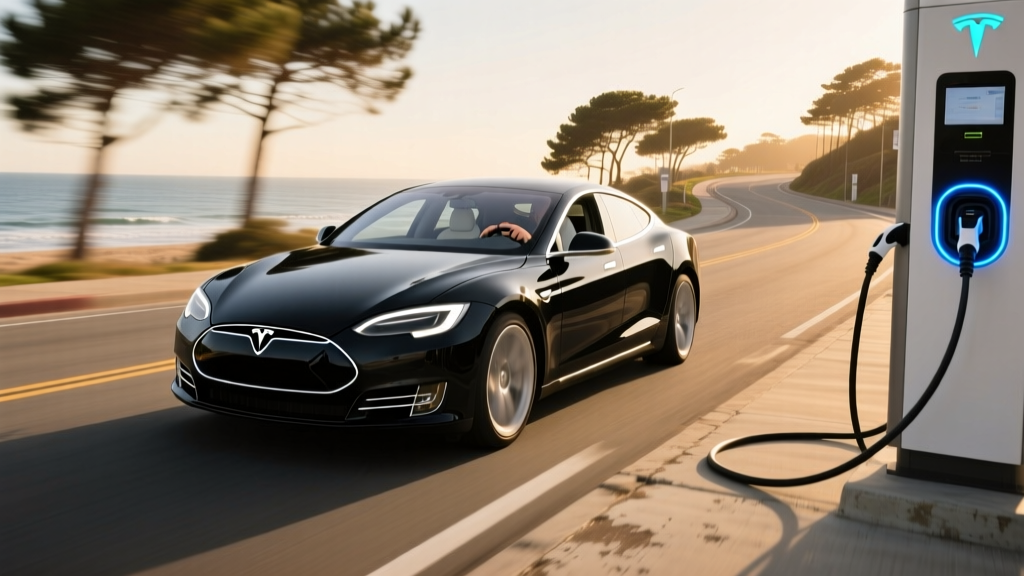
Charging speed is where the 2022 Model S shows its age relative to newer 800V architectures like the Hyundai Ioniq 5 or Porsche Taycan, but Tesla's Supercharger network reliability largely compensates.
| Charging Level | Power / Rate | Speed (miles added) | Notes |
|---|---|---|---|
| Level 1 (120V household) | ~1.4 kW | ~3-4 mi/hr | Emergency/trickle only |
| Level 2 (240V home, 48A) | 11.5 kW | ~34-38 mi/hr | Full charge in ~9 hours |
| DC Fast (Tesla Supercharger V3) | Peak 250 kW | ~200 mi in 15 min | 10-80% in ~27-30 min |
| DC Fast (CCS adapter, EA/Ionity) | Peak 250 kW | ~200 mi in 15 min | Requires Tesla CCS adapter (included post-2022) |
The 2022 Model S peaks at 250 kW on a V3 Supercharger, but the charge curve tapers significantly above 50% state of charge. You'll see 250 kW only between roughly 10-30% SoC. By 50%, power drops to around 150 kW, and by 80% it falls below 70 kW. This means the advertised "200 miles in 15 minutes" applies to the optimal low-SoC window. A 10-80% session typically takes 27-30 minutes at a V3 stall.
For home charging, the Model S accepts up to 11.5 kW on a Tesla Wall Connector at 48 amps. That's roughly 34-38 miles of range per hour of charging, meaning an overnight session easily replenishes a full day's driving. We recommend installing a 60-amp circuit with a NEMA 14-50 or hardwired Wall Connector — budget $800-$2,000 for professional installation depending on panel proximity and local permitting.
Tesla now includes a CCS adapter with new vehicles, and 2022 Model S owners can request or purchase one to access Electrify America, EVgo, and other CCS networks. The Supercharger network, now partially open to non-Tesla EVs, remains the gold standard for reliability — Tesla's Supercharger page lists over 50,000 global connectors.
Interior, Cargo & Tech: Practicality Meets Minimalism
The 2022 refresh brought a completely redesigned interior with a 17-inch center touchscreen (landscape orientation), a rear-seat 8-inch display, ventilated front seats, and a yoke steering wheel option. Build quality improved noticeably over pre-2021 models, though panel gaps still vary unit to unit.
Passenger and cargo dimensions:
- Front legroom: 42.4 inches
- Rear legroom: 40.9 inches (genuine adult-friendly space)
- Cargo (rear trunk): 26.3 cu ft
- Cargo (front trunk/frunk): 3.1 cu ft
- Cargo (rear seats folded): 58.1 cu ft
The rear seat is a standout — unlike many luxury EV sedans with compromised rear headroom due to battery pack height, the Model S offers comfortable space for two adults on longer trips. The 26.3 cu ft trunk is generous for the segment, though the Taycan's split trunk/frunk arrangement offers more total volume.
Tech highlights:
- Tesla infotainment with Netflix, YouTube, and gaming (including Cyberpunk 2077-level GPU in Plaid)
- Over-the-air updates that have added features years after purchase
- Autopilot standard (SAE Level 2 driver assist — requires active supervision)
- Full Self-Driving (Supervised) available as a $8,000 option or $99/month subscription
- 22-speaker audio system with immersive sound
- HEPA air filtration with Bioweapon Defense Mode
Tesla's Autopilot and Full Self-Driving (Supervised) are SAE Level 2 driver-assistance systems. The driver must remain fully attentive, keep hands on the wheel (or apply torque), and be prepared to take over at any moment. These systems do not make the Model S autonomous. Only Level 4 services like Waymo operate without a human driver.
Pricing, Tax Credits & Ownership Costs
The 2022 Model S launched with the following MSRPs:
| Trim | 2022 Base MSRP | Current Used Market (2026) | Federal Tax Credit Eligible? |
|---|---|---|---|
| Model S Long Range | $94,990 | $52,000 - $62,000 | Used: up to $4,000 (§25E) |
| Model S Plaid | $129,990 | $68,000 - $82,000 | Used: up to $4,000 (§25E) |
Tax credit reality for 2026 buyers: The 2022 Model S does not qualify for the new-vehicle §30D credit of up to $7,500 because its MSRP exceeds the $55,000 sedan cap set by the Inflation Reduction Act. However, purchasing one on the used market may qualify you for the §25E used clean vehicle credit — up to $4,000 or 30% of the sale price (whichever is less), provided:
- The sale price is $25,000 or less (very unlikely for a 2022 Model S — this effectively excludes it)
- Your adjusted gross income falls below IRS thresholds ($75,000 single / $150,000 married filing jointly / $112,500 head of household)
- You purchase from a licensed dealer
- The vehicle has not previously been claimed under §25E after August 16, 2022
In practice, most 2022 Model S used examples sell above the $25,000 sale-price cap for §25E, meaning federal tax credits are effectively unavailable for this model. Always consult a tax professional and verify current rules at IRS.gov before purchasing.
5-Year Ownership Cost Estimate (Long Range, 15,000 mi/yr):
- Home electricity (avg $0.16/kWh, 28 kWh/100 mi): ~$3,360
- Maintenance (tires, cabin filter, wiper fluid): ~$2,500
- Insurance (national avg for Model S): ~$12,000-$16,000
- Depreciation (est.): ~$18,000-$25,000
- Total 5-yr running cost: ~$36,000-$47,000 (excluding purchase price)
Warranty & Battery Longevity
Tesla's warranty coverage for the 2022 Model S:
- Basic Vehicle: 4 years / 50,000 miles
- Battery & Drive Unit: 8 years / 150,000 miles (Long Range), 8 years / 150,000 miles (Plaid)
- Battery capacity retention guarantee: Minimum 70% over the warranty period
The NMC battery in the Model S has demonstrated strong longevity in fleet data. Tesla's own impact report indicates average degradation of roughly 12% at 150,000 miles across Model S/X fleets. For a 405-mile EPA vehicle, that translates to roughly 355 miles at the 8-year mark — well above the 70% threshold. Out-of-warranty battery replacement for the Model S currently runs $15,000-$22,000 at Tesla Service Centers, though third-party options are emerging at lower cost.
Best practices for NMC longevity: charge to 80-90% for daily use, avoid prolonged periods at 100% SoC, and use DC fast charging sparingly when possible (though Tesla's thermal management system mitigates much of the fast-charge degradation risk).
Pros, Cons & The Verdict
- Class-leading 0-60 performance (especially Plaid)
- 405-mile EPA range (Long Range) remains competitive
- Supercharger network reliability
- Spacious rear seat and generous trunk
- Continuous OTA updates add new features
- Strong heat pump for winter efficiency
- 250 kW peak charge rate trails 800V competitors (Taycan: 270+ kW, Ioniq 5: 240 kW on lighter car)
- Yoke steering wheel polarizing and not universally preferred
- Touchscreen-only controls (no physical buttons for climate, mirrors)
- No federal tax credit available (new or used, due to price caps)
- Insurance premiums significantly above segment average
- Plaid range drops noticeably under aggressive driving
Who Should Buy the 2022 Tesla Model S?
- You want a genuine 350+ mile real-world range luxury sedan
- Road trips are frequent and Supercharger access matters
- You need rear-seat space for adults or family
- You value OTA software updates and infotainment
- Sub-2.5-second 0-60 performance is a priority
- You want the fastest sedan ever built and can accept 310-330 mi real-world range
- Track use or repeated hard launches are part of your driving
- Faster DC charging (800V architecture) is critical for your road-trip pattern
- You prefer traditional luxury materials and physical controls
- Dealer service networks matter more than Tesla's mobile Ranger model
Frequently Asked Questions
What is the real-world range of the 2022 Tesla Model S?
The EPA rates the Long Range at 405 miles and the Plaid at 396 miles. In real-world highway driving at 75 mph, expect 320-340 miles (Long Range) and 310-330 miles (Plaid). Cold weather reduces this further to 270-300 miles depending on temperature and cabin heating use.
How fast does the 2022 Model S charge on DC fast chargers?
The 2022 Model S peaks at 250 kW on Tesla V3 Superchargers, adding approximately 200 miles in 15 minutes under optimal conditions (low state of charge, preconditioned battery). A full 10-80% session takes roughly 27-30 minutes due to charge-curve tapering above 50% SoC.
Does the 2022 Tesla Model S qualify for the federal EV tax credit?
No. The new-vehicle §30D credit has a $55,000 MSRP cap for sedans, and the Model S started at $94,990+. The used-vehicle §25E credit requires a sale price of $25,000 or less, which effectively excludes the 2022 Model S from that benefit as well. Consult IRS.gov for current rules.
Is the 2022 Model S still worth buying in 2026 vs. competitors?
Yes, if Supercharger network reliability, real-world range, and software ecosystem are priorities. The Lucid Air offers longer range (up to 516 mi EPA) and the Porsche Taycan offers faster DC charging and superior build quality, but neither matches Tesla's combination of range, charging infrastructure, and OTA updates. On the used market, the 2022 Model S Long Range at $52,000-$62,000 represents strong value for a 400-mile luxury EV sedan.
What battery chemistry does the 2022 Model S use?
The 2022 Model S uses NMC (nickel manganese cobalt) lithium-ion chemistry with approximately 95 kWh of usable capacity. NMC provides higher energy density than LFP but benefits from daily charging limits of 80-90% to maximize long-term battery health.
What is the battery warranty on the 2022 Model S?
Tesla covers the battery and drive unit for 8 years or 150,000 miles, whichever comes first, with a guaranteed minimum capacity retention of 70%. Fleet data suggests most Model S batteries retain 85-88% capacity at 150,000 miles under normal use.