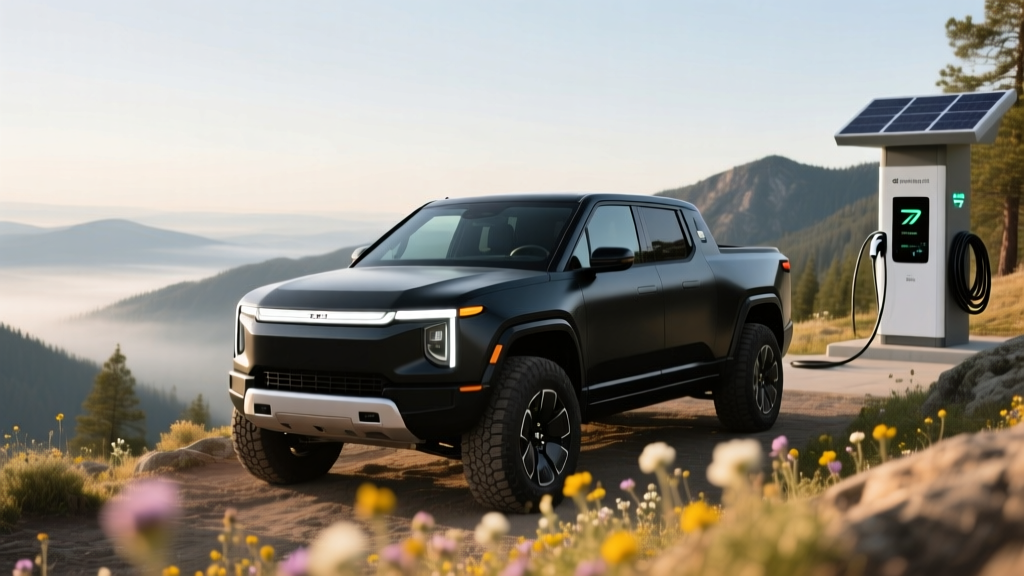
The 2022 Rivian R1T Launch Edition arrived as the first mainstream electric pickup truck, blending supercar-level acceleration with genuine off-road capability and a cleverly designed gear tunnel. Now several model years into production, the Launch Edition remains a benchmark for what an electric truck can do — and a cautionary tale about early-production growing pains. Here's everything you need to know about its real-world range, charging behavior, ownership costs, and whether it still holds up against the expanding field of electric trucks.
Quick Specs at a Glance
| Specification | 2022 Rivian R1T Launch Edition |
|---|---|
| EPA Range | 314 miles (Large Pack) |
| Battery Capacity | 135 kWh usable (NMC chemistry) |
| Drivetrain | Quad-Motor AWD |
| Horsepower | 835 hp |
| 0–60 mph | 3.0 seconds |
| Max DC Fast Charge | 200 kW (peak) |
| 10–80% DC Charge Time | ~47 minutes |
| Level 2 Home Charging | 11.5 kW (~25 mi/hr) |
| MPGe (combined) | 70 MPGe |
| Efficiency | 48 kWh/100 mi |
| Towing Capacity | 11,000 lbs |
| Payload Capacity | 1,764 lbs |
| Bed Length | 4'6" (54 in) + Gear Tunnel |
| Battery Warranty | 8 years / 175,000 miles |
| Original MSRP (Launch Ed.) | $73,000 (before destination) |
Range and Efficiency: EPA Sticker vs. Reality
Real-World Expectation: Plan for 250–280 miles on mixed highway driving at 70–75 mph. In cold weather (below 30°F), expect a 15–25% reduction, dropping effective range to roughly 210–240 miles. The R1T's boxy aerodynamics and 7,100+ lb curb weight work against it at sustained highway speeds.
The 135 kWh Large Pack battery uses NMC (nickel-manganese-cobalt) chemistry, which offers higher energy density than LFP but is more sensitive to sustained 100% state-of-charge storage. Rivian recommends daily charging to 85–90% for battery longevity, which effectively gives you about 270 miles of usable daily range.
Efficiency sits at 48 kWh per 100 miles according to fueleconomy.gov, which translates to 70 MPGe combined. That's notably less efficient than a sedan-shaped EV, but competitive within the electric truck segment. City driving with regenerative braking can push efficiency higher; sustained highway towing will slash it dramatically — expect as low as 1.5–2.0 miles per kWh when towing near max capacity.
Charging Performance: DC Fast and Home Level 2
| Charging Level | Power / Rate | Speed | Notes |
|---|---|---|---|
| Level 1 (120V) | 1.4 kW | ~3 mi/hr | Emergency/trickle only; ~100+ hrs for full charge |
| Level 2 (240V, 48A) | 11.5 kW | ~25 mi/hr | Full charge in ~12 hours; ideal overnight home setup |
| DC Fast Charge | 200 kW (peak) | ~140 mi in 20 min | Peak rate sustained only to ~30% SoC; tapers significantly above 60% |
The R1T Launch Edition uses a CCS1 connector for DC fast charging. At a 200+ kW station (such as Electrify America's 350 kW chargers), the truck peaks near 200 kW but cannot sustain that rate. The charge curve drops to roughly 150 kW by 40% state-of-charge and further to under 100 kW past 60%. The result is a 10–80% session taking approximately 47 minutes — respectable for a 135 kWh pack, but noticeably slower than newer 800V-architecture trucks like the Hyundai Ioniq 5-based platforms.
For home charging, the onboard 11.5 kW AC charger requires a 60-amp dedicated circuit (NEMA 14-50 or hardwired Wall Connector). Expect a full 0–100% charge in roughly 12 hours. Most owners charging nightly from 20–80% will need only 5–6 hours. Rivian's Wall Connector is bundled with some configurations, but any quality Level 2 EVSE (ChargePoint, Emporia, Grizzl-E) rated for 48 amps works identically.
The R1T also supports NACS (Tesla Supercharger) access via adapter. Rivian began shipping NACS adapters to owners in 2024, opening up the Supercharger network — a significant advantage for road-trip charging reliability.
Performance and Drivetrain
The quad-motor all-wheel-drive system puts an independent motor at each wheel, producing 835 horsepower and 908 lb-ft of torque. The result is a 3.0-second 0–60 mph sprint — faster than most sports cars, let alone a 7,100-pound truck. The tank-turn feature (spinning left and right wheels in opposite directions) remains a party trick more than a practical tool, but the individual-wheel torque vectoring provides exceptional traction control on loose surfaces.
Ride height is adjustable via a four-corner air suspension system, offering up to 14.9 inches of ground clearance in Off-Road mode and lowering for easy loading at Park mode. Approach, departure, and breakover angles are genuinely competitive with body-on-frame off-roaders, and the R1T has completed the Rubicon Trail and similar extreme routes in stock form.
On-road, the air suspension delivers a surprisingly compliant ride for a solid-rear-axle truck, though some owners report wind noise at highway speeds from the large side mirrors and flat windshield angle. Steering is direct and well-weighted, and the low center of gravity (battery pack under the floor) minimizes body roll compared to conventional trucks.
Interior, Cargo, and the Gear Tunnel
The R1T seats five with generous front and rear legroom (41.3 inches front, 36.4 inches rear). The cabin materials in the Launch Edition include ash wood trim, vegan leather, and a minimalist 15.6-inch center touchscreen running Rivian's proprietary infotainment software. A 12.3-inch digital gauge cluster and a 6.8-inch lower screen for climate controls round out the layout.
Cargo versatility is where the R1T genuinely innovates:
- Bed: 4'6" (54 inches) with a locking tonneau cover and integrated air compressor
- Gear Tunnel: A 11.6 cu ft pass-through compartment between cab and bed, accessible from both sides — ideal for skis, camping gear, or long items
- Frunk: 11.1 cu ft front trunk with a drain plug (doubles as a cooler)
- Max Cargo Volume: Combined bed + tunnel + frunk provides roughly 67 cu ft of enclosed storage
The gear tunnel is the R1T's signature feature and something no competitor offers. It's lockable, weather-sealed, and optionally fitted with Rivian's Camp Kitchen slide-out unit (a $5,000+ add-on that includes an induction cooktop and sink).
Pricing, Tax Credits, and Ownership Costs
| Cost Factor | Amount |
|---|---|
| Original Launch Edition MSRP | $73,000 (+ $1,800 destination = $74,800) |
| Federal §30D Tax Credit (New, 2022) | Not eligible — exceeded $80,000 MSRP cap when equipped; income limits apply |
| Used EV Credit (§25E, post-2024) | Up to $4,000 if purchased used under $25,000 (unlikely at current resale values) |
| Current Resale (2026 market, ~40k mi) | $48,000–$62,000 depending on condition/mileage |
| Estimated Insurance (annual) | $2,200–$3,100 |
| Estimated Electricity Cost (15k mi/yr) | $1,080–$1,440/yr at $0.15/kWh avg |
The 2022 R1T Launch Edition was originally priced at $73,000 before destination, though most buyers added the Camp Kitchen, premium paint, or 22-inch wheels, pushing as-tested prices to $80,000–$85,000. Under current IRS §30D rules, new EVs must have an MSRP under $80,000 for trucks (vans, SUVs) and meet battery-sourcing and critical-mineral requirements to qualify for the full $7,500 credit. The R1T Launch Edition's MSRP and Rivian's battery sourcing made full credit eligibility inconsistent for 2022 deliveries. Always verify current-year rules at IRS.gov §30D.
For 2026 buyers looking at the used market, the §25E used-EV credit offers up to $4,000 (30% of sale price, capped) on vehicles sold for $25,000 or less — a threshold most used R1Ts do not meet. Check current eligibility at IRS.gov §25E and consult a tax professional.
Warranty and Long-Term Reliability
Rivian provides an 8-year / 175,000-mile battery and drive unit warranty, with a minimum 70% capacity retention threshold during that period. The bumper-to-bumper warranty is 5 years / 60,000 miles. This battery warranty is among the most generous in the industry by mileage, though the capacity threshold (70%) is standard rather than exceptional.
As an early-production vehicle, the 2022 Launch Edition has seen more than its share of service campaigns. Common issues reported by owners include:
- Software glitches requiring OTA updates or service-center reflashes
- Air suspension calibration drift
- Panel gap inconsistencies (improved in later production runs)
- 12V auxiliary battery failures (a known issue across many EVs)
Rivian's service network has expanded significantly since 2022, with mobile service vans handling many repairs at the owner's location. However, body-shop capacity and parts availability remain pain points for collision damage. Insurance premiums reflect this — expect $200–$300/month in many states.
Driver Assistance and Technology
The R1T Launch Edition ships with Rivian's Driver+ system, a Level 2 driver-assistance suite per SAE classification. This includes adaptive cruise control, lane-centering, automatic emergency braking, and highway assist on mapped roads. It is not autonomous — the driver must remain engaged with hands on the wheel and eyes on the road at all times.
The infotainment system runs on a Qualcomm Snapdragon processor with over-the-air update capability. Software improvements have been substantial since launch — Rivian has added features like enhanced route planning with charging stops, improved regenerative braking profiles, and Dog Mode via OTA. Apple CarPlay and Android Auto are supported wirelessly.
Pros and Cons
Pros
- 3.0-second 0–60 with 835 hp — supercar quick
- Gear tunnel is genuinely innovative and useful
- 11,000-lb towing with integrated trailer brake controller
- Air suspension with 14.9" ground clearance for real off-road use
- 8-yr / 175,000-mi battery warranty
- NACS Supercharger access via adapter (post-2024)
- Frunk with drain plug — doubles as a cooler
Cons
- 314-mi EPA range drops to ~220 mi when towing
- 200 kW peak DC charging is outpaced by newer 350 kW+ trucks
- 4'6" bed is short for traditional truck buyers
- High insurance premiums ($2,200–$3,100/yr)
- Early-production build quality inconsistencies
- No federal tax credit for most original buyers
- Service network still thinner than legacy OEMs
Who Should Buy the 2022 Rivian R1T Launch Edition?
Choose the R1T Launch Edition if: You want a dual-purpose adventure vehicle and daily driver, need genuine off-road capability with instant electric torque, value the gear tunnel for outdoor gear, and can charge at home. It's ideal for outdoor enthusiasts, tech-forward truck buyers, and those who tow a boat or camper on weekends.
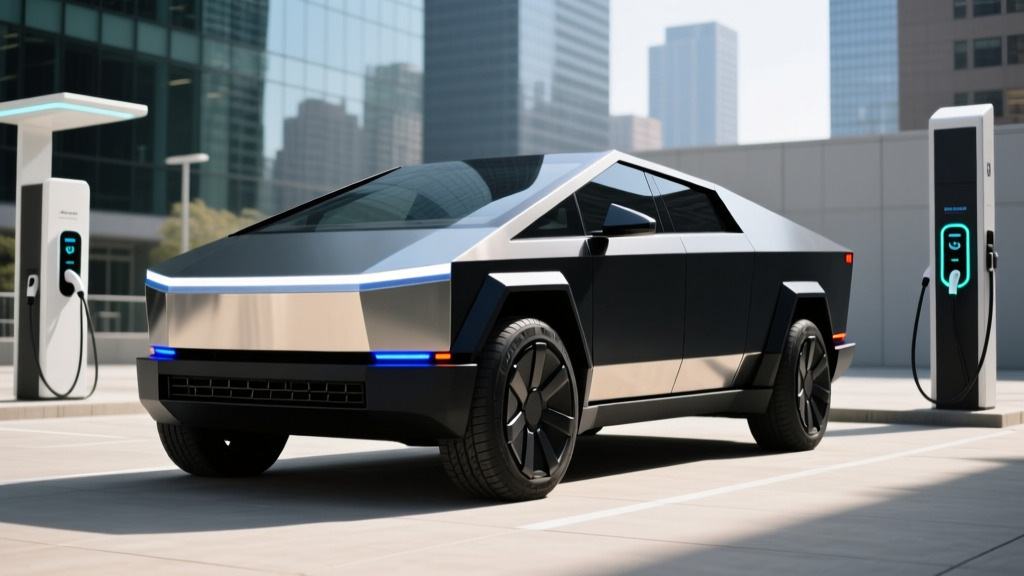
Look elsewhere if: You need a long bed for work-site hauling (the 4'6" bed is limiting), you regularly tow over 200+ miles (range collapses under load), you want the lowest possible charging stop times, or you need a proven reliability track record with cheap insurance. Consider the Ford F-150 Lightning for work use or the Tesla Cybertruck for range and charging speed.
Frequently Asked Questions
What is the real-world range of the 2022 Rivian R1T Launch Edition?
The EPA rates it at 314 miles on the Large Pack with 20-inch wheels. Real-world highway driving at 70–75 mph yields 250–280 miles. Cold weather (below 30°F) reduces this further to 210–240 miles. Towing near max capacity can drop range to 150–180 miles.
How fast does it charge at home and on the road?
At home on a Level 2 (240V, 48A) charger, the R1T adds about 25 miles per hour, reaching a full charge in roughly 12 hours. On DC fast chargers, it peaks at 200 kW and charges from 10–80% in approximately 47 minutes, though the charge curve tapers significantly above 60% SoC.
Does the 2022 R1T Launch Edition qualify for the federal EV tax credit?
For original new purchasers, §30D eligibility was inconsistent due to the MSRP cap ($80,000 for trucks) and battery-sourcing requirements. Many Launch Edition buyers with options exceeding $80,000 did not qualify. For used buyers in 2026, the §25E credit requires a sale price under $25,000, which most used R1Ts exceed. Consult a tax professional and verify at IRS.gov.
Is the R1T worth buying versus the Ford F-150 Lightning or Tesla Cybertruck?
The R1T wins on off-road capability, the gear tunnel, and build ambition. The F-150 Lightning wins on bed length (5.5' or 6.5'), lower pricing, and a more established dealer/service network. The Cybertruck wins on range (340+ mi EPA), charging speed (250+ kW peak), and stainless-steel durability. Your priority — adventure, work, or efficiency — determines the winner.
What are the biggest reliability concerns?
As a 2022 first-year production vehicle, expect more service visits than a mature-platform truck. Software issues, air suspension calibration, and panel gaps were common early complaints. Rivian's OTA update cadence has addressed many software issues. The 8-year/175,000-mile battery warranty provides long-term peace of mind.
Can I use Tesla Superchargers with the R1T?
Yes. Rivian began shipping NACS adapters in 2024, enabling R1T owners to access Tesla's Supercharger network (V3 and V4 stalls). This dramatically expands road-trip charging options in rural areas where CCS networks remain sparse.