The compact electric crossover segment has no shortage of contenders, but the Rivian Hatchback R3X — the adventure-oriented trim of Rivian's smaller R3 platform — is attempting something few have pulled off: blending genuine off-road capability with an affordable entry price and a usable daily-driver footprint. After spending time with the preliminary specifications and Rivian's production timeline, here is everything you need to know about range, charging, pricing, and whether this EV earns a spot on your shortlist.
Rivian R3X Specifications at a Glance
| Specification | Rivian R3X (Dual-Motor AWD) |
|---|---|
| EPA Est. Range | ~300+ miles (Standard battery); ~330+ miles (Max battery) |
| Battery Capacity | ~85 kWh usable (Standard); ~105 kWh usable (Max) |
| Battery Chemistry | LFP (Standard); NMC (Max) |
| Drivetrain | Dual-Motor AWD |
| Horsepower | ~400 hp (est.) |
| 0–60 mph | ~4.5 seconds (est.) |
| Max DC Fast Charge | ~200 kW (peak) |
| 10–80% DC Charge | ~25 minutes |
| Level 2 Home Charge | 11.5 kW (~37 mi/hr) |
| Charging Port | NACS (native Tesla Supercharger access) |
| Cargo Volume | ~25 cu ft (rear seats up); ~55 cu ft (folded) |
| Base MSRP | ~$45,000 (Standard); ~$52,000 (Max) |
| Battery/Powertrain Warranty | 8 years / 100,000 miles |
Real-World Range: What the EPA Number Doesn't Tell You
EPA Estimated: ~300 miles (Standard Battery) / ~330 miles (Max Battery)
Real-World Expectation:
• City/commuter driving: 290–315 miles (regen braking recovers energy in stop-and-go)
• Highway (70–75 mph sustained): 240–270 miles (aerodynamic drag dominates at speed)
• Cold weather (below 32°F): 210–250 miles (battery resistance + cabin heating draw)
• Off-road / low-speed trail use: Highly variable; expect 3–4 miles per kWh depending on terrain
The R3X's boxy, adventure-focused styling trades some aerodynamic efficiency for interior volume and ground clearance. On highway road trips at 75 mph, expect to see roughly 3.2–3.5 miles per kWh, which translates to approximately 250–270 miles of real range from the standard ~85 kWh pack before you'll want to stop. This is typical for the compact crossover class — the Hyundai Ioniq 5 and Tesla Model Y exhibit similar highway range compression.
Cold weather is the more significant variable. Lithium-based batteries lose efficiency in freezing temperatures, and the R3X's cabin heating demands are substantial in sub-zero conditions. Rivian's heat pump system (confirmed for the R3 platform) mitigates this compared to resistive heating, but plan for a 15–25% range reduction in sustained winter driving. If your commute is under 80 miles round-trip, this won't matter day-to-day. If you're planning a January road trip from Denver to Moab, route planning around DC fast chargers becomes essential.
Charging Speed: DC Fast, Level 2, and the NACS Advantage
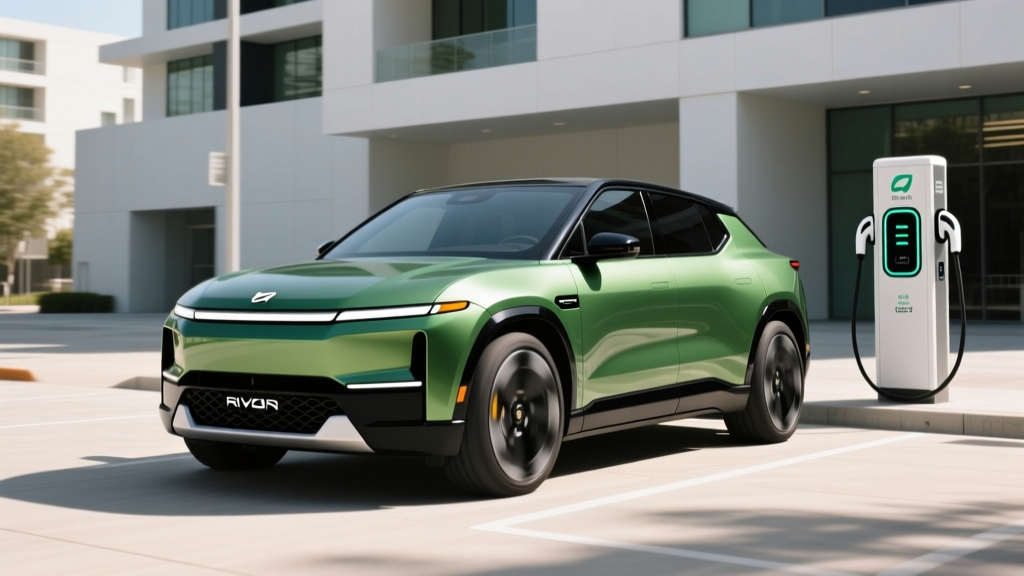
Charging speed is where the R3X's value proposition gets tested against the segment. Rivian has confirmed the R3 platform will ship with a native NACS (North American Charging Standard) port, meaning direct access to Tesla's Supercharger network — currently the most reliable and widespread DC fast-charging infrastructure in the U.S., with over 20,000 stalls nationwide.
| Charging Level | Power / Rate | Miles Added per Hour | Use Case |
|---|---|---|---|
| Level 1 (120V household) | ~1.4 kW | ~4 mi/hr | Overnight trickle; emergency top-off |
| Level 2 (240V home) | 11.5 kW | ~37 mi/hr | Daily home charging; full charge in ~8–9 hrs |
| DC Fast (peak) | ~200 kW | ~650+ mi/hr (peak) | Road trips; 10–80% in ~25 min |
The ~200 kW peak DC fast-charge rate is competitive but not class-leading. The Hyundai Ioniq 5 peaks at ~240 kW on 800V architecture, and the Kia EV6 achieves similar figures. However, peak kW is only part of the story — what matters is the sustained charge curve. Rivian's battery thermal management system (carried over from the R1S/R1T platform's proven architecture) should sustain strong charging rates through the 20–60% state-of-charge window before tapering above 80%, as all lithium batteries do to protect cell longevity.
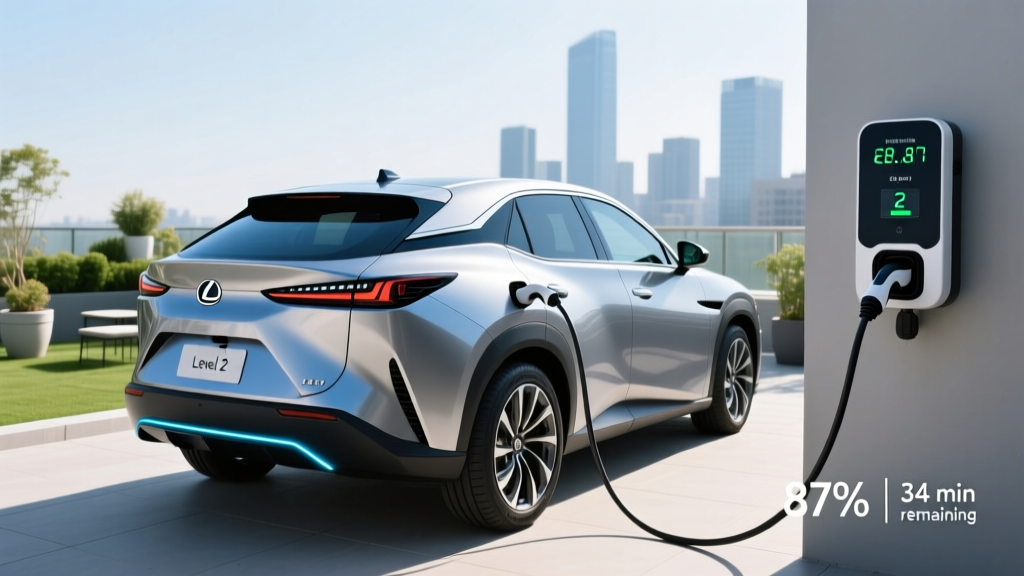
For home charging, the 11.5 kW onboard charger means a standard 48-amp Level 2 wall connector on a 60-amp circuit will replenish the standard battery from empty in roughly 8 hours — ideal for overnight charging on a time-of-use electricity plan. Budget approximately $500–$1,500 for professional Level 2 installation depending on your electrical panel's capacity and the run distance from panel to garage. If your home has a 100-amp main panel, a panel upgrade to 200 amps ($1,500–$3,000) may be necessary.
Performance and Drivetrain: Adventure-Ready Dual-Motor AWD
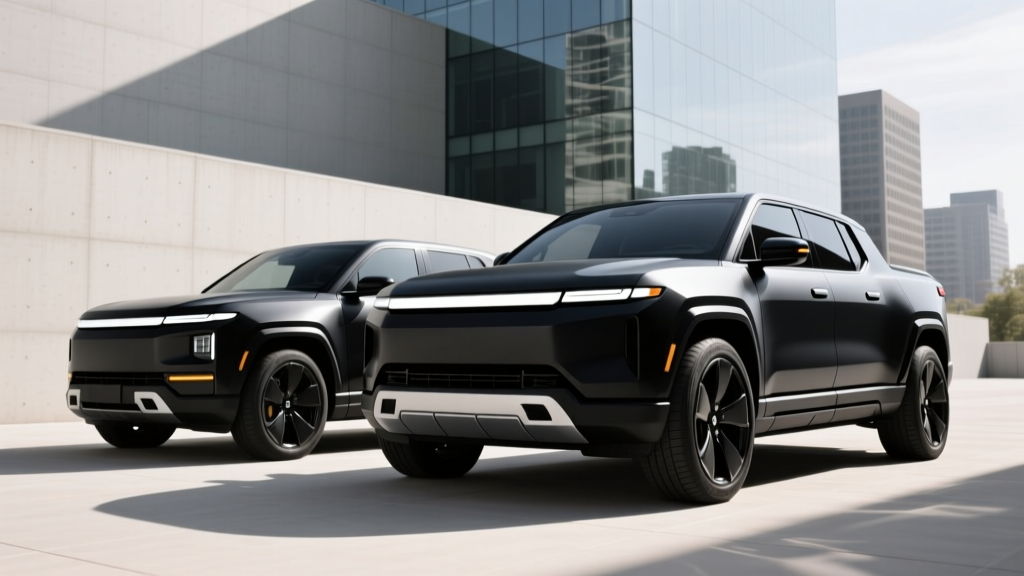
The R3X designation signals Rivian's adventure trim — analogous to the R1T Adventure package. This means dual-motor all-wheel drive as standard, increased ground clearance (estimated 8.5+ inches), and underbody protection for light off-road use. Rivian has not published final horsepower figures, but based on the dual-motor output from the R1 platform and the R3's lighter curb weight, expect approximately 400 horsepower and a 0–60 mph time around 4.5 seconds.
That puts the R3X in interesting territory: quicker than a Subaru Crosstrek or Toyota RAV4 TRD Off-Road by a wide margin, while offering torque-vectoring AWD that can send power to individual wheels for traction on loose surfaces. Rivian's quad-motor option (available on R1 vehicles) is not expected for the R3 platform, keeping cost and complexity down for this price point.
The R3X is expected to offer drive modes including All-Purpose, Sport, Snow, and an Off-Road mode that adjusts throttle mapping, regen strength, and traction control for trail use. Approach and departure angles should exceed typical compact crossovers, though Rivian has not published final geometry specs. Towing capacity is anticipated at approximately 3,000–3,500 pounds — adequate for a small trailer or pair of dirt bikes, but not in the same league as the R1T's 11,000-pound rating.
Pricing, Trims, and Federal Tax Credit Eligibility
Rivian has positioned the R3 platform as its volume play, targeting a starting price significantly below the R1S and R1T. The R3X adventure trim sits above the base R3 (single-motor RWD) in the lineup.
| Trim / Battery | Est. MSRP | Potential §30D Credit | Effective Price |
|---|---|---|---|
| R3 (Base, RWD, Standard) | ~$38,000 | Up to $7,500 | ~$30,500 |
| R3X (AWD, Standard Battery) | ~$45,000 | Up to $7,500 | ~$37,500 |
| R3X (AWD, Max Battery) | ~$52,000 | Up to $7,500 | ~$44,500 |
- MSRP Cap: SUVs, vans, and pickup trucks must have an MSRP at or below $80,000. The R3X qualifies on price.
- Income Cap: Modified adjusted gross income must not exceed $150,000 (single), $225,000 (head of household), or $300,000 (joint filers).
- Battery Sourcing: The full $7,500 credit requires meeting BOTH critical-mineral and battery-component sourcing thresholds set by the IRS. If only one threshold is met, the credit is $3,750. Rivian's supply chain for the R3 platform has not been fully detailed — confirm eligibility at purchase.
- Point-of-Sale Transfer: As of 2024, buyers can transfer the credit to the dealer for an immediate price reduction at purchase, rather than waiting to claim it on their tax return.
Source: IRS §30D Clean Vehicle Credit. Eligibility rules are subject to legislative change. Consult a tax professional before relying on credit amounts.
Interior Space, Tech, and Daily Livability
The R3 is a compact crossover — think of it as Rivian's answer to the Volvo EX30 or the upcoming Tesla Model Q. Interior dimensions place it in the sub-compact-to-compact segment, with approximately 25 cubic feet of cargo space behind the second row and roughly 55 cubic feet with the rear seats folded. A front trunk (frunk) is expected to add an additional 3–5 cubic feet of sealed, weatherproof storage — a Rivian signature feature.
Legroom should accommodate adults in the rear for shorter trips, though the R3's wheelbase (shorter than the R1S) means rear knee room will be tighter than a Model Y or Ioniq 5. This is a vehicle optimized for couples, small families, or solo adventurers who need gear space more than passenger volume.
On the tech front, expect Rivian's latest-generation infotainment system running on a large central touchscreen (estimated 14–15 inches), wireless Apple CarPlay and Android Auto, over-the-air software updates, and Rivian's Driver+ suite of Level 2 driver-assistance features. Driver+ includes adaptive cruise control, lane-centering, and highway assist — but it is not a self-driving system. You must remain engaged with hands on the wheel at all times, consistent with SAE Level 2 automation.
Unique to the R3X: expect integrated roof rails with a dynamic load rating for rooftop tents, a gear tunnel or integrated storage solutions in the cargo area, and Rivian's Waypoints navigation that integrates charging stops and trail information. A camp kitchen accessory (similar to the R1T's) may be offered as a dealer-installed option.
Warranty and Long-Term Ownership
Rivian is expected to carry forward its current warranty structure for the R3 platform:
- Battery & Powertrain: 8 years / 100,000 miles (with a capacity retention threshold, typically 70% of original capacity)
- Bumper-to-Bumper: 5 years / 60,000 miles
- Roadside Assistance: 5 years / 60,000 miles
The choice of LFP (lithium iron phosphate) chemistry for the standard battery pack is significant for longevity. LFP cells tolerate more charge cycles with less degradation than NMC cells, and they can be routinely charged to 100% without the same longevity concerns. If you plan to keep the R3X for 10+ years and charge daily at home, the LFP standard pack may actually be the smarter ownership choice despite its lower range. The Max battery's NMC chemistry offers more energy density (and thus more range) but benefits from being charged to 80% for daily use and reserved at 100% only for road trips.
Insurance costs for Rivian vehicles have historically run 10–20% above comparable mainstream EVs, reflecting the brand's lower production volume and higher repair costs. Expect annual premiums in the $1,800–$2,400 range depending on your state, driving record, and coverage level. Get quotes before committing to a purchase.
How the R3X Stacks Up Against Competitors
The R3X doesn't have a direct rival that matches its adventure positioning at this price point, but cross-shoppers will inevitably compare it to several established models:
- Tesla Model Y: More interior space, faster Supercharger network access (though R3X now shares this via NACS), lower starting price on base trims. But the Model Y offers no off-road pretensions and its styling is ubiquitous.
- Hyundai Ioniq 5: Faster peak charging (800V architecture), more rear-seat room, strong value. Less ground clearance, no off-road capability.
- Volvo EX30: Similar compact footprint and price, premium interior. Smaller battery, less range, no adventure features.
- Subaru Solterra / Toyota bZ4X: Closest in spirit (AWD, adventure brand), but significantly less range (~220–250 mi EPA) and slower charging.
- Native NACS port = direct Tesla Supercharger access
- LFP battery option for longevity and daily 100% charging
- Genuine off-road capability in a compact EV footprint
- Expected ~$45K starting price (before credit) is competitive
- Rivian's OTA updates and software experience are top-tier
- Frunk + gear-focused storage solutions
- Compact rear seat — not ideal for tall passengers on long trips
- DC fast-charge speed (~200 kW) trails Ioniq 5's 800V system
- Rivian service center network is still expanding — coverage gaps in rural areas
- Boxy styling increases highway energy consumption vs. sleeker rivals
- Final EPA range and tax credit sourcing details still pending at launch
- Insurance premiums likely above segment average
Who Should Buy the Rivian R3X?
- Want a compact EV that can handle Forest Service roads, ski-resort parking lots, and weekend trailheads — not just grocery runs
- Can charge at home (Level 2) and want the LFP battery's long-term durability
- Value Tesla Supercharger access for road trips but don't want a Tesla
- Are a couple or small family who doesn't need three-row SUV space
- Want Rivian's software and OTA update experience at a lower price than the R1S
🔄 Look elsewhere if you:
- Need maximum rear-seat legroom for adult passengers regularly (consider Model Y or Ioniq 5)
- Prioritize the absolute fastest DC charging times (Ioniq 5 / EV6 with 800V)
- Live far from a Rivian service center and can't tolerate mobile-service-only coverage
- Need to tow more than ~3,500 pounds (step up to the R1T or F-150 Lightning)
Frequently Asked Questions
What is the real-world range of the Rivian R3X?
The R3X is targeting an EPA-estimated 300+ miles with the standard LFP battery and 330+ miles with the Max NMC battery. In real-world highway driving at 70–75 mph, expect approximately 240–270 miles from the standard pack. Cold weather (below freezing) will reduce this by 15–25%, so plan for 210–250 miles in winter conditions. City driving with regenerative braking returns results closer to the EPA sticker.
How fast does the Rivian R3X charge?
On a DC fast charger, the R3X peaks at approximately 200 kW, achieving a 10–80% charge in roughly 25 minutes under ideal conditions (warm battery, low state of charge at plug-in). At home on a Level 2 (240V, 48-amp) charger, the 11.5 kW onboard charger adds about 37 miles of range per hour, fully replenishing the standard battery overnight in about 8 hours. The native NACS connector means you can use Tesla Superchargers without an adapter.
Does the Rivian R3X qualify for the $7,500 federal EV tax credit?
The R3X's MSRP (estimated $45,000–$52,000) is well under the $80,000 SUV cap for the IRS §30D credit. However, the full $7,500 depends on battery-component and critical-mineral sourcing requirements that are subject to change. Your personal eligibility also depends on income limits ($150K single / $300K joint). Confirm your eligibility through the IRS or a tax professional before purchase, and ask Rivian directly about the R3's battery sourcing compliance at time of order.
Is the Rivian R3X worth buying over a Tesla Model Y or Hyundai Ioniq 5?
It depends on your priorities. If off-road capability, adventure-focused features, and a distinctive design matter to you, the R3X offers something neither the Model Y nor Ioniq 5 can match. If maximum interior space (Model Y) or the fastest DC charging (Ioniq 5) are your top criteria, those rivals have the edge. The R3X's NACS port eliminates the Supercharger-access advantage Tesla previously held. For outdoor-oriented buyers who want a compact EV, the R3X is likely the best option in its price class — provided a Rivian service center is accessible in your area.
When will the Rivian R3X be available to buy?
Rivian has targeted the first half of 2026 for initial R3 production at its Normal, Illinois factory. Reservations are open with a refundable deposit. Early production typically prioritizes reservation holders and higher-trim configurations, so the R3X (adventure trim) may be among the first variants delivered. Expect broader availability and shorter wait times by late 2026 or early 2027.
What battery chemistry does the R3X use, and does it matter?
The standard battery uses LFP (lithium iron phosphate) chemistry, which offers excellent cycle life, thermal stability, and the ability to charge to 100% routinely without accelerated degradation. The Max battery uses NMC (nickel manganese cobalt), which provides higher energy density (more range per pound) but benefits from daily charging limits of 80% for longevity. If you charge at home nightly and want a battery that will outlast the vehicle's ownership period, the LFP standard pack is arguably the better long-term choice.
Sources: Rivian R3 official page, IRS §30D Clean Vehicle Credit, U.S. DOE fueleconomy.gov. Specifications are based on manufacturer-announced data and may be revised prior to production. Always verify final EPA ratings, pricing, and tax credit eligibility at time of purchase.