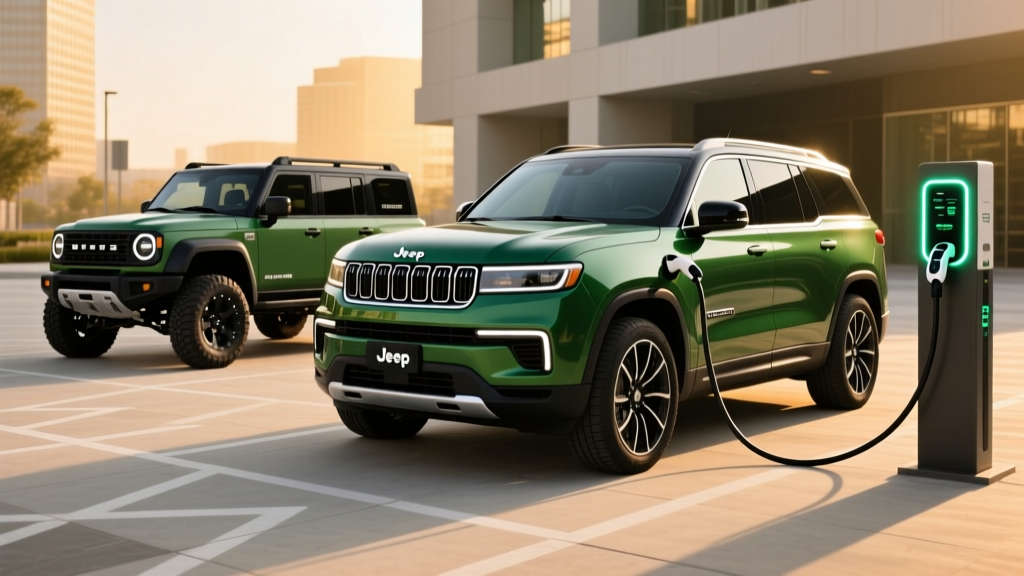
The short answer: Jeep currently sells two fully electric models for 2026: the Wagoneer S (a performance-oriented luxury SUV starting around $65,995) and the Recon (an off-road-focused SUV starting near $52,995). Both share Stellantis' STLA Large platform with ~100 kWh battery packs, dual-motor AWD, and EPA-estimated ranges between 270–320 miles depending on trim. Federal §30D tax credit eligibility depends on battery sourcing, your income, and MSRP caps — check current IRS rules before assuming a $7,500 credit.
Jeep's Electric Lineup: What's Actually Available
Jeep's transition to electric has been deliberate rather than rushed. For the 2026 model year, US buyers have two battery-electric options — both riding on the STLA Large architecture with 800-volt-capable electrical systems. Here's the spec breakdown:
| Spec | 2026 Wagoneer S | 2026 Recon |
|---|---|---|
| Base MSRP | $65,995 | $52,995 |
| EPA Range (est.) | ~300 mi | ~280 mi |
| Battery (usable) | ~100 kWh, NMC | ~100 kWh, NMC |
| Horsepower | 600 hp | ~450 hp |
| 0–60 mph | 3.4 sec | ~4.5 sec |
| Peak DC Charge Rate | ~250 kW | ~225 kW |
| 10–80% DC Charge | ~23 min | ~25 min |
| Level 2 Rate | 11.5 kW | 11.5 kW |
| Drivetrain | Dual-motor AWD | Dual-motor AWD (w/ e-lockers) |
| Battery Warranty | 8 yr / 100,000 mi | 8 yr / 100,000 mi |
Real-world range reality: The EPA sticker tells one story. In practice, expect the Wagoneer S to deliver roughly 250–270 miles on highway-heavy trips at 70–80 mph, and the Recon closer to 230–250 miles given its boxier aerodynamic profile and all-terrain tires. In cold weather (below 30°F), plan for a 20–30% reduction from EPA figures — meaning a 270-mile winter highway range from the Wagoneer S is realistic, not pessimistic. Both models include a heat pump, which helps mitigate cabin-heating energy drain compared to resistive heaters.
📊 Range Expectations (Wagoneer S)
EPA sticker: ~300 mi | Highway (75 mph): ~255 mi | Cold weather (20°F, mixed): ~210 mi | City/regen-heavy: ~310 mi
Charging: Speeds, Networks, and Home Setup
Both Jeep EVs use the NACS (Tesla North American Charging Standard) connector, giving them native access to Tesla Supercharger stalls — currently the largest and most reliable DC fast-charging network in the US. This was a significant advantage Stellantis secured by adopting NACS over CCS for its new EV platform.
| Level | Power | Miles Added per Hour | Where |
|---|---|---|---|
| Level 1 (120V) | ~1.4 kW | ~3–4 mi/hr | Standard outlet |
| Level 2 (240V) | 11.5 kW | ~30–35 mi/hr | Home wallbox, public Level 2 |
| DC Fast (peak) | 225–250 kW | ~600+ mi/hr (peak) | Supercharger, Electrify America |
Charging curve reality: The "250 kW peak" figure on the Wagoneer S applies only between roughly 10–35% State of Charge (SoC). Beyond 50%, the rate tapers significantly — expect ~120 kW around 60% SoC and ~50 kW above 80%. This is normal lithium-ion battery management, not a defect, but it means the last 20% takes disproportionately long. Plan your road-trip stops to charge from 10–80% and drive on.
Home charging costs: A Level 2 home installation (240V, 48-amp circuit) typically runs $800–$2,500 total, including the wallbox unit ($400–$700), licensed electrician labor ($400–$1,500), and permits ($50–$200). If your electrical panel needs a 200-amp upgrade, add $1,500–$3,000. At the national average electricity rate of ~$0.16/kWh, fully charging the Wagoneer S's 100 kWh pack costs roughly $16 at home — versus $55–$75 to fill a comparable gas SUV's tank at current fuel prices.
Jeep EV vs. Gas: The Real Ownership Cost Comparison
The honest question most Jeep buyers are asking: does going electric actually save money compared to a gas Wrangler or Grand Cherokee? The answer depends heavily on your driving volume, local electricity rates, and whether you can charge at home.
| 5-Year Cost Factor | Wagoneer S (EV) | Grand Cherokee 4xe (PHEV) | Grand Cherokee Gas V6 |
|---|---|---|---|
| Purchase Price (base) | $65,995 | $57,995 | $44,995 |
| Est. Federal Tax Credit | $0–$7,500* | $3,750–$7,500* | $0 |
| Fuel/Energy (75K mi) | ~$2,400 | ~$4,800 | ~$9,400 |
| Maintenance (5 yr) | ~$1,200 | ~$3,000 | ~$3,500 |
| Insurance (est. avg) | ~$11,500 | ~$9,800 | ~$8,500 |
| Est. Depreciation | ~$22,000 | ~$19,000 | ~$16,000 |
| 5-Year Total (approx.) | ~$93,600 | ~$88,100 | ~$82,400 |
*Tax credit eligibility depends on IRS §30D rules including buyer income caps ($150K single / $300K joint), MSRP caps ($80K for SUVs), and battery critical-mineral sourcing requirements. Verify current eligibility at irs.gov. Credit amounts shown are estimates and may differ at point of sale.
The EV wins on fuel and maintenance — no oil changes, fewer brake replacements thanks to regenerative braking, and electricity at roughly one-third the per-mile cost of gasoline. But higher insurance premiums (typically 25–40% more for EVs due to repair costs and battery replacement risk) and steeper depreciation in the current market partially offset those savings. For most buyers driving 12,000–15,000 miles annually with home charging access, the Wagoneer S reaches cost parity with a loaded gas Grand Cherokee around year 6–7, not year 1.
Tax Credits and Incentives: What You Actually Qualify For
Federal §30D tax credit rules have tightened considerably. Here's the eligibility checklist for 2026:
- MSRP cap: Vehicle base price must not exceed $80,000 for SUVs (both Jeep EVs qualify)
- Income cap: Adjusted gross income ≤ $150,000 (single) / $225,000 (head of household) / $300,000 (married filing jointly)
- Battery sourcing: Increasing percentages of critical minerals and battery components must be sourced from US or free-trade-agreement countries — this requirement tightens annually and may reduce or eliminate credit for some trims
- Point-of-sale transfer: You can transfer the credit to the dealer at purchase, reducing your out-of-pocket cost immediately rather than waiting for tax filing
- One credit per VIN: The vehicle must be new, purchased for personal use, and primarily used in the US
As of 2026, battery-sourcing requirements have become the primary disqualifier for many EVs. Stellantis has been working to localize its STLA Large battery supply chain, but the exact credit amount available for each Jeep EV trim can change mid-year. Always verify current eligibility on fueleconomy.gov before signing a purchase agreement.
Off-Road Capability: Can an Electric Jeep Actually Trail?
This is where the Recon earns its Jeep badge and the Wagoneer S does not. The Recon includes front and rear electronic locking differentials, underbody skid plates, Selec-Terrain traction management with a dedicated Rock mode, and 33-inch all-terrain tires on available trims. It also features a "front trunk" (frunk) with drain plugs for gear storage on wet trails.
The Wagoneer S, by contrast, is a street-oriented performance luxury SUV — think of it as Jeep's answer to the BMW iX or Mercedes EQE SUV. It has AWD with torque vectoring but no low-range gearing, no lockers, and modest ground clearance. It will handle snow and gravel roads competently, but it is not a Rubicon replacement.
Trail-range reality: Off-road driving is energy-intensive. Low-speed rock crawling with high torque demand, combined with all-terrain tire rolling resistance, can reduce the Recon's range by 35–50% compared to highway driving. On a challenging trail day covering 40 miles, you might consume the equivalent of 70–80 miles of rated range. Plan accordingly and know where your nearest charger is before heading off-pavement.
Common Misconceptions About Jeep EVs
| Myth | Fact |
|---|---|
| "EVs can't tow or off-road" | The Recon is purpose-built for trails with e-lockers and skid plates. Towing is rated ~3,500 lbs — less than a gas Wrangler, but adequate for small trailers. |
| "The battery will need replacing in 5 years" | NMC batteries in modern thermal-managed packs typically retain 85–90% capacity after 100,000 miles. The 8-year/100,000-mile warranty covers drops below ~70% capacity. |
| "Charging takes hours on road trips" | At a 250 kW Supercharger, a 10–80% charge takes ~23 minutes — comparable to a gas station stop with food and restroom break. |
| "You'll get the full $7,500 tax credit" | Credit eligibility depends on your income, the vehicle's battery sourcing compliance, and MSRP — many buyers will qualify for a partial credit or none at all. |
| "EVs are worse in winter" | Range drops 20–30% in sub-freezing temps, but both Jeep EVs include heat pumps and battery preconditioning. Remote preconditioning while plugged in eliminates most cold-start penalty. |
Decision Framework: Should You Buy a Jeep EV?
Choose the Wagoneer S if:
- You want a performance luxury SUV with 600 hp and premium interior tech
- Your driving is primarily on-road with occasional light-duty AWD needs
- You have reliable Level 2 home charging and drive under 300 miles daily
- Your budget is $65K–$80K and you value instant torque and quiet cruising
Choose the Recon if:
- You genuinely off-road and want an EV that doesn't compromise trail capability
- You want Jeep Wrangler-level ruggedness with zero tailpipe emissions on the trail
- You accept the 280-mile range and higher energy consumption off-pavement
- Your budget is $53K–$68K and you prioritize utility over luxury finishes
Stick with a gas or PHEV Jeep if:
- You regularly tow over 5,000 lbs (the gas Grand Cherokee handles 6,200+ lbs)
- You live in a charging desert with no reliable public DC fast-charging within 50 miles
- You take frequent 500+ mile road trips through rural areas with sparse charging infrastructure
- Your budget is under $45K and you need maximum range flexibility today
Frequently Asked Questions
Can I charge a Jeep EV at a Tesla Supercharger?
Yes. Both the Wagoneer S and Recon use the NACS connector natively, meaning they can plug directly into Tesla Supercharger V3 and V4 stalls without an adapter. Tesla's network currently offers over 25,000 stalls across the US, making this a significant practical advantage over CCS-equipped competitors.
How long does a Jeep EV battery last before replacement?
Based on degradation data from similar NMC packs in the STLA Large platform, expect 85–90% capacity retention at 100,000 miles under normal use. Full battery replacement (if ever needed outside warranty) currently costs $12,000–$18,000 depending on pack configuration. The 8-year/100,000-mile warranty covers replacement if capacity drops below approximately 70%. Most EV batteries outlast the vehicle's useful life.
What does it cost to charge a Jeep EV at home per month?
At the national average rate of ~$0.16/kWh and driving 1,250 miles per month (consuming roughly 350 kWh), expect to pay $50–$65/month for home charging. This compares to $150–$200/month in gasoline for a similarly sized gas SUV averaging 22 MPG combined. Rates vary significantly by state — California drivers may pay $80–$100/month while Pacific Northwest drivers might pay $35–$45.
Is the Jeep Recon as capable off-road as a Wrangler Rubicon?
The Recon approaches Rubicon capability with e-lockers, skid plates, and Selec-Terrain modes, but differs in key ways. It has less suspension articulation than a solid-axle Wrangler, a lower tow rating (~3,500 lbs vs. ~3,500 for a 2-door Wrangler), and range anxiety is a genuine concern on remote trails far from chargers. For moderate-to-hard trails near civilization, the Recon is highly capable. For multi-day backcountry expeditions, a gas Wrangler still offers superior range and refueling flexibility.
Do Jeep EVs qualify for the federal tax credit in 2026?
Eligibility depends on three factors: your income (must be under IRS caps), the vehicle's MSRP (both qualify under the $80K SUV cap), and battery-sourcing compliance (which changes throughout the year). The credit may be $7,500, a partial amount, or $0 depending on current sourcing rules. Check the latest status at irs.gov and ask the dealer for the point-of-sale credit transfer paperwork before finalizing your purchase. State incentives may stack on top — check your state's energy office for local rebates.