Quick Verdict: The Original Electric Adventure SUV
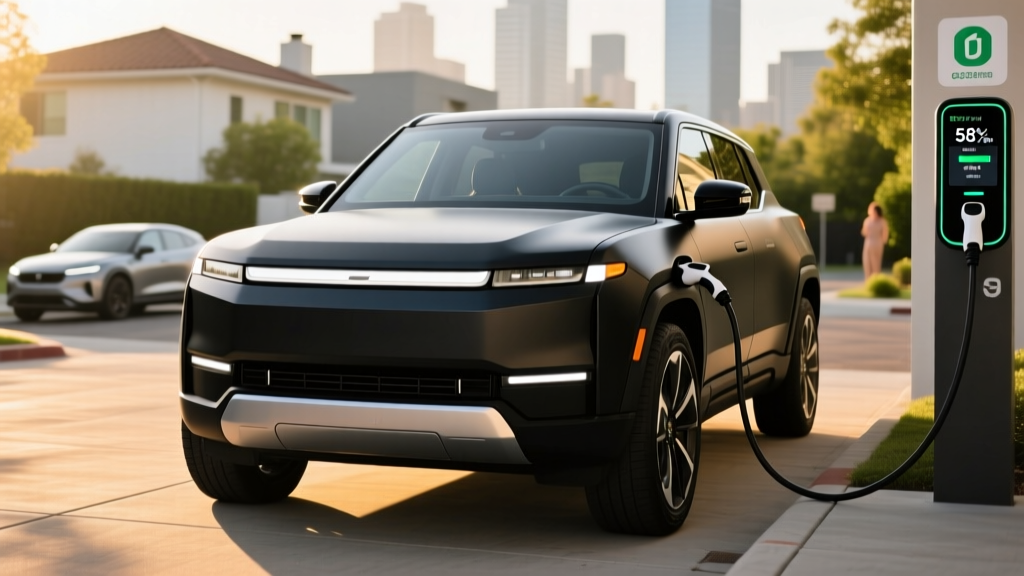
The 2022 Rivian R1S launched as one of the first three-row electric SUVs to reach American driveways, carving out a niche between the Tesla Model X and the GMC Hummer EV. Built on Rivian's skateboard platform at the Normal, Illinois factory, the R1S pairs genuine off-road hardware — including a four-motor option, air suspension, and a wading depth of over three feet — with a tech-forward cabin and over-the-air updates. For buyers evaluating a used 2022 R1S in today's market, the key questions center on its large-pack battery longevity, real-world range versus the EPA sticker, charging speeds on the NACS-transitioned Supercharger network, and whether this first-generation model remains competitive against newer three-row EVs.
This review covers the 2022 R1S in its original dual-motor and quad-motor configurations with the 135 kWh Large Pack, which was the dominant configuration delivered that model year. We'll break down exact specs, real-world efficiency data, and what ownership looks like in 2026.
Range, Battery, and Real-World Efficiency
| Spec | Dual-Motor (Large Pack) | Quad-Motor (Large Pack) |
|---|---|---|
| EPA Range | 316 miles | 316 miles |
| Battery Capacity | ~128.9 kWh usable (135 kWh gross) | ~128.9 kWh usable (135 kWh gross) |
| Battery Chemistry | NMC (Samsung SDI 2170 cells) | NMC (Samsung SDI 2170 cells) |
| Drivetrain | Dual-Motor AWD | Quad-Motor AWD |
| Horsepower | 533 hp | 835 hp |
| Torque | 610 lb-ft | 908 lb-ft |
| 0-60 mph | ~4.5 seconds | ~3.0 seconds |
| EPA Efficiency | 69 MPGe (2.0 kWh/mi) | 69 MPGe (2.0 kWh/mi) |
| Max DC Charge Rate | ~200 kW (peak) | ~200 kW (peak) |
| Level 2 Charge Rate | 11.5 kW (up to 48A) | 11.5 kW (up to 48A) |
| Towing Capacity | 7,700 lbs | 7,700 lbs |
| Ground Clearance (max) | 14.9 inches | 14.9 inches |
The 135 kWh Large Pack uses Samsung SDI 2170-format NMC (nickel-manganese-cobalt) cells arranged in a structural battery pack that doubles as a stressed chassis member. NMC chemistry offers high energy density — necessary to push a three-row SUV past 300 miles — but requires more careful state-of-charge management than LFP. Rivian recommends daily charging to 85-90% for NMC packs and reserving 100% charges for road trips.
According to fueleconomy.gov, the 2022 R1S Large Pack achieves 69 MPGe combined (74 city / 65 highway). That translates to roughly 2.0 kWh per mile, which is thirsty by EV standards but expected for a 6,000-lb body-on-frame SUV with all-terrain tires.
Charging Speeds: DC Fast and Home Level 2
| Level | Power | Speed (approx.) | Notes |
|---|---|---|---|
| Level 1 (120V) | ~1.4 kW | ~3-4 miles/hour | Emergency/trickle only; 135 kWh pack takes days |
| Level 2 (240V, 48A) | 11.5 kW | ~25-28 miles/hour | Full charge in ~12 hours; ideal for overnight |
| Level 2 (240V, 32A) | 7.7 kW | ~17-19 miles/hour | Common portable charger / lower-amp circuit |
| DC Fast Charge (peak) | ~200 kW | 10-80% in ~33-38 min | Peak only sustained briefly; tapers significantly above 60% SoC |
| DC Fast Charge (avg 10-80%) | ~120-140 kW avg | ~170-190 miles added in 30 min | Real-world average on a 150-350 kW station |
The 2022 R1S originally shipped with a CCS1 charge port. However, Rivian owners gained access to the Tesla Supercharger network (via NACS adapter) starting in 2024, which dramatically expanded fast-charging options. On a 250 kW+ CCS station (such as Electrify America or EVgo), the R1S peaks around 200 kW but only holds that rate for a narrow window between roughly 15-40% state of charge. The charge curve tapers progressively: by 60% SoC you're typically seeing 100-120 kW, and above 80% it drops below 50 kW. This is normal for a large NMC pack with active thermal management, but it means a 10-80% session takes roughly 33-38 minutes in ideal conditions — slower than Hyundai Ioniq 5 or Lucid Air competitors.
At home, the onboard 11.5 kW charger is a strong point. On a 60-amp dedicated circuit with a hardwired Level 2 EVSE (like a ChargePoint Home Flex or Wallbox Pulsar Plus), you'll add roughly 25-28 miles of range per hour. A full 0-100% charge takes approximately 12 hours, which means overnight charging easily replenishes even a near-depleted pack. Most owners charging nightly from 40-80% will see a full top-up in under 5 hours.
Home charging installation cost: Expect $800-$2,500 for a professional 60-amp circuit installation if your electrical panel has capacity. Homes needing a 200-amp panel upgrade should budget an additional $1,500-$3,500. Always get a quote from a licensed electrician before purchasing equipment.
Performance, Drivetrain, and Capability
The 2022 R1S Dual-Motor delivers 533 horsepower and 610 lb-ft of torque, hitting 0-60 mph in approximately 4.5 seconds — genuinely quick for a three-row SUV. The Quad-Motor variant, with an independent motor at each wheel, produces 835 hp and 908 lb-ft, reaching 60 mph in about 3.0 seconds. That's supercar territory in a vehicle that can seat seven and tow 7,700 pounds.
Beyond straight-line speed, the R1S's air suspension provides 6.5 inches of adjustability, from a low "park" mode for easier loading to a maximum 14.9 inches of ground clearance in Off-Road mode. The quad-motor system enables true torque vectoring, with Rivian's tank-turn capability (rotating the vehicle in place by spinning left and right wheels in opposite directions) available on soft surfaces. Approach, departure, and breakover angles rival dedicated off-road SUVs, and the 42.7-inch wading depth exceeds any competitor in the electric SUV segment.
Ride quality on the 2022 model year received mixed reviews from early owners. The air suspension delivers a compliant highway cruise, but the heavy vehicle mass and stiff sidewall all-terrain tires can produce noticeable impacts on sharp pavement imperfections. Rivian improved ride tuning in subsequent OTA updates and model years, but the 2022 version rides firmer than a BMW X5 or Mercedes GLS.
Interior Space, Cargo, and Technology
| Measurement | Specification |
|---|---|
| Seating Capacity | 7 passengers (3 rows) |
| Front Legroom | 41.3 inches |
| Second-Row Legroom | 38.2 inches |
| Third-Row Legroom | 30.4 inches |
| Cargo (behind 3rd row) | 10.4 cu ft |
| Cargo (behind 2nd row) | 46.7 cu ft |
| Cargo (behind 1st row, max) | 88.2 cu ft |
| Front Trunk (Frunk) | 11.0 cu ft |
The R1S cabin uses a minimalist, nature-inspired design language with vegan leather (or available premium Nappa leather on later builds), real wood trim (ash or walnut), and a 15.6-inch center touchscreen running Rivian's proprietary OS. The digital instrument cluster is a 12.3-inch display, and a secondary 6.8-inch rear touchscreen controls rear climate and entertainment. Wireless Apple CarPlay and Android Auto were not available on 2022 launch models — Rivian added wireless phone projection via OTA update in 2023.
The third row is best suited for children or short trips; at 30.4 inches of legroom, adults will find it cramped on longer drives. Cargo space behind the third row (10.4 cu ft) is tight for a week's groceries for a family of five, but folding the third row opens up 46.7 cu ft, and the 11-cu-ft frunk compensates with secure, weatherproof storage for charging cables and gear.
Driver assistance comes via Rivian's Driver+ system, a Level 2 ADAS featuring adaptive cruise control, lane-centering, and automatic lane changes on highways. Per NHTSA SAE definitions, this requires continuous driver supervision — it is not autonomous driving. The system works well on well-marked interstates but can be hesitant in construction zones and on faded lane markings. The 2022 model year did not include Rivian's later hands-free highway assist, which arrived in subsequent model years.
Pricing, Tax Credits, and Ownership Costs
| Configuration | Original MSRP (2022) | Used Market Range (2026 est.) | Federal Tax Credit |
|---|---|---|---|
| Dual-Motor, Large Pack (Adventure) | ~$78,000 | $52,000 - $62,000 | Up to $4,000 (used EV credit, §25E) |
| Quad-Motor, Large Pack (Adventure) | ~$90,000+ | $60,000 - $74,000 | Up to $4,000 (used EV credit, §25E) |
| Launch Edition (Quad-Motor) | ~$84,500 | $58,000 - $68,000 | Up to $4,000 (used EV credit, §25E) |
As a 2022 model, the R1S is now purchased on the used market. The §30D new-vehicle tax credit (up to $7,500) no longer applies. Instead, buyers may qualify for the §25E used clean vehicle credit, which provides 30% of the sale price up to a maximum of $4,000. According to IRS guidelines, eligibility requires:
- Sale price of $25,000 or less (for the used credit — note: many 2022 R1S listings exceed this threshold, which disqualifies them)
- Buyer adjusted gross income below $75,000 (single), $112,500 (head of household), or $150,000 (joint)
- Vehicle must be at least two model years old (2022 qualifies in 2026)
- Purchase from a licensed dealer (private-party sales do not qualify)
- Credit is non-refundable and can only be claimed once per vehicle
Critical note: Because most used 2022 R1S listings in 2026 exceed the $25,000 sale-price cap, the majority of buyers will not qualify for the federal used-EV credit. Check the dealer sale price carefully. Some states offer additional rebates that stack — consult your state's energy office or the Alternative Fuels Data Center for local incentives.
Five-year ownership cost estimate (assuming a used purchase at $60,000, 15,000 miles/year, $0.14/kWh home electricity):
- Electricity (home charging): ~$2,520/year (~$12,600 over 5 years)
- Insurance: ~$2,800-$3,600/year (EV SUV premiums run higher; get quotes before buying)
- Maintenance: ~$400-$600/year (no oil changes; tire rotation, cabin filter, wiper fluid)
- Tires: ~$1,200-$1,800 per set, replacement every 25,000-35,000 miles (heavy EVs wear tires faster)
- Estimated 5-year total operating cost: ~$30,000-$38,000 (excluding purchase price, depreciation, and registration)
Warranty Coverage and Battery Longevity
Rivian's warranty for the 2022 R1S includes:
- Battery Pack: 8 years / 175,000 miles (whichever comes first), covering defects and capacity loss below 70% of original capacity
- Powertrain (motors, gearbox, power electronics): 8 years / 175,000 miles
- Bumper-to-Bumper (Limited Vehicle): 5 years / 60,000 miles
- Corrosion Perforation: 12 years / unlimited miles
- Roadside Assistance: 5 years / 60,000 miles
The 175,000-mile battery warranty is among the most generous in the segment (Tesla covers 8 years / 150,000 miles for Model X). The 70% capacity retention threshold is industry-standard. As of 2026, the oldest 2022 R1S vehicles are four years old, and community-reported degradation data on forums like Rivian Owners and the Rivian subreddit suggests most Large Pack vehicles are retaining 92-96% of original capacity at 30,000-50,000 miles — well within warranty parameters. NMC cells in a thermally managed pack with liquid cooling tend to age gracefully when owners avoid frequent 100% charges and DC fast-charging exclusively.
Battery replacement cost out of warranty remains a concern for any large-pack EV. Industry estimates for a 135 kWh NMC replacement range from $18,000 to $30,000+ including labor, though Rivian's modular pack design may allow section-level repairs at lower cost. No widespread battery failure patterns have emerged for the 2022 R1S as of early 2026.
Pros, Cons, and Who Should Buy
Pros
- 316-mile EPA range is practical for road trips and daily driving
- Quad-motor performance (3.0s 0-60) is extraordinary for a three-row SUV
- Class-leading off-road capability with air suspension and 14.9" ground clearance
- 7,700-lb towing capacity with integrated trailer brake controller
- 11.5 kW Level 2 onboard charger enables fast home replenishment
- NACS adapter grants access to Tesla Supercharger network
- Generous 8-year/175,000-mile battery warranty
- Continuous OTA improvements since launch
- Distinctive, head-turning design with Camp Kitchen and Gear Tunnel options
Cons
- Real-world highway range drops to 260-285 mi (cold weather: 210-240 mi)
- DC fast charging peaks at ~200 kW and tapers early; 10-80% takes 33-38 min
- Heavy (5,900+ lbs) — eats tires and reduces efficiency vs. lighter crossovers
- Third row is tight for adults; cargo behind 3rd row is only 10.4 cu ft
- Firm ride quality on 2022 models compared to luxury German SUVs
- No Apple CarPlay/Android Auto at launch (added later via OTA)
- Most used examples exceed $25,000, disqualifying them from the §25E used-EV credit
- Insurance premiums run 20-35% higher than comparable gas SUVs
- Rivian service center network still expanding; mobile service handles minor issues
Who the 2022 R1S suits best:
- Active families who need three rows, tow a boat or camper, and want off-road capability without a gas V8
- Outdoor enthusiasts who value the frunk, available Camp Kitchen, Gear Tunnel shuttle, and genuine trail-riding chops
- Home-charging owners with a garage or dedicated parking spot where overnight Level 2 charging makes daily driving effortless
- Tech-forward buyers who appreciate OTA updates and don't mind a younger brand's growing service network
Who should look elsewhere:
- Buyers who primarily drive highway miles in cold climates and need consistent 300+ mile range (consider a Lucid Air or Tesla Model X)
- Those who prioritize third-row adult comfort and cargo space (the Kia EV9 or upcoming larger SUVs may suit better)
- Buyers without home charging access — the R1S's 33-38 min DC fast-charge time and large battery make public-charging-only ownership tedious
2022 Rivian R1S vs. Key Competitors
| Spec | 2022 Rivian R1S (Dual-Motor) | 2022 Tesla Model X (LR) | 2024 Kia EV9 (LR AWD) |
|---|---|---|---|
| EPA Range | 316 mi | 348 mi | 280 mi |
| 0-60 mph | 4.5 sec | 3.8 sec | 5.0 sec |
| Seating | 7 | 5-7 | 6-7 |
| Max DC Charge | ~200 kW | ~250 kW | ~210 kW |
| Towing | 7,700 lbs | 5,000 lbs | 5,000 lbs |
| Off-Road Capability | Excellent | Moderate | Moderate |
| Used Price (2026 est.) | $52K-$62K | $55K-$72K | $42K-$52K |
The R1S wins on towing, off-road hardware, and adventure versatility. The Model X wins on range, charging speed, and Supercharger network seamlessness (native NACS). The Kia EV9 undercuts on price and offers a more traditional SUV feel with faster DC charging architecture, though with less range and no off-road pretensions.
Frequently Asked Questions
What is the real-world range of the 2022 Rivian R1S?
The EPA rates it at 316 miles, but expect 260-285 miles in real-world highway driving at moderate temperatures. Cold-weather highway range drops to roughly 210-240 miles. City driving with regenerative braking can approach 295-310 miles.
How fast does the 2022 R1S charge at home and on DC fast chargers?
At home on a Level 2 (240V, 48A) charger, the R1S adds approximately 25-28 miles of range per hour, with a full charge taking about 12 hours. On DC fast chargers, it peaks around 200 kW but averages 120-140 kW over a 10-80% session, which takes roughly 33-38 minutes under ideal conditions.
Does the 2022 Rivian R1S qualify for a federal EV tax credit in 2026?
As a used vehicle, it may qualify for the §25E used clean vehicle credit of up to $4,000 — but only if the dealer sale price is $25,000 or less. Most 2022 R1S listings exceed this cap, so the majority of buyers will not qualify. Income limits also apply ($75K single / $150K joint). Consult a tax professional and review IRS §25E guidelines before purchasing.
Is the 2022 R1S worth buying vs. newer three-row EVs?
Yes, if you prioritize off-road capability, towing, and adventure features. The R1S remains the most capable off-road electric SUV available. However, if range efficiency, third-row comfort, or faster DC charging are top priorities, consider a used Tesla Model X, a new Kia EV9, or Rivian's updated 2025+ dual-motor models with the newer Gen 2 drive unit.
What are the biggest concerns with a used 2022 R1S?
Key considerations include: tire wear costs (heavy EVs consume tires faster), limited Rivian service center availability in some regions, the firm ride quality of the 2022 air suspension calibration, and the fact that most used examples won't qualify for the federal used-EV tax credit due to the $25,000 price cap. Battery health has been strong across the fleet so far.
Can the 2022 R1S use Tesla Superchargers?
Yes. Rivian provided NACS adapters to existing owners starting in 2024, enabling access to Tesla's Supercharger network. The adapter supports up to the vehicle's maximum DC charge rate (~200 kW). This significantly expanded the R1S's road-trip charging options.
How does the R1S handle cold weather?
The R1S includes a heat pump and battery preconditioning, which help mitigate cold-weather range loss. Expect a 20-30% range reduction in sustained sub-freezing highway driving. Preconditioning the battery before arriving at a DC fast charger is essential for achieving peak charge rates in cold weather — without it, charge speeds can be cut in half.