Quick Verdict: The 2022 Model Y Performance Still Sets the Bar
Three years after its model year, the 2022 Tesla Model Y Performance remains one of the most compelling used electric SUVs on the market. With a factory-rated 3.5-second 0-60 mph time, 303 miles of EPA-estimated range, and access to Tesla's Supercharger network, it delivers a combination of speed, efficiency, and charging infrastructure that few competitors from its era can match. For buyers shopping the used EV market in 2026, the Performance trim offers a tangible step up in acceleration and handling over the Long Range variant — without a massive penalty in range or daily usability.
This review breaks down every critical spec, real-world range expectation, charging behavior, and ownership cost so you can evaluate a 2022 Model Y Performance listing with confidence.
Full Spec Sheet at a Glance
| Spec | Value |
|---|---|
| EPA Range | 303 miles |
| Battery (usable) | ~75 kWh (NMC) |
| Drivetrain | Dual-Motor AWD |
| Horsepower | ~456 hp (combined) |
| 0-60 mph | 3.5 seconds |
| Top Speed | 155 mph |
| DC Fast Charge (peak) | 250 kW |
| 10-80% DC Charge Time | ~27 minutes |
| Level 2 Home Charge Rate | 11.5 kW (~44 mi/hr) |
| MPGe (combined) | 117 MPGe |
| Efficiency | 28 kWh/100 mi |
| Cargo Volume (rear seats up) | 30.2 cu ft |
| Cargo Volume (rear seats folded) | 76.2 cu ft |
| Battery Warranty (original) | 8 yr / 120,000 mi |
| Original MSRP | ~$65,990 (before incentives) |
0-60 and Performance: The Numbers Behind the Badge
The "Performance" designation on the 2022 Model Y is not merely a trim label — it represents a meaningful hardware and software upgrade over the Long Range. Tesla equipped the Performance with a more powerful rear drive unit, Performance brakes with larger rotors, a lowered sport suspension, and 21-inch Überturbine wheels. The result is a 3.5-second 0-60 mph time, verified by Tesla and independently tested by multiple automotive outlets within a tenth of a second of that claim.
The dual-motor all-wheel-drive powertrain delivers approximately 456 horsepower and an estimated 497 lb-ft of torque. Unlike internal-combustion performance SUVs, this torque is available instantly from zero RPM, making the Model Y Performance feel even quicker in real-world passing and merging scenarios than the 0-60 number alone suggests.
Track Mode, accessible through the vehicle's touchscreen, adjusts torque distribution between the front and rear motors, increases regenerative braking aggressiveness, and manages battery and motor cooling for sustained high-effort driving. While no substitute for a dedicated sports car on a road course, Track Mode makes the Model Y Performance genuinely capable at track days — something few electric SUVs can claim.
The sport suspension lowers the ride height by roughly 0.6 inches compared to the Long Range, reducing body roll and improving cornering composure. The tradeoff is a firmer ride quality, especially noticeable on rough pavement and expansion joints. Buyers prioritizing ride comfort over handling should test-drive both trims back to back.
Range and Efficiency: EPA vs. Real World
Real-World Highway (70-75 mph, moderate temps): ~255-275 miles
Real-World Cold Weather (below 32°F, mixed driving): ~210-240 miles
Real-World City / Moderate Climate: ~280-300 miles
The 2022 Model Y Performance carries an EPA-estimated range of 303 miles, according to fueleconomy.gov. That figure represents a combined cycle — a mix of city and highway driving under moderate temperatures.
In practice, expect the real-world range to vary significantly based on conditions. Highway driving at 75 mph typically yields 255-275 miles before the battery reaches a low state of charge. The Model Y's aerodynamic crossover profile helps, but sustained high-speed driving remains the largest efficiency penalty for any EV.
Cold weather compounds range loss. In temperatures below freezing, battery chemistry becomes less efficient, cabin heating draws substantial energy (the 2022 Model Y uses a heat pump, which helps considerably compared to resistive heating), and regenerative braking is limited until the battery warms. Expect 210-240 miles of usable range in deep winter conditions. This is not unique to Tesla — all lithium-ion EVs experience similar cold-weather degradation — but it's critical to plan around if you live in a northern climate.
The 28 kWh/100 mi efficiency rating (117 MPGe combined) is among the best in the electric crossover segment. For context, the 2022 Ford Mustang Mach-E GT consumes roughly 37 kWh/100 mi, and the 2022 BMW iX xDrive50 uses about 35 kWh/100 mi. Tesla's efficiency advantage translates directly into more miles per charge and lower charging costs.
Charging Speed: DC Fast Charge and Home Level 2
| Charging Level | Power | Speed / Time |
|---|---|---|
| Level 1 (120V household) | ~1.4 kW | ~3-4 miles per hour |
| Level 2 (240V, 48A) | 11.5 kW | ~44 miles per hour |
| DC Fast Charge (peak) | 250 kW | 10-80% in ~27 min |
| DC Fast Charge (V3 Supercharger avg) | ~150 kW sustained | ~180 miles in 30 min |
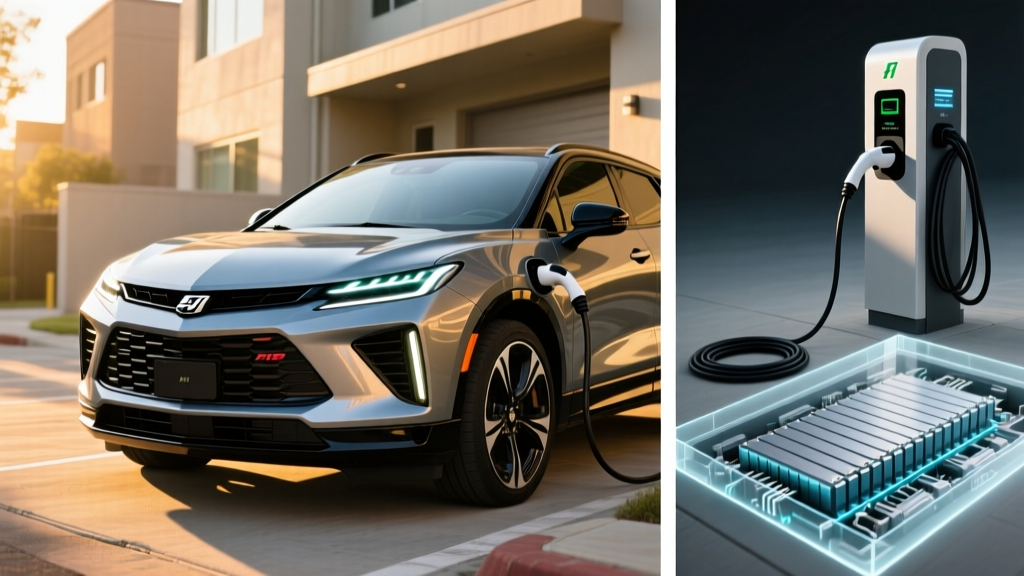
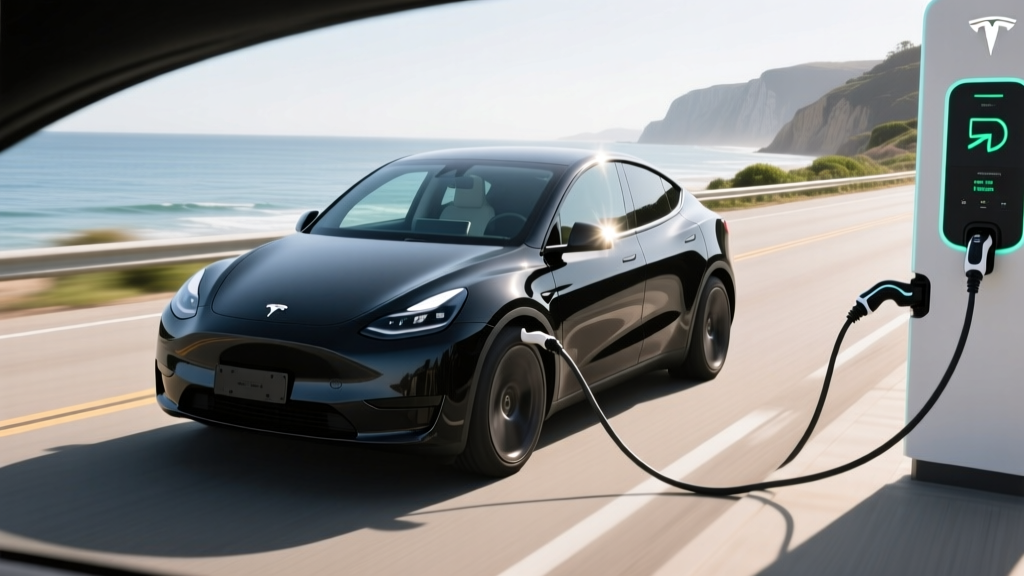
The 2022 Model Y Performance charges via the Tesla (NACS) connector, which in 2026 is the dominant North American charging standard adopted by nearly every major automaker. On a V3 or V4 Tesla Supercharger, the battery can accept up to 250 kW of peak DC fast-charging power.
However, peak charge rate is not sustained charge rate — a distinction every EV buyer should understand. The battery management system tapers charging speed as the state of charge rises to protect cell longevity. In real-world testing, the 10-80% charge takes approximately 27 minutes at a V3 Supercharger. The charge curve holds above 150 kW through roughly 50% SoC, then gradually steps down. Charging from 80-100% adds significant time and is generally unnecessary for road trips — plan to charge to 80% and go.
For home charging, the onboard charger accepts up to 11.5 kW on a 240-volt, 48-amp Level 2 circuit. This requires a 60-amp dedicated breaker. A full overnight charge (roughly 8-9 hours from near-empty) easily replenishes the battery for daily driving. Most owners report plugging in each evening and starting every morning with a full charge — the single biggest convenience advantage of EV ownership.
Using a Tesla Wall Connector (~$420) installed by a licensed electrician typically costs $800-$2,000 total depending on your panel capacity and run distance. If your home has a 200-amp electrical panel with available capacity, installation is straightforward. Older homes with 100-amp panels may require a panel upgrade ($1,500-$3,000+) before adding a Level 2 charger.
Interior, Cargo, and Technology
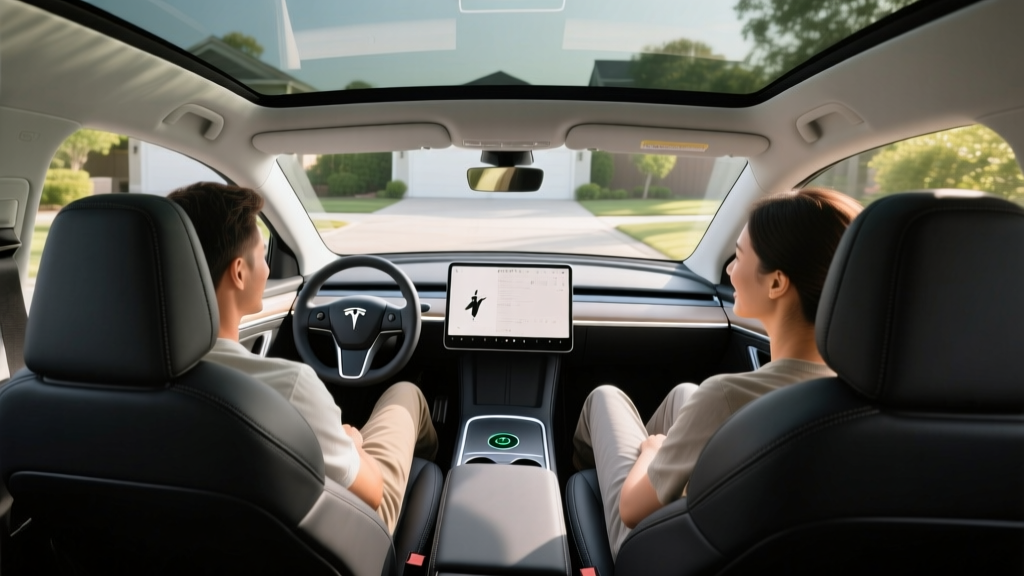
The 2022 Model Y interior follows Tesla's minimalist design language: a single 15-inch landscape touchscreen handles navigation, media, climate controls, and vehicle settings. There is no traditional instrument cluster — speed and driving information appear in the upper-left corner of the main display.
Cargo capacity is a standout strength. With the rear seats upright, you get 30.2 cubic feet behind the second row. Fold the 60/40 split rear seats and that expands to 76.2 cubic feet — competitive with midsize gas-powered SUVs. The front trunk (frunk) adds roughly 4.1 cubic feet for charging cables, groceries, or a small bag. A small optional third-row seat was available on some 2022 Model Y configurations, but it's best suited for children and reduces cargo space significantly.
Legroom measures 41.8 inches in the front and 37.4 inches in the rear — adequate for adults on longer trips, though the rear seat cushion sits relatively low to the floor due to the battery pack underneath, creating a somewhat knees-up seating position.
Standard technology includes:
- Tesla Autopilot (adaptive cruise control + lane centering) — SAE Level 2 driver assistance
- Over-the-air software updates adding features post-purchase
- Sentry Mode dashcam recording with USB storage
- Dog Mode and Camp Mode climate settings
- Native route planning with Supercharger integration and battery preconditioning
Full Self-Driving (Supervised) was available as a $12,000 option or $199/month subscription in 2022. It adds features like automatic lane changes, Navigate on Autopilot, and traffic light/stop sign recognition. As of 2026, FSD remains a Level 2 system requiring full driver supervision despite its name.
Pricing, Tax Credits, and Used Market Value in 2026
| Item | Amount |
|---|---|
| Original MSRP (2022) | ~$65,990 |
| Typical Used Price (2026, ~35-50k mi) | $32,000 – $40,000 |
| Federal Used EV Credit (§25E) | Up to $4,000 (30% of sale price, max $4,000) |
| Estimated After-Credit Price | ~$28,000 – $36,000 |
The 2022 Model Y Performance originally stickered at approximately $65,990 before destination fees. Depreciation has been significant — as of early 2026, clean examples with 35,000-50,000 miles typically sell for $32,000-$40,000 depending on condition, color, FSD status, and market.
As a used EV purchase, the IRS §25E Used Clean Vehicle Credit may apply. This credit offers 30% of the sale price up to a maximum of $4,000, available to buyers meeting income thresholds ($75,000 single / $150,000 joint AGI). The vehicle must be purchased from a licensed dealer for at least $25,000 or less (the Model Y qualifies in most cases at current used prices), and the credit can be transferred to the dealer at the point of sale for an immediate price reduction.
Note: The federal new EV tax credit (§30D, up to $7,500) does not apply to used vehicle purchases. State and local incentives vary — check your jurisdiction's energy office or utility provider for additional rebates on used EVs or home charger installation.
Pros and Cons
Pros
- 3.5s 0-60 — genuinely fast for a family crossover
- 303-mi EPA range with class-leading efficiency
- 250 kW DC fast charging on the Supercharger network
- Spacious cargo area (76.2 cu ft max)
- Continuous OTA updates improve the car over time
- Strong used-market availability and parts support
Cons
- Firm ride quality from sport suspension and 21" wheels
- Rear seat cushion height is low (knees-up position)
- No Apple CarPlay or Android Auto
- All climate controls buried in touchscreen
- Insurance costs above segment average
- FSD purchase does not reliably transfer resale value
Who Should Buy the 2022 Model Y Performance?
- You want sports-sedan acceleration in a practical family SUV
- You frequently road-trip and value the Supercharger network
- You have access to Level 2 home charging
- You want a used EV that still receives software updates and feature additions
- Ride comfort is your top priority (look at the Long Range trim or a Hyundai Ioniq 5)
- You need Apple CarPlay / Android Auto integration
- You regularly drive in extreme cold and need maximum range buffer (consider a larger-battery EV)
Frequently Asked Questions
What is the real-world range of the 2022 Model Y Performance?
The EPA rates it at 303 miles combined. Real-world highway driving at 70-75 mph yields roughly 255-275 miles. In cold weather below freezing, expect 210-240 miles. City driving in moderate temperatures can approach the EPA figure.
How fast does the 2022 Model Y Performance charge?
On a Tesla V3/V4 Supercharger, it peaks at 250 kW and charges from 10-80% in about 27 minutes. At home on a 240V/48A Level 2 charger, it adds approximately 44 miles of range per hour, fully replenishing overnight.
Does the 2022 Model Y Performance qualify for a federal tax credit?
As a used purchase in 2026, it may qualify for the IRS §25E Used Clean Vehicle Credit — up to $4,000 (30% of sale price). Eligibility depends on buyer income limits ($75K single / $150K joint), dealer sale, and a sale price at or below $25,000. Check irs.gov for current rules and consult a tax professional.
Is the 2022 Model Y Performance worth buying over competitors?
Against the 2022 Ford Mustang Mach-E GT (0-60 in 3.5s, 260-mi range, slower charging) and the 2022 BMW iX xDrive50 (more luxurious but heavier, less efficient, and more expensive used), the Model Y Performance offers the best combination of range, charging speed, efficiency, and Supercharger network access. Its main tradeoff is ride firmness and minimalist interior execution.
What is the battery warranty on a used 2022 Model Y Performance?
Tesla's original battery and drive unit warranty covers 8 years or 120,000 miles (whichever comes first) with a minimum 70% capacity retention threshold. For a 2022 model, that coverage extends through the 2030 model year or 120,000 miles. Tesla battery degradation data across the fleet shows an average of roughly 12% capacity loss at 100,000 miles, meaning most packs remain well within warranty thresholds.
How does the 2022 Model Y Performance handle towing?
The 2022 Model Y has a maximum towing capacity of 3,500 pounds when equipped with the factory tow hitch. Towing significantly reduces range — expect a 30-50% reduction depending on trailer weight and aerodynamics. Plan for more frequent charging stops when towing.