Quick Verdict: A Proven Compact EV With Real-World Caveats
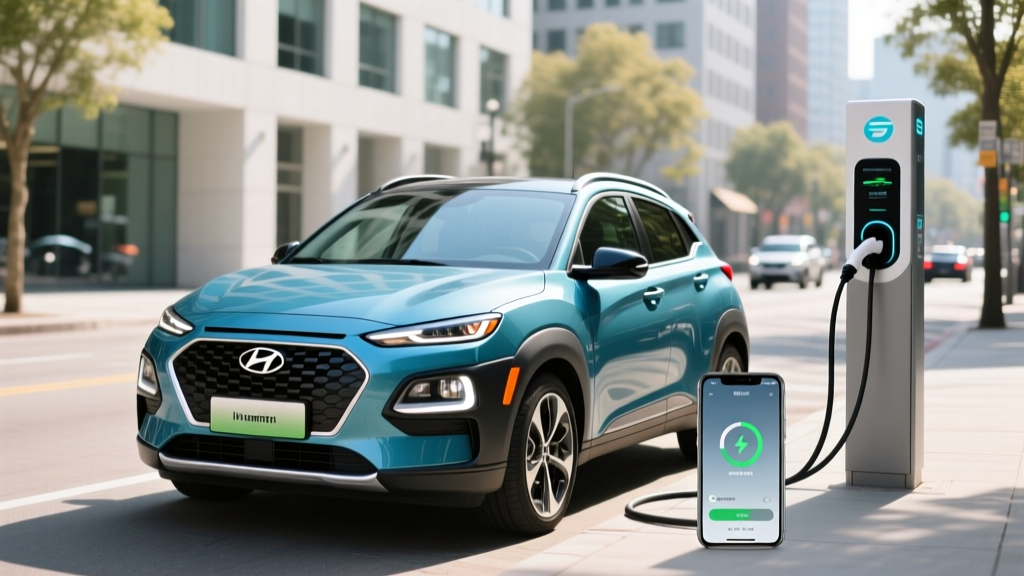
The 2019 Hyundai Kona Electric was one of the first affordable long-range EVs to challenge the Chevrolet Bolt and early Nissan LEAF Plus. With an EPA-estimated 258 miles of range, a 64 kWh NMC battery, and peppy 201-hp front-wheel-drive powertrain, it remains a compelling used-EV purchase in 2026 — especially if you qualify for the federal used-EV tax credit. But its modest 75 kW DC fast-charging speed and compact cargo area mean it's best suited for commuters and city dwellers, not road-trippers or families needing serious hauling space.
This review covers everything you need to know before buying a 2019 Kona Electric today: real-world range data, charging speeds, battery health expectations, used pricing, tax-credit eligibility under current IRS §30D/§25E rules, and how it stacks up against key competitors.
Range, Battery & Efficiency: The Numbers That Matter
| Spec | Value |
|---|---|
| EPA Range | 258 miles |
| Battery Capacity | 64 kWh usable (NMC chemistry) |
| Efficiency (Combined) | 120 MPGe / 28 kWh per 100 mi |
| Drivetrain | FWD, single motor |
| Horsepower | 201 hp (150 kW) |
| Torque | 290 lb-ft |
| 0–60 mph | ~6.4 seconds |
The 64 kWh lithium-ion pack uses NMC (nickel-manganese-cobalt) chemistry, which offers good energy density but is more sensitive to sustained high states of charge than LFP (lithium iron phosphate) batteries. For long-term battery health, Hyundai recommends keeping the state of charge between 20% and 80% for daily use and only charging to 100% before long trips.
Efficiency is a genuine strong point. At 28 kWh per 100 miles combined, the Kona Electric is one of the most efficient compact EVs of its era. For context, that translates to roughly $0.04–$0.06 per mile at the U.S. average residential electricity rate of ~$0.16/kWh — dramatically cheaper than a comparable gas-powered Kona at ~$0.14/mile (assuming 30 MPG and $3.50/gallon).
Charging Speeds: DC Fast, Level 2 & Level 1
Charging is where the 2019 Kona Electric shows its age most clearly. By 2026 standards, its 75 kW peak DC fast-charging rate is modest. Here's the full breakdown:
| Charging Level | Power | Speed / Time | Connector |
|---|---|---|---|
| Level 1 (120V household) | ~1.2 kW | ~4 mi/hr added; full charge ~55+ hrs | J1772 |
| Level 2 (240V home/public) | 7.2 kW | ~25 mi/hr added; full charge ~9 hrs | J1772 |
| DC Fast Charge | Peak 75 kW | 10–80% in ~54 min; peak rate tapers significantly above 60% SoC | CCS1 |
The DC fast-charging curve is the critical detail many reviews omit. The Kona Electric peaks at approximately 75 kW only when the battery is between roughly 10–40% state of charge. From 40–60%, the rate drops to around 50–55 kW. Above 60%, it tapers further to 30–40 kW, and above 80% it slows to a trickle. This means a 10–80% session takes roughly 54 minutes — acceptable for a quick stop but noticeably slower than modern EVs like the Hyundai Ioniq 5 (which can do 10–80% in ~18 minutes at 240 kW peak).
For daily use, Level 2 home charging is the sweet spot. A 240V Level 2 charger delivering the car's maximum 7.2 kW acceptance rate will fully replenish the battery overnight in about 9 hours. If you're installing a home Level 2 charger, a 40-amp circuit (delivering ~9.6 kW) is more than sufficient — the car will only draw 7.2 kW regardless. According to fueleconomy.gov, consistent Level 2 home charging is the most cost-effective and battery-friendly approach.
Performance & Driving Dynamics
The 2019 Kona Electric's 201 hp and 290 lb-ft of instant torque make it genuinely quick off the line. The 0–60 mph time of approximately 6.4 seconds puts it ahead of most compact crossovers in its class, gas or electric. The single-speed reduction-gear transmission delivers smooth, linear acceleration with no shift shock.
Driving dynamics are competent but not sporty. The extra weight of the 64 kWh battery pack (curb weight is roughly 3,700 lbs — about 700 lbs more than a gas Kona) is noticeable through corners, and the low-rolling-resistance tires prioritize efficiency over grip. Steering is light and numb, which suits city driving but feels vague on winding roads.
Regenerative braking is adjustable via paddle shifters behind the steering wheel, with four levels (0–3). Level 3 provides aggressive deceleration that approaches one-pedal driving in city traffic, though it won't bring the car to a complete stop without touching the brake pedal — unlike some newer EVs with full one-pedal modes.
Interior, Cargo & Tech
The cabin is functional but reflects the Kona's budget origins. Hard plastics dominate the dashboard and door panels, though the layout is intuitive and controls are easy to reach.
| Dimension | Measurement |
|---|---|
| Front Legroom | 41.5 in |
| Rear Legroom | 33.4 in |
| Cargo (behind rear seats) | 19.2 cu ft |
| Cargo (rear seats folded) | 45.8 cu ft |
| Front Headroom | 39.6 in |
Cargo space is tight compared to rivals. The Chevrolet Bolt EV offers 56.6 cu ft with seats folded, and the Kia Niro EV (which shares the Kona's powertrain) provides 53.0 cu ft. The Kona Electric's 19.2 cu ft behind the rear seats is adequate for groceries and a couple of carry-on bags but won't accommodate large luggage for family trips.
There is no front trunk (frunk) — the space under the hood houses the electric motor, inverter, and auxiliary 12V battery.
Infotainment: The 2019 model comes with either a 7.0-inch or 8.0-inch touchscreen (depending on trim), with standard Apple CarPlay and Android Auto. The Ultimate trim adds navigation and a head-up display. The interface is responsive and logically organized — a refreshing contrast to some overly complex modern EV touchscreens.
Driver Assists (Standard on all trims):
- Forward collision-avoidance assist with pedestrian detection
- Lane keeping assist
- Driver attention warning
- Blind-spot collision warning (SEL and above)
- Smart cruise control with stop-and-go (Ultimate trim only)
These are SAE Level 1–2 driver-assistance features. The driver must remain fully engaged at all times — this is not a self-driving system. Hyundai's Smart Cruise Control on the Ultimate trim provides basic adaptive cruise with lane centering, but it lacks the sophistication of Tesla Autopilot or GM Super Cruise.
Pricing, Trims & Federal Tax Credit Eligibility
The 2019 Kona Electric was sold in three trims. Original MSRP figures and approximate 2026 used-market pricing:
| Trim | Original MSRP | Approx. Used Price (2026) | Federal Used-EV Credit (§25E) |
|---|---|---|---|
| SEL | $37,385 | $16,000–$19,000 | Up to $4,000 if eligible |
| Limited | $41,585 | $18,000–$21,500 | Up to $4,000 if eligible |
| Ultimate | $45,285 | $20,000–$24,000 | Up to $4,000 if eligible |
Important tax-credit distinction: Because the 2019 Kona Electric is a used vehicle, the new-vehicle §30D credit (up to $7,500) does not apply. Instead, buyers may qualify for the §25E Previously Owned Clean Vehicle Credit, which provides up to $4,000 (30% of the sale price, capped at $4,000) — provided all of the following are met, per IRS guidelines:
- Price cap: The sale price must be $25,000 or less (most 2019 Kona Electric listings qualify).
- Buyer income limits: Modified adjusted gross income (MAGI) must not exceed $75,000 (single), $112,500 (head of household), or $150,000 (married filing jointly).
- Vehicle age: The model year must be at least two years before the calendar year of purchase (a 2019 model purchased in 2026 qualifies).
- Dealer requirement: The vehicle must be purchased through a licensed dealer (private-party sales do not qualify).
- First transfer: The credit applies only to the first qualified sale of the vehicle after August 16, 2022. If the credit was already claimed on this specific VIN in a prior qualifying sale, it cannot be claimed again.
- Ownership restriction: You cannot have claimed another used-EV credit in the 3 years prior.
At a typical used price of $18,000 for a Limited trim, the §25E credit could reduce your effective cost to approximately $14,000 — making the Kona Electric one of the most affordable long-range EVs available in 2026. Always consult a tax professional to confirm eligibility, as IRS rules are subject to change.
Warranty & Battery Longevity
Hyundai provides one of the best EV warranties in the industry, and it transfers to subsequent owners (though the duration changes):
| Coverage | Original Owner | Subsequent Owner |
|---|---|---|
| New Vehicle | 5 years / 60,000 mi | Remainder of 5/60,000 |
| Powertrain | 10 years / 100,000 mi | 5 years / 60,000 mi |
| EV Battery | 10 years / 100,000 mi | 10 years / 100,000 mi (transfers) |
The battery warranty covers capacity loss below 70% of original capacity. For a 2019 model, this means coverage extends through the 2029 model year or 100,000 miles — whichever comes first. This is a significant advantage when buying used, as many 2019 Kona Electrics still have meaningful battery warranty remaining.
NMC batteries in the Kona Electric have shown relatively modest degradation in owner reports. Typical degradation after 5 years / 60,000 miles is approximately 8–12%, meaning a car originally rated at 258 miles might realistically deliver 225–240 miles at full charge. Checking the battery's State of Health (SoH) via an OBD-II scanner and an app like Car Scanner or Torque before purchase is strongly recommended.
How It Compares: Kona Electric vs. Key Rivals
| Spec | 2019 Hyundai Kona Electric | 2019 Chevrolet Bolt EV | 2019 Nissan LEAF Plus |
|---|---|---|---|
| EPA Range | 258 mi | 238 mi | 226 mi |
| Battery | 64 kWh (NMC) | 60 kWh (NMC) | 62 kWh (NMC) |
| HP | 201 hp | 200 hp | 214 hp |
| DC Fast Charge (peak) | 75 kW | 55 kW | 100 kW |
| 10–80% DCFC Time | ~54 min | ~60 min | ~45 min |
| Cargo (seats folded) | 45.8 cu ft | 56.6 cu ft | 30.0 cu ft |
| Efficiency | 120 MPGe | 119 MPGe | 104 MPGe |
| Used Price Range (2026) | $16K–$24K | $13K–$19K | $12K–$18K |
The Kona Electric leads this group in EPA range and efficiency but trails the Bolt in cargo space and the LEAF Plus in DC charging speed. The Bolt's larger cargo area (56.6 cu ft) makes it more practical for families, while the LEAF Plus's CHAdeMO connector is increasingly a liability as the U.S. charging infrastructure consolidates around CCS and NACS.
Against a 2020+ Tesla Model 3 Standard Range (250 mi EPA, ~170 kW DCFC, Supercharger access), the Kona Electric falls behind on charging speed and Supercharger network access — a meaningful disadvantage for road-trippers. However, the Kona's lower used price and Hyundai's strong battery warranty make it a safer financial bet for budget-conscious buyers who primarily drive locally.
- You commute 30–80 miles round-trip and can charge at home
- You want the lowest cost-per-mile of any compact EV in this price range
- Remaining battery warranty matters to you (up to 2029)
- You qualify for the §25E used-EV credit (income under $75K single / $150K joint)
- You regularly road-trip and need fast DC charging (consider a used Model 3 or Ioniq 5)
- You need more than 45.8 cu ft of cargo space (consider the Bolt EV)
- You live in a very cold climate and can't tolerate 180-mile winter range
- You want access to the Tesla Supercharger network
Pros & Cons
- 258-mi EPA range is excellent for the price
- 120 MPGe efficiency keeps per-mile costs very low
- 10-year/100,000-mi battery warranty transfers to used owners
- Quick 6.4-sec 0–60 with instant torque
- Standard Apple CarPlay/Android Auto
- Qualifies for up to $4,000 §25E used-EV credit
- Comprehensive standard driver assists
- 75 kW peak DCFC is slow by 2026 standards (~54 min 10–80%)
- No heat pump — significant cold-weather range loss
- Tight cargo space (19.2 cu ft rear / 45.8 cu ft total)
- Cramped rear legroom (33.4 in)
- No frunk
- CCS1 connector — no native NACS/Supercharger access
- Hard-plastic interior feels dated
Frequently Asked Questions
What is the real-world range of the 2019 Hyundai Kona Electric?
In mixed city/highway driving at moderate temperatures, expect 230–250 miles. Sustained highway driving at 70+ mph drops range to roughly 200–220 miles. In freezing weather, plan for 180–200 miles due to the resistive cabin heater and battery cold-soak effects.
How fast does the 2019 Kona Electric charge?
On a DC fast charger, it peaks at 75 kW and takes approximately 54 minutes from 10–80% state of charge. At home on a 240V Level 2 charger, it accepts up to 7.2 kW and fully charges in about 9 hours, adding roughly 25 miles of range per hour of charging.
Does the 2019 Kona Electric qualify for the federal EV tax credit?
As a used vehicle, it does not qualify for the new-vehicle §30D credit. However, it may qualify for the §25E Previously Owned Clean Vehicle Credit of up to $4,000, provided the sale price is $25,000 or less, you meet income caps ($75K single / $150K joint), and you purchase through a licensed dealer. Consult a tax professional and review IRS §25E guidelines before relying on the credit.
Is the 2019 Kona Electric worth buying in 2026?
Yes — if you're a commuter who charges at home and values low running costs. At $16,000–$24,000 used (potentially $12,000–$20,000 after the §25E credit), it offers 258 miles of EPA range and a strong remaining battery warranty. It's less ideal for road-trippers due to slow DC charging and limited Supercharger access.
What is the biggest drawback of the 2019 Kona Electric?
The 75 kW DC fast-charging ceiling is the most significant limitation. On a road trip, you'll spend nearly an hour at each charging stop while modern EVs recharge in 18–25 minutes. Combined with CCS-only connectivity (no native NACS), long-distance travel requires more planning and patience than newer platforms.
How long will the battery last?
NMC batteries in the Kona Electric typically degrade 8–12% over 5 years / 60,000 miles. The 10-year / 100,000-mile battery warranty covers capacity below 70%, meaning a 2019 model is covered through 2029. With proper charging habits (20–80% daily, avoiding frequent DC fast charges), many owners report minimal degradation well beyond 100,000 miles.
Can I charge a 2019 Kona Electric at a Tesla Supercharger?
Not natively. The Kona Electric uses a CCS1 connector. As of 2026, Tesla has opened some Superchargers to non-Tesla CCS vehicles via the built-in Magic Dock adapter at select stations, and third-party CCS-to-NACS adapters exist — but compatibility and reliability vary. Check the Tesla app or PlugShare for CCS-enabled Supercharger locations before relying on this for travel.
Sources: fueleconomy.gov — 2019 Hyundai Kona Electric, IRS §25E Previously Owned Clean Vehicle Credit, Hyundai Motor America specifications.